Explore the Myrtle Beach Real Estate Blog

Find exactly what you need, whether you're buying, selling, or just getting to know the Grand Strand.

01

Buying a Home

First-time buyer guides, financing tips, and how to win in the Myrtle Beach market.

02

Selling a Home

Pricing, staging, and the marketing that actually gets coastal homes sold.

03

Lifestyle and Communities

Coastal living, local communities, and what day-to-day life is really like along the Grand Strand.

04

Market Updates

The latest on prices, inventory, and what it means for you.

05

Moving & Relocation

Relocating to the coast? Tips on the move, schools, and settling into the Grand Strand.

06

Offer to Close

Step-by-step guides to buying and selling on the Grand Strand — from your first offer through closing day.

Aug. 4, 2026

Top 5 Things Every Buyer Should Do After Closing (Before Moving Into Their New Home)

The Window Between Closing and Move-In Is More Valuable Than Most Buyers Realize

Closing day is a huge milestone, but the smartest buyers treat it as the start of a short and important window rather than the finish line. The days between getting the keys and moving the first box in are the easiest time to take care of things that become much harder once furniture is in place and daily life has started. A little planning here protects your investment, your safety, and your sanity.

These five steps are the ones we recommend to every buyer moving into a new home in the Myrtle Beach area, whether it is a primary residence, a second home, or an investment property. If you are still shopping, our guide to what buyers should know before purchasing in Myrtle Beach pairs well with this checklist.

1. Change the Locks and Update Every Access Code

You have no way to know how many keys, garage door openers, gate fobs, alarm codes, and lockbox codes were floating around before you owned the home. Contractors, cleaners, former neighbors, and previous agents may all still have access. Rekeying the locks or replacing them outright is the single most important security step you can take on day one.

While you are at it, reset the garage door codes, change the alarm system code and any monitored account, update smart lock and camera credentials, and change any Wi-Fi router password left behind by the previous owner. If the home has smart-home devices, do a factory reset before you connect them to your accounts.

2. Deep Clean, Paint, and Handle Small Projects While the Home Is Empty

An empty home is the best home to clean, paint, and repair. Once furniture is in place, everything becomes twice as much work. Even if the sellers left the home clean, a professional deep clean of floors, baseboards, cabinet interiors, appliances, HVAC vents, and bathrooms gives you a fresh start you will feel every day.

If you plan to paint any rooms or refinish any floors, this is the moment. So is replacing outdated ceiling fans or light fixtures, upgrading outlets and switches, or handling any minor repair that is easier without furniture in the way. A weekend of small projects before move-in day can save you months of unfinished intentions later.

3. Test All Systems and Locate Every Main Shutoff

Before you rely on any system in your new home, test it. Run every faucet, flush every toilet, and check under every sink for leaks. Turn on the HVAC in both heat and cool mode. Test every burner and appliance. Trip and reset every GFCI outlet. Check the water heater temperature. Run the garage door, the doorbell, and every smoke and carbon monoxide detector.

Just as important, physically locate every main shutoff and label them if they are not already. The main water shutoff, the gas shutoff, the breaker panel, and the HVAC service switch should all be known to you before you need them. Also change the HVAC filter on day one so you know when it was last done, and note the water heater and HVAC model numbers for future service.

4. Finalize Insurance, Update Your Address, and Set Up Utilities

Confirm your homeowner's insurance is active on the closing date and that any wind, hail, and flood coverage is in place. Coastal buyers in the Myrtle Beach real estate market should specifically confirm flood and windstorm coverage details with their agent, because gaps in coastal policies are easy to miss until it matters.

Then handle the administrative pieces. Transfer or start service for electric, water, sewer, trash, internet, and gas where applicable. File a change of address with USPS and update your address with banks, credit cards, employer, driver's license, voter registration, subscriptions, and any auto-pay accounts. Set up trash and recycling pickup for your specific community, because schedules differ block by block along the Grand Strand.

5. Photograph the Empty Home and Start a Home File

Take detailed, dated photos and short video walk-throughs of every room, closet, garage, attic, and exterior area before you move a single box in. This becomes your baseline condition record. It matters for insurance claims later, for warranty conversations with builders, for HOA architectural questions, and for your own memory of what was original.

Start a simple home file at the same time. Keep the closing package, the survey, the title policy, HOA documents, appliance manuals and warranty registrations, insurance policy documents, and any receipts from work done before move-in. Digitize everything to a cloud folder so it is available from anywhere. Future you will thank present you every time something needs attention. When it is eventually time to sell, this home file is exactly what makes our 7-step home selling process so much smoother.  

Top 5 Things Every Buyer Should Do After Closing (Before Moving Into Their New Home)

A Few Extras That Matter in Coastal Myrtle Beach

  • Confirm hurricane season readiness: know where the shutters are, if any, and where the evacuation routes run
  • Check exterior caulking around windows and doors, since coastal humidity and salt air accelerate wear
  • Verify the dehumidifier drain line and any crawlspace vents are clear before humid weather returns
  • Introduce yourself to at least one neighbor; the Grand Strand is a community-driven market and it matters
  • Confirm HOA rules for parking, trash cans, exterior changes, and short-term rentals if applicable

These extras are especially valuable for buyers relocating from inland markets who may not be used to coastal ownership realities. Our guide to things to know before buying in Surfside Beach covers many of the same coastal ownership realities in more detail.

Key Takeaways

  • Rekey locks and reset every access code on day one to secure your investment
  • Deep clean, paint, and handle small projects before furniture is in the way
  • Test every system and locate every main shutoff before you rely on the home daily
  • Finalize insurance, update your address, and start every utility service on the correct date
  • Photograph the empty home and start a digital home file for insurance, warranty, and future reference

About Greg Harrelson

Greg Harrelson is a seasoned Realtor® with more than 30 years of experience serving the Myrtle Beach and Grand Strand markets. As the founder of Century 21 The Harrelson Group, Greg has built his career helping buyers, sellers, and investors achieve success in every corner of the coastal Carolina real estate market. His expertise spans residential homes, investment properties, land development, and coastal condos. Known for his deep local knowledge, innovative marketing strategies, and commitment to personal service, Greg consistently helps clients reach their real estate goals while navigating the ever-changing market with confidence and precision.

Aug. 3, 2026

The Real Cost of Owning an Oceanfront Condo in Myrtle Beach

The $40,000 Number That Gets People in Trouble

If you've been shopping oceanfront condos in Myrtle Beach, you've seen it. A listing that says the unit brings in $40,000 or $50,000 a year in rental income. You start doing math in your head, and it looks like a slam dunk.

Here's the thing. That number is real. It's also not the whole story.

Most listing agents show you the gross income and stop there. They don't walk you through what it actually costs to run that condo. And once you see the real numbers, the picture changes.

I've been selling real estate on the Grand Strand for over 20 years. I've been part of more than 15,000 home and condo sales. I've watched a lot of buyers fall in love with a rental projection and skip right past the expense side. Let's fix that.

Watch the full breakdown here: The True Cost of Owning an Oceanfront Condo


What It Actually Costs to Run an Oceanfront Condo

Operating expenses on an oceanfront condo typically eat up somewhere between 55 and 65% of your gross rental revenue. Not 10%. Not 20%. More than half.

Let's break down where that money goes.

HOA and Regime Fees

Oceanfront buildings sit right on the water, and that comes with a price tag. The HOA is covering building maintenance, elevators, pools, lazy rivers, and coastal insurance policies that are far more expensive than what you'd see on an inland property.

You should expect HOA fees to run anywhere from $600 to over $1,000 dollars a month. That's before a single guest checks in.

Property Management Fees

If you hire an on-site or local vacation rental manager, plan on handing over 25 to 40% of your gross income for that service.

Think you'll dodge that by self-managing on Airbnb? You'll save some money, but you won't save it all. Cleaning crews, booking software, and dynamic pricing tools still cost you real time and real cash every month.

South Carolina's Investment Property Tax

Here's one that catches a lot of buyers off guard. In South Carolina, non-owner-occupied rental properties are taxed at a 6% assessment ratio, not the 4% ratio you get on a primary residence.

That difference can double your property tax bill compared to what you'd pay on a home you actually live in. If you're running the numbers off a friend's primary residence tax bill down the street, you're going to be short.

Salt Air and Guest Turnover

Living on the ocean is beautiful. It's also brutal on a building.

Salt air destroys HVAC units, door locks, and outdoor furniture at roughly twice the rate you'd see inland. Add in heavy guest turnover from short-term rentals, and your wear and tear climbs even faster.

On top of that, you need to budget for HOA special assessments. When the elevator needs replacing or the roof needs repair, that bill gets split among every owner in the building, and it can show up with little warning.

The Real Math: $40,000 Gross vs. $12,000 to $14,000 Net

Let's put it all together.

Say a two-bedroom oceanfront condo grosses $40,000 a year in rental income. After you subtract HOA fees, taxes, insurance, management fees, and maintenance reserves, you might walk away with $12,000 to $14,000 net.

That works out to a realistic cap rate of around 2 to 4%. Not the double-digit return the gross number made you picture.

So Are Oceanfront Condos Still Worth Buying?

Not at all does that mean stay away. It means buy for the right reasons.

Oceanfront condos still offer strong equity growth over time. You get real tax depreciation benefits. And you get a place your own family can vacation in whenever you want, which isn't something you can put a dollar figure on.

The buyers who do well with these properties are the ones who go in with real numbers instead of the rental projection off a flyer. They know the expense side going in, so nothing surprises them a year later.

Want the Real Numbers on a Specific Building?

Greg Harrelson I can run an actual ROI spreadsheet on a specific Myrtle Beach condo building so you know exactly what you're walking into before you make an offer.
Drop a comment on the video or send me a direct text. I'll get you real numbers, not a listing sheet fantasy.

My name is Greg Harrelson with Century 21 The Harrelson Group.

About Greg Harrelson

Greg Harrelson is a seasoned Realtor® with more than 30 years of experience serving the Myrtle Beach and Grand Strand markets. As the founder of Century 21 The Harrelson Group, Greg has built his career helping buyers, sellers, and investors achieve success in every corner of the coastal Carolina real estate market. His expertise spans residential homes, investment properties, land development, and coastal condos. Known for his deep local knowledge, innovative marketing strategies, and commitment to personal service, Greg consistently helps clients reach their real estate goals while navigating the ever-changing market with confidence and precision.

Aug. 3, 2026

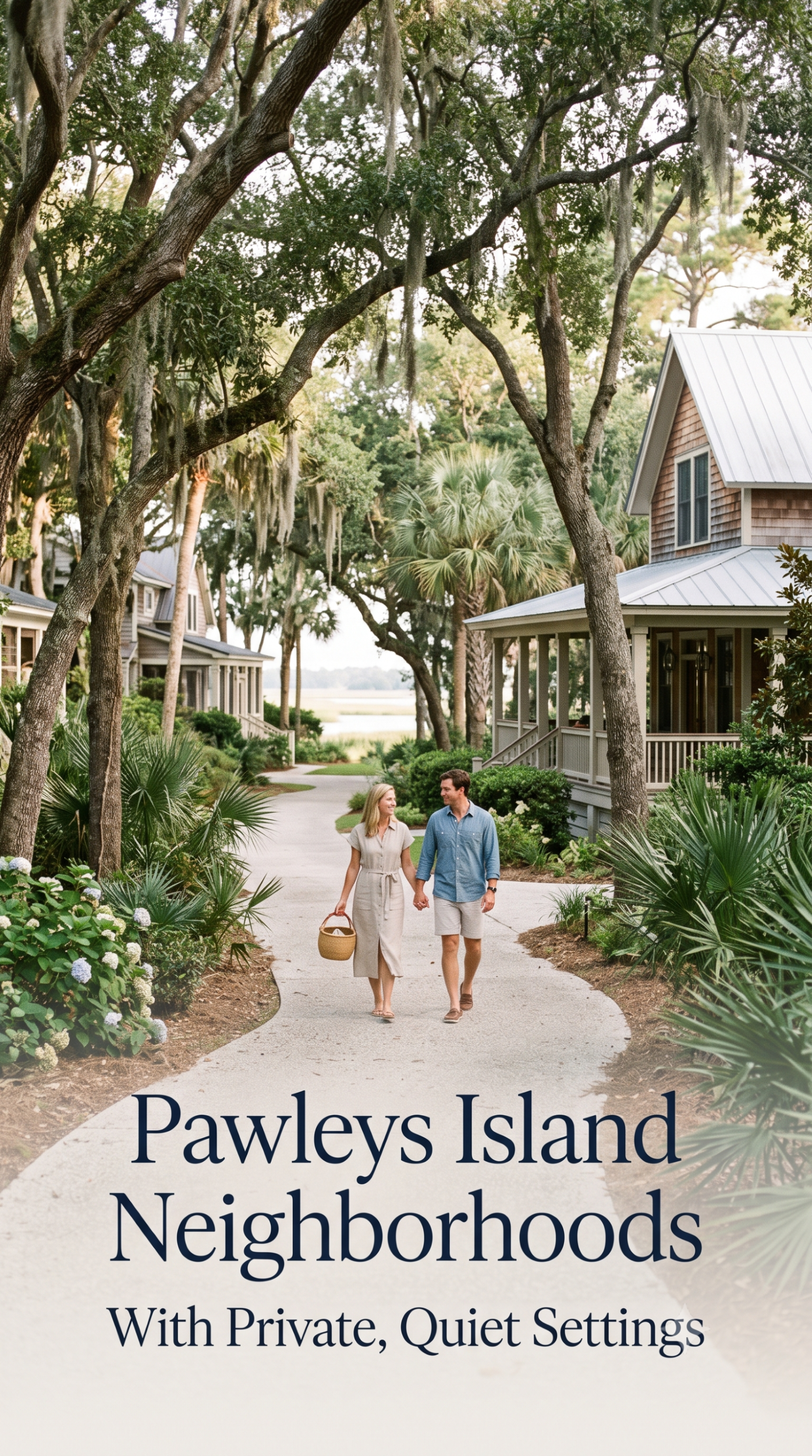
Pawleys Island Neighborhoods With Private, Quiet Settings

Why Buyers Come to Pawleys Island for Privacy and Quiet

Pawleys Island has always attracted buyers who want a slower, quieter coastal lifestyle. Compared to the busier corridors up the coast, the entire market has a more residential, less tourist-driven feel. Within Pawleys Island itself, certain neighborhoods take that character even further with gated entries, tucked-away layouts, and mature landscaping that create a real sense of privacy. Buyers exploring Pawleys Island real estate for a private, quiet setting usually already know they want this specific lifestyle.

Private and quiet mean different things to different buyers. Some want gated security. Others want physical distance from neighbors. Others want a small-community feel where the same faces appear at the mailbox each week. The right Pawleys Island neighborhood depends on which of these definitions matters most.

What Defines a Private, Quiet Pawleys Island Neighborhood

The most-requested qualities among buyers looking for privacy include gated or guarded entries, low pass-through traffic, mature trees that shield the home visually, larger lots or thoughtful spacing between homes, limited short-term rental activity, and a strong resident base rather than a heavy seasonal turnover. The best Pawleys Island neighborhoods for privacy combine several of these features.

 Pawleys Island Neighborhoods With Private, Quiet Settings

Top Private, Quiet Pawleys Island Neighborhoods

DeBordieu Colony

Few Pawleys Island area communities deliver privacy the way DeBordieu Colony does. The gated community offers private beach access, golf, tennis, and a low-density layout that creates a real sense of retreat. It is the natural first stop for luxury buyers who want privacy at the top of their list.

The Reserve Litchfield

The Reserve Litchfield gives buyers a tucked-away setting with a strong community identity. The neighborhood appeals to buyers who want a quieter footprint with easy access to the broader coastal and golf amenities of the Litchfield and Pawleys Island area.

Enclave at Pawleys Island

Enclave at Pawleys Island offers a smaller-community feel with quiet streets and a strong resident base. Buyers who want a neighborhood that feels intentional and cared-for often gravitate here.

Sanderling Bay

Sanderling Bay combines a private community feel with a coastal Lowcountry setting. Buyers who want a quieter neighborhood with the marsh and water within easy reach often shortlist Sanderling Bay early.

Willbrook Plantation

Willbrook Plantation offers a planned, quiet community layout with mature landscaping and a strong sense of neighborhood. The community appeals to buyers who want privacy without giving up amenities and organized community life.

Heritage Plantation

Heritage Plantation pairs a gated setting with a respected golf course and a well-kept residential footprint. It works well for buyers who want quiet gated living with everyday community services.

Allston Plantation

Allston Plantation offers another private, established residential community for buyers who value settled character and a low-key neighborhood feel over amenity-driven living.

Costs and Practical Considerations for Privacy Buyers

  • Gated and amenity-rich communities carry higher HOA fees; compare fee vs. amenity value carefully
  • Reserve health, special assessment history, and rental rules should be reviewed alongside monthly fees
  • Flood zones, elevation, and insurance vary widely within the Pawleys Island footprint
  • Property tax rates in Georgetown County differ between primary residences and second homes
  • Short-term rental frequency in a community can undermine the quiet setting even in a gated neighborhood

Buyers who prioritize privacy should ask specifically about rental activity within the community, because a high rate of weekly rentals often changes the daily feel.

Strategy for Buyers

The best Pawleys Island privacy buyers define what privacy means to them first. Gated luxury, tucked-away residential quiet, or small-community intimacy each point to different neighborhoods. Once the definition is clear, the shortlist usually narrows to two or three strong candidates.

Touring in shoulder season, walking the streets at different times of day, and asking about rental frequency all reveal information that listing photos cannot. Working with a local agent who knows each neighborhood's culture and rental activity is the fastest way to find the property that fits your definition of quiet.

Key Takeaways

Pawleys Island continues to attract buyers who want a private, quiet coastal lifestyle. DeBordieu Colony, The Reserve Litchfield, Enclave at Pawleys Island, Sanderling Bay, Willbrook Plantation, Heritage Plantation, and Allston Plantation each deliver a different flavor of privacy. Buyers who define their privacy priorities early, weigh HOA and rental rules carefully, and lean on local expertise are best positioned to land a Pawleys Island home that delivers on both the quiet setting and long-term value.

About Greg Harrelson

Greg Harrelson is a seasoned Realtor® with more than 30 years of experience serving the Myrtle Beach and Grand Strand markets. As the founder of Century 21 The Harrelson Group, Greg has built his career helping buyers, sellers, and investors achieve success in every corner of the coastal Carolina real estate market. His expertise spans residential homes, investment properties, land development, and coastal condos. Known for his deep local knowledge, innovative marketing strategies, and commitment to personal service, Greg consistently helps clients reach their real estate goals while navigating the ever-changing market with confidence and precision.

July 31, 2026

Selling an Inherited Home in Horry or Georgetown County

Selling an Inherited Home Is Both a Real Estate and a Family Decision

Selling an inherited home in Horry or Georgetown County adds emotional and administrative complexity to a transaction that would otherwise be straightforward. When probate is part of the picture, working with a specialist matters; we have a dedicated SC probate real estate specialist for this exact situation. Multiple heirs may need to coordinate. Probate may need to run its course. Tax basis, exemptions, and title questions all come into play. And someone has to prepare the property, price it, and manage the sale itself. This guide walks through the process so families can move forward with clarity. Our 7-step Myrtle Beach home selling process covers the general framework; this guide adds the inherited-property specifics.

Every inherited-home sale is different, but the same handful of decisions usually shape how smoothly the process runs.

Confirm the Legal Path to Sell

Probate, Testate, and Intestate

The first step is understanding how the property passes and who has legal authority to sell. If the estate is going through probate, the personal representative or executor typically handles the sale under court authority. If the property passed by a transfer-on-death deed, joint ownership, or a trust, the process may bypass probate entirely. A South Carolina probate attorney can confirm the specific path in Horry or Georgetown County.

Title and Deed Review

A title search early in the process identifies liens, outstanding mortgages, tax obligations, or ownership questions that could delay closing. Handle these upstream rather than during the buyer's due diligence window; it saves time and preserves negotiating position.

Coordinate With Heirs and Other Stakeholders

When multiple heirs share an interest in the property, decisions about pricing, prep, and offer acceptance need alignment. Get everyone on the same page early. Some families choose a single point-of-contact to work with the agent and attorney. Others involve all heirs in each decision. Either approach works if it is agreed to in advance.

Realistic expectations about price, timeline, and share of proceeds prevent friction later. A local agent can help by providing a data-driven price range that gives every heir the same starting point based on the current Myrtle Beach real estate market and recent comparable sales.

Understand the Tax Picture

Inherited property in the United States typically receives a stepped-up cost basis to the fair market value at the date of death. That step-up can significantly reduce capital gains tax when the property is sold. Working with a CPA or tax professional early helps confirm the basis, plan for any tax liability, and identify whether tools like a 1031 exchange apply to any heir who wants to reinvest their share into another investment property.

South Carolina property tax treatment also shifts when a property leaves owner-occupied status. Non-primary residence rates are higher, and the property may reassess. Factor this into carrying costs during the sale process, especially if the property will sit for several months.

Selling an Inherited Home in Horry or Georgetown County

Prepare the Home for Market

Contents and Personal Items

Deciding what to keep, distribute among family, sell, or donate is one of the harder parts of an inherited sale. Give this step time. Bringing in an estate sale professional or a specialized cleanout service can help when the volume is significant or when family is spread across multiple states.

Repairs and Presentation

Once contents are handled, evaluate the home the way a buyer will. Deep cleaning, fresh paint in neutral tones, small repairs, updated light fixtures, and clean landscaping typically deliver the strongest return per dollar. Avoid major renovations unless the home is significantly dated for the neighborhood; over-improving inherited property rarely pays back.

Coastal-Specific Considerations

Inherited coastal homes may have deferred maintenance from salt-air exposure or humidity. Address sliders, caulking, HVAC servicing, roof condition, and any obvious water intrusion signs before listing. Buyers evaluate coastal properties carefully, and clean presentation prevents negotiation friction.

Costs and Practical Considerations

  • Probate timelines vary; the personal representative should confirm current Horry or Georgetown County expectations
  • Attorney closing is required in South Carolina and often coordinates smoothly with probate counsel
  • Carrying costs during the sale (taxes, insurance, utilities, HOA) fall to the estate until closing
  • Insurance coverage often needs to be updated when a property becomes vacant during probate
  • 1031 exchange options may be available for individual heirs who want to reinvest their share

Planning for these items early prevents delays and reduces surprise costs.

Strategy for Sellers

Families who sell inherited homes well tend to do three things right. They handle the legal path early with a probate attorney. They align heirs on price, prep, and process before listing. And they work with a local real estate professional who has experience with inherited-property sales, coastal specifics, and coordinating with attorneys and CPAs. The right team makes the difference between a stressful process and a manageable one.

Key Takeaways

Selling an inherited home in Horry or Georgetown County brings together real estate, legal, tax, and family decisions in one transaction. Start with the legal path and title, align the heirs, confirm the tax picture with a CPA, and then prep the home thoughtfully before listing. Coastal-specific maintenance, non-primary tax rates, probate timelines, and vacant-property insurance all shape the numbers. A local agent experienced with inherited-property sales, working alongside a probate attorney and CPA, helps families reach a strong, timely closing while protecting relationships along the way.

Frequently Asked Questions

Do I need to complete probate before selling?

In many cases yes, but not always. If title passed through a trust, joint ownership, or a transfer-on-death deed, probate may not be required for the sale. A South Carolina probate attorney can confirm the specific requirements for the property in Horry or Georgetown County.

What is a stepped-up basis and why does it matter?

Stepped-up basis generally means the tax basis of the inherited property adjusts to the fair market value at the date of death. This adjustment often significantly reduces the capital gains tax owed when the property is later sold. Confirm the exact numbers and treatment with your CPA before closing.

What if the heirs disagree on price or timing?

Disagreements are common. An independent, data-driven price range from a local agent gives every heir the same starting point. Bringing in a mediator or attorney early can also help when disagreements escalate.

What if the home has been vacant for a long time?

Vacant homes need attention before listing. Confirm insurance still applies to a vacant property, check for water intrusion or pest issues, service the HVAC, and address any deferred maintenance. Clean, secure presentation often improves both offers and inspection outcomes.

About Greg Harrelson

Greg Harrelson is a seasoned Realtor® with more than 30 years of experience serving the Myrtle Beach and Grand Strand markets. As the founder of Century 21 The Harrelson Group, Greg has built his career helping buyers, sellers, and investors achieve success in every corner of the coastal Carolina real estate market. His expertise spans residential homes, investment properties, land development, and coastal condos. Known for his deep local knowledge, innovative marketing strategies, and commitment to personal service, Greg consistently helps clients reach their real estate goals while navigating the ever-changing market with confidence and precision.

July 30, 2026

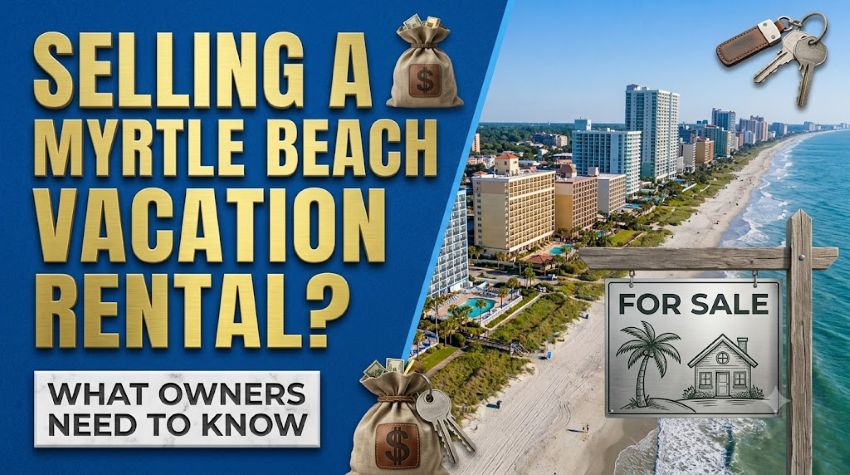
Selling a Vacation Rental Property in Myrtle Beach: What Owners Need to Know

Selling a Vacation Rental Is Its Own Kind of Sale

Selling a vacation rental property in Myrtle Beach is not the same as selling a primary residence. You are marketing to a different buyer pool, coordinating around active bookings, presenting income history alongside the physical property, and often working with a property manager and multiple stakeholders. Owners who plan the sale carefully protect both their income during the process and their bottom line at closing. Our 7-step Myrtle Beach home selling process gives the general framework; this guide adds the vacation-rental specifics.

Whether you own an oceanfront condo, a beach house, or a professionally managed unit inside a rental program, the same handful of decisions shape how smoothly the sale goes. Owners planning to reinvest into another investment property should also review the rules around a 1031 tax exchange before they list.

Selling a Vacation Rental in Myrtle Beach

Who Buys Vacation Rentals in Myrtle Beach

Understanding the buyer pool helps you position the sale. Investors focused on cash flow evaluate rental history, expenses, HOA reserves, and forward bookings, especially when shopping across the broader Myrtle Beach condos for sale market. Lifestyle buyers want a property they can enjoy themselves and rent when they are not using it. Snowbirds want a long-term hold with light rental use. Each buyer type looks at the property differently, and your presentation should give all three what they need to make an offer with confidence.

Timing the Sale Around Bookings

Decide How to Handle Existing Reservations

If bookings are already on the calendar, decide early whether you will honor them, transfer them to the new owner, or refund. Buyers often prefer income to arrive on day one, so honoring bookings can strengthen offers. Just as often, buyers want a clean start. Make the decision before you list so the strategy is consistent.

Choose the Right Season to List

Late spring and early summer often deliver the strongest buyer traffic because vacation-rental interest peaks alongside travel season. Off-season listings can still perform well when priced and presented properly, and they give buyers time to prepare for the following season. The right timing depends on your goals and the specific unit.

Presenting the Property to Both Users and Investors

Physical Presentation

Even income-focused buyers evaluate the physical property. Update photos to reflect current condition, deep clean the unit, refresh linens if they are worn, and remove any dated decor. Coastal humidity and salt-air wear more quickly than inland properties, so small refreshes often deliver strong returns before listing.

Financial Presentation

Investors want to see rental income history for at least the last 12 to 24 months, along with expenses like HOA fees, insurance, taxes, utilities, cleaning, and management fees. Present net operating income clearly rather than only gross rent. Well-documented financials build buyer confidence and support your asking price.

HOA and Building Documents

Buyers will want to see the master insurance policy, current budget, reserve study, meeting minutes, and any recent or pending special assessments. Having these ready before you list keeps the process moving and reduces surprises during due diligence.

Coordinating With Your Property Manager

If a professional manager runs the rental program, they should know you are selling and be prepared to coordinate showings, financial documents, and any booking questions. Some management contracts require notice or affect commissions when a sale happens; review your contract before you list. A cooperative manager makes the sale easier for everyone.

Costs and Practical Considerations

  • Capital gains tax planning matters; consider consulting a tax professional early, especially about 1031 exchange options
  • South Carolina is an attorney-closing state, so the closing attorney will coordinate the legal side of the sale
  • Non-primary residence property tax rates in Horry and Georgetown counties are higher than primary rates
  • Wind, hail, and flood insurance policies may need to transfer or be canceled properly around closing
  • Furnishings and inventory are often part of the sale in vacation rentals; document what conveys

Planning for these items up front prevents delays at the closing table.

Strategy for Sellers

Vacation rental sellers who succeed in Myrtle Beach tend to do three things well. They present the property with strong physical condition and clean, current photos. They present the financials with clarity and organization. And they align with a local agent who understands both the coastal real estate market and the mechanics of running a rental property. Investors sense that combination immediately, and lifestyle buyers respond to it just as strongly.

Key Takeaways

Selling a vacation rental in Myrtle Beach is a specialized transaction that rewards preparation. Understand the buyer pool, plan how to handle existing bookings, present both the physical property and the rental financials clearly, and coordinate with your property manager and HOA documents in advance. Non-primary tax rates, insurance, capital gains, and inventory conveyance all shape the numbers you take home. A local agent who understands both the coastal market and the mechanics of vacation rentals is the fastest path to a strong sale.

Frequently Asked Questions

Should I honor existing rental bookings when I sell?

Many buyers prefer income on day one and appreciate honoring existing bookings; others want a clean start. Decide early, be transparent in the listing, and align your strategy with the type of buyer you are targeting. A local agent can help you decide based on the current market and your specific property.

Do I have to pay capital gains tax when I sell a vacation rental?

Capital gains treatment depends on how long you owned the property, how it was used, and your specific tax situation. A 1031 exchange may allow you to defer capital gains on qualifying investment properties. Consult a tax professional before listing to identify options and plan accordingly.

Will my property manager help with the sale?

Most reputable managers cooperate with owners who are selling, but review your contract for any notice requirements or restrictions. Coordinate showings, financial documentation, and communications with your manager from the start.

What documents should I have ready before listing?

At minimum, gather 12 to 24 months of rental income history, an operating expense summary, HOA budget and reserve study, master insurance policy, meeting minutes, any recent special assessments, and a list of any furnishings included in the sale. Having these ready reduces buyer friction and supports your asking price.

About Greg Harrelson

Greg Harrelson is a seasoned Realtor® with more than 30 years of experience serving the Myrtle Beach and Grand Strand markets. As the founder of Century 21 The Harrelson Group, Greg has built his career helping buyers, sellers, and investors achieve success in every corner of the coastal Carolina real estate market. His expertise spans residential homes, investment properties, land development, and coastal condos. Known for his deep local knowledge, innovative marketing strategies, and commitment to personal service, Greg consistently helps clients reach their real estate goals while navigating the ever-changing market with confidence and precision.

July 30, 2026

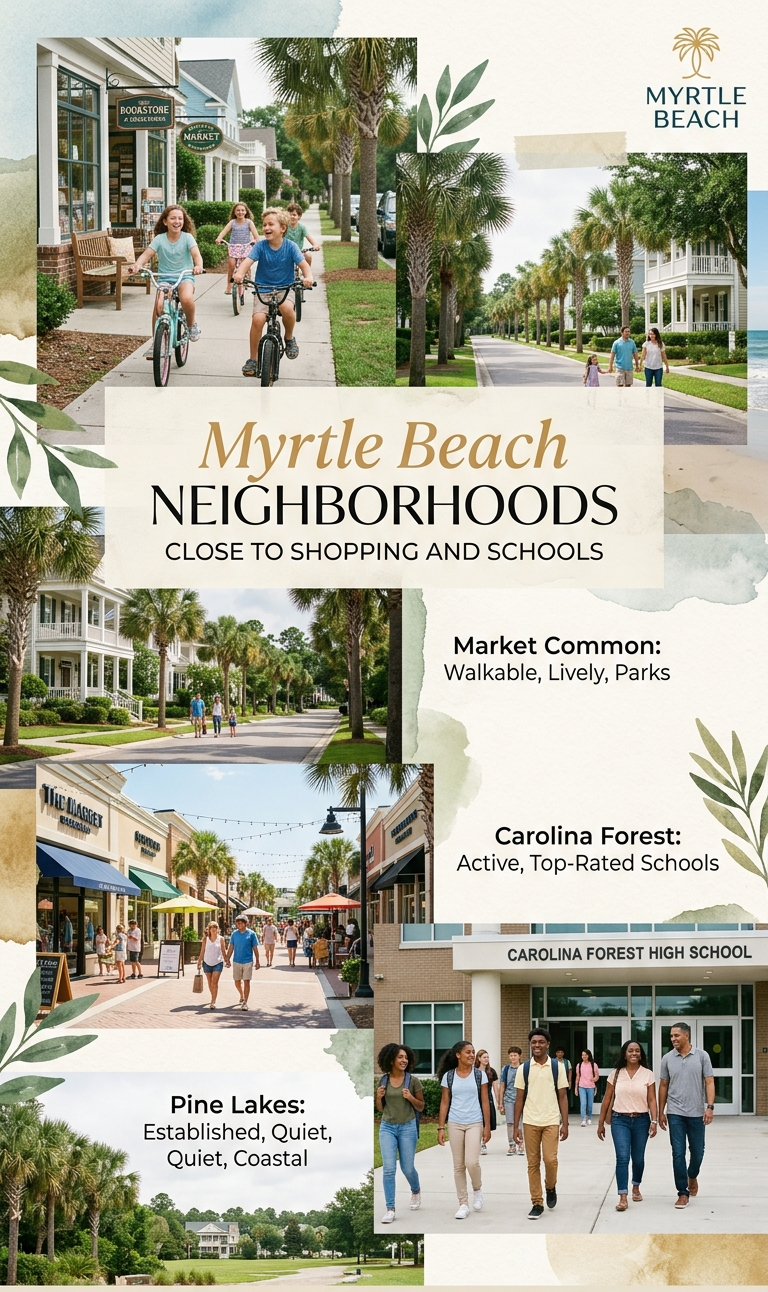
Myrtle Beach Neighborhoods Close to Shopping and Schools

Why Buyers Prioritize Shopping and School Access

Not every Myrtle Beach buyer is chasing an oceanfront lifestyle. For families, remote workers, retirees, and full-time residents, everyday convenience often outweighs the appeal of an ocean view. Being close to grocery, dining, healthcare, and quality schools shapes the way a home actually feels to live in. Buyers exploring Myrtle Beach real estate for daily convenience quickly find that a handful of neighborhoods stand out for combining lifestyle, community feel, and easy access to essentials.

Choosing a neighborhood with strong shopping and school access is not just a lifestyle decision. It also supports long-term resale strength, because these are the same qualities that consistently attract new buyers year after year.

What Buyers Look For in Convenience-Focused Neighborhoods

The most-requested qualities are short drives to grocery stores, walkability or short drives to restaurants and coffee, access to shopping without long highway commutes, proximity to well-regarded elementary, middle, and high schools, and enough community infrastructure to support daily life without constant travel. The best Myrtle Beach neighborhoods for convenience layer these together in a way that feels natural rather than compromising.

Top Myrtle Beach Neighborhoods for Shopping and Schools

Carolina Forest

Carolina Forest is one of the largest master-planned areas in Myrtle Beach and consistently ranks high for family buyers. The area is anchored by strong schools, retail corridors along Carolina Forest Boulevard, and a growing set of dining and grocery options. Multiple planned communities offer amenities that add to the everyday convenience.

Market Common

Market Common is a lifestyle destination as much as a neighborhood. Buyers here can walk to restaurants, boutique shops, entertainment, and community events, with a mix of housing that includes single-family homes, townhomes, and condos. Nearby schools serve the surrounding neighborhoods, and the daily convenience is difficult to match anywhere else in Myrtle Beach.

Forestbrook

Forestbrook is a strong choice for families who want a settled residential neighborhood with easy access to shopping and schools. The area works particularly well for buyers who want a lower-key setting than Carolina Forest while keeping daily services close.

Arrowhead

For buyers who want a golf-community lifestyle with everyday convenience, Arrowhead offers a well-established community with proximity to shopping corridors along River Oaks and Highway 501. Families and retirees both appreciate the balance of amenities and daily access.

Myrtle Beach Neighborhoods Close to Shopping and Schools

Practical Considerations

  • School attendance boundaries can change; confirm current assignments through the county district for any specific home
  • Traffic patterns near shopping corridors change seasonally as tourism ebbs and flows
  • HOA amenities add value but should be weighed against monthly fees and reserve health
  • New construction and resale communities offer different long-term maintenance profiles
  • Commute times to work centers and airports should be tested in real conditions before buying

These details often affect long-term satisfaction more than the sale price and are worth confirming before making an offer.

Strategy for Buyers

Buyers who prioritize shopping and school access get the best results by leading with daily-life priorities. School attendance, morning commute, grocery runs, and weekend routines each shape which neighborhood fits best. Once these priorities are clear, the shortlist typically narrows to two or three communities.

Local guidance matters because school boundaries, community reputation, and everyday traffic patterns show up better on the ground than in listing data. An experienced local agent helps buyers align the right neighborhood with the right long-term plan.

Key Takeaways

  • Carolina Forest is the leading master-planned area for families who want strong shopping and school access
  • Market Common delivers a walkable lifestyle where shopping and dining are part of daily life
  • Forestbrook offers a settled residential option with easy access to essentials
  • Arrowhead pairs golf-community amenities with convenient daily access
  • School boundaries, traffic patterns, and HOA value all shape long-term satisfaction

About Greg Harrelson

Greg Harrelson is a seasoned Realtor® with more than 30 years of experience serving the Myrtle Beach and Grand Strand markets. As the founder of Century 21 The Harrelson Group, Greg has built his career helping buyers, sellers, and investors achieve success in every corner of the coastal Carolina real estate market. His expertise spans residential homes, investment properties, land development, and coastal condos. Known for his deep local knowledge, innovative marketing strategies, and commitment to personal service, Greg consistently helps clients reach their real estate goals while navigating the ever-changing market with confidence and precision.

July 29, 2026

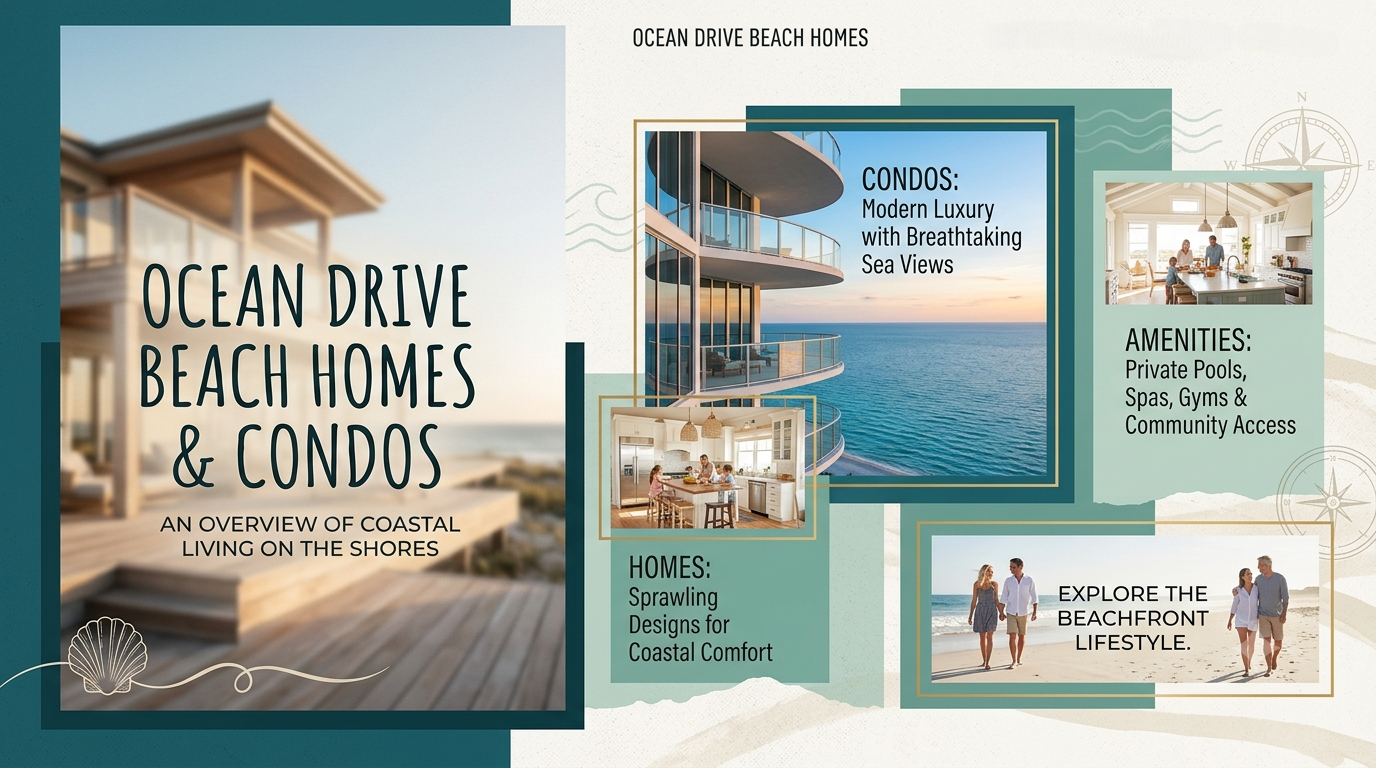
Ocean Drive Beach Homes and Condos Overview

Why Ocean Drive Beach Has Its Own Following

Ocean Drive Beach, often simply called O.D., is the cultural heart of North Myrtle Beach. Main Street's shag dancing history, local restaurants, festivals, and long-standing community identity give it a personality that no other part of the Grand Strand quite matches. Buyers exploring North Myrtle Beach real estate for the O.D. lifestyle usually already know it is what they want; the search is really about finding the right home or condo within the area.

Ocean Drive covers a mix of properties: oceanfront and oceanview condos, beach houses, older cottages, and single-family homes on the numbered avenues just inland. Each style delivers a different daily experience, and each has its own cost and lifestyle profile.

The Ocean Drive Lifestyle

What defines Ocean Drive is walkability paired with community identity. Owners walk to Main Street for dinner, live music, and long-standing local shops. The beach is close from nearly every home in the area. Seasonal events, especially those tied to the shag dancing tradition, keep the community active year round. For full-time residents, second-home buyers, and vacation rental investors, the O.D. lifestyle is what typically drives the purchase decision.

Home and Condo Options in Ocean Drive Beach

Ocean Drive Condos

Condos in the Ocean Drive area range from smaller oceanfront buildings to larger mid-rise buildings with resort-style amenities. Buyers can choose from long-established buildings with a strong owner base to newer construction with more contemporary layouts. Rental rules vary building by building, so investors should confirm eligibility before making an offer.

37th Place North

37th Place North gives buyers a condo option in the Ocean Drive area with a small-building feel. The building appeals to buyers who want a more intimate community setting rather than a large resort tower.

Ocean Keyes

Ocean Keyes offers a planned condo community with strong amenity access in the Ocean Drive area. Buyers who want resort-style amenities alongside proximity to Main Street find it a strong fit.

Ocean Drive Beach Houses

Ocean Drive beach houses offer a different style of ownership. Whether older classic cottages or renovated raised beach homes, these properties give owners more space and rental flexibility than most condos. They also carry different maintenance and insurance profiles that buyers should model out before making an offer.

Single-Family Homes on the Numbered Avenues

The numbered avenues stretching inland from Ocean Boulevard offer single-family homes at a range of price points. Buyers who want walkability to both the beach and Main Street without the maintenance of a beach house often find their best value here.

Ocean Drive Beach Homes and Condos Overview

Costs and Practical Considerations

  • Wind, hail, and flood insurance vary widely across Ocean Drive by elevation and building
  • HOA fees and reserve health matter especially in oceanfront and amenity-heavy buildings
  • Short-term rental rules vary by building, HOA, and street; confirm before buying for income
  • Salt-air maintenance costs affect HVAC, sliders, balconies, and finishes over time
  • Property tax rates on non-primary residences in Horry County are higher than for primary homes

Buyers who model full carrying costs before making an offer avoid the most common surprises in this market.

Strategy for Buyers

The best Ocean Drive buyers lead with lifestyle. Investors want rental flexibility and building reputation. Snowbirds want low-maintenance condos with reliable off-season management. Full-time residents want walkability, community feel, and long-term neighborhood character. Second-home families want easy weekly stays with room for guests. Once the lifestyle is clear, the shortlist usually narrows to a few condos or a specific pocket of homes.

Local guidance matters especially in this market. Ocean Drive buildings and blocks can feel very similar in listing data but very different in daily life. An agent who has walked the properties, worked with local rental managers, and knows the current HOA landscape helps buyers make confident decisions.

Key Takeaways

Ocean Drive Beach offers a distinctive lifestyle that combines walkability, community identity, and coastal access in a way no other Grand Strand area quite matches. Ocean Drive condos, 37th Place North, Ocean Keyes, beach houses, and the numbered-avenue single-family homes each deliver a different mix of experience and cost. Buyers who define lifestyle priorities early, confirm rental rules and insurance details, and lean on local expertise are best positioned to find an Ocean Drive property that delivers on both daily enjoyment and long-term value.

About Greg Harrelson

Greg Harrelson is a seasoned Realtor® with more than 30 years of experience serving the Myrtle Beach and Grand Strand markets. As the founder of Century 21 The Harrelson Group, Greg has built his career helping buyers, sellers, and investors achieve success in every corner of the coastal Carolina real estate market. His expertise spans residential homes, investment properties, land development, and coastal condos. Known for his deep local knowledge, innovative marketing strategies, and commitment to personal service, Greg consistently helps clients reach their real estate goals while navigating the ever-changing market with confidence and precision.

July 28, 2026

Golf Communities in Little River, SC

Why Little River Is a Strong Golf Community Market

Little River sits in one of the most golf-rich corners of the Grand Strand. The area's mature courses, established communities, and quieter pace draw a steady mix of full-time residents, retirees, and second-home buyers who want golf to be part of daily life. Buyers exploring Little River real estate for a golf-focused lifestyle usually appreciate the value the market delivers compared to busier coastal corridors.

Golf communities in Little River do more than provide access to a course. They shape the neighborhood's daily rhythm, community events, and property values. Choosing the right community is largely a matter of matching lifestyle goals to community character.

What Buyers Look For in a Little River Golf Community

Golf-focused buyers weigh a familiar set of factors. Course quality and design. Membership structure and fees. Walkability from home to clubhouse. Amenity mix beyond golf, from pools and clubhouses to fitness and social calendars. And the daily community feel, especially in the shoulder and off-season months.

Top Golf Communities in Little River

Heather Glen

Heather Glen is one of the most recognized golf communities in Little River. The course, community feel, and established resident base make it a natural first stop for golf-focused buyers who want a full lifestyle experience.

Aberdeen Buck Creek

Aberdeen at Buck Creek offers condo living inside a golf-oriented community. Buyers who want lower-maintenance ownership without giving up golf access find this a strong fit.

Palm Lakes Plantation

Palm Lakes Plantation pairs a planned community setting with amenity access and a strong residential base. It works well for buyers who want a community feel that supports both golf and daily life.

River Hills

River Hills is another established golf-oriented community that has drawn full-time residents and second-home owners for years. Buyers who value legacy character and a settled feel often shortlist River Hills early.

The Preserve at Little River

The Preserve at Little River offers a quieter, more residential setting with community amenities. Buyers who want privacy and community character alongside golf access find this neighborhood a strong balance.

 Golf Communities in Little River, SC

Costs and Practical Considerations

  • Golf membership structures vary; some are bundled into HOA, others sold separately
  • HOA fees can look similar between communities but include very different amenity packages
  • Reserve health and special assessment history should be reviewed alongside monthly fees
  • Insurance costs are generally lower here than in coastal markets but still vary by property
  • Course access rules, cart path proximity, and clubhouse activity can shape daily life

These factors often matter more to golf-focused buyers than the sale price because they define the daily experience of ownership.

Strategy for Buyers

Successful Little River golf buyers lead with lifestyle rather than course rating. Do you want to walk to the clubhouse? Do you value the social calendar? Do you want membership bundled or separate? Do you prefer a settled legacy community or a more contemporary planned neighborhood? Once these questions have clear answers, the shortlist narrows to two or three strong options.

Touring in person, walking the course, meeting neighbors, and reviewing HOA financials all reveal information that listing photos cannot. A local agent who knows each community's culture makes the comparison honest and helps buyers avoid overpaying for amenities they will not use.

Key Takeaways

Little River delivers a strong golf-community market with quieter pace and better value than busier Grand Strand corridors. Heather Glen, Aberdeen at Buck Creek, Palm Lakes Plantation, River Hills, and The Preserve at Little River each offer a different blend of course, community character, and lifestyle. Buyers who define lifestyle priorities early, understand the membership structure, and lean on local expertise are best positioned to find a golf-community home that delivers on both daily enjoyment and long-term value.

About Greg Harrelson

Greg Harrelson is a seasoned Realtor® with more than 30 years of experience serving the Myrtle Beach and Grand Strand markets. As the founder of Century 21 The Harrelson Group, Greg has built his career helping buyers, sellers, and investors achieve success in every corner of the coastal Carolina real estate market. His expertise spans residential homes, investment properties, land development, and coastal condos. Known for his deep local knowledge, innovative marketing strategies, and commitment to personal service, Greg consistently helps clients reach their real estate goals while navigating the ever-changing market with confidence and precision.

July 27, 2026

Conway, SC Homes With Larger Yards and More Space

Why Conway Delivers More Yard for the Money

Conway has become a natural answer for Grand Strand buyers who want more yard, more space, and a quieter pace without leaving the region entirely. Buyers exploring Conway SC real estate for larger-yard homes consistently mention the same trade-off: giving up coastal proximity in exchange for real space, better value, and a stronger sense of neighborhood.

Larger yards are not the same as farm-style acreage. Most Conway communities that offer more space still feel like defined neighborhoods, with sidewalks, community services, and a mix of homes. That balance is a big part of the appeal.

Who Buys Larger-Yard Homes in Conway

Larger-yard buyers in Conway include growing families who want room for kids and pets, retirees who want a garden or workshop, remote professionals who want a quieter home office, and out-of-state buyers relocating from busier metros. What unites them is the desire for a real yard and a real neighborhood at a manageable price point.

Top Conway Communities for Larger Yards and Space

Rivers Edge Plantation

Rivers Edge Plantation combines river access, mature landscaping, and lot sizes that give owners real breathing room. Buyers who want a residential community with meaningful space often start here.

Wild Wing Plantation

Wild Wing Plantation is best known as a golf community, but many of its neighborhoods offer larger lots and open feel alongside the amenity package. Buyers who value both amenities and yard space find it a strong balance.

Heritage Preserve

Heritage Preserve offers newer construction with lot options that support outdoor living. The community appeals to buyers who want a modern home and enough yard to enjoy it.

Night Owl Farms

Night Owl Farms gives buyers a more spread-out setting with larger parcels and a country feel while still sitting inside a defined community. It works well for buyers who want space without leaving the neighborhood structure behind.

Cat Tail Bay

For buyers who want a residential setting with generous lots and a quieter pace, Cat Tail Bay is a strong option. The community's layout and lot sizes support outdoor living and long-term comfort.

Reserve at Wild Horse

Reserve at Wild Horse offers larger-lot options in a well-planned setting. Buyers who want more space without moving fully rural often shortlist this community early.

Conway, SC Homes With Larger Yards and More Space

Costs and Practical Considerations

  • Lot lines, easements, and setbacks vary by community; request the survey before assuming buildable area
  • HOA architectural rules can limit fences, sheds, and outbuildings even on larger lots
  • Wells, septic, and natural gas availability differ between neighborhoods, so confirm utilities early
  • Drainage and stormwater plans matter more on larger lots and can affect maintenance and resale
  • Property tax rates apply differently to primary residences and second homes in Horry County

These details do not disqualify larger-yard homes, but they clarify the true cost of ownership.

Strategy for Buyers

Larger-yard buyers in Conway benefit from leading with lifestyle. Some want pure space and privacy. Others want a yard that supports gardening, workshops, or entertaining. Others want kids and pets to have room without the buyer taking on full acreage maintenance. Once the lifestyle goal is clear, the community shortlist usually narrows quickly.

Touring in person matters. The feel of a larger lot, the lay of the land, and the way a community connects to the surrounding area all show up best when walking the property. A local agent who knows the Conway market lot by lot helps buyers align the right home with the right lifestyle.

Key Takeaways

Conway continues to attract Grand Strand buyers seeking larger yards and more space because it delivers real square footage, real lot size, and a neighborhood feel without the coastal price tag. Rivers Edge Plantation, Wild Wing Plantation, Heritage Preserve, Night Owl Farms, Cat Tail Bay, and Reserve at Wild Horse each offer a different blend of setting and lot profile. Buyers who define lifestyle priorities early, review lot and HOA details carefully, and lean on local expertise are best positioned to land a home that delivers on both space and long-term value.

About Greg Harrelson

Greg Harrelson is a seasoned Realtor® with more than 30 years of experience serving the Myrtle Beach and Grand Strand markets. As the founder of Century 21 The Harrelson Group, Greg has built his career helping buyers, sellers, and investors achieve success in every corner of the coastal Carolina real estate market. His expertise spans residential homes, investment properties, land development, and coastal condos. Known for his deep local knowledge, innovative marketing strategies, and commitment to personal service, Greg consistently helps clients reach their real estate goals while navigating the ever-changing market with confidence and precision.

Posted in For Buyers
July 24, 2026

Surfside Beach Condos With Rental Potential

Why Surfside Beach Is a Strong Vacation Rental Market

Surfside Beach earned its Family Beach reputation for a reason. The compact footprint, walkable streets, quiet oceanfront, and family-friendly pace draw a steady stream of repeat visitors year after year. That reliability is what makes Surfside Beach real estate attractive to investors. Vacation renters know what to expect when they book Surfside, and that predictability supports strong occupancy across seasons.

Not every Surfside Beach condo is set up for rental income. Rental rules vary by building and by street, and investor performance depends on the right combination of location, amenities, and management. Buyers who understand the local rental landscape make better decisions.

What Makes a Surfside Beach Condo Rental-Friendly

Rental Program Eligibility

Some Surfside buildings openly welcome short-term rentals; others limit rental length, require minimum stays, or restrict rentals entirely. Investors should always confirm rental eligibility in writing before assuming a property will support rental income.

Proximity to the Beach and Pier

Renters pay a premium for short walks to the sand, the pier, and the restaurants along the main strip. Condos within a few blocks of these amenities typically outperform properties farther inland.

Amenities and Presentation

Pools, elevator access, secure entry, and modern interiors all support higher nightly rates and better reviews. The building's overall condition and management shape the guest experience even when the unit itself is updated.

Top Surfside Beach Condos for Rental Potential

Ocean Palms

Ocean Palms offers investors condo options within an easy walk of the beach and the town center. The community appeals to vacationing families and returning guests who want a residential feel with beach access.

The Retreat at Ocean Commons

The Retreat at Ocean Commons combines newer construction with low-maintenance design, both of which support rental demand and reduce owner headaches. It fits investors looking for a modern property that can be rented seasonally or year round.

Surfside Beach Club Homes

Surfside Beach Club attracts renters who want a community-oriented setting close to the beach. The neighborhood character supports strong repeat-guest performance for investors who market well.

Deerfield Plantation Condos

Deerfield Plantation offers condo options in a golf-adjacent setting for investors targeting golf-focused vacation renters. The community draws a specific traveler profile, which can be an advantage for investors who position the property to match.

Surfside Beach Houses

For investors willing to look beyond pure condo ownership, Surfside Beach houses can also perform well as short-term rentals. Beach houses often attract larger groups, extended families, and repeat visitors, which lifts weekly and monthly rental income when priced correctly.

 Surfside Beach Condos With Rental Potential

Costs and Practical Considerations for Investors

  • HOA fees, master insurance, and reserve health all shape the true carrying cost of the property
  • Short-term rental rules vary by building and street, and by town ordinance, so confirm before buying
  • Property tax rates apply differently to second homes than to primary residences in Horry County
  • Wind, hail, and flood insurance costs can be higher for oceanfront and near-ocean properties
  • Property management fees, cleaning turnover costs, and marketing spend all affect true net income

Running a full carrying-cost model before making an offer prevents the most common investor mistakes.

Strategy for Buyers

Successful Surfside Beach rental investors define their strategy first. Short-term daily rentals, weekly summer rentals, monthly snowbird stays, or a mix all point toward different buildings and price points. Once the strategy is clear, the shortlist of buildings usually narrows quickly.

Working with a local agent who knows the buildings, the rental history, and the current rental rules is the fastest way to identify a property that fits the investment plan. Small differences in floor, view, and building reputation can drive meaningful differences in rental income and long-term appreciation.

Key Takeaways

  • Surfside Beach delivers reliable vacation rental demand thanks to its Family Beach identity and repeat visitors
  • Rental performance depends on rental program eligibility, proximity to the beach, amenities, and presentation
  • Ocean Palms, The Retreat at Ocean Commons, Surfside Beach Club, Deerfield Plantation Condos, and Surfside beach houses each offer different investor profiles
  • HOA fees, insurance, rental rules, and turnover costs all shape net income and should be modeled up front
  • A defined rental strategy narrows the shortlist and makes the search significantly more efficient

Frequently Asked Questions

Are short-term rentals allowed on every Surfside Beach condo?

No. Rental rules vary by building, by street, and by town ordinance. Some buildings openly support short-term rentals, others require weekly or longer stays, and a few prohibit rentals entirely. Always confirm rental eligibility in writing before buying if income is part of the plan.

Do I need a business license to run a vacation rental in Surfside Beach?

The Town of Surfside Beach and Horry County both have rules that can apply to short-term rentals, including licensing and tax registration. Owners should confirm current requirements with the town and county directly, and coordinate with a property manager or tax professional familiar with local rentals.

What HOA fees are typical for Surfside Beach rental condos?

HOA fees vary widely based on building size, amenities, and reserve health. Higher fees are not always worse if they include strong amenity packages and healthy reserves. Requesting the current budget and reserve study is the safest way to compare fees between buildings.

Is oceanfront always the best rental performer?

Oceanfront often supports higher nightly rates, but the higher carrying costs, insurance, and HOA fees can offset the income. Second-row and near-beach properties often deliver stronger net yield for the right investor. The right choice depends on the specific building, price, and rental strategy.

About Greg Harrelson

Greg Harrelson is a seasoned Realtor® with more than 30 years of experience serving the Myrtle Beach and Grand Strand markets. As the founder of Century 21 The Harrelson Group, Greg has built his career helping buyers, sellers, and investors achieve success in every corner of the coastal Carolina real estate market. His expertise spans residential homes, investment properties, land development, and coastal condos. Known for his deep local knowledge, innovative marketing strategies, and commitment to personal service, Greg consistently helps clients reach their real estate goals while navigating the ever-changing market with confidence and precision.

Posted in For Buyers