Explore the Myrtle Beach Real Estate Blog

Find exactly what you need, whether you're buying, selling, or just getting to know the Grand Strand.

01

Buying a Home

First-time buyer guides, financing tips, and how to win in the Myrtle Beach market.

02

Selling a Home

Pricing, staging, and the marketing that actually gets coastal homes sold.

03

Lifestyle and Communities

Coastal living, local communities, and what day-to-day life is really like along the Grand Strand.

04

Market Updates

The latest on prices, inventory, and what it means for you.

05

Moving & Relocation

Relocating to the coast? Tips on the move, schools, and settling into the Grand Strand.

06

Offer to Close

Step-by-step guides to buying and selling on the Grand Strand — from your first offer through closing day.

Aug. 18, 2026

Home Warranty vs. Builder Warranty: What's the Difference on Grand Strand New Construction?

Two Documents, Two Different Jobs

A builder warranty comes from the builder and covers workmanship, systems, and structural defects on the home they built you. A home warranty is a service contract you buy from a third-party company that covers repairs or replacements on major systems and appliances when they break from normal use. On brand new construction along the Grand Strand, the builder warranty is what actually protects you the first year. A third-party home warranty is mostly redundant at that stage.

Here's the thing. A lot of buyers walk into a new construction closing thinking one document covers everything. It doesn't. Each warranty has different coverage windows, different claim processes, and different exclusions. Knowing the difference before closing is the difference between an easy repair call and a fight with two companies pointing at each other.

What a Builder Warranty Covers

Most builders on the Grand Strand — from national builders like D.R. Horton, Lennar, and Pulte to regional builders active around Longs, Conway, and Carolina Forest — issue a written warranty at closing. Typical coverage looks like this:

  • Workmanship and materials for a defined period (often one year)
  • Mechanical systems like plumbing, electrical, and HVAC for a longer window (often two years)
  • Major structural defects for the longest window (often ten years, sometimes backed by a third-party structural warranty company)

Every builder issues these on different schedules and with different exclusions. Get the actual warranty document in writing before closing and read it. Ask your Myrtle Beach real estate agent to walk through it with you, and if anything feels unclear, ask the closing attorney to review it too. South Carolina is an attorney-closing state, so you already have legal representation involved.

What a Home Warranty Covers

A home warranty is a private service contract, not a builder obligation. It covers repair or replacement of major systems and appliances that fail from normal use during the term of the contract. Standard coverage includes HVAC, plumbing, electrical, water heater, kitchen appliances, and washer/dryer. Add-ons often include pool, spa, well, septic, and second refrigerators.

What it does not cover is workmanship defects, structural issues, code violations, or anything the builder was supposed to fix. Those go back to the builder under the builder warranty. Home warranties also exclude cosmetic issues and damage from neglect.

Where the Two Overlap — and Where They Don't

During the first year on a new build, the builder warranty and a home warranty overlap heavily on systems like HVAC, plumbing, and electrical. That's why buying a third-party home warranty on year one usually isn't worth it. The builder is on the hook already.

Where they don't overlap:

  • The builder warranty covers workmanship and structural defects the home warranty never touches
  • The home warranty covers appliances and normal-use failures the builder warranty may not include
  • Once the builder's mechanical systems coverage expires (often after year two), a home warranty starts to make more sense as ongoing protection
Home Warranty vs. Builder Warranty: What's the Difference on Grand Strand New Construction?

How Claims Actually Work

Builder Warranty Claim

Contact the builder's warranty department, not a random subcontractor. Most builders have a formal warranty request process that's spelled out in the closing packet. Keep everything in writing. Document with photos. Give the builder a reasonable window to respond before you escalate. If the issue involves a structural defect, the builder may bring in the third-party structural warranty company that backs the coverage.

Home Warranty Claim

Call the warranty company directly. They dispatch an approved technician, you pay a flat service call fee, and the company decides what's covered under your contract. If a repair is denied, ask for the specific contract language they're relying on. This is why reading the sample contract matters before you sign anything.

Common New Construction Pitfalls to Avoid

  • Missing warranty registration deadlines with the builder or third-party structural warranty company
  • Calling a random contractor instead of the builder for a covered issue, which can void portions of the coverage
  • Assuming everything is covered instead of reading the warranty document
  • Skipping the pre-drywall walk and 11-month walk-through that many builders offer
  • Buying a third-party home warranty in year one when the builder already covers the same items

The 11-month walk is one of the most valuable moves a new construction buyer can make. It gives you a chance to catch workmanship and systems issues just before the first-year builder warranty expires. Most buyers don't do it. The ones who do are the ones I see get everything fixed on the builder's dime.

When a Home Warranty Makes Sense on New Construction

Two situations where it's worth it:

  • Year two or three, when the builder's systems coverage has expired and you want continued protection on HVAC, plumbing, electrical, and appliances
  • If you're buying a spec home or inventory home that's been sitting a while, or a home the builder has already sold once, where the builder warranty may be shorter or have already started

For most buyers on typical new construction, the smart move is to skip the home warranty year one, do the 11-month walk, and then evaluate whether to add a home warranty as the builder's mechanical coverage runs out. Our guide to the best Longs SC neighborhoods for new construction gives more context on where new inventory is active right now.

Key Takeaways

Builder warranties and home warranties are two different products with two different sources. On new construction along the Grand Strand, the builder warranty already covers workmanship, systems, and structural defects on defined schedules, so a third-party home warranty in year one is usually redundant. Where a home warranty earns its keep is later — year two, three, and beyond — when the builder's mechanical coverage runs out and you want continued protection on the systems that fail most in coastal Carolina. Read the actual warranty documents at closing, register the coverage on time, do the 11-month walk-through, and lean on your agent and closing attorney to make sure you understand what you're actually buying.

Frequently Asked Questions

Do builder warranties in South Carolina cover the same things everywhere?

No. Coverage terms vary by builder, by project, and sometimes by community. Two homes in the same area from two different builders can have very different warranty schedules. Always read the actual document that comes with your specific closing packet.

What is the 11-month walk-through and do I need one?

The 11-month walk is a walkthrough of the home with the builder before the one-year workmanship warranty expires. It gives you a final chance to identify issues the builder should fix under warranty. Most builders offer it and most buyers skip it. Doing the walk saves real money.

Can I buy a home warranty in addition to the builder warranty?

Yes, but on year one it usually duplicates coverage the builder already provides. Most Grand Strand buyers get more value adding a home warranty in year two or three, once the builder's systems coverage has expired.

What happens if the builder goes out of business before my warranty expires?

The builder's own workmanship coverage typically ends with the company. Structural coverage backed by a third-party warranty company (common with national builders) continues even if the builder disappears. That's why the third-party structural warranty document in your closing packet matters — it survives the builder.

Who do I call first if something breaks on a new home?

Call the builder's warranty department first if the item could be a workmanship, systems, or structural issue covered under the builder warranty. Calling a random contractor instead can void that portion of your coverage. Keep every request in writing.

About Greg Harrelson

Greg Harrelson is a seasoned Realtor® with more than 30 years of experience serving the Myrtle Beach and Grand Strand markets. As the founder of Century 21 The Harrelson Group, Greg has built his career helping buyers, sellers, and investors achieve success in every corner of the coastal Carolina real estate market. His expertise spans residential homes, investment properties, land development, and coastal condos. Known for his deep local knowledge, innovative marketing strategies, and commitment to personal service, Greg consistently helps clients reach their real estate goals while navigating the ever-changing market with confidence and precision.
Aug. 17, 2026

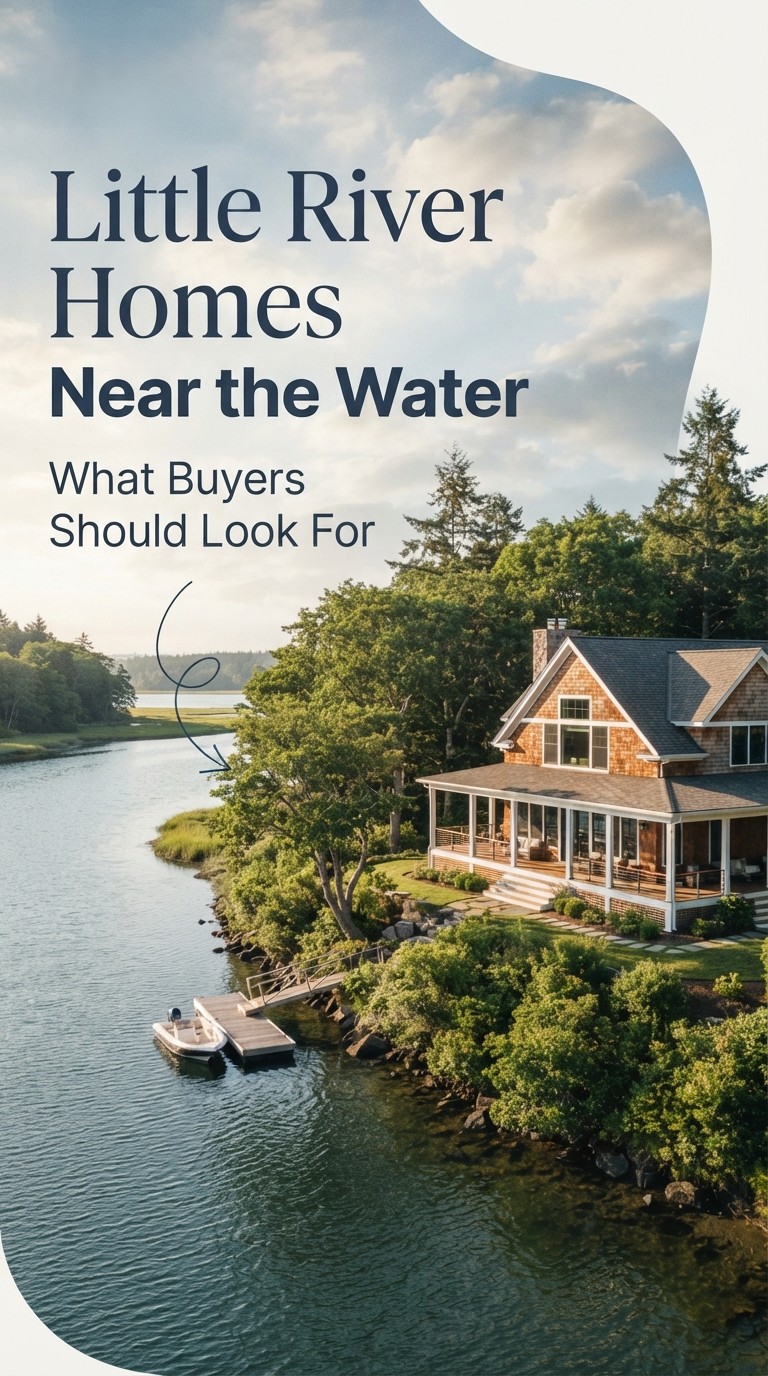
Little River Homes Near the Water: What Buyers Should Look For

How Much Water You Want Changes Everything

If you want to live on the water without paying oceanfront prices, Little River is one of the strongest values on the northern Grand Strand. You get the Intracoastal Waterway, tidal creeks, marina access, and a slower pace, all inside a small town that sits about a 15-minute drive from the North Myrtle Beach beaches. The catch is that "near the water" means different things in Little River, and the trade-offs matter more than they do in a typical suburban buy.

Here's what I mean. A home on the Intracoastal is a different animal from a marsh-front cottage, which is a different animal from a condo overlooking a marina. Each one has its own insurance profile, its own dock or boat access rules, and its own resale story. Knowing which one you actually want is the first move.

What "Near the Water" Means in Little River

The Intracoastal Waterway

The Intracoastal cuts through Little River and defines a lot of the local identity. Homes on the ICW give owners direct boat access, wide-open water views, and boat traffic in both directions all day. Depending on the exact stretch, you're a short cruise from the ocean through the Little River Inlet. Expect higher insurance costs, more scrutiny on bulkheads and docks, and a smaller resale pool that pays a premium when you sell.

Marina Communities

Little River is home to several working marinas. Condo and townhome communities around the marina district give you deeded slip access or a short walk to your boat, without the maintenance burden of owning waterfront land. Grande Harbour Condos is one of the best-known examples in this category.

Tidal Creeks and Marsh Frontage

Some of the quietest Little River homes sit on tidal creeks or marsh frontage. You may not have a big navigable waterway at your dock, but you have wildlife, sunsets, and a private feel that pulls a lot of retirees and second-home buyers in. Confirm what type of boat, if any, the water at low tide can actually support.

Waterway-Adjacent Communities

Waterway Cove and similar communities give buyers proximity to the Intracoastal in a defined neighborhood setting, without every home being direct waterfront. If you want the lifestyle and the community feel without the direct-water insurance profile, this is the middle path.

Little River Homes Near the Water: What Buyers Should Look ForWhat to Check Before You Make an Offer

Elevation and Flood Zone

Get the elevation certificate. Confirm the flood zone. Both directly affect your insurance premiums and, later, your resale price. Some water-adjacent Little River properties sit in higher-risk zones than buyers assume, and the number changes what the true annual cost of ownership looks like.

Dock, Bulkhead, and Seawall Condition

If a home has a dock, bulkhead, or seawall, you need to know its age, condition, and permit history. Replacement is expensive. Coastal salt exposure ages these faster than an inland pond dock. Ask for repair records and get an inspector who knows waterfront structures, not just the general house.

HOA and Community Rules

Communities near the water often have rules about boat storage, RVs, exterior modifications, and dock use. Read the HOA documents before you close. Some communities restrict short-term rentals; others allow them freely. If rental income is part of your plan, confirm the specific rule for the specific property, not the general area.

Insurance Modeling

Wind, hail, and flood coverage on water-adjacent Little River homes runs meaningfully higher than inland properties. Get a real quote before you're under contract. Coastal exposure is real, and the annual number changes what the property actually costs to own.

Who Ends Up Loving It

Buyers who thrive in water-adjacent Little River usually fall into a few patterns:

  • Boaters who want daily access without paying North Myrtle Beach oceanfront pricing
  • Retirees who want water views and a small-town pace
  • Snowbirds who want a quieter coastal base than the tourist corridor further south
  • Remote workers who want the water outside their window and short drives to the coast

What ties them together is a preference for the water lifestyle over the beach lifestyle. Both exist in the Grand Strand. Little River leans hard into the first one.

Broader Little River Context

Water-adjacent buying is one slice of the Little River market. If you're weighing this against inland communities, planned neighborhoods, or golf-community options, our overview of living in Little River gives you the fuller picture.

Key Takeaways

Little River gives buyers a real water lifestyle at a price point the oceanfront markets rarely touch. The Intracoastal Waterway, marina communities, tidal creeks, and waterway-adjacent neighborhoods each solve for different buyers. Before you offer, confirm the elevation certificate, flood zone, dock and bulkhead condition, HOA rules, and insurance quote. Buyers who match their lifestyle goal to the right type of water proximity get the most value. Buyers who chase the view without checking the numbers often end up carrying costs they didn't plan for.

Frequently Asked Questions

Is Little River waterfront cheaper than North Myrtle Beach oceanfront?

Generally yes. Little River waterfront and water-adjacent homes typically price lower than comparable North Myrtle Beach oceanfront property, especially when you compare on square footage and lot size. You're paying for water and lifestyle, not beachfront.

Can I get a boat from a Little River home to the ocean?

Yes, through the Little River Inlet. Homes on or near the Intracoastal Waterway typically have direct boat access. Homes on tidal creeks may have depth limits at low tide, so confirm draft restrictions for the specific property and the specific boat you plan to keep there.

Do I need flood insurance on a Little River waterfront home?

Often yes. Lenders require flood insurance in higher-risk flood zones, and many water-adjacent Little River properties fall inside those zones. Even where it's not required, coastal exposure makes coverage worth strong consideration. Get a real quote before making an offer.

Are short-term rentals allowed on Little River waterfront homes?

It depends on the specific community and any HOA rules. Some communities allow short-term rentals; others restrict length of stay or prohibit them outright. Confirm the specific rule for the specific property in writing before assuming rental income.

About Greg Harrelson

Greg Harrelson is a seasoned Realtor® with more than 30 years of experience serving the Myrtle Beach and Grand Strand markets. As the founder of Century 21 The Harrelson Group, Greg has built his career helping buyers, sellers, and investors achieve success in every corner of the coastal Carolina real estate market. His expertise spans residential homes, investment properties, land development, and coastal condos. Known for his deep local knowledge, innovative marketing strategies, and commitment to personal service, Greg consistently helps clients reach their real estate goals while navigating the ever-changing market with confidence and precision.

Aug. 14, 2026

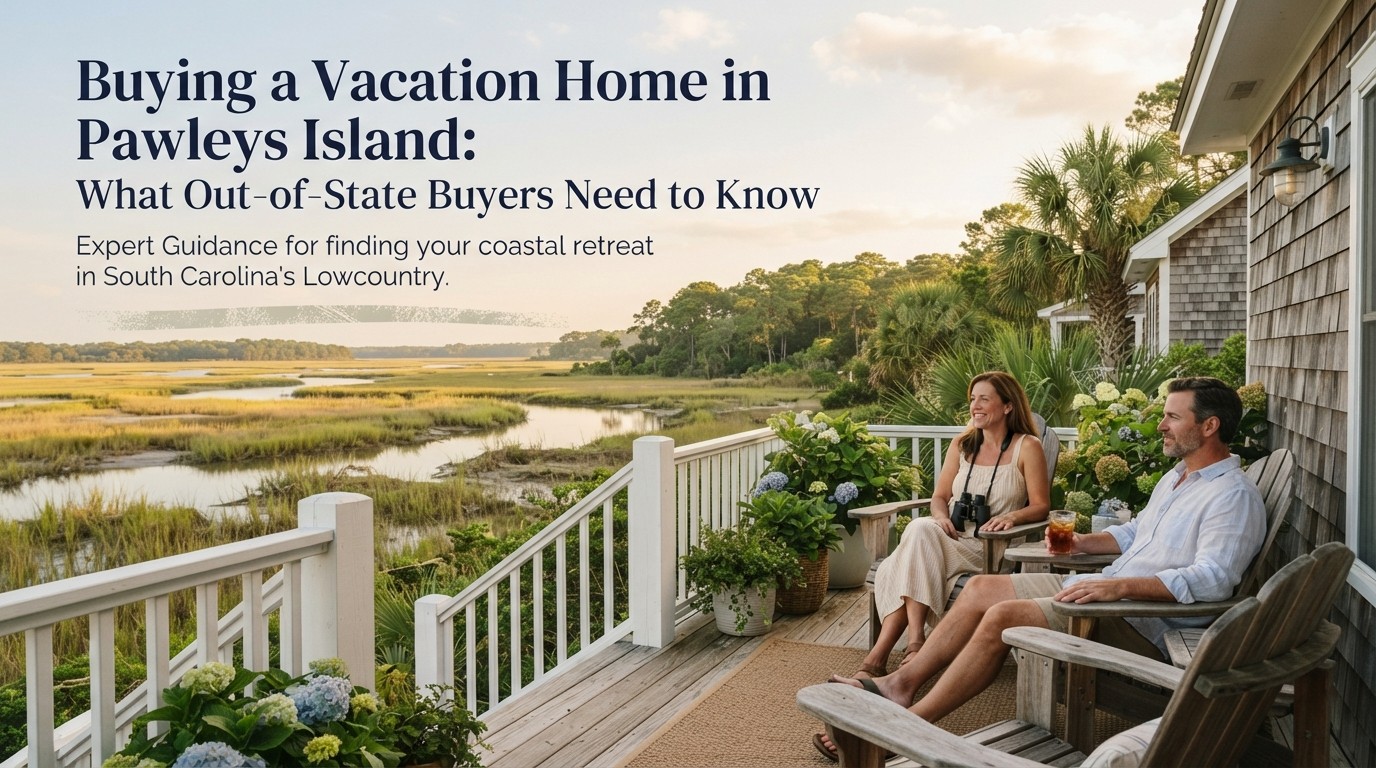
Buying a Vacation Home in Pawleys Island: What Out-of-State Buyers Need to Know

Why Pawleys Is the Right Kind of Different

Pawleys Island is one of the strongest vacation home markets on the South Carolina coast because it protects what draws buyers in the first place: a quiet, historic, low-density feel. If you want a coastal second home that stays that way in ten years, Pawleys sits at the top of the shortlist. Financing, taxes, insurance, and rental rules all work a little differently than a primary residence purchase, so know the moving parts before you make an offer.

Here's the thing. Most buyers I've worked with over 20+ years in the Grand Strand market pick their vacation-home community first and their house second. The right community shapes your daily rhythm, your rental potential, and your long-term resale story. Get the community right and the rest is easier.

Why Pawleys Island Draws Vacation-Home Buyers

Pawleys is smaller, quieter, and more residential than the busier Myrtle Beach corridor. Local ordinances have kept the island low-rise and low-density. The community identity leans toward legacy families, retirees, and a wave of newer second-home buyers looking for a coastal retreat that doesn't feel like a resort.

That character is a business decision as much as a lifestyle one. It's why Pawleys real estate has held value through market cycles that punished flashier destinations. If you're buying a vacation home you also plan to sell someday, this matters. Browse Pawleys Island real estate to see the range across price points and property types.

Picking the Right Community

Pawleys Plantation

Pawleys Plantation is a Jack Nicklaus signature golf community with a strong resident base and steady vacation-home demand. If golf, clubhouse life, and a settled community feel are what you want in your vacation days, start here.

DeBordieu Colony

DeBordieu Colony is the private, gated, luxury end of the local market. Private beach access, golf, tennis, and a low-density layout give buyers a real sense of retreat. Pricing runs meaningfully higher and inventory moves slower, but the lifestyle is distinct.

Litchfield and Willbrook

The Litchfield area, including established golf communities and beach-adjacent neighborhoods, sits between Pawleys and Murrells Inlet and offers a strong mix of vacation and full-time properties. Good for buyers who want proximity to both coastal amenities and the Pawleys pace.

The Island Itself

The narrow strip of land called Pawleys Island proper is where you'll find the classic beach cottages and oceanfront homes that define the local architecture. Inventory is limited, pricing reflects that, and the properties come with the maintenance realities of true beach ownership.

Buying a Vacation Home in Pawleys Island What Out-of-State Buyers Need to Know

Financing a Vacation Home

Vacation home financing is a different underwrite than a primary residence. Expect a larger down payment, a slightly higher rate, and stricter reserve requirements. Some buyers use cash for the coastal purchase, especially at higher price points. Others use a combination of a home equity line on their primary and a second-home loan on the Pawleys property.

Talk to a lender who does South Carolina second-home loans regularly, not just a national call center. Local lenders understand condo warrantability quirks, coastal insurance requirements, and the way SC attorney closings run.

Taxes, Insurance, and Ongoing Costs

  • South Carolina applies a higher tax assessment ratio to non-primary residences than to owner-occupied primaries, so property taxes on a vacation home run meaningfully higher than an equivalent primary
  • Wind, hail, and flood insurance on coastal Pawleys property is real cost; model it with a local carrier before you make an offer, not after
  • HOA and community fees vary widely; in DeBordieu and the golf communities they cover meaningful amenities, in island cottage neighborhoods they may be minimal or nonexistent
  • If you plan to rent, budget for property management, cleaning turnover, and marketing spend before you calculate net income

Rental Income: Rules and Reality

Short-term rental rules in the Pawleys area vary by community and by governing authority. Some HOAs allow daily rentals, others require weekly minimums, and some prohibit short-term rentals entirely. Georgetown County and the Town of Pawleys Island each have their own rules to check.

If rental income is central to your decision, get the rules in writing before you commit. Don't rely on what a listing agent says the general area allows; confirm the specific rule for the specific property. Our property management team can walk through what realistic income and occupancy look like for a specific building or neighborhood.

Long-Term Exit Planning

Smart vacation-home buyers plan the exit before they close. If you may reinvest into another investment property when you eventually sell, look into 1031 tax exchange options with a CPA who does them regularly. Even if you never use it, understanding the option shapes how you buy and hold.

Key Takeaways

Pawleys Island rewards vacation-home buyers who lead with community character rather than square footage. The market's low-density identity protects long-term value in ways flashier destinations don't. Pick the community that matches your daily rhythm — golf and clubhouse life, gated luxury, cottage-style island living, or Litchfield's mixed pace — then evaluate financing, taxes, insurance, and rental rules for the specific property. Skip the shortcuts, use local pros who work this area regularly, and plan the exit before you close.

Frequently Asked Questions

Do I need to be a South Carolina resident to buy a vacation home in Pawleys Island?

No. Out-of-state buyers purchase Pawleys Island vacation homes regularly. You will need a South Carolina real estate attorney at closing since SC is an attorney-closing state, but there's no residency requirement to own property here.

How much more are property taxes on a vacation home compared to a primary?

South Carolina applies a 6% assessment ratio to non-primary residences and a 4% ratio to owner-occupied primaries, which produces a meaningfully higher tax bill on second homes. Confirm your actual annual number with the Georgetown County Assessor's Office based on the specific property.

Can I rent my Pawleys vacation home when I'm not using it?

In many cases yes, but rules vary by community and by governing authority. Some HOAs allow short-term rentals freely; others impose minimum-stay requirements or prohibit them. Confirm the specific rule for the specific property in writing before you assume rental income.

Is flood insurance required on Pawleys Island vacation homes?

Often yes, especially on properties in higher-risk flood zones or with financing. Even when not required, coastal exposure makes it worth strong consideration. Get a real elevation certificate and a real quote before making an offer.

What's the difference between Pawleys Plantation and DeBordieu Colony?

Both are gated golf communities, but DeBordieu is more private, more exclusive, and priced at a higher point, with private beach access. Pawleys Plantation is more approachable and community-oriented, with a strong Jack Nicklaus course and a broader mix of price points. Pick based on the lifestyle you want, not the label.

About Greg Harrelson

Greg Harrelson is a seasoned Realtor® with more than 30 years of experience serving the Myrtle Beach and Grand Strand markets. As the founder of Century 21 The Harrelson Group, Greg has built his career helping buyers, sellers, and investors achieve success in every corner of the coastal Carolina real estate market. His expertise spans residential homes, investment properties, land development, and coastal condos. Known for his deep local knowledge, innovative marketing strategies, and commitment to personal service, Greg consistently helps clients reach their real estate goals while navigating the ever-changing market with confidence and precision.

Aug. 13, 2026

What Makes Garden City Beach Different From Surfside Beach

Same Coast, Two Different Places

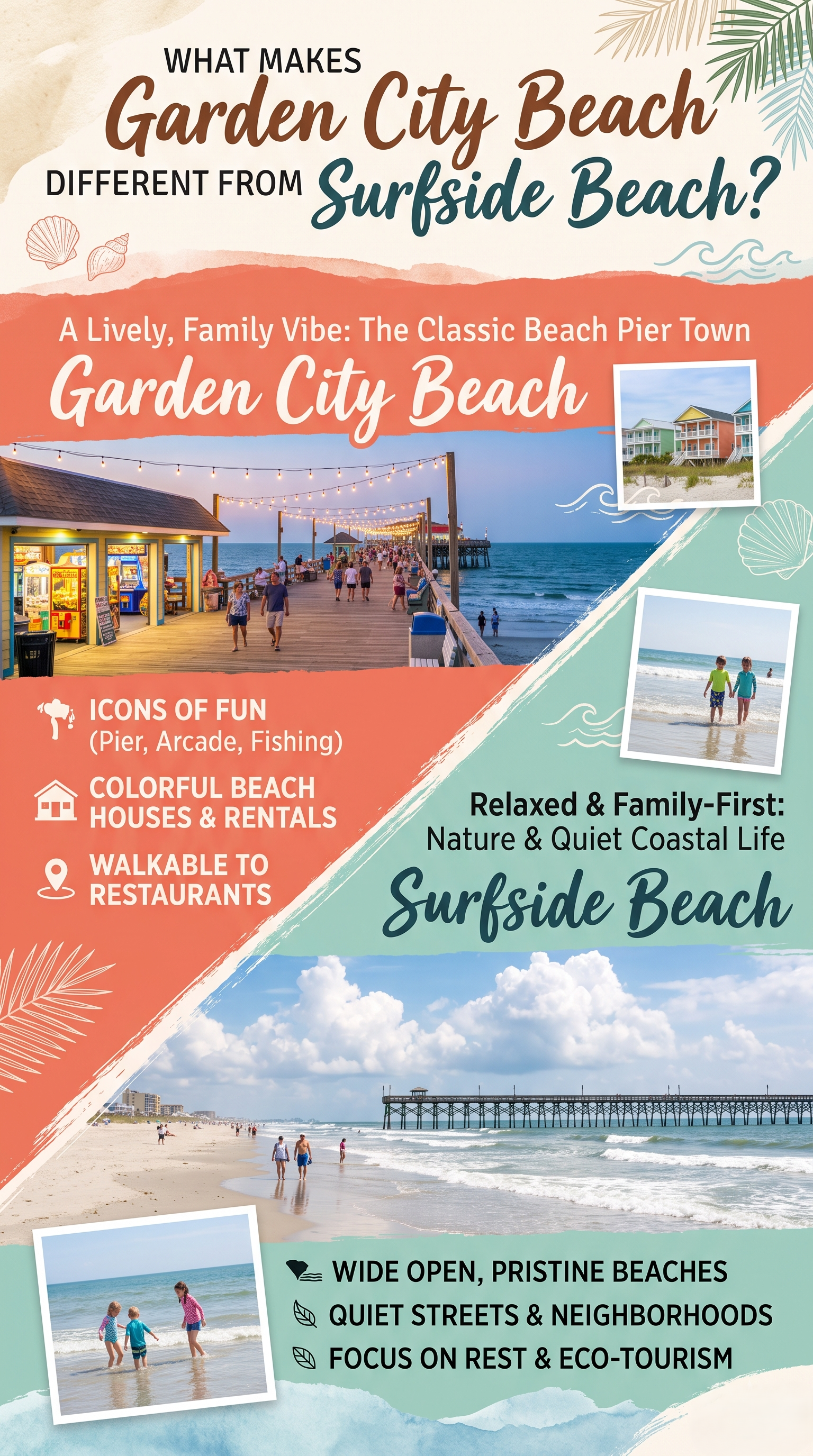
Garden City Beach and Surfside Beach share a border, share a stretch of the same coast, and often get lumped together by out-of-town buyers. On the ground they feel like two different places. Surfside is smaller, quieter, and leans hard into its "Family Beach" identity. Garden City is more compact, more condo-heavy, and more oriented around the pier and the inlet. If you're deciding between them, the trade-off usually comes down to how much you want a residential town feel versus a walkable pier-and-beach lifestyle.

Here's what I mean. Both are strong choices. They're not the same choice.

The Character Is Different

Surfside Beach: The Family Beach

Surfside is an incorporated town with its own government, its own police, and its own set of rules. It brands itself "The Family Beach" and lives up to it. Low-rise, sidewalks, playgrounds, and a residential grid inland from the ocean. The town has actively worked to preserve that character, and it shows in the pace and the resident base.

Buyers exploring Surfside Beach real estate tend to be full-time residents, second-home buyers, and vacationing families who want a quieter beach experience than the busier corridors north.

Garden City Beach: The Pier and the Inlet

Garden City Beach is not an incorporated town. It's a beach community that spans Horry and Georgetown counties, anchored culturally by the Garden City Pier and the transition down into Murrells Inlet. The vibe is more walkable-beach-day than residential-neighborhood. You feel the ocean, the pier, and the inlet immediately when you're there.

Buyers exploring Garden City Beach real estate often lean toward oceanfront and near-ocean condos, small beach houses, and communities built around the pier walk.

The Housing Mix Is Different

Surfside's housing mix tilts residential. Single-family homes on the numbered avenues, established neighborhoods like Surfside Beach Club and Deerfield Plantation, and a mix of condos concentrated closer to the beach. Buyers who want a real neighborhood inland from the ocean have real options here. Take a look at Surfside Beach Club for one example of that residential character.

Garden City's housing mix tilts condo. Oceanfront and near-ocean condo buildings dominate the market, especially along Waccamaw Drive and Atlantic Avenue. Beach houses exist, but the pier-area condo experience is what most buyers picture when they think Garden City. Buildings like One Ocean Place anchor the oceanfront condo scene.

The Rules Are Different

Because Surfside is an incorporated town and Garden City is not, the governance is different. Surfside has town ordinances that shape parking, noise, short-term rentals, beach access, and construction. Garden City properties fall under Horry County or Georgetown County jurisdiction depending on which side of the county line the specific property sits on.

What that means practically:

  • Short-term rental rules can vary between the two, and inside Garden City can vary by county
  • Building height, setback, and rebuild rules differ
  • Trash pickup, beach ordinances, and parking enforcement are managed by different authorities

Confirm the specific rule for the specific property in writing before you assume what applies. Never assume "the general area rule."

The Lifestyle Is Different

Surfside Lifestyle

Surfside days feel local. Morning walks on the beach, coffee at a local spot, running errands without much traffic, dinner at a family-run restaurant. Even in high season, the town feels manageable. Locals know each other. That character is a big part of what buyers pay for here.

Garden City Lifestyle

Garden City days feel like beach days. The pier is the center of gravity. You walk from your condo to the sand, to the restaurants along the strip, out onto the pier for the sunset. The lifestyle is more vacation-forward, more oriented around the water than the neighborhood. For a lot of second-home buyers and short-term renters, that's exactly the appeal.

 What Makes Garden City Beach Different From Surfside BeachWhich One Fits Which Buyer

Surfside Wins When You Want:

  • A residential neighborhood with sidewalks and a town feel
  • Full-time living or long stays with easy daily rhythms
  • Single-family home options inland from the ocean
  • Family-focused beach experience with less tourist density

Garden City Wins When You Want:

  • Oceanfront or near-ocean condo living
  • A walkable pier-and-beach lifestyle
  • A shorter vacation-home reach into the water
  • Strong short-term rental potential in the right building

Two Related Reads

If you're leaning toward Surfside, our overview of things to know before buying in Surfside Beach covers the practical items in more detail. If Garden City is your lean, the best Garden City Beach neighborhoods for coastal living walks through specific communities to compare.

Key Takeaways

Garden City Beach and Surfside Beach look similar on a map and feel like two different places on the ground. Surfside is an incorporated town with a residential, family-first character and more single-family home options. Garden City is a coastal community centered on the pier, with a condo-heavy market and a more walkable vacation-forward lifestyle. Because one is incorporated and one isn't, rules and governance differ between them. Match your daily rhythm to the community, confirm the specific rule for the specific property, and lean on local guidance to make the call.

About Greg Harrelson

Greg Harrelson is a seasoned Realtor® with more than 30 years of experience serving the Myrtle Beach and Grand Strand markets. As the founder of Century 21 The Harrelson Group, Greg has built his career helping buyers, sellers, and investors achieve success in every corner of the coastal Carolina real estate market. His expertise spans residential homes, investment properties, land development, and coastal condos. Known for his deep local knowledge, innovative marketing strategies, and commitment to personal service, Greg consistently helps clients reach their real estate goals while navigating the ever-changing market with confidence and precision.

Aug. 12, 2026

Do I Need a Home Warranty When Buying a Home in Myrtle Beach?

When a Home Warranty Actually Pays Off in Myrtle Beach

If you're buying a resale home in Myrtle Beach, a home warranty is usually worth it for your first year. It's cheap peace of mind on the systems that fail most often on the Grand Strand: HVAC compressors that take a beating from salt air and humidity, water heaters in older Horry County homes, and pool equipment that lives outside year round. If you're buying brand new construction, the builder's warranty already covers you and a home warranty is mostly redundant that first year.

Here's the thing. A home warranty isn't insurance. It's a service contract that pays to repair or replace covered systems and appliances when they break from normal use. That's a different animal than your Myrtle Beach homeowners insurance, which covers damage from storms, fire, theft, and other sudden events. You want both. They do different jobs.

What a Home Warranty Actually Covers

Most home warranty plans in the Myrtle Beach area cover the same core list: HVAC, plumbing, electrical, water heater, kitchen appliances, and washer/dryer. Coverage on pools, spas, well pumps, septic, and second refrigerators is usually add-on. Coverage is capped, so a plan might pay up to a certain dollar amount per repair before you're on the hook for the rest.

What it does not cover is anything the home inspector should have flagged as pre-existing, cosmetic issues, code upgrades, or damage from your own neglect. That's why a good inspection matters just as much as the warranty. If you haven't lined one up yet, our Myrtle Beach home inspector page is a solid place to start.

Why Warranties Earn Their Keep in Coastal Carolina

Salt air and humidity are hard on mechanical systems. HVAC coils corrode faster here than they do inland. Ductwork sees more moisture. Water heaters in coastal properties often have shorter useful lives than the manufacturer estimate. And a lot of Grand Strand homes sit vacant part of the year, which is another way systems break.

After 20+ years in the Myrtle Beach market, what I see consistently is that first-year system failures on resale homes happen often enough that the warranty pays for itself when it does. One HVAC compressor replacement can run several thousand dollars. A home warranty deductible for that same repair usually runs a small service fee.

What a Home Warranty Costs in South Carolina

Annual premiums for a standard plan in the Myrtle Beach area typically range from a few hundred dollars up to around a thousand, depending on coverage level, add-ons, and the provider. Deductibles (called service call fees) usually run a flat amount per visit. Costs shift year to year and by provider, so get a real quote before you commit.

One angle a lot of buyers miss: many sellers will pay for the first year of coverage as part of the deal. Ask for it in your offer, especially on an older home. It costs the seller a modest amount and gives you real protection your first year of ownership.

Do I Need a Home Warranty When Buying a Home in Myrtle Beach

When to Get One

  • Buying an older resale home in Horry or Georgetown County
  • Buying a coastal property where salt-air wear is a factor
  • Buying a home where the HVAC, water heater, or major appliances are older than 7 years
  • Buying a second home or snowbird property that will sit unused part of the year
  • Any time the seller will pay for the first year

When to Skip It

  • Buying new construction with an active builder warranty (see next section)
  • Buying a fully renovated home where all major systems and appliances are brand new
  • You already have a generous cash reserve and prefer to self-insure repairs

Home Warranty vs. Builder Warranty on New Construction

New construction in communities like Carolina Forest, Market Common, and the Longs area comes with a builder warranty that already covers workmanship, systems, and structural issues for defined windows. That's why paying for a separate home warranty on a brand-new build the first year usually isn't worth it. Once the builder's mechanical and systems coverage runs out, that's when a home warranty starts to make more sense.

Ask your builder for their exact warranty schedule in writing before closing. Different builders offer different coverage windows and different processes for filing claims. Your Myrtle Beach real estate agent should walk through this with you side by side with the plan documents.

How to Compare Home Warranty Plans

Not every warranty company is equal. Look at the specific coverage list, the caps per repair, the service call fee, whether pools and spas are included or add-on, and how the company handles denied claims. Read the sample contract before you sign. Ask your agent which providers other clients have had good and bad experiences with locally.

Key Takeaways

  • A home warranty is a service contract for covered systems and appliances, not insurance
  • Most resale buyers in Myrtle Beach benefit from at least one year of coverage
  • New construction buyers usually don't need one the first year — the builder warranty covers it
  • Ask the seller to pay for year one; it's a small ask that often gets accepted
  • Read the coverage caps and exclusions before you sign any warranty contract

Frequently Asked Questions

Is a home warranty required to buy a home in South Carolina?

No. Home warranties are optional in South Carolina. Lenders don't require them and neither does state law. They're an added protection you choose to buy.

Can the seller pay for my home warranty?

Yes. In many Grand Strand deals the seller pays for the buyer's first year of home warranty coverage as part of the negotiation. It's a common ask and often accepted. Talk with your agent about including it in your offer.

What's the difference between a home warranty and homeowners insurance?

A home warranty covers repair or replacement of major systems and appliances when they break from normal use. Homeowners insurance covers property damage from events like storms, fire, or theft. You want both; they cover different risks.

Does a home warranty cover pre-existing problems?

Generally no. Most warranty companies exclude conditions that existed before coverage began. That's why a solid home inspection during your due diligence period matters. The inspection catches known issues so the warranty can cover the ones that show up later.

Do home warranties cover pools, spas, or wells?

Sometimes, usually as an add-on. If your Myrtle Beach home has a pool, spa, well, septic, or a second refrigerator, ask specifically about coverage before you buy the plan. Many standard plans exclude these by default.

About Greg Harrelson

Greg Harrelson is a seasoned Realtor® with more than 30 years of experience serving the Myrtle Beach and Grand Strand markets. As the founder of Century 21 The Harrelson Group, Greg has built his career helping buyers, sellers, and investors achieve success in every corner of the coastal Carolina real estate market. His expertise spans residential homes, investment properties, land development, and coastal condos. Known for his deep local knowledge, innovative marketing strategies, and commitment to personal service, Greg consistently helps clients reach their real estate goals while navigating the ever-changing market with confidence and precision.

Aug. 11, 2026

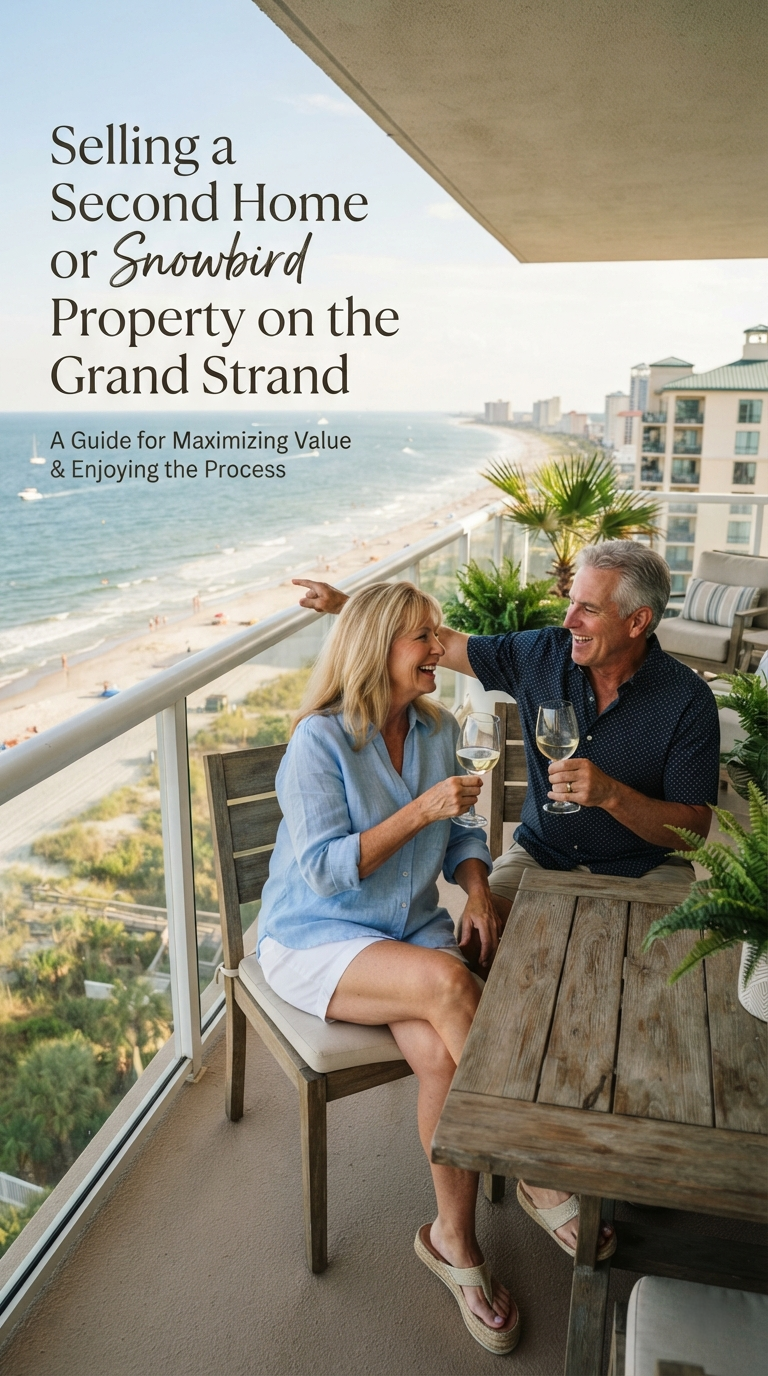
Selling a Second Home or Snowbird Property on the Grand Strand

Selling a Second Home Is Its Own Kind of Decision

Selling a second home or snowbird property on the Grand Strand is different from selling a primary residence. You are often selling from a distance, coordinating around your travel schedule, thinking about taxes on a non-primary property, and letting go of a place that has real emotional weight. Sellers who plan the process carefully protect both the sale price and their own peace of mind. Our 7-step Myrtle Beach home selling process gives the general framework; this guide adds the specifics for second-home and snowbird sellers.

Whether the property is a condo you have used for winters, a family beach house, or a vacation home you have outgrown, the same handful of decisions shape how smoothly the sale goes. Owners planning to reinvest into another investment property should look at the rules around a 1031 tax exchange before they list.

Why Owners Sell a Grand Strand Second Home

Second-home owners sell for a wide range of reasons. Some are ready to consolidate finances or shift into full-time coastal living. Others are downsizing after decades of family use. Some are moving on to a different market. Others are timing a sale before major life or health changes. Understanding your own why is the foundation of a good sale strategy, because it shapes timing, pricing, and how much presentation work makes sense.

Planning a Sale From a Distance

Choose a Local Team You Can Trust

Distance amplifies the importance of your local agent. You need someone who can walk the property, coordinate cleaners and vendors, meet the photographer, oversee showings, and communicate clearly across time zones. An experienced local team removes almost all of the daily friction from a long-distance sale.

Handle Access and Vendors in Advance

Confirm how showings will be managed, whether by lockbox, secure keypad, or scheduled access through the agent. Line up trusted local vendors for cleaning, landscaping, minor repairs, and any pre-listing prep. Having a short list of go-to service providers ready before you list means small issues do not become big delays.

Timing the Sale

Grand Strand buyer traffic tends to be strongest in late spring and summer, but snowbird-focused properties often see stronger interest as fall approaches and buyers plan for the following winter. Our guide to the best North Myrtle Beach neighborhoods for year-round living also helps sellers understand what buyers of these properties are considering. The right timing depends on the specific property and price point. Discuss timing with a local agent before setting a listing date.

If you plan to visit the property for the last time before it sells, coordinate that visit with the listing timeline. Some owners want to close the door themselves before showings begin. Others prefer to have all personal belongings removed and the property professionally staged before their final visit.

Selling a Second Home or Snowbird Property on the Grand StrandPreparing a Second Home for Market

Personal Belongings and Storage

Second homes often accumulate personal touches: photos, keepsakes, favorite kitchen items. Before staging, remove or store personal belongings so buyers see the property as their potential home rather than someone else's retreat.

Address Coastal Maintenance

Second homes sometimes have deferred maintenance from limited use. Salt-air wear, humidity effects on HVAC, sliders, and finishes should all be addressed before listing. A short pre-listing punch list from your agent, worked through with local vendors, prevents these items from surfacing as inspection concerns.

Neutral, Bright, Ready-to-Enjoy Presentation

Buyers of second homes are shopping the lifestyle. Neutral, bright, uncluttered presentation with strong outdoor staging captures that lifestyle in photos and in person. Skip theme-heavy decor and lean into clean, coastal appeal.

Tax and Financial Considerations

Capital Gains and Basis

Second-home sales usually do not qualify for the primary-residence capital gains exclusion. Consult a tax professional early to confirm your cost basis, calculate potential gains, and evaluate options like a 1031 exchange if you plan to reinvest into another investment property.

Property Taxes and Insurance

Non-primary residence property tax rates in Horry and Georgetown counties are higher than primary rates. Confirm that current-year taxes, HOA dues, and insurance are paid or prorated correctly through closing. Coordinate with your insurance carrier on the cancellation or transition date so there are no coverage gaps.

South Carolina Attorney Closing

South Carolina is an attorney-closing state. The closing attorney handles the legal side of the sale, which is especially helpful for out-of-state sellers who may need mail-away documents and remote signing coordinated. Your agent can coordinate this ahead of time so nothing rushes at the closing table.

Strategy for Sellers

Second-home and snowbird sellers who succeed on the Grand Strand tend to do three things well. They align with a local agent who can manage the process end to end, including vendor coordination and communication. They plan the tax and financial picture with a CPA before listing. And they let the local team handle the day-to-day so they can focus on the emotional side of moving on from a place that meant something to them. That combination consistently leads to smoother, stronger sales.

Key Takeaways

Selling a second home or snowbird property on the Grand Strand rewards planning and specialization. Choose a local team you can trust to manage the sale end to end. Time the listing based on the specific property and price point. Prepare the home with attention to coastal maintenance and clean, neutral presentation. Confirm the tax picture and closing logistics with a CPA and closing attorney early. With the right team in place, long-distance sellers can achieve strong results without needing to be on the ground for every step.

About Greg Harrelson

Greg Harrelson is a seasoned Realtor® with more than 30 years of experience serving the Myrtle Beach and Grand Strand markets. As the founder of Century 21 The Harrelson Group, Greg has built his career helping buyers, sellers, and investors achieve success in every corner of the coastal Carolina real estate market. His expertise spans residential homes, investment properties, land development, and coastal condos. Known for his deep local knowledge, innovative marketing strategies, and commitment to personal service, Greg consistently helps clients reach their real estate goals while navigating the ever-changing market with confidence and precision.

Posted in For Sellers
Aug. 10, 2026

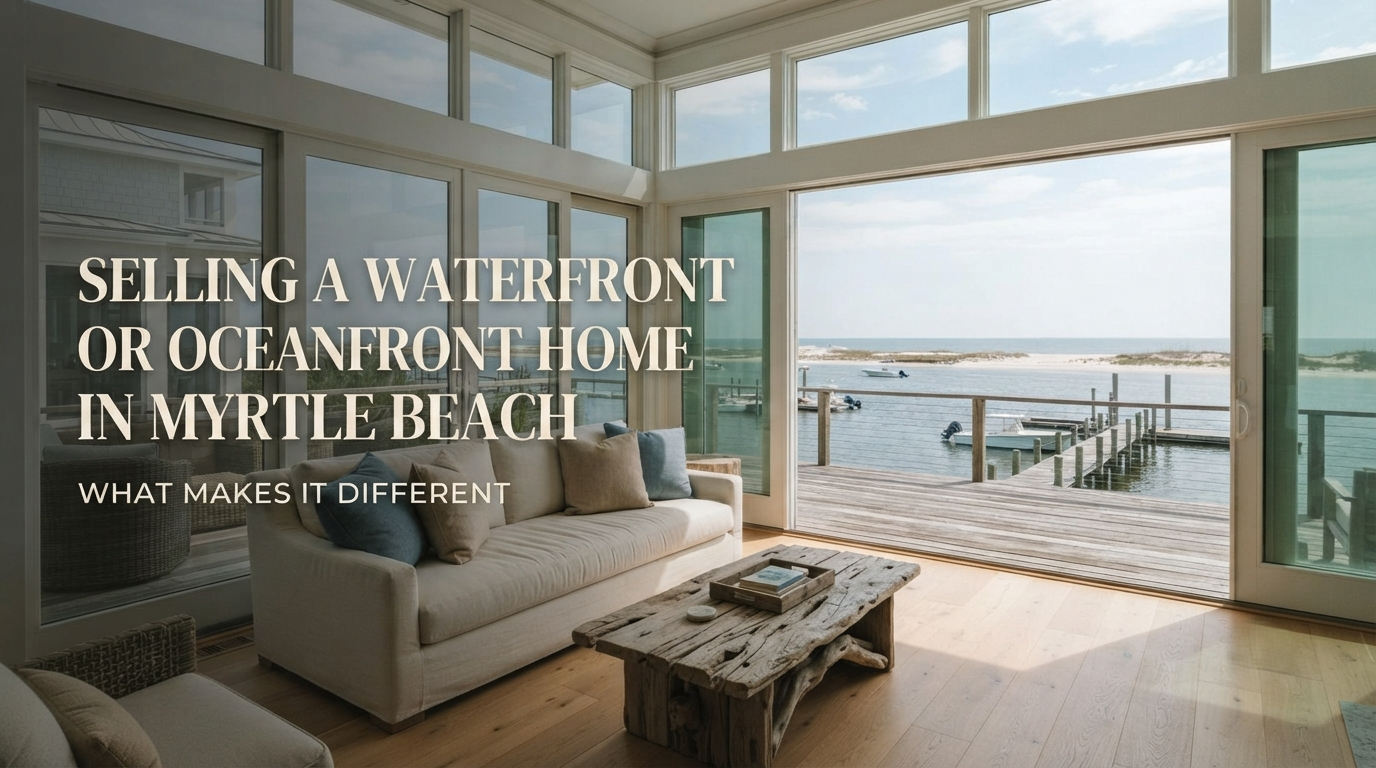
Selling a Waterfront or Oceanfront Home in Myrtle Beach: What Makes It Different

Waterfront and Oceanfront Homes Sell Differently

Selling a Myrtle Beach waterfront or oceanfront home is a fundamentally different transaction than selling an inland property. The buyer pool is smaller and more specialized. Buyers focused on resort-style oceanfront communities like Kingston Plantation arrive with a specific set of expectations. The financial and insurance considerations are more complex. And the emotional appeal of the property drives the sale in ways that everyday listings simply do not. Sellers who understand these differences early get better results. If you want a broader framework, our 7-step Myrtle Beach home selling process gives the foundation; this guide adds the coastal specifics.

Waterfront and oceanfront selling rewards preparation and specialization. It punishes shortcuts.

Understanding the Waterfront Buyer Pool

Buyers for waterfront and oceanfront homes in Myrtle Beach are usually one of a few clear profiles. Luxury lifestyle buyers relocating from higher-cost markets who often scrutinize coastal coverage closely; our Myrtle Beach homeowners insurance resource is a useful reference when discussing the insurance profile of the property. Second-home buyers who want a coastal retreat with occasional rental use. Investor-owners focused on strong vacation rental performance. And retirees planning a long-term coastal lifestyle. Each of these buyers evaluates the property differently, so the presentation needs to speak to all of them.

The buyer pool is also more selective. Waterfront buyers can afford to wait for the right property, and they will. A home that is priced correctly and presented well moves quickly. A home that is off on either front sits longer than inland comparables.

Pricing a Waterfront or Oceanfront Home

Pricing waterfront property requires better data than an automated online estimate can produce. Comparable sales must be recent, in the same water or view category, and adjusted for elevation, structure type, insurance profile, and lot or building position. Two homes on the same street can carry very different values because of these variables.

Overpricing is more costly on waterfront homes than inland. The buyer pool is small, and word travels fast. When a well-known waterfront property sits too long, the market questions the value even when it is later corrected. Getting the range right at launch matters more here than almost anywhere.

Selling a Waterfront or Oceanfront Home in Myrtle Beach What Makes It Different

Preparing the Property

Address Salt-Air Wear

Coastal exposure shows up on sliders, railings, exterior finishes, HVAC coils, and outdoor structures. Buyers notice signs of neglect immediately in a waterfront setting. Fresh caulking, working sliders, clean railings, and functional outdoor showers all signal a well-maintained home.

Elevate the Outdoor Living

Outdoor space often sells the waterfront home. Stage porches, decks, docks, and patios with clean, simple seating. The goal is to invite buyers to picture their morning coffee, their sunset, their family gathering in that exact spot.

Prepare for the Inspection

Waterfront inspections dig into elevation certificates, seawalls, bulkheads, docks, roof condition, HVAC exposure, and flood-related documentation. Have this information organized before you list. Buyers who see clean, well-organized documentation move faster and negotiate less.

Presenting the Property Online

Waterfront and oceanfront listings live or die on their online presence. Professional photography, drone footage, twilight shots, and video walk-throughs are the standard, not the exception, for this price point. Most of your buyers will be relocating from out of town and will decide whether to book a trip based on those images. Cutting corners on media is one of the most expensive mistakes waterfront sellers make.

Insurance, Elevation, and Flood Documentation

  • Elevation certificates and flood zone designations should be current and available to buyers
  • Wind, hail, and flood insurance quotes should be modeled for the buyer's likely financing scenarios
  • Master condo policies and any HOA reserves should be reviewed alongside individual coverage
  • Any prior storm claims or repair history should be disclosed clearly and completely
  • Dock permits, seawall condition, and bulkhead status should be documented if applicable

Buyers of waterfront property expect this level of documentation. Sellers who prepare it in advance close faster and with fewer concessions.

Working With the Right Agent

Not every agent has experience marketing and negotiating waterfront and oceanfront sales. This category rewards specialization, and the difference in outcome is often significant. Look for an agent with a specific waterfront track record, a professional media approach, and comfort with the financial and insurance complexity that comes with coastal property.

Key Takeaways

  • Waterfront and oceanfront buyers are more selective and better informed than inland buyers
  • Pricing accuracy at launch matters more here than almost anywhere else
  • Salt-air maintenance, outdoor staging, and clean documentation drive stronger offers
  • Professional photography, video, and drone are the standard for this price point
  • Elevation certificates, insurance profiles, and dock or seawall documentation should be ready before listing
  • An agent with waterfront specialization delivers meaningfully better results than a generalist

About Greg Harrelson

Greg Harrelson is a seasoned Realtor® with more than 30 years of experience serving the Myrtle Beach and Grand Strand markets. As the founder of Century 21 The Harrelson Group, Greg has built his career helping buyers, sellers, and investors achieve success in every corner of the coastal Carolina real estate market. His expertise spans residential homes, investment properties, land development, and coastal condos. Known for his deep local knowledge, innovative marketing strategies, and commitment to personal service, Greg consistently helps clients reach their real estate goals while navigating the ever-changing market with confidence and precision.

Posted in For Sellers
Aug. 7, 2026

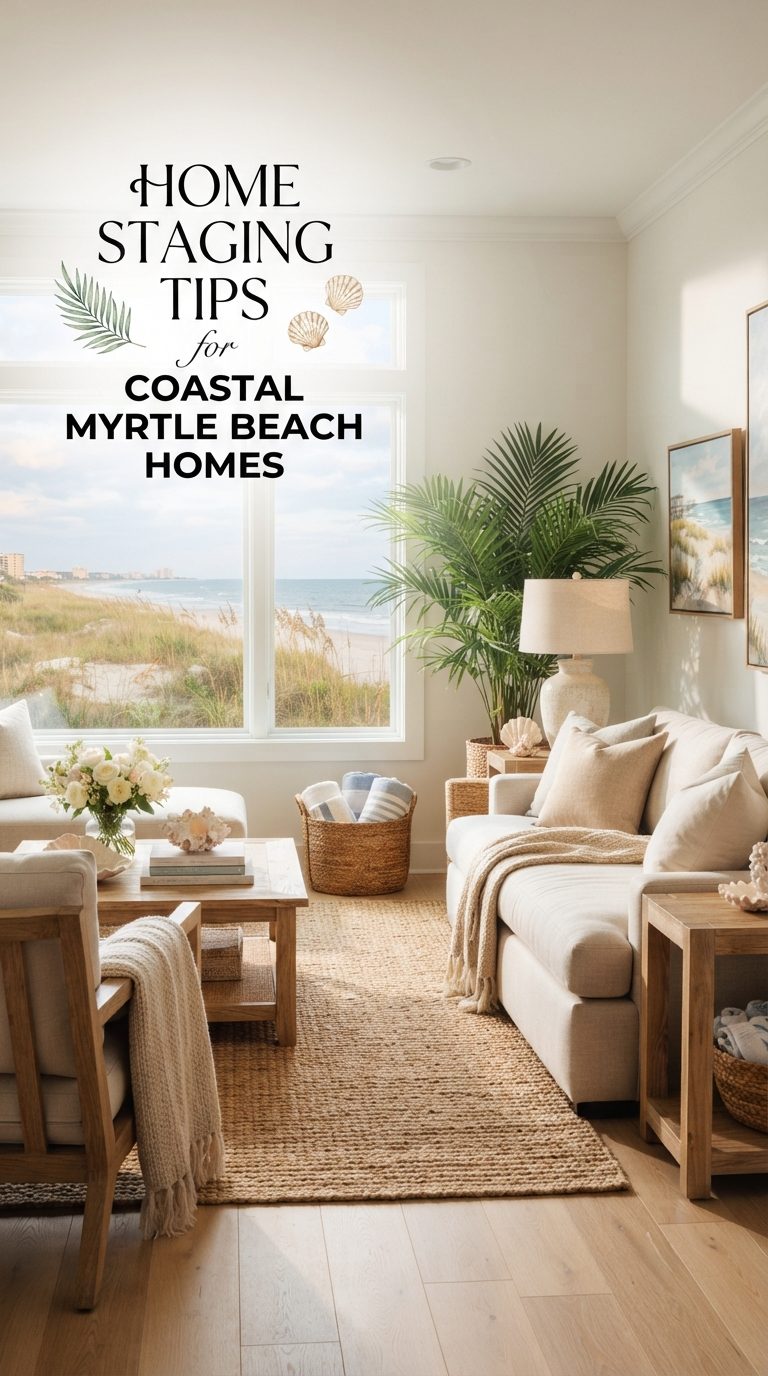
Home Staging Tips for Coastal Myrtle Beach Homes

Why Coastal Homes Need a Different Staging Approach

Staging a home for sale in the Myrtle Beach real estate market is not the same as staging in an inland suburb. Most buyers here are searching from out of town, they are shopping online long before they arrive, and they are buying a lifestyle almost as much as a home. Staging that captures both the coastal lifestyle and the practical benefits of the home consistently drives more showings and stronger offers. If you are exploring the broader process, our 7-step Myrtle Beach home selling guide pairs well with the staging tips below.

Coastal staging is less about high-end furniture and more about light, space, air, and the emotional pull of a home by the sea. The best staged homes on the Grand Strand feel bright, breezy, and ready to move into.

Lead With Light and Neutral Color

Coastal buyers respond to bright, airy spaces. Open every blind and curtain before showings and photos. Replace heavy or dated window treatments with sheer or minimal panels that let natural light through. If any room feels dim, add a warm floor lamp or a table lamp rather than relying only on overhead lights.

Neutral wall color is the fastest way to make a home feel updated. Soft whites, warm greiges, and light coastal blues photograph well and appeal to the broadest buyer pool. Bold accent walls, dark paint, and personalized colors reduce the buyer pool and should usually go before the first showing.

Declutter, Depersonalize, and Create Space

Buyers need to picture themselves in the home, not tour yours. Remove family photos, personal collections, refrigerator magnets, and anything that ties the home strongly to the current owner. Clear kitchen and bath countertops down to two or three intentional items. Empty closets by at least a third so they feel spacious rather than stuffed.

Furniture that feels oversized should either come out or move to storage. Rooms should feel walkable and open. Buyers subconsciously judge rooms by how easily they can move through them, and staging that removes 15 to 20 percent of the furniture almost always improves the perception.

Home Staging Tips for Coastal Myrtle Beach HomesPlay Up the Coastal Lifestyle

Outdoor Spaces

On the Grand Strand, outdoor space often sells the home. Stage porches, balconies, decks, and patios with clean seating, a small table, and a fresh planter or two. If the home has an ocean view or a marsh view, the outdoor space should invite buyers to picture their morning coffee there.

Coastal, Not Kitschy

Coastal-inspired decor works when it is subtle. A few pieces of driftwood, neutral seashell tones, and a couple of framed beach photos can reinforce lifestyle. Overloading with rope, anchors, and beach cliches often has the opposite effect. Restraint sells better than theme.

Air It Out

Coastal humidity is real. Open windows to air out the home before showings when weather allows. If closets, garages, or storage areas smell musty, address that before you list. A subtle, clean scent is helpful; heavy air fresheners are not.

Handle Storage, Garage, and Small Repairs

Buyers open closets and look at garages. Both should feel organized rather than cluttered. Store off-season clothing, holiday decor, and rarely-used items off-site so closets, pantries, and garages show at their best. In the garage, keep the floor as clear as possible and use shelving where you can.

Handle the small repairs that show up in photos and on inspections. Fresh caulk in the bathrooms and kitchen, a working smoke detector cover, a functioning door handle, and a lightbulb-free burn-out list all add up. Small polish signals a well-maintained home.

What to Skip

  • Skip major renovations that will not pay you back in the sale price
  • Skip strong-scented candles, air fresheners, and heavy potpourri
  • Skip cluttered coffee tables, kitchen counters, and bathroom vanities
  • Skip personal photos, religious or political items, and hobby collections during showings
  • Skip trendy or bold paint colors that narrow the buyer pool

Sellers who over-improve or over-decorate often lose more than they gain. Clean, bright, and neutral almost always wins.

Coordinate Staging With Professional Photos

Once the home is staged, coordinate with your agent on professional photography, video, and drone footage before you go live. Coastal buyers shopping from out of state make their decision to book a trip based on those images. Before deciding how much staging effort makes sense, it also helps to know where your home currently prices in the market. Our Find Your Home’s Value tool gives you a personalized starting point. The work you put into staging pays off most visibly in the photos, which is where the majority of your buyers will first see the home.

Key Takeaways

  • Lead with light, neutral color, and open, walkable rooms
  • Declutter and depersonalize so buyers can picture themselves living there
  • Play up outdoor spaces and subtle coastal touches; avoid theme-heavy decor
  • Handle small repairs, storage, and garage organization before the first showing
  • Coordinate staging with professional photos, video, and drone to maximize online impact

About Greg Harrelson

Greg Harrelson is a seasoned Realtor® with more than 30 years of experience serving the Myrtle Beach and Grand Strand markets. As the founder of Century 21 The Harrelson Group, Greg has built his career helping buyers, sellers, and investors achieve success in every corner of the coastal Carolina real estate market. His expertise spans residential homes, investment properties, land development, and coastal condos. Known for his deep local knowledge, innovative marketing strategies, and commitment to personal service, Greg consistently helps clients reach their real estate goals while navigating the ever-changing market with confidence and precision.

Posted in For Sellers
Aug. 6, 2026

Best Aynor, SC Neighborhoods for New Construction

Why New Construction Is Growing Fast in Aynor

Aynor has quietly become one of the most active new construction markets on the western edge of the Grand Strand region. As pricing has climbed closer to the coast, builders and buyers have both looked further west for larger lots, quieter neighborhoods, and homes with modern efficiency at more approachable price points. Buyers exploring Aynor homes for sale now find a growing supply of newer inventory across a range of community styles.

New construction in Aynor is not one-size-fits-all. Some communities focus on larger lots and a country feel, others on planned-neighborhood layouts, others on affordability and simple entry pricing. Understanding the differences up front helps buyers land in the right neighborhood the first time.

What Buyers Get With New Construction in Aynor

New homes in Aynor typically deliver open floor plans, modern kitchens and baths, energy-efficient windows and HVAC systems, and warranties that reduce near-term repair risk. Many communities also offer natural gas, larger primary suites, and updated stormwater plans that older inland areas simply do not have. For buyers moving from older homes, the daily experience of a new build often justifies the move on its own.

Best Aynor, SC Neighborhoods for New Construction

Top Aynor Neighborhoods for New Construction

Aynor New Homes

The best starting point for a general search is our Aynor new homes page, which pulls together current new construction listings across the town. It is a useful way to compare price points and floor plans quickly before narrowing to specific neighborhoods.

Greenfield Estates

Greenfield Estates pairs newer home options with a defined community layout at an accessible price point. It works well for first-time buyers, retirees, and out-of-state buyers who want a modern home in a straightforward community setting.

Woodland Farms

Woodland Farms blends newer construction with larger lot options for buyers who want more space around the home. It fits buyers who want a country feel without leaving the structure of a defined neighborhood.

Green Meadow Farms

Green Meadow Farms offers another strong option for buyers seeking newer homes with generous lot sizes. The community appeals to buyers who want an open feel and a manageable price point at the same time.

Baylee Estates

Baylee Estates provides estate-style options with larger parcels and a more spread-out community footprint. Buyers who want more room around a newer home often gravitate here.

Keighley Estates

Keighley Estates gives buyers newer home options in a settled Aynor setting. It works well for buyers who value a defined community with a residential character.

Practical Considerations for New Construction Buyers in Aynor

  • Well and septic systems are common in Aynor; inspect both before closing even on new construction
  • Builder incentives, financing programs, lot premiums, and upgrade pricing all shape the true total cost
  • Independent inspections at multiple construction stages catch issues early
  • HOA fees, architectural rules, and future amenity plans should be reviewed carefully
  • Commute times to Conway, Myrtle Beach, and North Myrtle Beach should be tested in real conditions

None of these are deal breakers, but each protects both the affordability and the long-term satisfaction of ownership.

Strategy for Buyers

The strongest Aynor new construction buyers lead with lifestyle. Larger lots, community structure, first-time-buyer value, or estate-style privacy each point toward different neighborhoods. Once the priority is clear, the shortlist typically narrows to two or three communities.

Working with a local agent who represents the buyer, not the builder, is one of the most important choices in a new construction purchase. Independent representation protects the contract, the lot premium, and the upgrade pricing on your behalf and often more than pays for itself through the process.

Key Takeaways

Aynor continues to attract new construction buyers because it delivers modern homes, manageable pricing, and a range of neighborhood styles. Greenfield Estates, Woodland Farms, Green Meadow Farms, Baylee Estates, Keighley Estates, and Pecan Place each offer a different blend of lot size, price point, and community feel. Buyers who define lifestyle priorities early, run independent inspections, and work with an independent local agent are best positioned to secure strong long-term value in one of the region's fastest-growing new construction markets.

About Greg Harrelson

Greg Harrelson is a seasoned Realtor® with more than 30 years of experience serving the Myrtle Beach and Grand Strand markets. As the founder of Century 21 The Harrelson Group, Greg has built his career helping buyers, sellers, and investors achieve success in every corner of the coastal Carolina real estate market. His expertise spans residential homes, investment properties, land development, and coastal condos. Known for his deep local knowledge, innovative marketing strategies, and commitment to personal service, Greg consistently helps clients reach their real estate goals while navigating the ever-changing market with confidence and precision.

Posted in For Buyers
Aug. 5, 2026

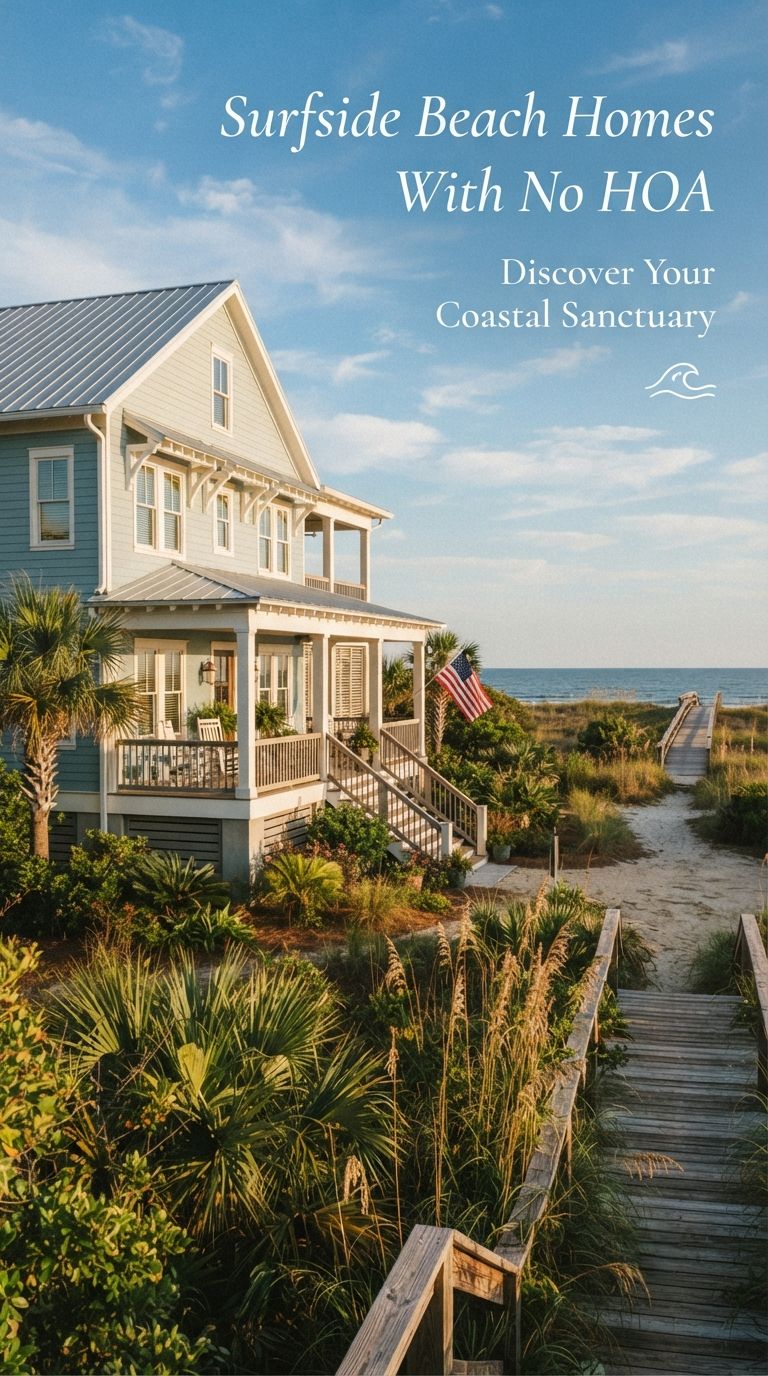
Surfside Beach Homes With No HOA

Why No-HOA Homes in Surfside Beach Are So Sought After

A rising number of buyers on the Grand Strand are specifically looking for homes with no HOA. Freedom to park a boat, RV, or trailer. Freedom to paint the exterior the color they want. Freedom to add a shed, fence, or workshop without architectural review. And freedom from a recurring monthly fee that always seems to climb. Buyers exploring Surfside Beach real estate for a no-HOA property usually have one or more of these motivations at the top of the list.

Surfside Beach is a strong market for no-HOA options because the town's older residential streets and beach-house inventory grew up before HOA structures became the norm. Many blocks remain HOA-free even as newer planned communities have added to the surrounding area.

Where to Find No-HOA Homes in Surfside Beach

Surfside Beach Houses on the Numbered Avenues

Many of the classic Surfside Beach houses on the numbered avenues between Ocean Boulevard and Highway 17 Business sit on individual lots with no HOA. These homes give owners the flexibility to renovate, add outdoor structures, and use the property with fewer restrictions.

Older Residential Blocks

Beyond the numbered-avenue beach houses, several older residential blocks throughout Surfside Beach include homes that were built before planned-community structures took over. Some sit in transitional areas, others in tucked-away pockets. Local knowledge is important to identify which specific streets and homes are truly HOA-free.

Individual Lots and Custom Builds

Some buyers pursue no-HOA freedom by purchasing an individual lot and building a custom home. This route takes more planning but delivers full flexibility on design, layout, and use. Buyers considering this approach should confirm zoning, setback, and permit requirements with the town in advance.

What Buyers Gain, and What They Give Up

No-HOA ownership gives buyers meaningful freedom and often lower recurring costs. There is no monthly fee, no architectural review board, and no rules limiting exterior choices, vehicles, or outbuildings. Homeowners can make decisions about their property on their own timeline.

The trade-off is real. No HOA also means no shared pool, no community amenities, no managed landscaping, and no consistent standards applied to neighboring properties. If the block ages unevenly, that can affect long-term value and daily experience. Buyers who want the freedom of no-HOA ownership also accept responsibility for evaluating the neighborhood themselves.

Surfside Beach Homes With No HOA

Practical Considerations for No-HOA Buyers

  • Confirm the property truly has no HOA; some blocks are covered by voluntary or historic covenants that still apply
  • Zoning, setback, and permit rules from the town still apply and shape what you can build or add
  • Insurance considerations, especially wind and flood coverage, remain the same as any coastal property
  • Property tax rates in Horry County are higher on non-primary residences than on primary homes
  • Short-term rental rules depend on town zoning and any deed restrictions, not just HOA rules

These factors do not disqualify no-HOA homes but shape the true freedom and cost of ownership.

Strategy for Buyers

The best no-HOA Surfside Beach buyers are clear about what they want from the freedom. Boat parking, an outbuilding, exterior flexibility, or simply the absence of a monthly fee each point to different property criteria. Once the priority is clear, the search becomes much easier because a local agent can zero in on specific blocks and inventory.

Because no two no-HOA properties are exactly alike and title research matters here, working with a local agent who knows the streets and the county-level restrictions makes the difference between a confident purchase and a costly surprise.

Key Takeaways

  • No-HOA homes in Surfside Beach are especially common on the numbered avenues and older residential blocks
  • Beach houses and individual lots are two of the strongest paths to true no-HOA ownership
  • Freedom comes at the cost of shared amenities and consistent neighborhood standards
  • Zoning, setback, insurance, and rental rules still apply even without an HOA
  • Local guidance and title research protect both the freedom and the long-term value of the property

Frequently Asked Questions

How can I confirm a home really has no HOA?

Ask your agent to request the seller's disclosure and any covenants attached to the property, and confirm with the title attorney during due diligence. Some blocks in Surfside Beach have older voluntary covenants that still apply even when there is no active HOA.

Can I run a short-term rental on a no-HOA home?

Short-term rental eligibility depends on town zoning, any historic deed restrictions, and state and local tax registration, not just the absence of an HOA. Always confirm rental rules in writing with the town before assuming the property supports vacation rental use.

Are no-HOA homes cheaper to own long term?

They are usually cheaper on the monthly fee side, but they shift all maintenance, exterior upkeep, and amenity choices back to the owner. The right way to compare is to model total annual ownership cost, not just the absence of a monthly fee.

Do no-HOA properties hold value as well as HOA communities?

Both can hold value well. HOA communities tend to enforce consistent standards, while no-HOA blocks depend more on individual owners maintaining their properties. Buyers in no-HOA neighborhoods should evaluate the surrounding homes in person before committing.

About Greg Harrelson

Greg Harrelson is a seasoned Realtor® with more than 30 years of experience serving the Myrtle Beach and Grand Strand markets. As the founder of Century 21 The Harrelson Group, Greg has built his career helping buyers, sellers, and investors achieve success in every corner of the coastal Carolina real estate market. His expertise spans residential homes, investment properties, land development, and coastal condos. Known for his deep local knowledge, innovative marketing strategies, and commitment to personal service, Greg consistently helps clients reach their real estate goals while navigating the ever-changing market with confidence and precision.

Posted in For Buyers