Explore the Myrtle Beach Real Estate Blog

Find exactly what you need, whether you're buying, selling, or just getting to know the Grand Strand.

01

Buying a Home

First-time buyer guides, financing tips, and how to win in the Myrtle Beach market.

02

Selling a Home

Pricing, staging, and the marketing that actually gets coastal homes sold.

03

Lifestyle and Communities

Coastal living, local communities, and what day-to-day life is really like along the Grand Strand.

04

Market Updates

The latest on prices, inventory, and what it means for you.

05

Moving & Relocation

Relocating to the coast? Tips on the move, schools, and settling into the Grand Strand.

06

Offer to Close

Step-by-step guides to buying and selling on the Grand Strand — from your first offer through closing day.

May 12, 2026

Exploring the Best Neighborhoods in Oak Island, NC: A Guide for Coastal Buyers

If you’ve been searching for the perfect coastal retreat in South Carolina, you know that the "perfect" home is often about more than just the house—it’s about the community. Just a short drive north across the state line lies Oak Island, NC, a hidden gem that has captured the hearts of many SC locals looking for a quieter, family-oriented alternative to the busier resort hubs.

East Beach Oak Island NC

Whether you are looking for a primary residence or a high-performing vacation rental, Oak Island offers distinct neighborhoods that cater to every lifestyle. Here are the top residential communities to keep on your radar this year.  

West Beach: Privacy and Sunsets

Located on the far western end of the island, West Beach is the go-to for those who value peace and quiet. Because this area is further from the main bridge and commercial center, the beaches are often less crowded.  

  • The Vibe: Tranquil, residential, and scenic.  
  • Why Buy Here: It’s famous for having some of the best sunset views on the island.

East Beach: The Heart of the Island

If you want to be where the action is, East Beach is the place. This area provides the easiest access to the island’s grocery stores, popular restaurants, and the main bridge to the mainland.

  • The Vibe: High energy, convenient, and social.
  • Why Buy Here: High rental demand. If you’re looking for an investment property, the proximity to amenities makes this a top choice for vacationers.  

Yaupon Beach: Historic Charm

As one of the oldest sections of the island, Yaupon Beach has a nostalgic, "old-school" beach town feel. It is home to the iconic Oak Island Pier and some of the most charming classic cottages.  

  • The Vibe: Historic, cozy, and community-focused.
  • Why Buy Here: You get a mix of renovated historic homes and modern builds, all within walking distance of the pier and local favorites like the Oak Island Golf Club.

The Lakes at Pine Forest: Modern Luxury

For buyers looking for new construction and a resort-style lifestyle, The Lakes at Pine Forest is a standout. Located just off the island in the mainland section of Oak Island, this planned community offers a different pace.

  • The Vibe: Upscale, active adult (55+), and manicured.
  • Why Buy Here: You get the benefits of brand-new construction with amenities like a pool, fitness center, and clubhouse, all while being minutes from the sand.

New Construction: Check out the latest floor plans at Pine Forest.

Caswell Beach: The Quiet Neighbor

While technically its own municipality, Caswell Beach is often considered part of the greater Oak Island experience. It’s home to the Oak Island Lighthouse and offers some of the most expansive beachfront lots in the region.  

  • The Vibe: Exclusive, spacious, and dignified.
  • Why Buy Here: If you want a larger lot and a slower pace of life with less commercial traffic, Caswell is the gold standard.  

Ready to Cross the State Line?

The transition from the South Carolina coast to Brunswick County, NC, is seamless when you have the right team behind you. If you’ve been browsing our South Carolina listings but want to see what life is like on "OKI," we are here to help.

Start your search today at BrunswickCountyBeachHomes.com to view live MLS updates for Oak Island and the surrounding beach communities.

BrunswickCountyBeachHomes.com Image

Posted in For Buyers
May 11, 2026

What Rising Interest Rates Mean for Local Buyers

Few topics generate as much conversation in real estate as interest rates. For local buyers in the Myrtle Beach area, rates affect everything from monthly affordability to long-term strategy. Understanding what rising rates actually mean, beyond the headline numbers, is one of the most valuable things a buyer can do before stepping into the market. The reality on the ground in coastal South Carolina is more nuanced than national news might suggest, and that nuance creates real opportunities for prepared buyers.

Why Rates Matter So Much

Mortgage rates directly shape your monthly payment. A change of even half a percentage point can move a payment by hundreds of dollars per month over the life of a loan. That sensitivity is why rates dominate buyer conversations. But monthly payment is only part of the story. Rates also influence the broader market, including how aggressive sellers are willing to be, how much competition you face, and how much room you have to negotiate.

What Rising Interest Rates Mean for Local Buyers

How Rates Reshape the Market

How Rates Affect the Buyer Pool

When rates rise, some buyers step back. Some shift their price ranges down. Others move from primary residence purchases to waiting on the sidelines. That can sound discouraging if you are a buyer, but it has a flip side. With fewer buyers competing for each home, the buyers who do remain often see less bidding pressure, more responsive sellers, and a calmer pace overall. Rising rates do not freeze the market, they shift its dynamics in ways that can favor patient, prepared buyers.

What Sellers Are Doing

Sellers along the Grand Strand have adapted to the higher-rate environment. More sellers are willing to negotiate, offer concessions, contribute to closing costs, or even buy down the buyer's rate to make the monthly payment more attractive. Those creative strategies are most available to buyers who are well-prepared, pre-approved, and ready to move when the right home comes along. Rising rates often unlock seller flexibility that did not exist during the rapid run-up of past years.

Coastal South Carolina Has Its Own Dynamic

The Myrtle Beach and Grand Strand markets are not driven by the same buyer profile that drives most national housing data. A meaningful share of buyers here are retirees, second-home buyers, and cash buyers from the Northeast, Midwest, and Mid-Atlantic. Many of them are less rate-sensitive because they are downsizing from higher-cost markets, paying cash, or putting down very large down payments. That structural difference makes Myrtle Beach real estate more resilient to rate movements than markets dominated by first-time buyers stretching to their maximum approval amount.

Running the Real Numbers

Affordability and Monthly Cost

The most useful thing a local buyer can do is sit down with a lender and run the actual numbers at today's rates. Buyers often anchor on a payment they hoped for two years ago instead of the payment that fits their budget today. Once you see the real numbers and compare them to rent, to your current mortgage, or to your retirement plan, the decision often becomes clearer. In many cases, even at higher rates, ownership in Myrtle Beach still makes sense because of long-term appreciation, lifestyle benefits, and predictable housing costs versus renting.

The Refinance Option

One of the most important reframes for today's buyers is recognizing that the rate you take today is not the rate you have to keep forever. If rates fall, refinancing becomes a tool to lower your payment without changing homes. The home you buy at today's price, however, locks in that price. You can refinance a rate. You cannot refinance a price. That perspective helps buyers stop waiting for a perfect rate that may not arrive on their timeline.

Strategy for Local Buyers

Begin with a strong pre-approval from a lender experienced with coastal South Carolina. Understand your full monthly cost including insurance, HOA, and property taxes, since these can vary widely along the Grand Strand. Stay flexible on neighborhood if your budget is tight, since moving inland from the beach by a few miles can dramatically improve affordability without sacrificing lifestyle. And consider asking sellers about rate buy-downs as part of your offer.

Why Some Buyers Should Not Wait

Buyers who wait for rates to drop sometimes assume that lower rates will simply mean better deals. The reality is usually the opposite. When rates fall, buyers flood back into the market, competition rises, and prices typically follow. Many buyers who waited for the past few years now wish they had bought at slightly higher rates because they would have built equity and locked in pricing they cannot match today. Acting in a quieter window often produces better long-term results than chasing the same property in a hot one.

Investment Perspective

Investors in the Grand Strand evaluate rates differently. They focus on cap rates, net rental income, and long-term appreciation rather than monthly payment alone. For short-term rental investors, the strong vacation traffic to Myrtle Beach often supports the higher debt service that comes with elevated rates. For long-term rental investors, rising rents in the area help offset the higher cost of capital. The math for investment is rarely about the rate itself, it is about whether the deal still makes sense at today's numbers.

Final Takeaway

Rising interest rates change the math, but they do not eliminate opportunity for buyers in coastal South Carolina. The Grand Strand market continues to attract steady demand from buyers across the country, sellers have grown more willing to negotiate, and creative financing strategies are widely available. Buyers who understand the local market, run their real numbers, and work with experienced professionals consistently find that even in a higher-rate environment, the right home is still within reach.

About Greg Harrelson

Greg Harrelson is a seasoned Realtor® with more than 30 years of experience serving the Myrtle Beach and Grand Strand markets. As the founder of Century 21 The Harrelson Group, Greg has built his career helping buyers, sellers, and investors achieve success in every corner of the coastal Carolina real estate market. His expertise spans residential homes, investment properties, land development, and coastal condos. Known for his deep local knowledge, innovative marketing strategies, and commitment to personal service, Greg consistently helps clients reach their real estate goals while navigating the ever-changing market with confidence and precision.

May 8, 2026

Is Now a Good Time to Buy in Coastal South Carolina?

It is one of the most common questions buyers ask before stepping into the coastal South Carolina market: is right now actually a good time to buy? The honest answer depends on your goals, your timeline, and how you read the broader picture, but for most buyers looking at the Grand Strand, the case for moving now is stronger than the headlines suggest. Coastal South Carolina has its own rhythm, and understanding that rhythm is the difference between waiting on the sidelines and confidently making your move.

Is Now a Good Time to Buy in Coastal South Carolina

Why Coastal South Carolina Stands Apart

National housing news rarely captures what is happening in our region. The Grand Strand and surrounding coastal communities have been one of the most consistent migration destinations in the country for years, drawing buyers from the Northeast, Midwest, and Mid-Atlantic. Retirees, remote workers, second-home buyers, and investors all gravitate to Myrtle Beach real estate and the surrounding markets for the same reasons: lifestyle, climate, and value. That broad and steady demand is part of why this market has held up well even when other parts of the country have softened.

Reading Today's Market Conditions

Inventory and Negotiating Room

The current market is more balanced than it has been in several years. Inventory has gradually improved, giving buyers more options and more negotiating room than they had during the rapid run-up of past years. Sellers are still motivated and homes priced correctly continue to move, but the urgency has cooled. That blend, available choice and reasonable competition, is exactly the environment most buyers want.

Pricing Trends Along the Grand Strand

Coastal South Carolina has seen steady, healthy appreciation rather than the dramatic swings that have shaken some other markets. That stability matters when you are buying. You are not stepping into something that feels overheated or fragile. Prices reflect real demand from real buyers who plan to live in, retire to, or invest in this area. Over a five- to ten-year window, that kind of foundation tends to reward patient owners.

Inventory and What It Means for Buyers

The Grand Strand currently offers a wide range of inventory across price points and property types. From condos in North Myrtle Beach to single-family homes in Carolina Forest to luxury properties in Pawleys Island, there is genuine variety on the market. That mix gives buyers leverage. You are not forced to settle on the third house you tour because nothing else exists. You can be selective about location, layout, and condition, which leads to better long-term satisfaction with your purchase.

Interest Rates and Buyer Decisions

Mortgage rates remain a frequent point of hesitation. It is worth remembering that you marry the home and date the rate. Buyers who locked in lower rates years ago benefited, but many of today's buyers have the option to refinance later if rates drop. What you cannot easily do is recreate today's home prices, today's negotiating room, or today's selection of homes if you wait two years. Rates also affect the buyer pool. When rates ease, more buyers come back into the market, competition increases, and prices typically follow. Buying during a quieter window often means more favorable terms than chasing the same property in a hotter cycle.

Lifestyle Factors That Do Not Wait

Real estate decisions are not only financial. Many buyers come to Myrtle Beach and the Grand Strand because of how they want to live. The beach mornings, the warmer winters, the slower pace, the proximity to family, and the years of retirement still ahead all carry weight. Waiting another two years to optimize a rate often means waiting another two years to start living the lifestyle that pulled you here in the first place. There is real value in those years that does not show up on a spreadsheet.

Investment Buyer Perspective

If you are buying for investment, the timing conversation looks different. Coastal South Carolina remains one of the strongest short-term rental markets in the country, with consistent vacation traffic that supports rental income year-round. Long-term rentals have also gained momentum as the local population continues to grow. For investors who run the numbers honestly, accounting for HOA fees, insurance, taxes, and management, the coastal market still pencils out attractively in many neighborhoods.

The Risk of Waiting

Trying to perfectly time a market is one of the more common mistakes buyers make. The buyers who wait for the absolutely perfect moment often watch it pass them by. By the time the headlines confirm it is a great time to buy, prices and competition have usually already adjusted. Smart buyers focus on whether the right home is available at the right number for their budget today, not on hitting an imagined bottom.

Strategy for Buyers Considering a Move Now

Get pre-approved with a lender who understands coastal markets. Be clear with yourself about what matters most: oceanfront, school district, golf community, or pure investment return. Tour properties in person when possible because Myrtle Beach has microclimates of value, where being a few streets from the beach can change a price significantly. And work with a local agent who can interpret what the data means for your specific neighborhood and price range.

Final Takeaway

For most buyers, now is a reasonable, even attractive, time to enter coastal South Carolina real estate. Inventory is healthier, pricing has stabilized, and the long-term fundamentals of this market remain strong. The decision is rarely about whether the market is perfect. It is about whether the right home, in the right place, at the right number for your situation, is available today. For many buyers across the Grand Strand, the answer is yes.

About Greg Harrelson

Greg Harrelson is a seasoned Realtor® with more than 30 years of experience serving the Myrtle Beach and Grand Strand markets. As the founder of Century 21 The Harrelson Group, Greg has built his career helping buyers, sellers, and investors achieve success in every corner of the coastal Carolina real estate market. His expertise spans residential homes, investment properties, land development, and coastal condos. Known for his deep local knowledge, innovative marketing strategies, and commitment to personal service, Greg consistently helps clients reach their real estate goals while navigating the ever-changing market with confidence and precision.

Posted in For Buyers
May 6, 2026

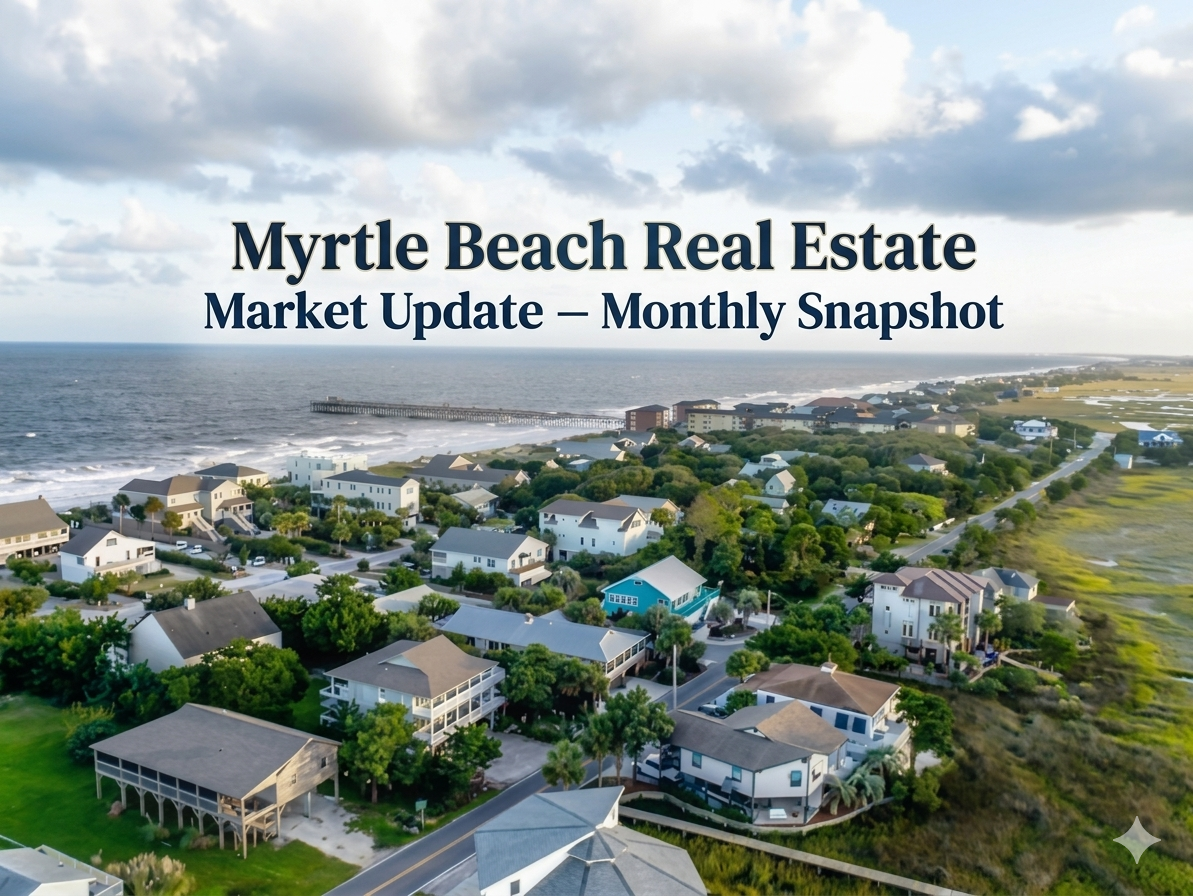
Myrtle Beach Real Estate Market Update – Monthly Snapshot

The Myrtle Beach real estate market continues to evolve as we move through 2026, and staying on top of monthly shifts is one of the smartest things buyers and sellers can do along the Grand Strand. Whether you are considering buying a beach home, selling a longtime family property, or weighing the value of an investment condo, understanding the current market gives you the confidence to move at the right moment. Here is a fresh look at what is happening this month in Myrtle Beach real estate and what those numbers actually mean for the people walking into showings and signing contracts.

Myrtle Beach Real Estate Market Update – Monthly Snapshot

Why Monthly Market Snapshots Matter

Real estate markets are not static. They move week by week based on inventory, interest rates, seasonal demand, and broader economic forces. A monthly snapshot helps you cut through the headlines and focus on what is actually happening locally. National housing news rarely reflects the realities of coastal South Carolina. The Myrtle Beach market behaves differently than Charlotte or Atlanta because so much of our buyer pool is made up of retirees, second-home owners, vacation buyers, and out-of-state relocators. When you check in regularly, you start to see patterns that help you time your moves intelligently.

Current Market Conditions

Inventory in Myrtle Beach

Inventory levels are one of the clearest indicators of where the market is leaning. When the number of active listings rises, buyers gain more leverage. When inventory tightens, sellers see faster sales and stronger pricing. In the Grand Strand, inventory tends to ebb and flow with the seasons. The early spring months often bring a wave of new listings as sellers prepare to capture vacationing buyers. Summer can stretch days on market simply because the sheer volume of homes available gives buyers more to consider. This month, we are seeing a healthy mix of single-family homes, condos, and oceanfront properties, which gives most buyers genuine options across price points.

Price Trends in Coastal South Carolina

Pricing in Myrtle Beach real estate has held remarkably steady, even as other parts of the country see softening or volatility. That stability is a direct result of the area's continued appeal to buyers from the Northeast, Midwest, and Mid-Atlantic, many of whom are relocating for the lifestyle, lower cost of living, and the favorable tax climate retirees often find here. Median sale prices vary widely by neighborhood, with luxury communities like Grande Dunes and Pawleys Island commanding premiums while inland and Conway-area neighborhoods continue to offer entry-level affordability.

Interest Rates and Their Local Effect

Even as national interest rate news creates noise, the Myrtle Beach market has shown resilience. Many buyers here put down larger down payments than the national average, especially second-home buyers and retirees who are downsizing from higher-cost markets. That cushions the local market against the kind of demand swings rates can create elsewhere. Buyers who waited last year are now more comfortable acting because they understand that home values in coastal South Carolina have trended steadily upward over time.

What Buyers and Sellers Are Watching

What Buyers Are Watching

Today's buyers in the Myrtle Beach area are paying close attention to a few things. Mortgage rates remain a top concern, especially for primary residence buyers. Cash buyers, who make up a notable share of vacation home and investment activity, are less rate-sensitive but more focused on cap rates and rental potential. Insurance costs and HOA fees are also a bigger part of the conversation than they were a few years ago. Smart buyers are running the full numbers, not just the mortgage payment, before committing.

What Sellers Are Watching

Sellers should be paying close attention to days on market and listing-to-sale price ratios. Homes priced correctly from day one continue to sell quickly. Homes that linger usually do so because of pricing, presentation, or both. Buyers along the Grand Strand have access to exceptional online tools and travel here specifically to see properties, so they arrive informed. A clean, well-prepared home that's priced in line with the current market still attracts strong offers.

Neighborhood Highlights

Different parts of the Grand Strand are seeing different levels of activity. Carolina Forest continues to draw families looking for new construction and quality schools. North Myrtle Beach sees consistent demand from second-home buyers and retirees. Murrells Inlet and Pawleys Island remain favorites for buyers prioritizing waterfront lifestyle and a quieter pace. The condo market, especially closer to the ocean, fluctuates more with seasonal tourism cycles, which is something investors should factor into their timing.

Seasonal Considerations

We are heading into one of the busiest stretches of the year for Myrtle Beach real estate. Spring through mid-summer typically brings increased showings, more visiting buyers, and often a stronger sense of competition for desirable properties. If you are buying, this is when speed and preparation matter most. If you are selling, this is when your home needs to look its best and your pricing strategy needs to be sharp.

Strategy

Strategy for Buyers

Get pre-approved before you start touring. Know exactly what your monthly carrying cost will be once insurance, HOA, and taxes are included. Be ready to move quickly on properties that check your boxes, especially in the more competitive neighborhoods. And work with an agent who tracks the local market daily, not just monthly.

Strategy for Sellers

Price based on current comparable sales, not last year's peak. Invest in staging and professional photography. Be flexible with showings, especially on weekends and during evening hours when out-of-town buyers tend to visit. And lean on a marketing strategy that reaches the actual buyer pool, which extends well beyond South Carolina.

Final Takeaway

The Myrtle Beach real estate market remains one of the most dynamic and opportunity-rich coastal markets in the country. Monthly snapshots help you stay informed, but real success comes from pairing that information with a knowledgeable local agent who can interpret what the numbers mean for your specific goals. Whether you are buying your forever home, listing a beach property, or building a rental portfolio, this market continues to reward those who pay attention and act with strategy.

About Greg Harrelson

Greg Harrelson is a seasoned Realtor® with more than 30 years of experience serving the Myrtle Beach and Grand Strand markets. As the founder of Century 21 The Harrelson Group, Greg has built his career helping buyers, sellers, and investors achieve success in every corner of the coastal Carolina real estate market. His expertise spans residential homes, investment properties, land development, and coastal condos. Known for his deep local knowledge, innovative marketing strategies, and commitment to personal service, Greg consistently helps clients reach their real estate goals while navigating the ever-changing market with confidence and precision.

Posted in Market Updates
May 4, 2026

Understanding Property Taxes in Horry County

Property taxes are one of the most important pieces of the homeownership puzzle, and they can also be one of the most misunderstood. If you are buying or selling a home in Horry County, taking time to understand how property taxes work here is well worth the effort. The good news is that South Carolina, and Horry County in particular, offers a property tax structure that is generally very favorable compared to many other parts of the country, especially the Northeast and Mid-Atlantic states where so many of our buyers come from.

Why Horry County Property Taxes Often Surprise Buyers

Buyers relocating from New Jersey, New York, Pennsylvania, Ohio, and other higher-tax states often arrive expecting tax bills similar to what they paid back home. Time and again, they are pleasantly surprised by what they see in Horry County. The combination of South Carolina's tax structure, the local assessment ratios, and the available tax exemptions can result in property tax bills that are dramatically lower than buyers expect. That single factor influences many out-of-state buyers' decisions to make the move permanent.

How Property Taxes Are Calculated in South Carolina

The Two Assessment Ratios

Property taxes in South Carolina are calculated using a system that includes the appraised value of the home, an assessment ratio set by the state, and the local millage rate. Two of the most important elements to understand are the assessment ratios. Owner-occupied primary residences are assessed at four percent of the appraised value. Second homes, vacation homes, and investment properties are assessed at six percent. That difference is significant, and it has a real impact on the annual tax bill.

The Primary Residence Advantage

If a home is your legal primary residence, applying for the four percent assessment is one of the most important steps you can take. The application is filed with the Horry County Assessor's office and typically requires documentation showing the home is your primary residence. Many buyers do not realize this is an active step that must be taken, and they end up paying more than necessary because the home defaults to a higher assessment until the application is approved.

Second Home and Investment Property Taxes

Buyers purchasing second homes or investment properties in Myrtle Beach real estate and elsewhere across Horry County should plan for the six percent assessment ratio. While that is higher than the primary residence rate, it is still very competitive on a national basis. Many vacation home buyers from higher-tax states find that even at the higher rate, their annual tax bill is a fraction of what they paid on a similar property up north.

The Millage Rate

What Goes Into the Millage Rate

The millage rate is the local component of the property tax calculation, and it varies depending on where the home is located. Different parts of Horry County fall under different combinations of school district, fire service, water and sewer, and municipal taxes. A home inside the Myrtle Beach city limits is taxed differently than a home in unincorporated Horry County or a home in Conway SC real estate. Understanding which jurisdictions apply to a specific property helps avoid surprises after closing.

Special Districts and Add-Ons

Some properties also fall within special tax districts that fund services like beach renourishment, business improvement, or stormwater management. These are usually small add-ons but they can show up on the tax bill. Newer buyers sometimes overlook these line items, so it is worth asking your real estate professional to review the full property tax history before you finalize your purchase.

Homestead Exemption for Older Homeowners

South Carolina offers a homestead exemption for residents aged 65 and older, those who are totally and permanently disabled, or those who are legally blind. The exemption removes the first fifty thousand dollars of fair market value from property taxation on the primary residence. For retirees moving to Horry County, this exemption can produce meaningful annual savings and is one of the reasons coastal South Carolina remains such a popular retirement destination.

How Taxes Affect Your Monthly Payment

If you are financing your home, property taxes are typically included in your monthly mortgage payment through an escrow account. That means even though the tax bill itself comes once a year, the cost is spread across twelve months. When you calculate affordability, your lender will use estimated annual taxes to set up your escrow. Buyers should ask whether the lender is using primary residence rates or non-owner-occupied rates, since this changes the estimated payment significantly.

What Sellers Should Communicate

If you are selling a home in Horry County, prospective buyers will often ask about your annual tax bill. Be ready to share that number, but also be ready to explain the context. A buyer purchasing the home as a primary residence may end up paying less than you do if you are currently using the home as a second home or rental. Conversely, an investor may pay more. Helping buyers understand how their use of the home affects taxes makes for a smoother, more informed transaction.

Strategy for Buyers and Sellers

Strategy for Buyers

Confirm whether the property is currently assessed as a primary residence or as a second home before drawing conclusions from the seller's tax bill. Ask your agent to pull the current assessment and millage rate for the specific property. File for the four percent primary residence assessment as soon as possible after closing if the home will be your primary residence. And factor any homestead exemption into your long-term planning if you are 65 or older.

Strategy for Sellers

Be transparent with buyers about your current property tax bill and how it might change for them. Provide your most recent tax statement so buyers can review it during due diligence. And work with an agent who can help explain the tax structure clearly so buyers feel confident moving forward.

Final Takeaway

Property taxes in Horry County are one of the most attractive elements of buying real estate in the Myrtle Beach area. The combination of low assessment ratios, competitive millage rates, and meaningful exemptions creates a tax environment that often surprises and delights buyers from higher-cost states. Whether you are buying a primary residence, vacation home, or investment property, understanding how taxes work here is an essential part of making smart, informed decisions.

Explore More on Our Site

To explore Horry County markets, browse Myrtle Beach homes for sale, view Myrtle Beach condos for sale, or check out Conway SC real estate.

About Greg Harrelson

Greg Harrelson is a seasoned Realtor® with more than 30 years of experience serving the Myrtle Beach and Grand Strand markets. As the founder of Century 21 The Harrelson Group, Greg has built his career helping buyers, sellers, and investors achieve success in every corner of the coastal Carolina real estate market. His expertise spans residential homes, investment properties, land development, and coastal condos. Known for his deep local knowledge, innovative marketing strategies, and commitment to personal service, Greg consistently helps clients reach their real estate goals while navigating the ever-changing market with confidence and precision.

May 3, 2026

Living in Georgetown, SC: What Home Buyers Need to Know Before Moving

Why Georgetown, SC Is Unique

Georgetown, South Carolina offers a different kind of coastal living than what many buyers first imagine when they think about the Grand Strand. Located just south of Pawleys Island and within reach of Myrtle Beach, Georgetown delivers a quieter, more historic setting that feels rooted in tradition.

This is one of the oldest communities in the state, and that history shows up in the architecture, tree-lined streets, and waterfront views along Winyah Bay. Instead of high-rise condos and heavy tourism, you’ll find charming homes, working waterfronts, and a slower pace that appeals to buyers looking for something more relaxed.

For those exploring real estate in Georgetown, SC, the appeal often comes down to authenticity. It’s coastal living without the constant hustle, while still being close enough to enjoy everything Myrtle Beach has to offer.

Georgetown SC Aerial Image

Understanding Your Buyer

Buyers interested in homes for sale in Georgetown, SC tend to have a clear vision of the lifestyle they want. This market attracts people who are intentionally stepping away from busier beach areas.

Common buyer profiles include:

  • Retirees looking for a peaceful coastal environment with character
  • Buyers relocating from out of state who want affordability near the coast
  • Second-home buyers who prefer quiet weekends over tourist traffic
  • Investors focused on long-term rentals rather than short-term vacation income

Unlike Myrtle Beach real estate, which often draws vacation rental investors, Georgetown is more about primary residences and lifestyle-driven purchases. Buyers here typically value privacy, history, and community over proximity to nightlife or attractions.

Market Conditions in Georgetown, SC

The market for Georgetown, SC homes for sale is generally steady and less competitive than nearby coastal hotspots. While Myrtle Beach can experience rapid swings due to tourism and investor activity, Georgetown tends to move at a more consistent pace.

Inventory is typically lower, and new construction is limited, which means many buyers are choosing from resale homes—often with unique features or historic significance.

Some key trends in the local market include:

  • Strong demand for homes near the historic district and waterfront
  • Limited supply of newer construction homes
  • More negotiating room compared to Myrtle Beach markets
  • Longer average days on market, giving buyers time to evaluate options

For buyers, this creates an opportunity to be more thoughtful and strategic. You’re less likely to face bidding wars, but you still need to be ready when the right property becomes available.

Home Features That Matter

When buying a home in Georgetown, SC, the details matter—especially because many properties are older or located near water.

Key features to evaluate include:

  • Flood zones and elevation, particularly for homes near marshes or rivers
  • Roof condition and storm durability due to coastal weather
  • HVAC efficiency, given the region’s heat and humidity
  • Updated electrical and plumbing systems in older homes
  • Foundation type, especially in raised or historic structures

Buyers are often drawn to Georgetown for its historic homes, but it’s important to balance charm with functionality. For example, a beautiful older home near downtown may require updates that newer homes in Myrtle Beach wouldn’t.

If you’re considering Georgetown condos for sale or low-maintenance properties, options are more limited than in Myrtle Beach, but they do exist in select communities.

Costs, Risks, and Practical Considerations

One of the biggest advantages of buying a home in Georgetown, SC is affordability compared to other coastal markets. However, there are still important financial factors to consider.

  • Property taxes are generally reasonable for the region
  • Flood insurance may be required depending on location
  • Wind and hurricane insurance can add to overall costs
  • Maintenance expenses may be higher for older homes

Another consideration is access to amenities. Georgetown offers local dining, shopping, and essential services, but it does not have the same level of commercial development as Myrtle Beach.

Georgetown SC and MB SC Map LocationsMany residents travel to Myrtle Beach for:

  • Expanded healthcare options
  • Major shopping centers
  • Airport access and travel convenience

This balance works well for buyers who prioritize a quiet home base but still want access to larger city amenities within a reasonable drive.

Local Lifestyle and Community Appeal

The lifestyle in Georgetown, SC is one of its strongest selling points. This is a community where people know their neighbors, and daily life feels more connected and less rushed.

You’ll find:

  • A historic waterfront district with locally owned shops and restaurants
  • Easy access to boating, fishing, and outdoor recreation
  • Community events that reflect the town’s culture and heritage
  • Less traffic and congestion than Myrtle Beach

For many buyers, Georgetown offers the best of both worlds. You can enjoy a peaceful, small-town environment while still being close to the beaches and attractions of the Grand Strand.

Compared to Myrtle Beach real estate, where the focus is often on entertainment and tourism, Georgetown is about lifestyle and long-term living.

Strategy for Buyers

If you’re serious about buying a home in Georgetown, SC, your approach should reflect the unique nature of the market.

Start by defining what matters most. Whether it’s historic charm, waterfront access, or a low-maintenance property, your priorities will guide your search.

It’s also important to understand that inventory can be limited. The right home may not be available immediately, but when it is, you’ll want to be prepared to act.

Smart buyer strategies include:

  • Reviewing flood zone maps and insurance requirements early
  • Budgeting for potential updates or renovations
  • Staying flexible on timelines due to limited inventory
  • Working with a local expert who understands Georgetown and the surrounding Grand Strand

Many buyers initially explore Myrtle Beach homes for sale but shift their focus to Georgetown after seeing the lifestyle difference. Having a clear strategy helps you make that transition with confidence.

Final Takeaway

Georgetown, SC offers a unique opportunity for buyers who want coastal living with character, history, and a slower pace. It’s not driven by tourism or rapid development, which makes it especially appealing for those looking to settle into a true community.

If you’re considering real estate in Georgetown, SC, take the time to understand both the benefits and the practical considerations. With the right expectations and guidance, it can be one of the most rewarding places to call home along the South Carolina coast.


About Greg Harrelson

Greg Harrelson is a seasoned Realtor® with more than 30 years of experience serving the Myrtle Beach and Grand Strand markets. As the founder of Century 21 The Harrelson Group, Greg has built his career helping buyers, sellers, and investors achieve success in every corner of the coastal Carolina real estate market. His expertise spans residential homes, investment properties, land development, and coastal condos. Known for his deep local knowledge, innovative marketing strategies, and commitment to personal service, Greg consistently helps clients reach their real estate goals while navigating the ever-changing market with confidence and precision.

Posted in For Buyers
May 2, 2026

Why Buyers Priced Out of Charleston Are Looking at Georgetown, SC Instead

For the past several years, Charleston has become one of the most expensive housing markets in the Southeast. Demand has soared, inventory has tightened, and many buyers who once dreamed of putting down roots in the Holy City are now finding themselves priced out. The good news is that South Carolina’s coast offers more than one historic, water-rich place to call home. About an hour up Highway 17, Georgetown is quietly drawing the attention of buyers who want the charm of the Lowcountry without the Charleston price tag.

Why Georgetown, SC Is Catching Charleston Buyers’ Attention

Georgetown sits along Winyah Bay, where five rivers meet the Atlantic. It is South Carolina’s third-oldest city, with a walkable historic district, a working harborfront, and centuries-old live oaks shading quiet residential streets. For buyers who fell in love with Charleston’s history but were stunned by its prices, Georgetown delivers a similar sense of place at a meaningful discount.

The median sale price in Georgetown sits well below comparable Charleston neighborhoods, and that gap shows up across nearly every property type, from historic homes and waterfront lots to new construction and golf community properties. Simply put, a buyer’s dollar stretches further here.

Understanding the Buyer

The Georgetown buyer profile has shifted noticeably over the past two years. We are seeing more relocating professionals from the Charleston metro who still want easy access to the city but need more square footage. Retirees from the Northeast and Midwest are also choosing Georgetown after touring Charleston and feeling sticker shock. Then there are the second-home buyers and investors who recognize that Georgetown offers waterfront access, established neighborhoods, and long-term appreciation potential without the Charleston competition.

Many of these buyers are coming from the Mount Pleasant, James Island, and West Ashley markets, where even modest homes have crossed the seven-figure mark. In Georgetown, the same budget can secure a larger home, often with a yard, a dock, or a marsh view.

Market Conditions in Georgetown

Inventory in Georgetown is tighter than it was a few years ago, but the market remains friendlier to buyers than Charleston’s. Days on market are typically longer, sellers are more open to negotiation, and bidding wars are far less common. That said, well-priced homes in the historic district or with deep-water access still move quickly.

For sellers, this shift in buyer interest from Charleston has been a quiet tailwind. Listings that once sat for months are getting fresh attention from out-of-area buyers who arrive ready to make decisions.

Home Features That Matter to Charleston Refugees

Buyers coming from Charleston tend to look for a specific set of features. They want walkability and a sense of community, which Georgetown’s historic district delivers. They want water, whether that is a riverfront lot, a marsh view, or proximity to the Intracoastal Waterway. Many also want a true Lowcountry feel, which means raised foundations, wide porches, metal roofs, and mature landscaping.

New construction is available in Georgetown County as well, particularly in golf and master-planned communities like Wedgefield Plantation and DeBordieu Colony. These offer the modern floor plans and amenities buyers expect, while still preserving the slower pace of life that Georgetown is known for.

Costs, Risks, and Practical Considerations

Affordability is the headline, but smart buyers look beyond list price. Property taxes in Georgetown County are competitive, and homestead exemptions for primary residences provide additional savings. Insurance costs deserve careful review. Coastal South Carolina carries flood and wind exposure, and premiums can vary widely based on elevation, FEMA flood zone, and proximity to the water.

Buyers should also account for the realities of older homes if they are shopping in the historic district. Foundation conditions, plumbing, electrical updates, and termite history are all worth a thorough inspection. Coastal humidity and the occasional named storm mean ongoing maintenance is part of life here.

HOA and community fees vary significantly. Plantation-style neighborhoods with golf, gated entrances, and shared amenities will carry higher fees than a private home in town. Knowing the difference upfront helps buyers compare properties on a true cost basis rather than just sticker price.

Local Lifestyle and Community Appeal

Part of Georgetown’s draw is the lifestyle it offers. Front Street is lined with locally owned restaurants, boutiques, and waterfront dining along the Sampit River. The Harborwalk gives residents and visitors a place to stroll right over the water. There is an active arts community, regular farmers markets, and a calendar that includes the Wooden Boat Show and the Winyah Bay Heritage Festival.

For outdoor lovers, the area is hard to beat. Hampton Plantation, Hobcaw Barony, and the Tom Yawkey Wildlife Center are all close by. Boating, fishing, and shrimping are part of daily life. Pawleys Island, Litchfield, and Murrells Inlet are a short drive north for additional beach access and dining options.

For families, Georgetown County School District has been making real investments, and the proximity to Coastal Carolina University and Horry-Georgetown Technical College provides educational options without the congestion of a larger metro.

Strategy for Buyers

Buyers coming from Charleston should approach Georgetown with fresh eyes. The market moves at a different pace, and the inventory mix is different. Working with a local agent who understands both the historic district and the surrounding county communities is essential. Take time to explore neighborhoods at different times of day, walk the historic streets, and visit the waterfront before narrowing your search. If financing is part of the picture, get pre-approved early. Sellers respond well to prepared buyers.

For more on the broader area, take a look at our overview of living in Georgetown, SC and what home buyers need to know before moving.

Strategy for Sellers

If you own property in Georgetown, the influx of Charleston-area buyers is a real opportunity. Pricing your home accurately for today’s market, not last year’s, matters more than ever. Professional photography, thoughtful staging, and clear marketing of features that appeal to relocating buyers, such as proximity to the water, historic character, or modern updates, will help your listing stand out. Highlighting what Georgetown offers compared to Charleston in your listing description can also resonate with the buyers actively making that comparison.

Final Takeaway

Charleston is not going anywhere, and its appeal is real. But for buyers who want the Lowcountry experience without the Lowcountry price, Georgetown deserves a serious look. With a walkable historic district, genuine waterfront access, a friendlier price point, and a slower pace of life, real estate in Georgetown, SC is becoming one of the smartest moves a coastal Carolina buyer can make right now.

About Greg Harrelson

Greg Harrelson is a seasoned Realtor® with more than 30 years of experience serving the Myrtle Beach and Grand Strand markets. As the founder of Century 21 The Harrelson Group, Greg has built his career helping buyers, sellers, and investors achieve success in every corner of the coastal Carolina real estate market. His expertise spans residential homes, investment properties, land development, and coastal condos. Known for his deep local knowledge, innovative marketing strategies, and commitment to personal service, Greg consistently helps clients reach their real estate goals while navigating the ever-changing market with confidence and precision.

Posted in For Buyers
May 1, 2026

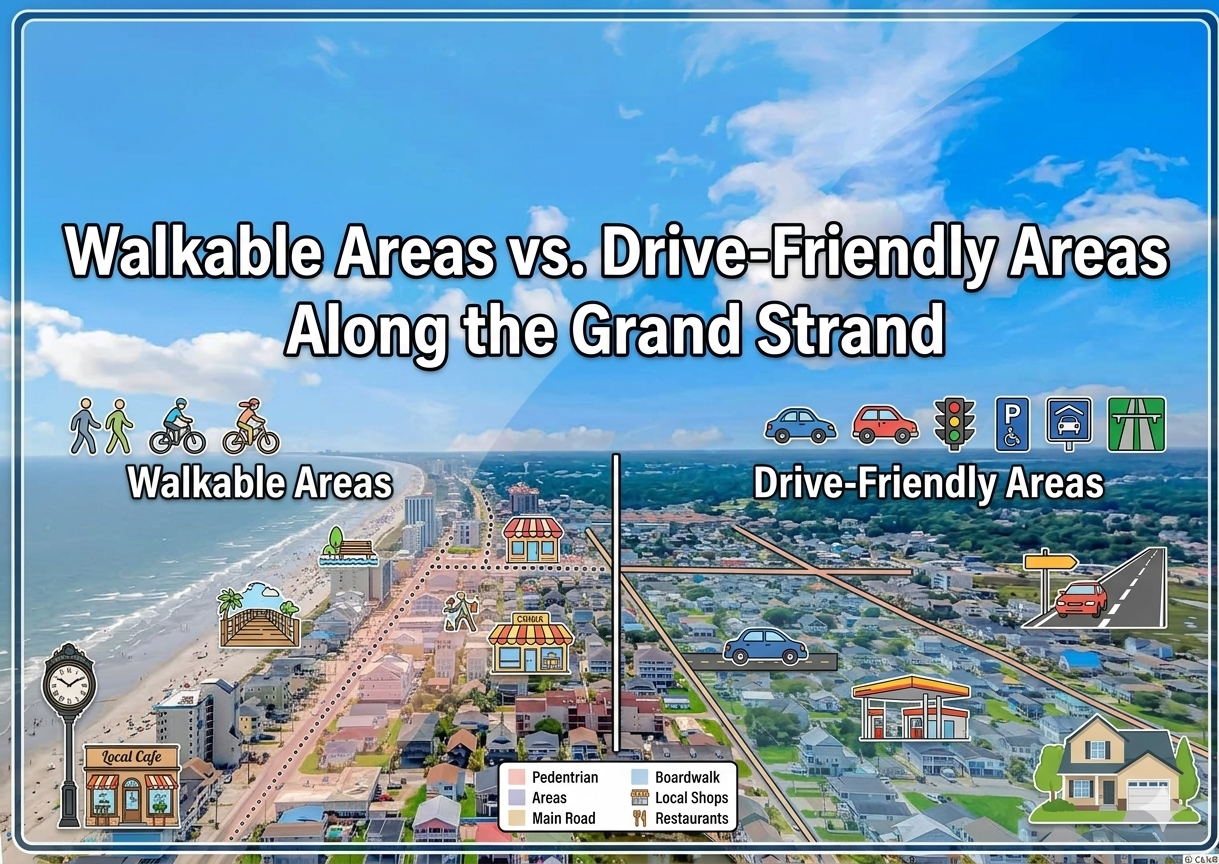
Walkable Areas vs. Drive-Friendly Areas Along the Grand Strand

A Complete Guide for Home Buyers, Sellers, and Real Estate Investors

When choosing where to live or invest along South Carolina’s Grand Strand, one of the most overlooked—but highly impactful—factors is walkability vs. car dependency. Whether your goal is lifestyle convenience, rental income, or long-term appreciation, understanding how different areas function can shape smarter real estate decisions.

In this guide, we’ll break down what walkability really means, where to find it along the Grand Strand, and how it compares to the region’s more traditional drive-friendly communities.

What Does “Walkability” Really Mean?

 Walkable Areas vs. Drive-Friendly Areas

Walkability refers to how easily residents can access everyday amenities—like grocery stores, restaurants, parks, and entertainment—without needing a car. Real estate platforms often measure this using Walk Score, which ranks locations from 0 to 100.

0–49: Car-dependent

50–69: Somewhat walkable

70+: Very walkable to “Walker’s Paradise”

Here’s the reality:

Most of the Grand Strand falls into the car-dependent category, meaning daily errands typically require driving.

However, that doesn’t mean walkable living doesn’t exist—it’s just more localized and intentional.

Walkable Areas Along the Grand Strand

1. The Market Common (Myrtle Beach)

One of the best examples of a walkable, master-planned community on the Grand Strand is The Market Common.

  • Mixed-use design (residential + retail + dining)
  • Tree-lined streets and pedestrian-friendly layout
  • Central parks, trails, and gathering spaces

This area was specifically designed as a “live-work-play” environment, making it highly attractive to young professionals, retirees, and second-home buyers.

Real Estate Insight:

Homes here often command higher price-per-square-foot due to lifestyle convenience and demand for walkability.

2. Downtown Georgetown

With a Walk Score around 70, Georgetown stands out as one of the few “very walkable” areas in the region.

  • Historic charm with waterfront access
  • Harborwalk lined with shops and restaurants
  • Compact downtown footprint

Best for: Buyers seeking charm, history, and a slower-paced coastal lifestyle.

3. Myrtle Beach Boardwalk & Tourist Districts

Certain pockets—especially near the oceanfront—offer strong pedestrian appeal:

  • The Myrtle Beach Boardwalk
  • Entertainment hubs like Broadway at the Beach
  • Resort-style condo zones

These areas are ideal for short-term rentals and vacation homes, where walkability enhances guest experience.

Drive-Friendly (Car-Dependent) Communities

The majority of the Grand Strand is designed around car travel, offering more space, newer developments, and suburban-style living.

Common Drive-Friendly Areas:

  • Carolina Forest
  • North Myrtle Beach (most residential sections)
  • Surfside Beach
  • Conway
  • Pawleys Island

Many of these areas have Walk Scores below 50, meaning most errands require a vehicle.

Why Buyers Still Prefer Car-Dependent Areas

Despite lower walkability, these communities remain highly desirable:

1. Larger Homes & New Construction

Buyers often get more square footage and modern amenities.

2. Lower Density Living

Less congestion, more privacy, and quieter neighborhoods.

3. Better Value for Money

Price points are typically lower than walkable, mixed-use districts.

4. Easy Regional Access

The Grand Strand’s road system makes commuting manageable, with major highways connecting the 60-mile coastline.

Walkability vs. Driving: Which Is Better for You?

For Home Buyers

  • Choose walkable areas if you value convenience, lifestyle, and social activity.
  • Choose drive-friendly areas if you prioritize space, affordability, and quiet living.

For Sellers

  • Walkability can be a strong marketing advantage—highlight proximity to dining, shopping, and attractions.
  • In suburban areas, emphasize home features, lot size, and community amenities instead.

For Investors

  • Walkable zones often generate higher short-term rental income.
  • Car-dependent neighborhoods may offer better long-term appreciation and lower entry costs.

Final Thoughts

If you’re considering buying or investing along the Grand Strand, don’t just ask:

“How much house can I afford?”

Ask instead:

“What kind of lifestyle do I want?”

Because in this market, your choice between walkable convenience and drive-friendly space can significantly impact both your daily experience and your property’s long-term value.

Posted in For Buyers
April 20, 2026

Greg Harrelson Has Expanded Into The Holden Beach NC Real Estate Market

Greg Harrelson Has Expanded Into The Holden Beach NC Real Estate Market

With more than 30 years of experience helping buyers and sellers along the Carolina coast, Greg Harrelson is now officially serving the Holden Beach Real Estate market. Holden Beach has always been a favorite among second-home buyers and vacation rental investors — a quiet, family-first barrier island that has managed to avoid the over-development of larger destinations. Greg and his team are now positioned to help buyers, sellers, and investors navigate one of the most desirable small-island markets in North Carolina.

Key Takeaways:

  • Greg Harrelson brings 30+ years of coastal Carolina experience to Holden Beach, NC buyers and sellers.
  • Holden Beach is an 8-mile barrier island with roughly 900 year-round residents, expanding to 10,000–20,000 in peak summer.
  • National Geographic Traveler named it one of the country's best family beaches.
  • Median home prices in early 2026 ranged from approximately $975,000 to $1.1 million, reflecting the island's premium second-home market.
  • Greg's team also covers Oak Island, Ocean Isle Beach, Sunset Beach, and Southport, giving buyers a complete view of Brunswick County's coastal options.

Why Holden Beach Stands Apart From Other NC Beach Towns

Holden Beach is the quiet one. While neighbors like Oak Island and Ocean Isle Beach have grown into year-round commercial communities, Holden Beach has intentionally stayed residential, low-rise, and family-oriented. You won't find chain hotels, high-rise condos, or busy bar strips here — and for the buyers who choose Holden Beach, that's exactly the point.

The island stretches about 8 miles along the Atlantic with the Intracoastal Waterway as its backyard. Homes are built on pilings (per FEMA requirements for barrier islands), which means most properties have ground-level parking, storage, and outdoor entertaining space below the living areas. Architectural styles run from traditional beach cottages to newer transitional and contemporary builds, most concentrated along Ocean Boulevard and the side streets that run between the ocean and the waterway.

In my experience working with buyers comparing Holden Beach to Oak Island or Ocean Isle, the decision almost always comes down to lifestyle. Buyers who want a true escape — somewhere to disconnect, enjoy family, and not see the same crowds they'd find in Myrtle Beach — consistently gravitate toward Holden.

The Holden Beach Real Estate Market in Early 2026

Holden Beach is firmly a premium coastal market. Recent data from early 2026 showed median home prices in the $975,000 to $1.1 million range, with price per square foot running around $580–$600. Homes have been averaging 70 to 75 days on the market, which gives serious buyers time to evaluate options without the pressure of a white-hot bidding environment.

A few patterns worth understanding before buying here:

  • Oceanfront homes carry the biggest premium, and many come with established vacation rental histories that help the investment math pencil out.
  • Second-row and ocean-view homes often deliver the best balance of price, rental income, and lifestyle use.
  • Canal-front homes are a signature Holden Beach property type — private docks, boat lifts, and direct Intracoastal Waterway access appeal strongly to boating-focused buyers.
  • Interior homes (away from the ocean and canals) offer the most accessible price points and still provide walking distance to the beach.

One thing I consistently see with Holden Beach: the performance of a property as a vacation rental depends heavily on its specific location, condition, and amenity package. Two homes on the same street can produce very different annual rental numbers based on whether they have a pool, how recently they've been updated, and how professionally they're marketed. That's why having an agent who understands both the purchase side and the rental side of this market matters.

Why Holden Beach Is Becoming a Top Relocation Target

Holden Beach sits inside Brunswick County, which was the fastest-growing county in North Carolina from April 2020 to July 2024, with a 24% population increase that added nearly 33,000 new residents. Brunswick County was also recently ranked the #1 most desirable place to relocate in a national 2025 U.S. News and World Report study.

Most of the growth is happening in inland communities like Leland, Shallotte, and Southport, but the beach markets benefit directly. Many buyers relocating to Brunswick County start by renting or buying inland, then eventually buy a second home at the beach — or vice versa. Holden Beach captures a disproportionate share of the high-end second-home demand because of its quieter character and its proximity to both Wilmington (about 45 minutes) and Myrtle Beach (about an hour).

North Carolina's state income tax dropped to 3.99% in January 2026, which has made the state even more attractive for retirees and remote workers comparing cost-of-living numbers with the Northeast and Midwest.

Who Buys on Holden Beach — And What They're Looking For

Over the years, Holden Beach has attracted a fairly consistent buyer profile. Understanding these groups helps explain the market dynamics:

Buyer Type What They Usually Want Common Price Range
Second-home buyers (families) 3–5 bedroom homes, ocean view or short walk to beach, established rental history optional $800K–$1.5M
Vacation rental investors Oceanfront or oceanview with strong existing rental numbers, pools preferred $1M–$3M+
Retirees relocating from the North Year-round usable home, lower maintenance, single-level if possible, mainland proximity $700K–$1.2M
Boating enthusiasts Canal-front home with private dock and boat lift, direct waterway access $900K–$2M
Luxury primary residence buyers West-end gated section, custom-built homes, privacy and space $1.5M–$4M+

If you're still weighing Holden Beach against other Brunswick County options, it's worth comparing side-by-side. Buyers who want a larger island with more year-round services often prefer Oak Island Real Estate. Buyers who specifically want a smaller, quieter, more premium island feel tend to choose Holden Beach.

What Makes Greg Harrelson's Team The Right Fit for Holden Beach

Holden Beach transactions are not typical residential transactions. Flood zones, elevation certificates, wind and hail insurance, short-term rental regulations, well and septic considerations, HOA rules in the west-end gated section, and waterway access issues all come into play. Add to that the realities of buying sight-unseen from another state — which is how many Holden Beach deals happen — and it becomes clear why experience matters.

Greg Harrelson's 30+ years on the Carolina coast have included extensive work in second homes, investment properties, and long-distance relocation purchases. The team understands how to evaluate a property not just as a home, but as an asset — which is exactly how most Holden Beach buyers need to think about their purchase.

For sellers, the advantage is marketing reach. A Holden Beach home isn't just being sold to local buyers; the marketing has to reach Charlotte, Raleigh, Richmond, Philadelphia, New York, Boston, and beyond, because that's where many of the qualified buyers live. Greg's team brings the systems, presentation, and reach required to compete at that level.

Holden Beach Real Estate FAQs

Is Holden Beach a good vacation rental investment?

Yes, Holden Beach has one of the stronger vacation rental markets in coastal North Carolina. The family-first character of the island, consistent summer demand, and strong word-of-mouth reputation help many properties produce reliable rental income. However, performance varies significantly by location, condition, and marketing — some homes on the books have shown $80,000+ in gross rental income in a year, while lesser-prepared properties underperform. Careful property selection is the key.

How does Holden Beach compare to Oak Island?

Holden Beach is smaller (about 8 miles vs. Oak Island's 14), quieter, and almost entirely residential. There's no meaningful commercial district on Holden Beach itself — you cross the bridge to Supply or Shallotte for groceries and services. Oak Island has a large commercial district with year-round amenities. Holden Beach typically commands higher per-square-foot pricing because of its smaller supply and premium reputation, while Oak Island offers a broader range of price points.

What are property taxes like on Holden Beach?

Property taxes in Brunswick County are considerably lower than what most Northeast buyers are used to. Holden Beach has its own municipal tax rate on top of the Brunswick County rate, so the total is higher than inland Brunswick County but still very competitive compared to coastal markets in the Northeast or parts of Florida. Combined with North Carolina's 3.99% state income tax, the total tax picture remains a major reason buyers relocate to this area.

Can I rent my Holden Beach home short-term?

Yes, Holden Beach allows short-term vacation rentals, and it's one of the core economic drivers of the island. The town does have specific registration requirements and noise/occupancy rules that owners need to follow, and certain property management practices are considered standard for the local market. Greg's team can walk you through the compliance requirements and help connect you with reputable rental management companies when appropriate.

Is Holden Beach safe from hurricanes and flooding?

Holden Beach is a barrier island on the Atlantic coast, so hurricane and flood risk is real and has to be planned for. That's why all homes are built on pilings and why flood insurance and wind/hail coverage are essential. The island has a strong history of rebuilding quickly after major storms, and local building codes have gotten more stringent over the years. Any serious buyer should review the specific flood zone, elevation, and insurance picture of the property they're considering — this is part of our standard due diligence process.

What's the best time of year to buy on Holden Beach?

Late fall through early spring typically offers the best buying conditions on Holden Beach. Inventory tends to be steady, seller motivation is higher because rental season is over, and buyers aren't competing with summer vacationers making emotional decisions. That said, great opportunities show up year-round on Holden Beach — the key is being ready to act when the right property appears.

Ready to Explore Holden Beach Real Estate?

Whether you're looking at Holden Beach for a family vacation home, a premium investment property, a full-time relocation, or a legacy asset to pass down, Greg Harrelson and his team are ready to help. Three decades of coastal Carolina experience means we know not just the market, but the specific nuances of barrier-island buying — from flood zones and rental economics to the character differences between Holden, Oak Island, Ocean Isle, and Sunset Beach.

Reach out today to start a conversation. We'll help you understand what's realistic for your budget, which parts of the island fit your goals, and how to evaluate properties like a local — even if you're buying from 800 miles away.

About Greg Harrelson

Greg Harrelson has been one of the top-producing real estate agents on the Carolina coast for over 30 years. With more than 15,000 homes and condos sold or partnered on throughout his career, Greg brings a level of market expertise that very few agents in the region can match. His approach combines proven marketing strategies with exceptional follow-up and communication, ensuring that every buyer and seller receives hands-on guidance from the first conversation through closing.

Greg's track record speaks for itself: over 1,100 five-star reviews on Zillow and more than 500 reviews on Google — a reflection of the consistent results and client-first service his team delivers. Whether you're buying a second home on Holden Beach, a vacation rental on Oak Island, or relocating full-time to Brunswick County from up north, Greg and his team have the experience, the systems, and the reputation to help you get it done right.

Posted in Company News
April 19, 2026

Real Estate Expert Greg Harrelson Forecasts 2026 Housing Market Shifts for Horry County

After more than 30 years in the Grand Strand market, Greg Harrelson has seen Horry County go through every kind of housing cycle — boom years, corrections, interest rate spikes, hurricanes, and the post-2020 frenzy. What's happening in 2026 doesn't look like any of those. It looks like a genuine rebalancing — a return to a market where buyers have leverage, sellers have to earn their price, and smart decisions are rewarded more than fast ones.

Here's Greg's read on what's actually shifting in the Horry County housing market this year, what's driving it, and what it means if you're buying, selling, or holding.

Key Takeaways for the 2026 Horry County Market:

  • Inventory has grown roughly 36% year over year, pushing months of supply above 9 months — firmly a buyer's market.
  • Median sale prices in Myrtle Beach sit near $274,000–$303,000 depending on the data source, with year-over-year changes ranging from modest gains to single-digit declines.
  • Mortgage rates are expected to settle in the 6% range through 2026, with NAR forecasting gradual improvement.
  • Days on market have stretched to roughly 93–111 days — sellers need realistic pricing and strong preparation to compete.
  • The 2026 FHA loan limit in Horry County is $541,287 for a one-unit property, opening up a wider buyer pool.

 Real Estate Expert Greg Harrelson Forecasts 2026 Housing Market

The Big Picture: Horry County Is Now a Buyer's Market

Horry County has shifted from the seller-dominated conditions of 2021–2022 to a buyer-friendly market in 2026. The single clearest indicator is months of supply. When you have under 5 months of inventory, sellers hold the pricing power. Horry County is currently sitting around 9+ months of supply, which historically aligns with real negotiation leverage on the buyer side.

Here's what that actually means for anyone making a decision this year:

  • Well-priced, well-prepared homes still sell. But nothing moves automatically anymore.
  • Overpriced homes sit. Price reductions have become standard — roughly 27–28% of Horry County listings see a price cut before going under contract.
  • Buyers can ask for concessions that simply weren't on the table two years ago: closing cost credits, rate buydowns, appliance packages, flexible closing dates.
  • Multi-offer bidding wars are rare, and when they happen, they're usually on turnkey homes priced below what local comps would support.

In my experience working with sellers during similar transitional phases, the ones who adjust their mindset early do far better than the ones who cling to 2022 pricing. The Horry County market isn't broken — it's just behaving like a normal market again, and normal markets reward correctly priced listings.

What's Actually Happening With Horry County Prices in 2026

Price data varies by source, which is itself a sign of a transitional market. Here's the honest picture across major data providers as of early 2026:

Metric Early 2026 Snapshot What It Tells You
Median Sale Price (Myrtle Beach) $274,000–$303,500 Down YoY by most measures; some data sources show small gains
Single-Family vs. Condo Split Single-family ~$328K–$385K / Condos ~$228K–$240K Condos are softer; single-family demand is steadier
Active Listings (Horry County) ~3,689 homes, up roughly 36% YoY Supply expansion is the #1 story of the year
Months of Supply ~9.4 months Clearly a buyer's market
Average Days on Market 93–111 days Homes sit longer; buyers have time to evaluate
Sale-to-List Ratio ~96% Sellers are giving up 4%+ on average

Single-family homes and condos are behaving like two separate markets. Condo inventory has grown faster, HOA and insurance costs have climbed, and buyers are being pickier. Well-located single-family homes in places like Carolina Forest, The Market Common, and parts of Conway are still performing closer to historical norms.

Mortgage Rates and What They Mean for 2026 Buyers

Mortgage rates have been the single biggest driver of buyer behavior since 2022, and they continue to shape the 2026 market. NAR's 2026 forecast expects rates to average around 6%, trending modestly downward but not dramatically. Here's the practical read:

  • Waiting for 4% rates is probably not a winning strategy. If rates drop meaningfully, buyer competition will spike and prices will firm up fast.
  • Temporary rate buydowns are back on the table. Sellers and builders are offering 2-1 and 3-2-1 buydown credits to help buyers offset the first few years of payments.
  • The FHA loan limit in Horry County is $541,287 for 2026. That's enough to cover a wide range of primary-residence options, especially slightly inland in Carolina Forest, Conway, and Socastee.
  • Refinancing remains a realistic Plan B. Buyers who stretch on the rate today can often refinance if rates move down 75+ basis points.

One thing I consistently see with Horry County buyers right now: the ones who act on a correctly priced home in 2026, even at today's rates, often come out ahead of the buyers who waited. That's because the price negotiation and seller concessions available today frequently outweigh the interest rate savings of waiting for a rate drop that may or may not happen.

What the 2026 Shift Means for Sellers in Horry County

If you're planning to sell in 2026, the market hasn't collapsed — but it doesn't work the way it did two years ago either. The approach has to change. Here's what's working right now:

  • Realistic pricing from day one. The old strategy of "list high and negotiate down" is actively hurting sellers in 2026. Buyers skip overpriced listings entirely rather than submit low offers.
  • Pre-listing prep matters more than ever. Paint, landscaping, minor repairs, professional photography — these things have always helped. In a 9-month-supply market, they're the difference between 30 days on market and 150.
  • Offering concessions proactively. Instead of waiting for a buyer to ask, many successful sellers are advertising closing-cost credits or rate-buydown contributions upfront as part of the listing strategy.
  • Flexibility on timing. Buyers in 2026 often want longer close windows or rent-back options. Sellers who can accommodate win more offers.

For sellers looking to understand what their specific home might sell for in 2026, the value of current comps has never been higher. Last year's comps aren't reliable. Even six-month-old comps can mislead on condo pricing. That's why a current, neighborhood-level analysis is where every serious seller conversation should start. Greg's team handles these evaluations for Myrtle Beach Homes For Sale and the broader Horry County market every day.

What the 2026 Shift Means for Buyers in Horry County

For buyers, 2026 looks like the best opportunity window in several years. Not because prices are about to crash — they aren't — but because the combination of higher inventory, longer days on market, and more motivated sellers has created real leverage.

  • You can take your time. 93–111 day average days on market means most homes will still be available tomorrow. Use that time to make informed decisions.
  • Negotiating from strength works again. Inspection requests, closing credits, rate buydowns, warranty contributions — all of these are reasonable asks on most deals.
  • Condos are particularly buyer-friendly. Condo inventory growth, HOA cost concerns, and insurance questions have softened this segment. Carefully selected condos may be the best value plays in the market.
  • New construction is competing aggressively. Builder incentive packages in Carolina Forest, Conway, and Socastee are often meaningful — rate buydowns, closing credits, and upgrade packages that resale sellers can't always match.

If you're looking for primary-residence options, the Myrtle Beach single-family market is where most first-time and relocating buyers are focused. If you're looking at Myrtle Beach as a second home or rental investment, you should be comparing single-family options alongside the condo market — specifically Myrtle Beach Condos for sale where the current value dynamics are strongest.

Why Greg's Track Record Matters More in a Shifting Market

Markets like 2026 separate agents who can coast on momentum from agents who actually know how to price, negotiate, and close in any condition. Greg's team has been doing this work through every type of Grand Strand market for more than 30 years, which is why the approach is built on proven systems rather than market-cycle dependence.

If you want to see how Greg's team approaches a listing in 2026 — from pricing and marketing through closing — take three minutes to watch How Greg Harrelson Sells Homes. It walks through the exact marketing and communication process his team uses on every listing, and why that process consistently produces results even when the broader market softens.

2026 Horry County Market FAQs

Is the Horry County housing market going to crash in 2026?

No, industry experts are not forecasting a crash. The Horry County market is rebalancing after the 2021–2024 run-up, with healthier inventory, normalized days on market, and more sustainable pricing. Homeowner equity positions remain strong, lending standards have stayed disciplined since 2008, and inbound migration continues to support long-term demand. Corrections are not crashes — this looks like a return to a more normal market.

When is the best time to buy a home in Myrtle Beach in 2026?

The late summer through early winter months (August through December) are historically the best buying windows in Myrtle Beach because inventory is highest and seasonal buyer demand is lowest. That said, the broader 2026 environment favors buyers year-round because of elevated inventory and longer days on market. The most important factor isn't the month — it's being pre-approved, clear on your criteria, and ready to act when the right property appears.

When is the best time to sell a home in Horry County in 2026?

February through July is traditionally the strongest selling window in Horry County, with demand highest and days on market shortest. In 2026, that seasonality is amplified because the slower months are expected to carry even more inventory. If you're planning to sell, aiming to list in late winter or early spring with your home fully prepared gives you the best chance of attracting serious buyers during peak activity.

How are Horry County property taxes calculated?

Horry County uses different assessment ratios depending on how you use the property. Primary residences are assessed at 4% of market value, while second homes and investment properties are assessed at 6%. After the local millage rate is applied, effective tax burdens typically run roughly 0.35% to 0.53% of market value, depending on exact location. Second-home buyers should always factor this higher tax ratio into their monthly budget.

Will mortgage rates drop in 2026?

Mortgage rates are expected to stay in the 6% range throughout 2026, with modest downward movement possible. NAR's 2026 forecast points to a more active market with improving conditions, but not a dramatic rate cliff. Buyers waiting for a major rate drop may end up competing with the flood of other waiting buyers if and when rates move, which typically firms prices and reduces seller flexibility.

Is new construction a better deal than resale in Myrtle Beach in 2026?

It depends on the specific home and the builder, but builder incentives are genuinely competitive right now in Horry County. Rate buydowns, closing cost credits, and included upgrade packages can be worth tens of thousands of dollars on new construction in growing areas like Carolina Forest, Conway, and Socastee. Resale homes in desirable locations still offer value through mature landscaping, established neighborhoods, and direct price negotiation. Smart buyers should evaluate both side by side rather than assuming one is always the better path.

What's the best neighborhood in Myrtle Beach for 2026 buyers?

It depends entirely on the use case. For full-time families, Carolina Forest offers strong schools, good inventory, and a wide price range. For urban-feeling primary residences, The Market Common and the Pine Lakes area are consistent picks. For vacation rental investment, North Myrtle Beach (Cherry Grove, Crescent Beach) and oceanfront Myrtle Beach condos continue to perform. For retirees prioritizing low maintenance, condos and gated golf communities remain top choices. The "best" neighborhood is the one that matches your actual goals, not just the current headline numbers.

Ready to Make a Smart Move in the 2026 Horry County Market?

Whether you're buying your first home, selling a long-held property, looking at investment condos, or relocating to the Grand Strand from out of state, the 2026 Horry County market rewards people who have accurate information and a plan. Greg Harrelson's team has been guiding buyers and sellers through market transitions for more than three decades, and we're ready to help you make a confident decision based on what's actually happening in the market — not headlines.

Reach out today for a no-pressure conversation about your specific situation. We'll walk through your goals, run the numbers that actually matter for your property or your search, and help you decide whether now is the right time to move — or whether waiting makes more sense for your circumstances.

About Greg Harrelson

Greg Harrelson has been one of the top-producing real estate agents in the Myrtle Beach and Grand Strand area for over 30 years. With more than 15,000 homes and condos sold or partnered on throughout his career, Greg brings a level of local market expertise that very few agents can match. His approach combines proven marketing strategies with exceptional follow-up and communication, ensuring that every buyer and seller receives hands-on guidance from the first conversation through closing.

Greg's track record speaks for itself: over 1,100 five-star reviews on Zillow and more than 500 reviews on Google — a reflection of the consistent results and client-first service his team delivers. Whether you're buying an oceanfront condo, a golf course home, or a primary residence anywhere along the Grand Strand, Greg and his team have the experience, the systems, and the reputation to help you get it done right.