A Complete Guide for Home Buyers, Sellers, and Real Estate Investors
When choosing where to live or invest along South Carolina’s Grand Strand, one of the most overlooked—but highly impactful—factors is walkability vs. car dependency. Whether your goal is lifestyle convenience, rental income, or long-term appreciation, understanding how different areas function can shape smarter real estate decisions.
In this guide, we’ll break down what walkability really means, where to find it along the Grand Strand, and how it compares to the region’s more traditional drive-friendly communities.
What Does “Walkability” Really Mean?
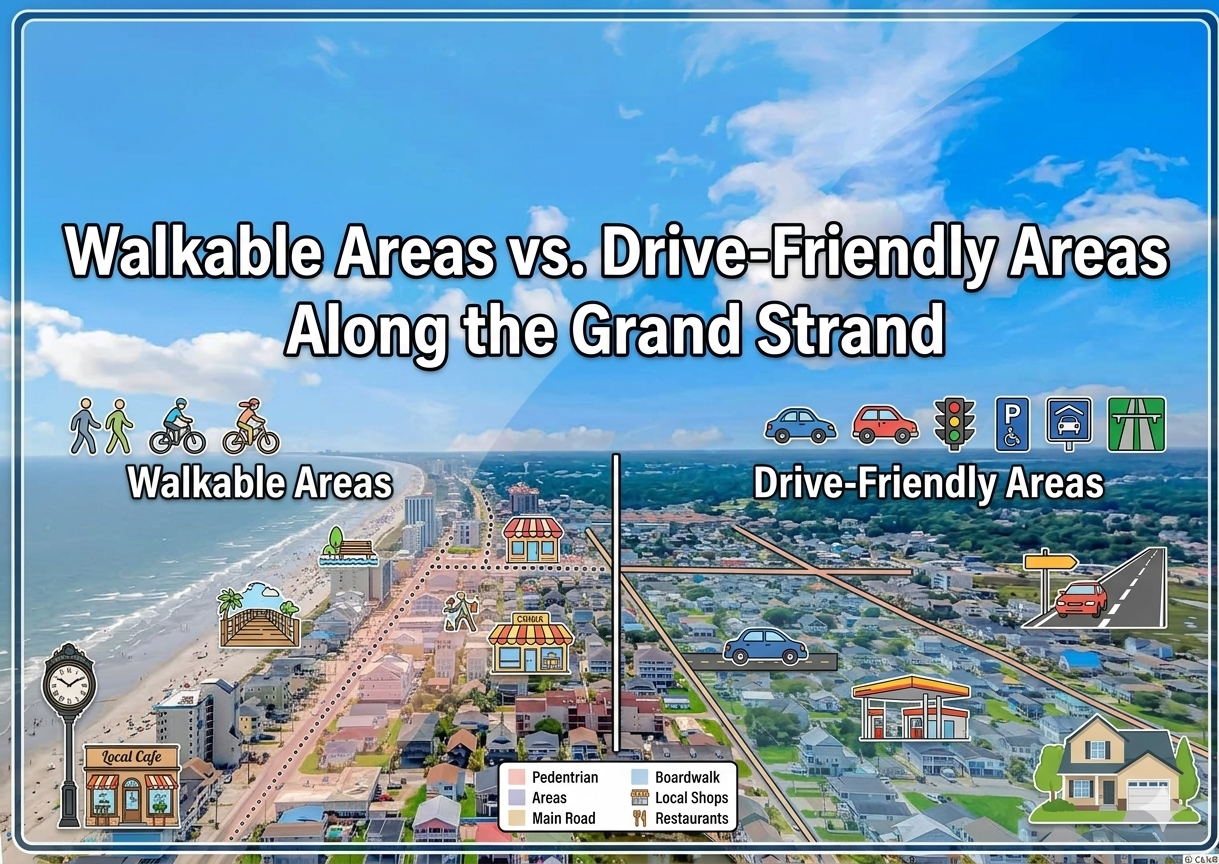
Walkability refers to how easily residents can access everyday amenities—like grocery stores, restaurants, parks, and entertainment—without needing a car. Real estate platforms often measure this using Walk Score, which ranks locations from 0 to 100.
0–49: Car-dependent
50–69: Somewhat walkable
70+: Very walkable to “Walker’s Paradise”
Here’s the reality:
Most of the Grand Strand falls into the car-dependent category, meaning daily errands typically require driving.
However, that doesn’t mean walkable living doesn’t exist—it’s just more localized and intentional.
Walkable Areas Along the Grand Strand
1. The Market Common (Myrtle Beach)
One of the best examples of a walkable, master-planned community on the Grand Strand is The Market Common.
- Mixed-use design (residential + retail + dining)
- Tree-lined streets and pedestrian-friendly layout
- Central parks, trails, and gathering spaces
This area was specifically designed as a “live-work-play” environment, making it highly attractive to young professionals, retirees, and second-home buyers.
Real Estate Insight:
Homes here often command higher price-per-square-foot due to lifestyle convenience and demand for walkability.
2. Downtown Georgetown
With a Walk Score around 70, Georgetown stands out as one of the few “very walkable” areas in the region.
- Historic charm with waterfront access
- Harborwalk lined with shops and restaurants
- Compact downtown footprint
Best for: Buyers seeking charm, history, and a slower-paced coastal lifestyle.
3. Myrtle Beach Boardwalk & Tourist Districts
Certain pockets—especially near the oceanfront—offer strong pedestrian appeal:
- The Myrtle Beach Boardwalk
- Entertainment hubs like Broadway at the Beach
- Resort-style condo zones
These areas are ideal for short-term rentals and vacation homes, where walkability enhances guest experience.
Drive-Friendly (Car-Dependent) Communities
The majority of the Grand Strand is designed around car travel, offering more space, newer developments, and suburban-style living.
Common Drive-Friendly Areas:
- Carolina Forest
- North Myrtle Beach (most residential sections)
- Surfside Beach
- Conway
- Pawleys Island
Many of these areas have Walk Scores below 50, meaning most errands require a vehicle.
Why Buyers Still Prefer Car-Dependent Areas
Despite lower walkability, these communities remain highly desirable:
1. Larger Homes & New Construction
Buyers often get more square footage and modern amenities.
2. Lower Density Living
Less congestion, more privacy, and quieter neighborhoods.
3. Better Value for Money
Price points are typically lower than walkable, mixed-use districts.
4. Easy Regional Access
The Grand Strand’s road system makes commuting manageable, with major highways connecting the 60-mile coastline.
Walkability vs. Driving: Which Is Better for You?
For Home Buyers
- Choose walkable areas if you value convenience, lifestyle, and social activity.
- Choose drive-friendly areas if you prioritize space, affordability, and quiet living.
For Sellers
- Walkability can be a strong marketing advantage—highlight proximity to dining, shopping, and attractions.
- In suburban areas, emphasize home features, lot size, and community amenities instead.
For Investors
- Walkable zones often generate higher short-term rental income.
- Car-dependent neighborhoods may offer better long-term appreciation and lower entry costs.
Final Thoughts
If you’re considering buying or investing along the Grand Strand, don’t just ask:
“How much house can I afford?”
Ask instead:
“What kind of lifestyle do I want?”
Because in this market, your choice between walkable convenience and drive-friendly space can significantly impact both your daily experience and your property’s long-term value.