Insurance Isn't Just a Line Item Anymore
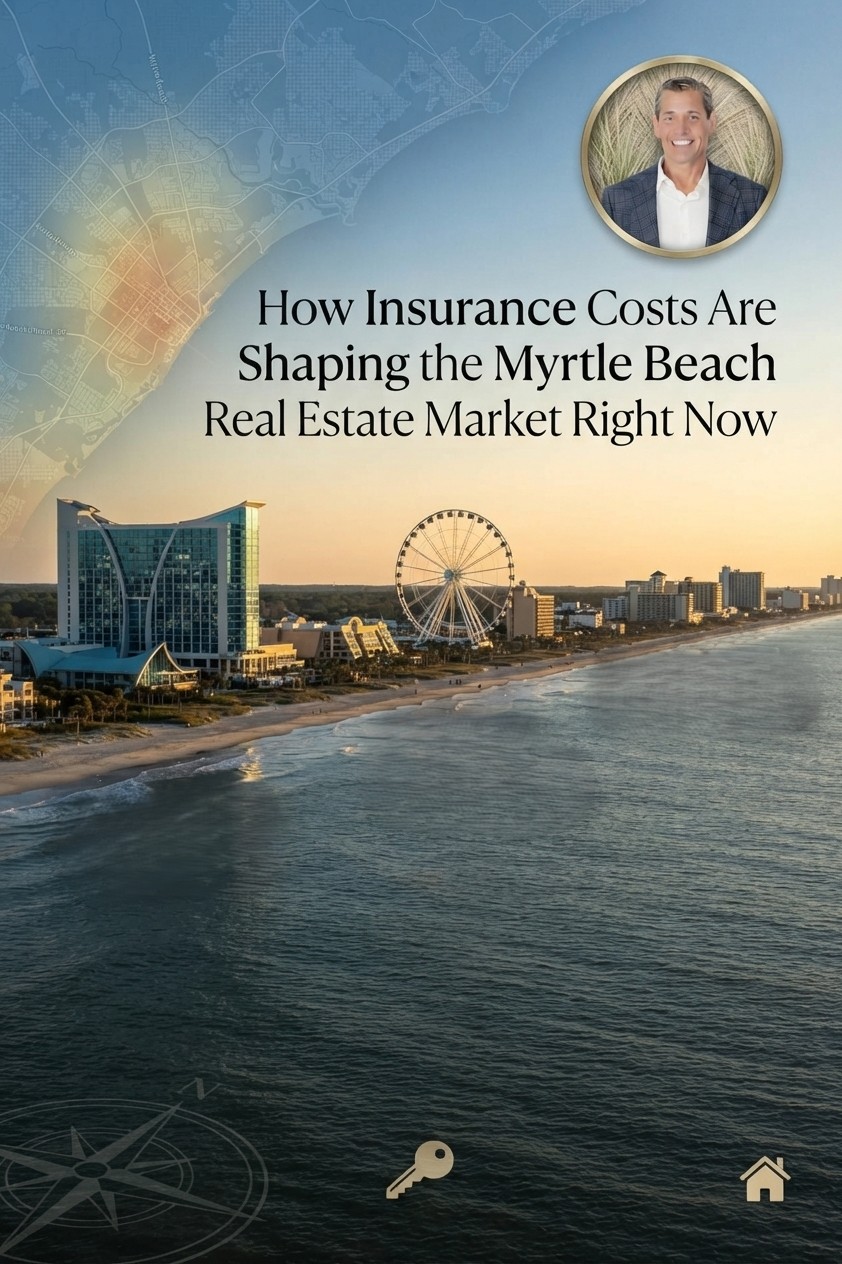
For most of the last decade, coastal insurance was a routine part of the transaction on the Grand Strand. Buyers factored it in. Sellers didn't think about it much. That's changed. Rising wind, hail, and flood premiums, tightening carrier appetites, and stricter underwriting have moved insurance to the front of the conversation in Myrtle Beach real estate. It shows up in buyer offers, in seller decisions, and in which properties actually close.
Here's what I'm watching across the market right now.
Buyer Behavior Is Shifting
Insurance Quotes Come Earlier
Buyers who used to get an insurance quote during the due diligence period are now getting them before they write the offer. Coastal premium sticker shock is real, and buyers want to know what the true monthly carrying cost looks like before they commit. On oceanfront and near-ocean properties, that quote can shift a buyer from serious to walking away.
Newer Construction Is Getting a Premium
Homes built with wind-resistant windows, modern building envelopes, elevated construction, and current-code roofing typically insure at meaningfully lower premiums than older coastal homes. Buyers are picking up on this and paying up for newer construction in a way they weren't a few years ago. Our post on new construction in Longs shows one inland market benefiting from that shift.
Inland Markets Are Absorbing More Demand
Insurance costs on inland properties in Longs, Conway, and Aynor run significantly lower than coastal Myrtle Beach. That gap widens the westward buyer flow that's been building for several years. Our take on the current Aynor SC real estate market trends covers how that's playing out in one of the strongest inland markets.
Elevation Certificates Are Mainstream
Buyers now routinely ask for elevation certificates before offering on any waterfront, marsh, or flood-zone-adjacent property. Sellers who have this ready move faster; sellers who don't lose momentum.
Seller Behavior Is Shifting Too
Documentation Matters More
Sellers who anticipate the insurance conversation have documents ready: current elevation certificate, current insurance policy, any roof or major system upgrade history, storm shutter records, wind mitigation reports. Sellers who don't have this end up scrambling during due diligence and often lose leverage in negotiations.
Upgrades With Insurance Payoff
Sellers considering pre-listing improvements are increasingly focused on items that lower insurance costs for the next buyer — roof replacement, hurricane shutters, wind-resistant windows, wind mitigation inspection reports. These upgrades used to be lifestyle decisions; now they're marketing tools.
Pricing Adjustments Reflect the Reality
On properties where insurance costs have jumped meaningfully, sellers are seeing pricing pressure they weren't a few years ago. A home that comps at a certain price on the surface can face buyer resistance when the annual insurance premium is 2 or 3x what the buyer expected. Smart sellers price for the current market, not the pre-2022 market.
 Where the Market Is Feeling It Most
Older Oceanfront Condos
Older oceanfront condo buildings with underfunded reserves and higher master insurance deductibles are the segment most affected. Buyers scrutinize the master policy alongside their individual HO-6 coverage. Buildings with strong reserves and modern construction hold value better; buildings with the opposite face harder sales.
Waterfront Homes with Older Systems
Waterfront and marsh-side homes built in earlier decades — original windows, older roofs, dated storm protection — carry higher premiums and face pickier buyer pools. Homes that have been meaningfully upgraded on the insurance-relevant items sell more easily.
Inland Communities Are Winning
Inland communities in Aynor, Longs, Conway, and inland Carolina Forest continue to see stronger relative demand as insurance-conscious buyers price out coastal options. The trend has been building for years and insurance is accelerating it.
What Buyers Should Actually Do Right Now
- Get a real insurance quote from a local carrier before making any coastal offer, not after
- Ask for the elevation certificate up front on any waterfront or flood-zone-adjacent property
- On condo purchases, review the master insurance policy alongside your individual HO-6 coverage
- Model the total annual carrying cost including insurance, taxes at the correct rate, HOA, and maintenance — not just the mortgage payment
- Consider newer construction and higher-elevation properties where the insurance math works in your favor
What Sellers Should Actually Do Right Now
- Have the elevation certificate, insurance documentation, and any upgrade records ready before you list
- Get a wind mitigation inspection if you have qualifying features — the credit can meaningfully lower buyer premiums
- Price to the current market with realistic buyer carrying costs in mind, not to what similar homes sold for three years ago
- If your property has meaningful insurance-relevant weaknesses, address them before listing or price accordingly
- Work with an agent who understands how to position insurance-related items in the listing description and negotiation
Our resource on Myrtle Beach homeowners insurance is a useful reference point for buyers and sellers who want to understand what carriers actually cover.
Longer-Term Signals
Two signals to watch for the next 12 months:
- Carrier appetite. When national carriers pull back from coastal markets, premiums rise and buyer pools shrink. When new carriers enter, the opposite. This is the biggest single driver of coastal market direction
- State-level regulatory activity. South Carolina insurance regulators periodically address coastal market issues; changes there ripple through the local real estate market
Insurance is now a leading indicator for the coastal real estate market, not a lagging one. Buyers, sellers, and agents who track it make better decisions than those who treat it as background noise.
Key Takeaways
Coastal insurance has moved from routine transaction line item to leading market factor on the Grand Strand. Buyers now get quotes before offers, scrutinize elevation certificates, and shift toward newer construction and inland communities. Sellers who prepare documentation, complete insurance-relevant upgrades, and price to current buyer realities move faster. Older oceanfront condos and waterfront homes with older systems feel the pressure most; inland markets like Aynor, Longs, and Conway continue to benefit from the westward buyer flow. Watch carrier appetite and state-level activity as the biggest signals for where the coastal market goes from here.
About Greg Harrelson
Greg Harrelson is a seasoned Realtor® with more than 30 years of experience serving the Myrtle Beach and Grand Strand markets. As the founder of Century 21 The Harrelson Group, Greg has built his career helping buyers, sellers, and investors achieve success in every corner of the coastal Carolina real estate market. His expertise spans residential homes, investment properties, land development, and coastal condos. Known for his deep local knowledge, innovative marketing strategies, and commitment to personal service, Greg consistently helps clients reach their real estate goals while navigating the ever-changing market with confidence and precision.