Explore the Myrtle Beach Real Estate Blog

Find exactly what you need, whether you're buying, selling, or just getting to know the Grand Strand.

01

Buying a Home

First-time buyer guides, financing tips, and how to win in the Myrtle Beach market.

02

Selling a Home

Pricing, staging, and the marketing that actually gets coastal homes sold.

03

Lifestyle and Communities

Coastal living, local communities, and what day-to-day life is really like along the Grand Strand.

04

Market Updates

The latest on prices, inventory, and what it means for you.

05

Moving & Relocation

Relocating to the coast? Tips on the move, schools, and settling into the Grand Strand.

06

Offer to Close

Step-by-step guides to buying and selling on the Grand Strand — from your first offer through closing day.

April 19, 2026

Greg Harrelson Maps Out The 5 Most Popular Home Selling Strategies

Too often, real estate agents rely on a single strategy to sell a home in Myrtle Beach — the MLS. Greg Harrelson agrees that the MLS is an important component of marketing a home for sale, but it's nowhere near the full picture. Getting a home sold, getting it sold in a shorter period of time, and ultimately attracting the highest bidder takes a lot more than just posting a listing and waiting.

Over three decades in the Grand Strand market, Greg has refined a 5-strategy approach that consistently outperforms MLS-only listings. Here's the complete map of how his team actually sells homes — and why sellers who use this approach tend to walk away with better results.

Key Takeaways:

  • The MLS alone is not a complete selling strategy in today's Myrtle Beach market.
  • Proper pricing isn't about being the cheapest — it's about hitting the pricing sweet spot that drives demand.
  • Online presentation directly controls how many in-person showings a home receives.
  • Target audience marketing reaches buyers other agents don't even know exist.
  • Active showing follow-up and strong seller communication are where most listings quietly fall apart.

Why the MLS Alone Isn't Enough Anymore

The MLS is the foundation. It feeds into Zillow, Realtor.com, Redfin, Trulia, and the dozens of other sites buyers actually browse. But once your listing is on the MLS, you're in a pool with every other home competing for the same buyer's attention. No special positioning, no proactive outreach, no differentiation. That's why MLS-only listings in today's market often sit longer and sell for less.
Greg Harrelson Maps Out The 5 Most Popular Home Selling Strategies

In my experience working with Myrtle Beach sellers, the difference between a home that sells in 14 days and one that sits for 90+ days almost always comes down to whether the agent is layering additional strategies on top of the MLS — not whether the MLS is "working." It's always working. The question is: what else is being done?

These are the five strategies Greg uses together to assure success for his sellers.

Strategy 1: Proper Positioning on the Market

Pricing strategy is the single most powerful lever in the entire selling process — and it's widely misunderstood. Proper positioning doesn't mean lowering the price. It means finding the pricing sweet spot where demand is highest.

In some cases, Greg has actually raised a home's price — and it sold immediately. Why? Because the original price was positioning the home in the wrong buyer pool. Move it to the right price tier, and suddenly a more qualified, more motivated buyer group sees it for the first time.

Pricing position determines how much demand a home will generate. Here's how that plays out in practice:

  • Priced too high: Zero showings for the first two weeks (when buyer attention is highest), then the listing goes stale.
  • Priced too low: Triggers buyer suspicion ("what's wrong with it?") and leaves money on the table.
  • Priced correctly: Heavy showing activity in the first 10–14 days, strong offers, fewer concessions.
  • Occasionally priced higher than comps would suggest: When the home has unique features that justify it and reaches a different buyer tier, it can actually produce faster results.

Getting position right requires current comps (not six-month-old ones), an honest read on condition, and a realistic understanding of what the competition looks like at each price point. The goal isn't the lowest price — it's the price that produces maximum demand.

Strategy 2: Virtual Presentation

How a property is presented online dictates how many showings it will get. More showings lead to more offers, and more offers lead to a faster sale at a better price. It's that simple. If your online presentation is weak, nothing else in the selling process matters — because buyers will never walk through the door.

Every buyer looking at Myrtle Beach homes starts online. They scroll through photos on Zillow, Realtor.com, and the MLS feeds before they ever decide whether to schedule a showing. That means the photos and descriptions aren't just supporting material — they are the first showing.

Strong virtual presentation means:

  • Professional photography. Wide-angle lenses, proper lighting, color correction, and composition choices matter. Phone photos read as "this seller isn't serious."
  • Mapped benefits and features. Not just bedroom counts and square footage — the specific story of why this home is different. What upgrades were done? What lifestyle does it uniquely support? What would a buyer feel walking in?
  • Video walkthroughs and 3D tours. Long-distance buyers — who make up a huge share of Myrtle Beach demand — filter listings by which ones have walkable tours available.
  • Drone and twilight shots when they add real value. For waterfront homes, pool lots, or notable acreage, aerial photography meaningfully improves click-through rate.

One thing I consistently see: homes with strong virtual presentation generate two to three times the online engagement of listings without it. That engagement converts directly into showings.

Strategy 3: Target Audience Marketing

Not every home appeals to every buyer. A second-row beach condo appeals to a different audience than a Carolina Forest family home, and a 55+ golf community home appeals to a different audience than a downtown investment property. Knowing exactly which audience is most likely to buy your home — and then actively marketing to that audience — is how efficient sales happen.

Target audience marketing happens through two main channels:

  • Database marketing. Greg's team maintains an actively worked buyer database built from Zillow Premier Agent leads, pay-per-click advertising, Google Local Services ads, 30+ years of past clients and referrals, relocation pipelines from Ohio, Pennsylvania, New York, New Jersey, and other feeder markets, and lists of second-home and investment buyers. When a new listing hits, it goes to the matching segment of that database before it hits the public search sites.
  • Strategic online marketing. This includes targeted social media campaigns, geographic-specific digital ads, and featured placement on real estate platforms where the target buyer is actually searching. The right ad to the right buyer produces results the MLS alone cannot.

For a home currently sitting on the market as one of many Myrtle Beach Homes For Sale, this kind of targeted outreach is often the difference between "sits for 90 days" and "sold in 3 weeks." It's also the reason condo listings work differently — the audience for Condos For Sale in Myrtle Beach skews heavily toward second-home buyers and investors, not primary residents, so the marketing approach should reflect that.

Strategy 4: Showing Follow-Up

This one quietly makes or breaks more Myrtle Beach sales than anything else on this list — and most sellers never realize it's happening. You'd be amazed how often a seller has a showing, the listing agent never follows up with the buyer or the buyer's agent, and a potential offer simply vanishes.

Greg's team follows up after every showing. That one practice changes outcomes. Often, the follow-up reveals that the buyer loves the home but had a few specific questions before they were willing to write an offer — maybe about the HVAC age, the HOA rules, whether short-term rentals are permitted, or what a particular repair history looked like. Getting those questions answered quickly, while the buyer's interest is still hot, keeps them moving forward.

Without follow-up, the buyer moves on to the next house. Their interest cools. They find something else. And the seller never knows they came that close to an offer.

Disciplined, professional showing follow-up after every single showing is not optional — it's one of the highest-ROI activities in the entire sales process.

Strategy 5: Communication and Collaboration With the Owner

The listing agent and the seller are a team. That's not a platitude — it's a working principle that directly affects results. When communication breaks down, adjustments don't get made, small problems grow into big ones, and the seller ends up frustrated.

Greg's team treats weekly seller updates as a non-negotiable part of the process. Every week, the conversation covers:

  • How many showings happened and what feedback came in
  • What's new in the competitive landscape (new listings, price changes, homes going under contract)
  • How the property is ranking in searches and performing online
  • Whether any adjustments to photos, description, pricing, or marketing are recommended
  • What the next week's plan looks like

A listing agent should be learning more every single week, and that information needs to be shared with the seller so both sides can make smart adjustments together. A well-informed seller makes fast, rational decisions when opportunities come up. A seller left in the dark makes slow, emotional ones.

This is the collaboration piece — and it's what separates listings that sell successfully from listings that just sit.

How These 5 Strategies Work Together

Any one of these strategies helps. But the real results come when all five are used together on every listing:

  • Correct pricing generates initial demand
  • Strong virtual presentation converts that demand into showings
  • Target audience marketing brings in buyers the MLS alone wouldn't reach
  • Showing follow-up turns interest into offers
  • Seller communication keeps the strategy sharp throughout the listing

Miss any one of these and performance drops. Use all five consistently and results show up measurably — faster sales, stronger offers, and less stress for the seller. This is the approach that has made Greg's team one of the most consistent producers in Myrtle Beach Real Estate For Sale for over 30 years.

FAQs: Home Selling Strategies in Myrtle Beach

Isn't the MLS enough to sell my home in Myrtle Beach?

No — not in today's market. The MLS is an essential foundation, but it puts your home in the same pool as every other active listing. Without added strategies like correct pricing, strong virtual presentation, targeted marketing, active showing follow-up, and ongoing seller communication, MLS-only listings often take longer to sell and sell for less than fully-marketed listings.

Why would raising the price of a home ever help it sell faster?

Pricing positions a home inside a specific buyer pool. If a home is priced just below a psychological threshold (like $399,000 vs $405,000), it can actually reach a less qualified, less motivated buyer segment. Moving the price up to align with a more active, better-qualified buyer tier can dramatically increase showings and generate faster offers. This only works when the property's actual value supports the higher price — but it's a real strategy Greg has used successfully many times.

How important are professional photos when selling in Myrtle Beach?

Extremely important. Every buyer evaluates homes online before scheduling a showing, which means photos are effectively the first showing. Listings with professional photography and 3D virtual tours generate two to three times the online engagement of listings without them, which directly translates to more in-person showings and more offers.

What is target audience marketing for a home listing?

Target audience marketing means identifying the specific buyer profile most likely to purchase a particular home, then actively reaching that audience through database outreach and strategic online advertising. Different homes appeal to different buyers — second-home buyers, primary residents, retirees, investors, relocation buyers — and the marketing approach should be tailored to the actual buyer profile, not just posted broadly and hoped for.

How often should my listing agent follow up after showings?

After every single showing, without exception. Professional showing follow-up within 24–48 hours is one of the highest-ROI activities in the selling process. Most sellers never realize how often a buyer's mild interest could have become an offer if the listing agent had just made one follow-up call. Skipping follow-up is one of the most common reasons homes in Myrtle Beach quietly underperform.

How often should I expect updates from my listing agent?

Weekly, at minimum. A listing is a live campaign, not a one-time decision. Every week there are new listings, price changes, showings, and feedback to discuss. Weekly communication allows the seller and agent to make fast, informed decisions together when adjustments are needed. Sellers who go weeks without hearing from their listing agent are almost always the ones who feel frustrated by the end of the process.

What makes Greg Harrelson's approach different from other Myrtle Beach agents?

The combination of all five strategies used on every listing, backed by 30+ years of local market experience, more than 15,000 homes sold or partnered on, and a systematic approach to pricing, presentation, marketing, follow-up, and communication. Many agents do one or two of these well. Greg's team does all five, consistently, which is why the results show up measurably for the sellers who work with us.

Ready to Sell With a Real Strategy Behind You?

Whether you're selling your primary residence, a vacation home, a condo, or an investment property anywhere along the Grand Strand, Greg Harrelson's team is ready to walk you through what a full 5-strategy listing plan would look like for your specific home. No pressure, no gimmicks — just honest insight built from three decades of Myrtle Beach selling experience.

Reach out today to schedule a consultation. We'll review your property, share current pricing based on today's comps, and map out exactly how we'd position, present, market, and sell it.

About Greg Harrelson

Greg Harrelson has been one of the top-producing real estate agents in the Myrtle Beach area for over 30 years. With more than 15,000 homes and condos sold or partnered on throughout his career, Greg brings a level of local market expertise that few agents can match. His approach combines proven marketing strategies with exceptional follow-up and communication, ensuring that every seller receives hands-on guidance from listing day through closing.

Greg's track record speaks for itself: over 1,100 five-star reviews on Zillow and more than 500 reviews on Google — a reflection of the consistent results and client-first service his team delivers. Whether you're selling an oceanfront condo, a Carolina Forest family home, or a golf course residence anywhere along the Grand Strand, Greg and his team have the experience, the systems, and the reputation to help you get it done right.

April 18, 2026

Greg Harrelson Identifies a More Efficient Way To Sell Homes In Myrtle Beach

After more than 30 years and over 15,000 transactions along the Grand Strand, Greg Harrelson has had a lot of time to watch what actually works when it comes to selling homes in Myrtle Beach — and what doesn't. The 2026 market has made one thing clearer than ever: the old "list it, post it, wait for offers" playbook doesn't cut it anymore. Inventory is higher, days on market are longer, and buyers have more options than they've had in years.

What works now is a more efficient sales process — one that gets the right price, in less time, with less stress for the seller. Below is Greg's breakdown of what that actually looks like, built from the patterns that separate homes that sell quickly from homes that sit.

Key Takeaways:

  • Selling efficiently isn't about cutting price — it's about pricing strategically, presenting professionally, and marketing aggressively.
  • Online presentation dictates how many in-person showings a listing gets. Photos are the first showing.
  • Market monitoring and real-time adjustments separate listings that sell from listings that sit.
  • Actively worked buyer databases produce qualified showings faster than passive MLS posting alone.
  • The combination of these systems is why Greg's team consistently outperforms the average Myrtle Beach days-on-market.

The Myrtle Beach Selling Process Has Changed — Here's Why It Matters

In the 2021–2022 market, almost any listing sold. You could post an outdated home with cell phone photos at an ambitious price and still get multiple offers. Those days are over. Today's average Myrtle Beach home sits on the market for 93 to 111 days depending on the data source, and inventory has grown roughly 36% year over year.

That shift has exposed which agents actually know how to sell homes and which ones were just taking orders during the frenzy. In my experience working with Myrtle Beach sellers during this kind of market transition, the single biggest mistake I see is treating the listing like a billboard instead of a system. A billboard waits for someone to drive by. A system actively generates demand, measures it, and adjusts until the property sells at the right price.

Greg Harrelson Identifies a More Efficient Way To Sell Homes In Myrtle Beach

Here are the components of a genuinely efficient Myrtle Beach selling process — the things that, when combined, produce measurably better results than the average MLS listing.

1. Strategic Positioning On The Market: The Right Price, Not the Lowest Price

The most common myth in today's market is that sellers have to slash price to sell. That's not what the data shows. What the data shows is that sellers have to price correctly — which is a very different thing.

An overpriced home gets zero showings for the first two weeks (when buyer attention is highest), then sits and gets stale. A home priced below market value leaves money on the table and often triggers buyer suspicion about what's wrong with it. A correctly priced home generates strong activity in the first 10 to 14 days, produces offers close to asking, and closes at a price that reflects true market value.

Getting that price right requires current neighborhood comps (not six-month-old comps), honest condition assessment, and a realistic read on what the competition looks like at each price tier. That pricing conversation is where every serious listing starts — not after the home has already been sitting for 60 days.

2. High-Quality Photos: Your Listing's First Showing Happens Online

Every single buyer looking at Myrtle Beach homes starts online. They look at photos on Zillow, Realtor.com, Redfin, and the local MLS feeds before they ever consider scheduling a showing. That means your online presentation is effectively the first showing — and how well it performs dictates how many in-person showings you'll actually get.

Photos that work in 2026 aren't just "good" — they're strategic:

  • Professional equipment and professional eyes. Wide-angle lenses, proper lighting, color correction, and composition choices all matter. Phone photos signal "this seller isn't taking it seriously."
  • Curated shot selection. Not every room needs five photos, and not every angle flatters. A tight 25–35 image set with every shot earning its place beats 60 mediocre images every time.
  • Drone and twilight shots where they add value. For waterfront homes, pool homes, or properties with notable acreage or views, aerial photography can meaningfully improve click-through rate.
  • Video walkthroughs and Matterport 3D tours. Long-distance buyers — who make up a big share of Myrtle Beach demand — often filter listings by which ones have walkable 3D tours.

One thing I consistently see with Grand Strand listings: homes with professional photography and 3D tours generate two to three times the online engagement of listings without them. More online engagement means more showings, which means more offers.

See Exactly How Greg's Team Sells Homes

Before getting into the rest of the system, watch this short overview of how Greg Harrelson approaches a listing from pricing through closing. It shows the specific marketing, communication, and database processes that make the difference.

3. Constant Market Monitoring and Real-Time Adjustments

A listing isn't a one-time decision — it's a live campaign. The competition changes every week. New listings come on. Competing homes reduce price. Some go under contract. Each of those movements changes your home's position in the market.

Efficient selling means tracking that competitive landscape in real time and adjusting when needed. That might mean:

  • Refreshing the MLS description and featured photo if showing activity slows
  • Running targeted social media campaigns when a comparable home reduces price
  • Recommending a strategic price adjustment before the listing gets stale
  • Changing which lead channels are being used to drive traffic to the property
  • Repositioning the marketing angle if a specific feature is what's actually generating interest

A set-it-and-forget-it approach is where sellers lose time and money. In a 9-month-supply market like Myrtle Beach in 2026, listings that aren't actively managed frequently sit 120+ days and eventually sell at 3–5% below what they could have gotten with better mid-campaign adjustments.

4. Properly Describe the Benefits and Features — Not Just the Bedroom Count

Most listing descriptions in Myrtle Beach are essentially identical: bedroom count, bathroom count, square footage, and a generic paragraph about "beach lifestyle." That's not marketing — that's data entry.

Genuinely effective listing copy answers the specific question every buyer is silently asking: why should I pick this one over the other twelve homes on my shortlist? That requires highlighting what actually differentiates the property:

  • The specific upgrades that were done and when (new HVAC in 2023, roof in 2020, fully remodeled primary bath)
  • The lifestyle story the home uniquely supports (walkable to the beach, rare pool lot, cul-de-sac location, quiet end unit)
  • The community features that matter for the target buyer profile (gated, golf access, short-term rental permitted, no HOA)
  • The financial picture when relevant (established rental income history, low HOA, no special assessments)
  • The geographic advantages (specific school zones, proximity to a particular employer or lifestyle draw)

This matters especially for neighborhoods where several homes compete at a similar price point. For example, in Carolina Forest Real Estate, there are often 50+ active homes at any given time, many with similar floor plans. The listings that sell fastest aren't necessarily the cheapest — they're the ones that most clearly explain why that specific home is the right one for the buyer reading the listing.

5. Actively Work a Proven Buyer Database

This is the single biggest difference between a traditional "hope it sells" listing and a genuinely efficient one. Most Myrtle Beach listings are marketed only through the MLS and the agent's personal network. That's a narrow pool of buyers.

Greg's team works an actively maintained buyer database built from multiple lead sources over many years:

  • Zillow Premier Agent leads — buyers who have directly inquired about Myrtle Beach properties
  • Pay-per-click advertising campaigns — targeted to specific neighborhoods, price ranges, and buyer types
  • Google Local Services ads — capturing buyers searching for local agents
  • The team's extensive past-client and referral network — built over 30 years
  • Relocation buyer pipelines — from Ohio, Pennsylvania, New York, New Jersey, and other feeder markets
  • Second-home and investor lists — buyers specifically looking for vacation rentals or investment properties
  • Open house and event attendee lists — people who have shown hands-on interest in comparable properties

When a new listing hits, it goes to this database before it hits Zillow publicly. That's how homes on our team routinely get offers before they've even had their first open house. It's not magic — it's just systematic work done consistently over three decades.

6. Coordinated, Repeated Buyer Follow-Up

Another underrated piece of efficient selling: nothing matters if the follow-up isn't happening. Showings need post-showing feedback calls. Interested buyers need proactive communication. Offers need clear counter-strategy. The team member handling each of these tasks needs to be fast, professional, and consistent.

A listing with strong marketing but weak follow-up loses buyers to the next-best listing where the agent actually returns calls. This is one of the quietest reasons homes in Myrtle Beach don't sell — not marketing failure, but follow-up failure.

7. Honest, Ongoing Communication With the Seller

The final piece that sellers often don't realize matters until they've been through a bad experience: ongoing transparent communication from the listing agent. What showings happened this week? What feedback came in? How are we tracking against the competition? What's the recommended next move?

A seller who's kept informed can make smart decisions quickly. A seller who's left in the dark ends up frustrated, distrustful, and often making emotional choices that hurt their outcome. Greg's team treats weekly seller updates as a non-negotiable part of the process, not a bonus.

How This Efficient Process Translates To Real Results

When these pieces are combined — accurate pricing, professional presentation, real-time monitoring, differentiated marketing, active buyer database work, disciplined follow-up, and transparent communication — the results show up measurably:

  • Listings tend to generate strong showing activity in the first 10–14 days
  • Offers come in closer to list price with fewer concessions
  • Days on market consistently run below the area average
  • Sellers experience less stress because the plan is clear and the communication is steady

For any seller currently looking at the landscape of Myrtle Beach Homes For Sale and wondering how theirs will stand out, the answer is almost always the same: it's not one factor — it's the system. Any of these components alone helps. All of them together is what produces the efficient outcomes sellers actually want.

FAQs: Selling Efficiently in Myrtle Beach

Do I need to lower my price to sell in the current Myrtle Beach market?

Not necessarily — you need to price correctly. In a buyer's market, an overpriced home sits, but an underpriced home leaves money on the table. The right strategy is to price based on current neighborhood comps and real-time competition, then adjust based on early showing activity. Homes priced correctly from day one often sell at or very close to asking without needing a price cut.

How important are professional photos when listing in Myrtle Beach?

Professional photography is one of the highest-ROI expenses in the entire sale. Every buyer evaluates your home online before deciding whether to see it in person. Listings with professional photos, drone shots (when appropriate), and 3D virtual tours typically generate two to three times the online engagement of listings without them — which directly translates to more showings and more offers.

How often should my listing agent adjust the marketing strategy?

Weekly, at minimum. The Myrtle Beach market changes every week — new listings come on, competitors reduce price, some go under contract. A listing that isn't being actively monitored and adjusted is losing ground. Greg's team reviews each active listing's performance every week and recommends specific adjustments when indicated.

What's the difference between a regular listing and an "actively marketed" listing?

A regular listing gets posted on the MLS and then waits. An actively marketed listing gets posted on the MLS plus pushed to a pre-built buyer database, featured in targeted ads, promoted on social media, included in broker outreach, and monitored daily. The actively marketed approach generates meaningfully more showings and typically produces offers faster.

Can Greg's team help me if my home is already listed and not selling?

Yes. If a home has been on the market without producing offers, the first step is a diagnostic: pricing, presentation, marketing, or communication — one of those is usually the bottleneck. Greg's team regularly takes over listings that have stalled, rebuilds the marketing strategy, and gets them sold. A fresh listing with a corrected approach often performs very differently than the original listing.

How long does a well-marketed Myrtle Beach home typically take to sell?

It depends on price point, property type, and neighborhood, but well-priced, well-marketed homes consistently sell meaningfully faster than the 93–111 day area average. Well-prepared homes in desirable neighborhoods often sell within the first 30 days when the listing strategy is built correctly from the start.

Ready to List Your Home the Efficient Way?

Whether you're selling your primary residence, a second home, or an investment property in Myrtle Beach, Carolina Forest, or anywhere along the Grand Strand, Greg Harrelson's team is ready to walk you through what an efficient listing plan actually looks like for your specific property. The first conversation is always free, honest, and built around your goals — not ours.

Reach out today to schedule a consultation. We'll review your property, share a realistic pricing range based on current 2026 comps, and walk through exactly how we'd market and sell it.

About Greg Harrelson

Greg Harrelson has been one of the top-producing real estate agents in the Myrtle Beach area for over 30 years. With more than 15,000 homes and condos sold or partnered on throughout his career, Greg brings a level of local market expertise that few agents can match. His approach combines proven marketing strategies with exceptional follow-up and communication, ensuring that every seller receives hands-on guidance from listing day through closing.

Greg's track record speaks for itself: over 1,100 five-star reviews on Zillow and more than 500 reviews on Google — a reflection of the consistent results and client-first service his team delivers. Whether you're selling an oceanfront condo, a Carolina Forest family home, or a golf course residence anywhere along the Grand Strand, Greg and his team have the experience, the systems, and the reputation to help you get it done right.

April 18, 2026

Greg Harrelson Expands Into Oak Island Real Estate Market

After more than 30 years of helping buyers and sellers along the Carolina coast, Greg Harrelson is officially expanding his reach into the Oak Island Real Estate market. For buyers coming down from the Northeast and Midwest, Oak Island has quietly become one of the most sought-after coastal destinations in North Carolina — and Greg and his team are now positioned to help those buyers find the right home, at the right price, in the right neighborhood.

Century 21 Firm Coverage Map

Key Takeaways:

  • Greg Harrelson brings 30+ years of Carolina coastal real estate experience to Oak Island, NC buyers and sellers.
  • Brunswick County was the fastest-growing county in North Carolina from 2020 to 2024, with a 24% population increase driven largely by northern transplants.
  • Oak Island offers 14 miles of uncrowded beaches, affordable coastal homes, and a low North Carolina state income tax of 3.99%.
  • Greg's team also serves Holden Beach, Ocean Isle Beach, Sunset Beach, Caswell Beach, and Southport.
  • Specialties include second homes, investment properties, and full-time relocation purchases.

Why Oak Island Is Attracting Buyers From Up North

Oak Island has become a top relocation target for buyers leaving colder, higher-tax states like New York, New Jersey, Pennsylvania, Ohio, Massachusetts, and Connecticut. The draw is simple: mild winters, genuine small-town coastal character, and home prices that still feel reasonable compared to what buyers are used to back home.

Greg Harrelson Expands Into Oak Island Real Estate Market

The numbers tell the story. Brunswick County was the fastest-growing county in North Carolina from April 2020 to July 2024, adding nearly 33,000 new residents and growing its population by 24%. It was also recently ranked the #1 most desirable place to relocate in a national 2025 U.S. News and World Report study. On top of that, North Carolina's state income tax dropped to 3.99% in January 2026 — another meaningful factor for retirees and remote workers comparing their options.

In my experience working with relocation buyers along this coast, the conversation almost always starts the same way: someone visited Oak Island on vacation, fell in love with the pace, and started running the math on what a second home or permanent move would actually cost. Once they compare their current property taxes and insurance to Brunswick County's numbers, the decision usually makes itself.

What Oak Island Offers That Other Beach Towns Don't

Oak Island is the largest beach community in North Carolina, stretching 14 miles along a south-facing shoreline with quiet surf and moderate tides. That south-facing orientation is one of the island's best-kept secrets — it means you can watch both sunrises and sunsets over the water depending on where you are on the island.

Unlike resort destinations built around high-rises and heavy commercial density, Oak Island has stayed true to its roots as a family-oriented beach town. You'll find more than 50 public beach access points, an extensive sidewalk system, several boat ramps, and the iconic Oak Island Lighthouse at the eastern end. The commercial district is the largest of the Brunswick Islands, which means residents have real grocery stores, restaurants, and services without having to cross the bridge.

The housing stock is a mix worth understanding:

  • Oceanfront homes — traditional beach cottages and larger custom builds, often used as vacation rentals or second homes.
  • Canal and waterway homes — popular with boaters who want a private dock and quick access to the Intracoastal Waterway.
  • Third-row and interior homes — the most accessible price point on the island, often the best value for full-time residents.
  • Condos and townhomes — a lower-maintenance option that works well for retirees and part-time owners.

The Current Oak Island Market at a Glance

The Oak Island market in early 2026 is best described as balanced — neither strongly favoring buyers nor sellers. That's actually good news for relocation buyers who want time to make a smart decision.

Recent market data from early 2026 shows Oak Island median home prices hovering in the $690,000 to $737,000 range depending on the source, with homes averaging around 60 days on the market. Inventory has tightened slightly year over year, but there's still enough selection for buyers to compare options. The sale-to-list ratio has been running just under 97%, which means well-priced homes are selling close to asking — and overpriced homes are sitting.

One thing I consistently see with coastal NC markets: buyers who try to time the market perfectly often miss the home they actually wanted. The more important decision is finding the right property in the right location — because on a barrier island, not every street, not every row, and not every elevation is equal.

Understanding The Full Brunswick County Beach Market

Oak Island is the anchor, but Greg Harrelson and his team cover the full stretch of Brunswick County's coastal towns. Each one has its own personality, and the right fit really does depend on what a buyer is looking for.

Beach Town Best Known For Typical Buyer
Oak Island Largest island, full commercial district, family-friendly Full-time residents, retirees, second-home buyers
Holden Beach National Geographic top family beach, quiet charm Second-home buyers, vacation rental investors
Ocean Isle Beach The "Gem of the Brunswick Islands," seven miles of beach Families, rental investors, retirees
Sunset Beach Smallest, quietest, Kindred Spirit Mailbox fame Retirees, nature lovers, privacy seekers
Caswell Beach Seclusion, the Oak Island Lighthouse, no commercial district Buyers wanting maximum privacy
Southport Historic downtown, Cape Fear River, oak-lined streets Retirees, culture lovers, mainland buyers

If you're weighing Oak Island against Holden Beach specifically, those are the two most common options buyers compare. Holden Beach is smaller, quieter, and almost entirely residential — you won't find a grocery store on the island itself. For buyers who want that disconnected vacation feel, Holden Beach Real Estate often wins. For buyers who want a true year-round community with more conveniences, Oak Island usually wins.

Why Greg Harrelson's Experience Matters on Oak Island

Greg Harrelson has been selling real estate along the Carolinas coast for over 30 years, with extensive experience in second homes, investment properties, and full-time relocation purchases. That matters on Oak Island for a few specific reasons.

Coastal transactions are different from inland transactions. Flood zones, elevation certificates, wind and hail insurance, short-term rental regulations, septic systems, private wells, and waterway access rules all come into play. A buyer moving down from New Jersey who's never bought in a flood zone before needs an agent who can flag those issues early — not discover them at closing.

Greg's team also understands the rental market, which is often the deciding factor for second-home buyers. Oak Island has a strong weekly summer rental market, but performance varies significantly by street, row, and amenity package. The difference between a property that pencils as an investment and one that doesn't can be as simple as the walk-to-beach distance.

Oak Island Real Estate FAQs

Is Oak Island NC a good place to buy a second home?

Yes, Oak Island is one of the best second-home markets on the Carolina coast right now. The island has a strong vacation rental demand through the summer months, reasonable entry prices compared to destinations like the Outer Banks or 30A, and a year-round community that supports property values in the off-season. Buyers from the Northeast and Midwest typically find it a noticeable upgrade in lifestyle and affordability compared to beach markets closer to home.

How does Oak Island compare to Holden Beach?

Oak Island is larger, has more amenities, and functions as a year-round community. Holden Beach is smaller, quieter, and almost entirely residential with limited commercial services on the island itself. Oak Island typically appeals to full-time residents and active retirees, while Holden Beach tends to attract buyers who want a peaceful vacation or second-home setting.

What are property taxes like in Brunswick County NC?

Property taxes in Brunswick County are significantly lower than what most buyers are used to in the Northeast. Combined with North Carolina's state income tax dropping to 3.99% in January 2026, the total tax picture is one of the biggest drivers of relocation to this part of the coast. Exact rates vary by municipality — Oak Island, Holden Beach, and unincorporated Brunswick County each have different millage rates — so it's worth running specific numbers on any home you're considering.

Can I use my Oak Island home as a vacation rental?

Yes, Oak Island permits short-term vacation rentals, and it's one of the stronger summer rental markets in coastal North Carolina. However, rental performance varies significantly by location within the island, and Oak Island does have specific registration and occupancy requirements for rental properties. Greg's team can walk you through which streets and home types tend to produce the best rental income.

How far is Oak Island from Myrtle Beach and Wilmington?

Oak Island sits almost exactly between Myrtle Beach, SC and Wilmington, NC — roughly 45 minutes to an hour from each. That location is a big part of the appeal. Residents have easy access to Wilmington International Airport, the shopping and dining of Myrtle Beach, and major medical facilities in both directions, without living in the middle of either.

Is now a good time to buy in Oak Island?

The Oak Island market in early 2026 is balanced, which means buyers have time and leverage they haven't had in several years. Inventory is adequate, price reductions are more common than they were during the peak seller's market, and well-prepared buyers can negotiate effectively. For relocation buyers with a 5-10 year horizon, the current window is a solid opportunity — especially given the ongoing population growth pressure on Brunswick County housing supply.

Ready to Explore Oak Island Real Estate?

Whether you're looking at a primary residence, a second home, or an investment property in Oak Island, Holden Beach, or anywhere else in Brunswick County, Greg Harrelson and his team are ready to help. Three decades of experience along the Carolina coast means we've seen every type of transaction, every type of coastal property, and every type of buyer situation — including the specific challenges that come with a long-distance relocation.

Reach out today to start a conversation about what you're looking for. We'll help you understand the market, narrow down the right island or neighborhood, and find the home that actually fits the life you're trying to build on the coast.

About Greg Harrelson

Greg Harrelson has been one of the top-producing real estate agents on the Carolina coast for over 30 years. With more than 15,000 homes and condos sold or partnered on throughout his career, Greg brings a level of market expertise that very few agents in the region can match. His approach combines proven marketing strategies with exceptional follow-up and communication, ensuring that every buyer and seller receives hands-on guidance from the first conversation through closing.

Greg's track record speaks for itself: over 1,100 five-star reviews on Zillow and more than 500 reviews on Google — a reflection of the consistent results and client-first service his team delivers. Whether you're buying an oceanfront home on Oak Island, a vacation property on Holden Beach, or relocating full-time from up north to Brunswick County, Greg and his team have the experience, the systems, and the reputation to help you get it done right.
April 16, 2026

Top Home Improvements That Actually Add Value in Coastal Carolina Markets

Top Home Improvements That Actually Add Value in Coastal Carolina Markets

Key Takeaways:

  • Not all improvements are equal — some generate 3–5x their cost at resale, others barely break even.
  • Coastal Carolina buyers prioritize move-in readiness, outdoor living, and low-maintenance materials.
  • Fresh paint, updated fixtures, and professional landscaping deliver the highest ROI per dollar spent.
  • Full kitchen and bathroom remodels rarely recoup their full cost in the Myrtle Beach market.
  • Coastal-specific improvements like impact windows, newer HVAC, and moisture-resistant materials carry extra weight with buyers here.

If you are preparing to sell your home in Myrtle Beach or anywhere along coastal Carolina, one of the biggest questions you will face is: what should I fix, update, or improve — and what should I leave alone? Spend too much and you will not recoup it. Spend too little and your home will be outcompeted by better-prepared listings. The key is understanding which investments actually move the needle for buyers in this specific market.

Top Home Improvements That Actually Add Value in Coastal Carolina Markets

This guide separates the high-ROI improvements from the money pits, with specific guidance for coastal Carolina's unique buyer preferences and climate realities. Start by browsing Myrtle Beach homes for sale to see what well-prepared competition looks like from a buyer's perspective.

Why Coastal Markets Are Different

Buyers purchasing in Myrtle Beach, the Grand Strand, and the broader coastal Carolina market have specific concerns that inland buyers do not: humidity, salt air corrosion, storm risk, flood insurance costs, and the impact of coastal weather on building materials and systems. Improvements that address those concerns — or that signal the home has been well-maintained in a demanding environment — carry extra weight here compared to a typical inland market.

Buyers also know that a coastal home that has been neglected can deteriorate quickly. Anything that signals good stewardship — recent HVAC service, newer water heater, fresh exterior paint, no signs of moisture intrusion — builds buyer confidence and supports your price.

High-ROI Improvements for Myrtle Beach Sellers

Fresh Interior and Exterior Paint

Nothing delivers a higher return per dollar spent than fresh paint. Neutral interior colors — soft grays, warm whites, greige — make every room feel larger, cleaner, and more move-in ready. A full interior repaint on a 1,500 square-foot home might cost $2,000–$3,500 and routinely adds $5,000–$10,000 in perceived value. Exterior paint or power-washing is equally important in coastal markets, where salt air and humidity can make a five-year-old home look dated. If your exterior paint is peeling or chalking, this is a non-negotiable fix before listing.

Landscaping and Curb Appeal

In a market where most buyers begin their search online, your listing photo is your first showing — and the exterior shot sets the entire tone. Fresh mulch, trimmed hedges, pressure-washed driveways and walkways, and a painted or replaced front door consistently rank among the highest-ROI pre-sale investments. Budget $500–$1,500 for a professional landscaping cleanup and expect a return multiple times that in buyer perception and offer prices.

Updated Light Fixtures and Hardware

Swapping out dated brass or builder-basic fixtures for modern brushed nickel, matte black, or warm gold hardware is a relatively inexpensive upgrade that makes a surprising visual difference. New door handles, cabinet pulls, faucets, and ceiling fixtures throughout the home can be done for $800–$2,000 and signal to buyers that the home has been refreshed and cared for — even if the underlying structure has not changed.

Kitchen Updates (Not Full Remodels)

A full kitchen remodel in a mid-range Myrtle Beach home typically costs $25,000–$50,000 and rarely returns more than 60%–70% of that at sale. What does return well: painting or refacing existing cabinets ($1,500–$4,000), replacing countertops with granite or quartz ($3,000–$6,000), installing a new stainless steel appliance package ($2,000–$4,000), and adding a tile backsplash ($400–$1,000). These targeted updates can transform a kitchen's appearance for $8,000–$15,000 and easily generate $15,000–$25,000 in additional buyer value.

Bathroom Refreshes (Not Full Remodels)

Similar logic applies to bathrooms. Replace the vanity, toilet, and light fixture. Recaulk the tub and shower. Regrout tile if it is stained. Add a frameless mirror and fresh towel bars. A $1,500–$3,000 bathroom refresh can make a dated bathroom feel nearly new to buyers without the $15,000–$25,000 cost of a full remodel.

HVAC System Servicing or Replacement

In coastal South Carolina's heat and humidity, HVAC is a serious concern for buyers. A system that is 15+ years old will either be flagged in the inspection or negotiated against in the offer. If your system is aging, getting it serviced and documented — or replacing it — sends a powerful signal of responsible ownership. A new HVAC system runs $5,000–$10,000 and can prevent buyers from discounting your price by $10,000–$15,000 or walking away entirely after the inspection.

Impact Windows or Storm Shutters

In a coastal market, buyers are acutely aware of storm risk and insurance costs. Homes with impact-resistant windows or a documented storm shutter system are easier to insure and offer peace of mind that resonates strongly with buyers — especially second-home and retiree buyers. If your home currently has single-pane or older windows, the upgrade cost ($8,000–$15,000) can justify itself in both buyer appeal and reduced insurance premiums.

Flooring Updates

Worn, stained, or dated carpeting is one of the top buyer turn-offs in any market. In coastal Carolina, luxury vinyl plank (LVP) flooring has become the preferred replacement — it is durable, moisture-resistant, looks great in listing photos, and costs $4–$8 per square foot installed. Replacing carpet in main living areas with LVP typically runs $3,000–$8,000 for most homes and makes an immediate visual impression.

Improvements That Rarely Pay Off Before a Sale

Full kitchen and bathroom remodels, adding a room or square footage, converting a garage, luxury landscaping features like water features or elaborate hardscaping, and custom built-ins are improvements that may add personal enjoyment but rarely deliver full-cost returns at resale. Buyers in the Myrtle Beach market pay for the right property at the right price — they are not typically paying a premium for the seller's renovation taste.

The One Rule That Overrides Everything

Spend money to fix problems, not to personalize. Deferred maintenance items — leaking roofs, faulty electrical, aging HVAC, evidence of moisture intrusion — will be discovered in the inspection and negotiated against aggressively. Address those first. Then invest in cosmetic improvements that improve buyer perception. That sequence almost always produces the best net proceeds.

Want a room-by-room walkthrough of what to address before listing your specific home? Reach out to Greg Harrelson — his team offers complimentary pre-listing consultations to help sellers maximize their return without overspending on the wrong improvements.

Frequently Asked Questions

What home improvements add the most value in Myrtle Beach?

Fresh paint, updated fixtures and hardware, landscaping cleanup, flooring replacement (LVP over worn carpet), and targeted kitchen and bathroom refreshes consistently deliver the strongest returns. Coastal-specific improvements like newer HVAC and impact windows also carry significant weight with buyers in this market.

Should I remodel my kitchen before selling my Myrtle Beach home?

A full remodel is rarely worth it before a sale — most sellers recover only 60%–70% of a major kitchen renovation at resale. Instead, focus on cabinet painting or refacing, new countertops, updated appliances, and a fresh backsplash. These targeted updates deliver better ROI and a significant visual improvement at a fraction of the cost.

Does new flooring add value when selling in coastal Carolina?

Yes, particularly when replacing worn or dated carpet with luxury vinyl plank (LVP). LVP is moisture-resistant, visually appealing, durable in coastal climates, and photographs well — all of which matter to buyers and their agents. The ROI on flooring replacement in main living areas is typically strong.

Do impact windows increase home value in Myrtle Beach?

Yes. Impact-resistant windows reduce insurance costs, signal storm preparedness, and provide peace of mind to coastal buyers. In a market where homeowners insurance has become a significant concern, impact windows can meaningfully differentiate your home and support a higher asking price.

What should I fix before listing my home in Myrtle Beach?

Prioritize deferred maintenance first: roof condition, HVAC function, electrical and plumbing issues, moisture intrusion, and visible structural problems. These will be flagged in the buyer's inspection and negotiated against heavily. After addressing those, invest in cosmetic improvements that improve buyer first impressions — paint, fixtures, landscaping, and flooring.

About Greg Harrelson

Greg Harrelson has been one of the top-producing real estate agents in the Myrtle Beach area for over 20 years. With more than 15,000 homes and condos sold or partnered on throughout his career, Greg has helped hundreds of sellers navigate the pre-listing preparation process — maximizing their investment while avoiding costly over-improvements that do not pay off at the closing table.

Greg's results speak for themselves: over 1,100 five-star Zillow reviews and more than 500 Google reviews from sellers who got real results. Whether your home needs significant preparation or just a few strategic touches, Greg and his team will give you an honest, experienced assessment. View current Myrtle Beach homes for sale to see what prepared competition looks like — and explore Carolina Forest homes for sale, where updated homes consistently outperform the market.

Posted in For Sellers
April 15, 2026

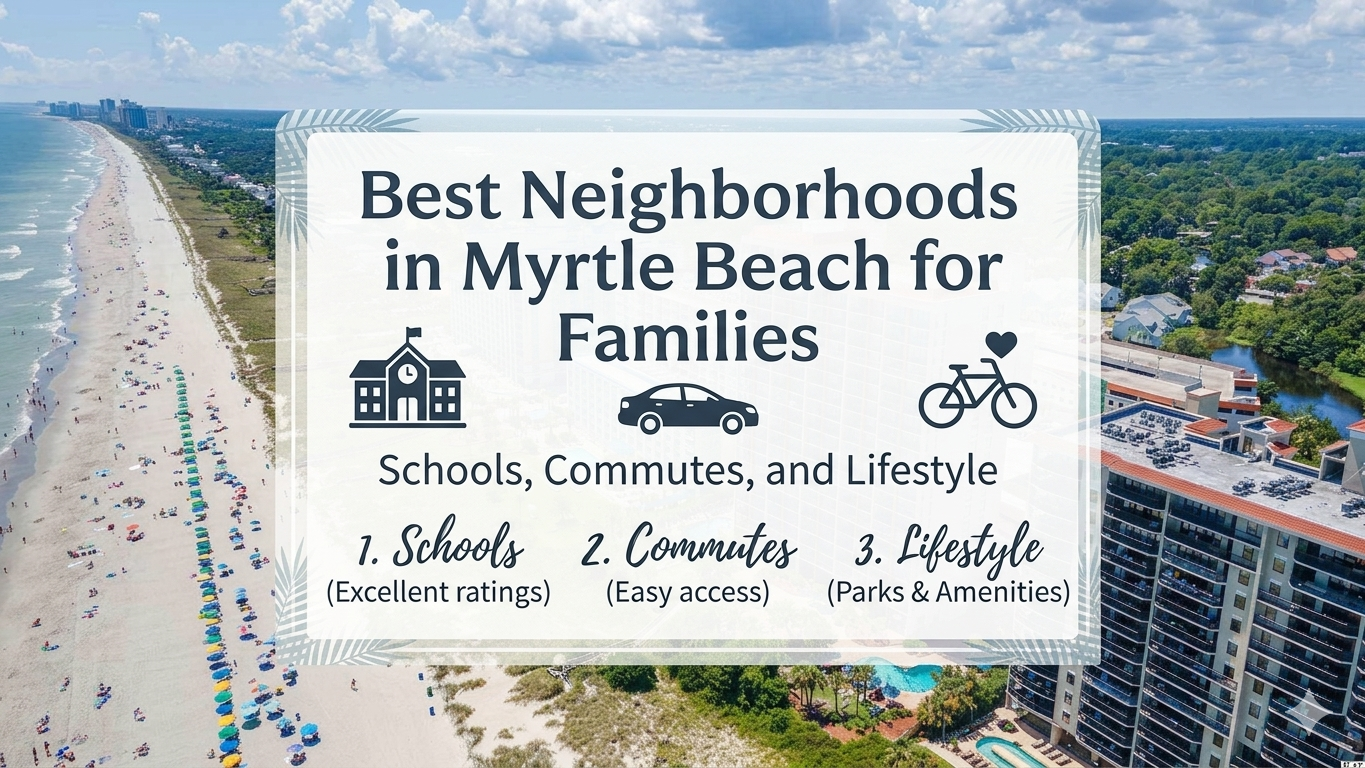
Best Neighborhoods in Myrtle Beach for Families: Schools, Commutes, and Lifestyle

Best Neighborhoods in Myrtle Beach for Families: Schools, Commutes, and Lifestyle

Key Takeaways:

  • Carolina Forest is the most popular family community in the Myrtle Beach area — newer construction, strong schools, and excellent amenities.
  • Conway offers the most affordable family housing with a small-town feel just 15 miles from the beach.
  • Market Common combines walkable lifestyle, newer construction, and proximity to the beach without the tourist noise.
  • Murrells Inlet and Surfside Beach offer quieter, family-friendly coastal living south of the main Myrtle Beach strip.
  • Horry County Schools serve most of the area — school quality varies significantly by zone, so researching specific assignments matters.

Relocating to the Myrtle Beach area with children is one of the most common moves families make from the Northeast, Midwest, and Southeast. The combination of affordable housing, no state income tax on Social Security, a lower overall cost of living, and genuine coastal lifestyle makes the Grand Strand a compelling choice for families at every income level. But "Myrtle Beach" covers a wide geography, and the right neighborhood for a family depends heavily on school quality, commute patterns, budget, and the lifestyle you are looking for.

This guide breaks down the best neighborhoods in the Myrtle Beach area for families — honestly, with the tradeoffs included. Browse Myrtle Beach homes for sale as you read through to get a real sense of what each community offers at current price points.

Please create an image with this title in the center: Best Neighborhoods in Myrtle Beach for Families: Schools, Commutes, and Lifestyle

Carolina Forest: The Top Choice for Most Families

Carolina Forest is consistently the most recommended community for families relocating to the Myrtle Beach area — and for good reason. Located about 10 miles inland from the beach off Route 501, it offers a combination of newer construction, competitive pricing, excellent community amenities, and some of the best school assignments in Horry County.

Carolina Forest High School regularly performs above the county average, and the feeder middle and elementary schools are among the most sought-after in the district. The community itself spans a large area with dozens of individual neighborhoods — from entry-level homes under $300,000 to larger executive homes in the $500,000–$700,000 range. Many neighborhoods have resort-style amenity centers with pools, tennis courts, and walking trails.

The commute to the main commercial corridors along Route 17 and the beach is 15–20 minutes depending on traffic. The biggest downside for some families: it is inland, so you do not get the immediate beach feel that some coastal communities offer. For families who want space, value, and good schools, Carolina Forest is hard to beat. Check out Carolina Forest homes for sale to see current inventory and pricing.

Market Common: Walkable Lifestyle with Beach Proximity

Market Common is a master-planned urban village built on the former site of Myrtle Beach Air Force Base. It features a walkable town center with restaurants, shops, a movie theater, and parks — all surrounded by well-designed residential communities ranging from townhomes to single-family homes. Prices generally start around $300,000 and move up to $600,000 and above for newer larger homes.

Families who want a genuine neighborhood feel — where kids can walk or bike to ice cream, the park, or the town center — find Market Common delivers that in a way that most of coastal South Carolina does not. It sits just two miles from the beach and away from the heavy tourist traffic of the main strip. School assignments here feed into competitive Horry County schools. The tradeoff is that price per square foot runs higher than Carolina Forest for comparable home sizes.

Murrells Inlet and Surfside Beach: Quieter Coastal Living

South of the main Myrtle Beach corridor, Murrells Inlet and Surfside Beach offer a noticeably quieter, more small-community feel that many families strongly prefer. Surfside Beach bills itself as "The Family Beach" — it has a more residential feel, less commercial clutter, and a genuine beach town atmosphere. Murrells Inlet is famous for its Marshwalk restaurant row and a strong sense of community identity that draws families looking to be part of a real neighborhood rather than a resort destination.

Both areas offer single-family homes ranging from the mid-$200,000s to $600,000 and above for waterfront or newer construction. School assignments vary — research specific street addresses for school zone assignments before committing to a neighborhood, as Horry County's attendance zones can be counterintuitive.

Conway: Best Value for Families on a Budget

Conway, the Horry County seat located about 15 miles northwest of Myrtle Beach, offers the most affordable family housing in the greater Grand Strand area. Single-family homes in established Conway neighborhoods can be found in the $200,000–$350,000 range — significantly below what the same square footage costs in Carolina Forest or Market Common.

Conway has a genuine small-town downtown with local restaurants, a riverwalk, and strong community events. It is home to Coastal Carolina University, which adds cultural amenities. The trade-off is a longer commute to the beach (20–25 minutes) and schools that perform somewhat below the Carolina Forest averages on state metrics. For families where budget is the primary driver and the daily beach proximity is less critical, Conway delivers excellent value.

North Myrtle Beach: Family-Friendly with Beach Access

North Myrtle Beach — specifically communities like Barefoot Resort — offers families a somewhat calmer coastal experience than central Myrtle Beach. It has its own school district (Horry County Schools serves the area) and more of a community identity compared to the tourist-heavy strip. Prices range from the $250,000s for older homes to $600,000+ for newer construction with community amenities.

The commute to central Myrtle Beach employment runs 20–30 minutes depending on location. For families who want to be in a beach community with more of a neighborhood feel, North Myrtle Beach is worth serious consideration.

Schools: What Families Need to Know About Horry County

Most of the Myrtle Beach area is served by Horry County Schools, one of the larger school districts in South Carolina. School quality varies significantly across the district. Carolina Forest, Socastee, and St. James zones are generally considered the strongest performers. Schools in the central Myrtle Beach zone and some Conway area schools perform below the state average on standardized metrics.

The most important step any family can take is to verify the specific school assignment for the exact address they are considering — not just the general community. Real estate listings do not always accurately reflect school zone assignments, and boundaries shift. Your agent can help verify current assignments directly with the district.

Connect with Greg Harrelson to get a neighborhood-by-neighborhood breakdown tailored to your family's specific priorities — school requirements, commute needs, budget, and lifestyle preferences all factor into finding the right community.

Frequently Asked Questions

What is the best neighborhood in Myrtle Beach for families with children?

Carolina Forest is consistently the top recommendation for families — it offers newer construction, competitive school assignments within Horry County, strong community amenities, and housing across a wide price range. Market Common is the top choice for families who prioritize walkability and lifestyle over square footage per dollar.

How are the schools in the Myrtle Beach area?

Horry County Schools serves most of the Myrtle Beach area. School quality varies significantly by zone. Carolina Forest, Socastee, and St. James attendance zones consistently rank among the strongest in the district. Always verify the specific school assignment for any address you are considering before committing to a purchase.

What is the most affordable family neighborhood near Myrtle Beach?

Conway offers the lowest price points for single-family homes in the greater Myrtle Beach area, with many neighborhoods offering homes in the $200,000–$350,000 range. It trades beach proximity and some school metrics for significant savings on housing costs.

Is Myrtle Beach a good place to raise a family?

Yes — the Myrtle Beach area offers a strong combination of affordable housing, outdoor lifestyle, low state taxes, and genuine community feel in its residential neighborhoods. The tourist strip is a small part of the overall area. Families who live here overwhelmingly find the quality of life strong, especially in communities like Carolina Forest, Market Common, Murrells Inlet, and Surfside Beach.

How far is Carolina Forest from the beach?

Carolina Forest is approximately 8–12 miles inland from the beach, depending on which part of the community you live in. A typical drive to the beach runs 15–20 minutes. Most Carolina Forest families find that proximity entirely workable for regular beach access without the congestion and noise of living directly on or near the tourist corridor.

About Greg Harrelson

Greg Harrelson has been one of the top-producing real estate agents in the Myrtle Beach area for over 20 years. With more than 15,000 homes and condos sold or partnered on throughout his career, Greg has guided hundreds of relocating families to exactly the right community for their needs — balancing school quality, commute, lifestyle, and budget with the precision that only deep local knowledge allows.

Greg's track record: over 1,100 five-star Zillow reviews and more than 500 Google reviews from clients who found the right home in the right neighborhood. If you are relocating your family to the Myrtle Beach area, start the conversation with Greg's team today. Browse all available Myrtle Beach homes for sale and take a close look at Carolina Forest homes for sale — the community most relocating families ultimately call home.

Posted in For Buyers
April 14, 2026

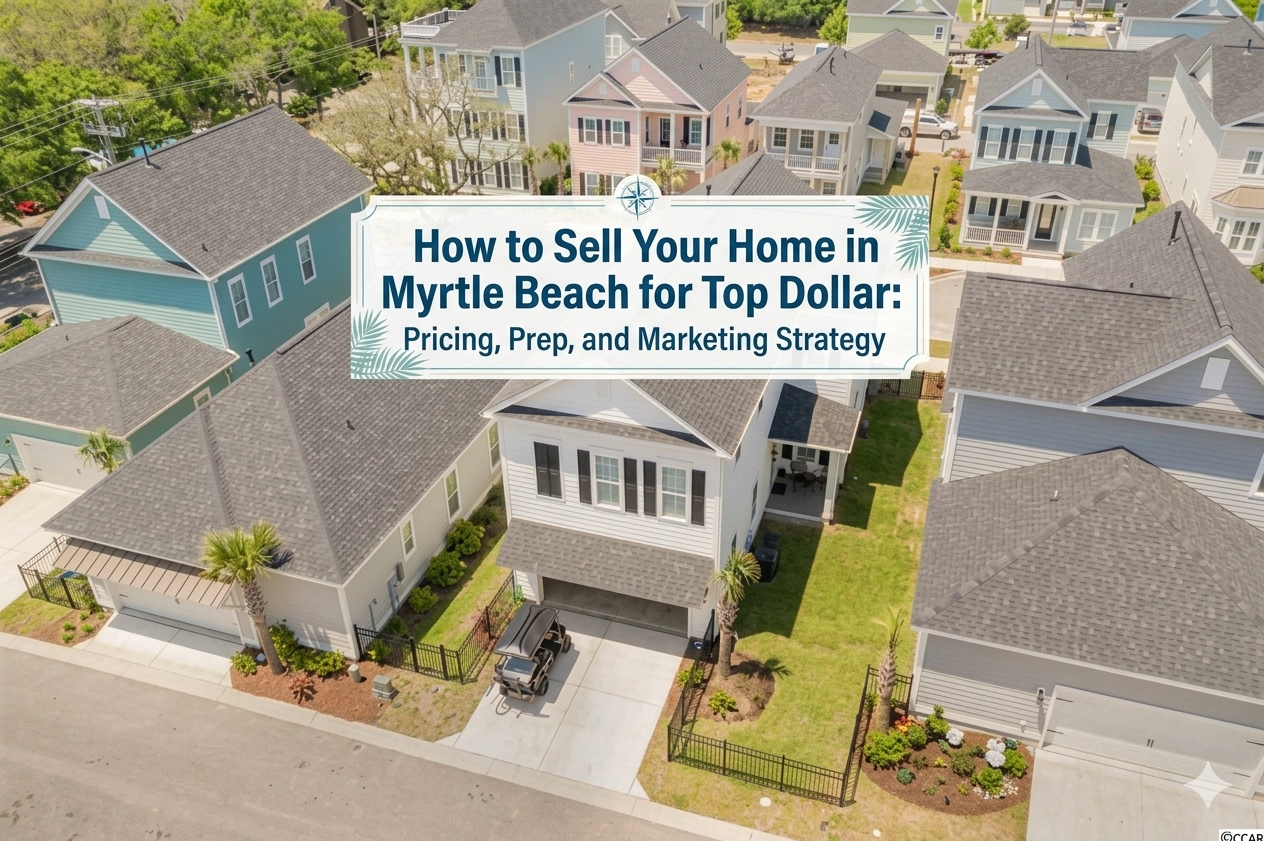
How to Sell Your Home in Myrtle Beach for Top Dollar: Pricing, Prep, and Marketing Strategy

How to Sell Your Home in Myrtle Beach for Top Dollar: Pricing, Prep, and Marketing Strategy

Key Takeaways:

  • In today's Myrtle Beach buyer's market, preparation and pricing are what separate top-dollar sales from average ones.
  • Homes that launch at the right price sell faster and for more money than homes that start high and reduce later.
  • Professional photography, strategic staging, and digital marketing are non-negotiable in 2026.
  • Small targeted improvements — paint, landscaping, fixtures — routinely deliver 3–5x their cost at closing.
  • Your agent's marketing reach and negotiation skills matter as much as the list price.

Selling a home in Myrtle Beach in 2026 requires a sharper strategy than it did two or three years ago. The market has shifted. Buyers have more choices, more time to decide, and more leverage to negotiate. In this environment, sellers who follow a disciplined, well-executed plan still achieve excellent results — while sellers who wing it, overprice, or underprepare leave significant money on the table.

This guide breaks down exactly what it takes to get top dollar for your Myrtle Beach home in the current market, from initial preparation through the negotiating table. Looking to understand what buyers are seeing? Browse Myrtle Beach homes for sale to see your competition firsthand.

Step 1: Price It Right From Day One

Nothing affects your final sale price more than your initial list price. This is not just conventional wisdom — the data backs it up consistently. Homes that are priced accurately from launch generate more showings in the critical first two weeks, create a sense of urgency among buyers, and sell closer to (or above) list price. Homes that start too high go stale. Buyers and agents notice how long a listing has been on the market, and extended time on market implies there is something wrong — even when there is not.

In the current Myrtle Beach market with homes averaging 90–112 days on market, the difference between a correctly priced home and an overpriced one is not a few days — it can be two to four months and a series of painful price reductions. Get a data-driven Comparative Market Analysis done by an experienced local agent before you settle on a number.

Step 2: Prepare Your Home to Compete

Today's Myrtle Beach buyers are browsing dozens of listings online before they schedule a single showing. Your home needs to look its absolute best — in photos, in video, and in person. Here is where to focus your prep energy:

Curb Appeal

The exterior is the first impression — in person and in the listing photo. Fresh mulch, trimmed hedges, a clean driveway, and a painted front door cost very little and make an outsized visual impact. Power-washing the driveway and exterior siding alone can make a 15-year-old home look years newer.

Declutter and Depersonalize

Buyers need to mentally move into your home. Family photos, excess furniture, and personal collections all make that harder. Clear countertops, open up floor space, and remove anything that makes the home feel cramped or overly personal. Rent a storage unit for 30–60 days if needed.

Address Deferred Maintenance

Loose door handles, dripping faucets, cracked caulk, burned-out light bulbs, and peeling paint all send a signal to buyers that the home has not been cared for — and they will apply that concern to things they cannot see. Fix the visible small stuff before you list. Buyers and inspectors will notice everything.

Targeted Improvements That Pay Off

Not every improvement is worth doing before a sale, but some consistently deliver strong returns in the Myrtle Beach market: fresh neutral interior paint (highest ROI per dollar spent), updated light fixtures and hardware, professional carpet cleaning or replacement on worn carpet, and updated cabinet hardware in kitchens and bathrooms. Major renovations like full kitchen remodels rarely recoup their full cost — focus on cosmetic updates that change buyer perception without blowing your budget.

Step 3: Invest in Professional Photography and Marketing

Over 95% of buyers begin their home search online. Your listing photos are your first showing. Amateur smartphone photos — no matter how nice the home — result in fewer clicks, fewer showings, and lower offers. Professional real estate photography is a non-negotiable investment in the current market. For higher-priced properties, drone photography and video walkthroughs have become expected tools.

Beyond photos, your home needs maximum digital exposure: full MLS syndication to Zillow, Realtor.com, and Redfin; targeted social media advertising; email marketing to active buyer databases; and agent-to-agent outreach. In my experience, the difference between a home that sits and a home that sells is often the width of its marketing reach — not its price.

Step 4: Nail the Showing Experience

When buyers walk through your door, you want them to feel welcomed, not distracted. Keep the home clean and lightly scented (nothing overwhelming), make it easy to access for showings on short notice, and leave during all showings. Sellers who hover during showings make buyers uncomfortable and rush them out the door. Give them space to connect with the property.

Step 5: Negotiate Like a Pro

The offer is not the finish line — it is the beginning of the real negotiation. Price, closing timeline, inspection contingencies, seller concessions, and personal property all come into play. In a buyer's market, most offers will include requests. Your agent's skill in countering strategically, managing inspection negotiations, and keeping the deal together when unexpected issues arise is what ultimately determines your net proceeds.

Reach out to Greg Harrelson today to get a full seller strategy session — including a free CMA, a prep checklist tailored to your home, and a marketing plan designed to generate the maximum buyer attention your property deserves.

Frequently Asked Questions

How long does it take to sell a home in Myrtle Beach in 2026?

The average days on market in Myrtle Beach is currently 90–112 days. Homes that are priced correctly, properly prepared, and well-marketed sell significantly faster — often in 30–45 days. Overpriced homes inflate the average considerably.

What improvements add the most value before selling in Myrtle Beach?

Fresh neutral paint, updated light fixtures and hardware, professional landscaping cleanup, and carpet cleaning or replacement consistently deliver the strongest returns. Major renovations like full kitchen remodels rarely recoup their full cost at resale.

Should I stage my home before selling in Myrtle Beach?

Yes. Professional or even owner-executed staging — decluttering, arranging furniture to maximize space, and creating a clean neutral aesthetic — helps buyers visualize themselves in the home. Staged homes photograph better and sell faster than unstaged ones.

Can I sell my Myrtle Beach home as-is in 2026?

Yes, you can sell as-is, but expect to price it below market to attract buyers who factor in repair costs. In a buyer's market with significant inventory, as-is homes face more competition and typically sell at steeper discounts than move-in-ready properties.

How do I find the best real estate agent to sell my Myrtle Beach home?

Look for an agent with a proven track record of sales in your specific neighborhood, strong marketing systems including professional photography and digital advertising, and verifiable client reviews. Experience in the current market cycle matters as much as total transaction count.

About Greg Harrelson

Greg Harrelson has been one of the top-producing real estate agents in the Myrtle Beach area for over 20 years. With more than 15,000 homes and condos sold or partnered on throughout his career, Greg brings proven marketing systems, sharp negotiating skills, and deep local market knowledge to every listing. His seller clients benefit from professional photography, aggressive digital marketing, and hands-on guidance from pricing through closing.

Greg's results: over 1,100 five-star Zillow reviews and more than 500 Google reviews from clients who achieved the outcomes they came looking for. Whether you are selling a condo, a golf course home, or a primary residence anywhere along the Grand Strand, Greg and his team are ready to deliver. View current Myrtle Beach homes for sale to see the market your home will compete in — and explore Carolina Forest homes for sale as one of the Grand Strand's most consistently sought-after communities.

Posted in For Sellers
April 13, 2026

What Is My Myrtle Beach Home Worth? How to Accurately Price Your Property to Sell Fast

How to Accurately Price Your Property to Sell Fast

Key Takeaways:

  • Pricing is the single most important decision you will make when selling your Myrtle Beach home.
  • Online estimates like Zillow Zestimates are often off by 5%–15% — they are a starting point, not a final answer.
  • A Comparative Market Analysis (CMA) from a local agent gives you the most accurate current value.
  • In 2026, Myrtle Beach median home prices range from approximately $190K–$385K depending on property type and area.
  • Overpricing in today's buyer's market leads to longer days on market and lower final sale prices.

If you are thinking about selling your home in Myrtle Beach, the question that matters most is not how much you paid for it or how much you have put into it — it is what today's buyers are actually willing to pay right now, in this market, for a home like yours. Getting that number right from the start is the difference between a smooth sale at a strong price and a listing that sits, collects price reductions, and eventually sells for less than it should have.

This guide explains exactly how Myrtle Beach home values are determined, what the market looks like in 2026, and how to position your property for the fastest and most profitable sale. Also browse Myrtle Beach homes for sale to see what competing properties look like from a buyer's perspective.

What Determines Your Home's Value in Myrtle Beach?

Several factors shape what buyers will pay for your property:

  • Location: Proximity to the beach, golf courses, top-rated schools, and amenities like Market Common or Carolina Forest all affect value. Oceanfront and ocean-view properties command premiums; inland properties compete on space and price.
  • Property type: Single-family homes, condos, and townhomes are three distinct markets in Myrtle Beach. Median prices differ significantly between them — do not use condo data to value a single-family home.
  • Square footage and condition: Buyers compare price per square foot. A home with deferred maintenance, dated finishes, or functional issues will price lower than a comparable move-in-ready property.
  • Recent comparable sales (comps): What similar homes in your specific neighborhood and zip code have sold for in the last 60–90 days is the most direct indicator of your home's current market value.
  • Current competition: How many similar homes are active right now? In today's Myrtle Beach market, inventory has grown significantly — buyers have choices, and your home must stand out on both value and presentation.

The 2026 Myrtle Beach Market: What Sellers Need to Know

The Myrtle Beach real estate market in 2026 is definitively a buyer's market. Homes are sitting on the market for 90–112 days on average. Inventory has grown 36% year-over-year. The sale-to-list price ratio has softened to around 96%, meaning most sellers are getting slightly below their asking price. Approximately 79% of active listings have seen at least one price reduction.

What this means for sellers: pricing to the market from day one is more important than ever. A home that is priced 5%–10% above true market value in this environment will not see the traffic it needs, will go stale, and will ultimately sell for less than a home priced correctly at launch. The data is clear on this — first-week traffic and showings predict everything about where your sale ends up.

Why Online Estimates Are Not Enough

Zillow, Redfin, and similar automated valuation models (AVMs) are useful for a general sense of value, but they have real limitations in the Myrtle Beach market. They rely on public records data, which can lag the actual market by weeks or months. They cannot account for a recent kitchen renovation, a new roof, or the fact that your community has a higher HOA fee than the neighbor they used as a comp. In a market with significant variation between oceanfront condos, golf course communities, suburban neighborhoods, and rural properties, a computer model simply cannot capture the nuance a knowledgeable local agent can.

I regularly see Zestimates that are 10%–20% off from actual market value in specific Myrtle Beach neighborhoods. Use them as a starting point for curiosity — not as your listing price.

How a Comparative Market Analysis (CMA) Works

A CMA is a detailed analysis prepared by a licensed real estate agent that compares your home to recently sold, currently active, and recently expired listings in your immediate area. A good CMA adjusts for differences in square footage, lot size, condition, upgrades, and location within the neighborhood. It gives you a defensible price range and a recommended list price based on current market conditions — not last year's conditions or a computer algorithm.

In my experience working with sellers across the Grand Strand, the homes that sell fastest and for the most money are the ones that launched at a price supported by solid comparable data. The sellers who trust the CMA process instead of their emotional attachment to a number consistently outperform those who start high and reduce later.

Factors That Can Boost or Reduce Your Home's Value

Value-adding factors: Updated kitchen and bathrooms, new roof, HVAC replacement within 5 years, fresh exterior paint, professional landscaping, screened porch or outdoor living space, community amenities like pool and tennis.

Value-reducing factors: Deferred maintenance, original builder-grade finishes in an older home, outdated electrical or plumbing, location on a busy road or near a commercial area, active HOA liens, and flood zone designation requiring separate insurance.

Pricing Strategy: List Price vs. Sale Price

Your list price is a marketing tool. It determines which buyers see your home in online search results (most buyers search within price brackets), what impression you make on the first day of activity, and how agents position your home to their clients. A price that is slightly below comparable sales can generate more showings and, in some cases, multiple offers — even in a buyer's market. A price that is too high signals overconfidence and sends buyers to better-valued competition.

The goal is not just any sale — it is the right sale at the strongest achievable price in the current market. That starts with an honest, data-driven conversation about value.

Contact Greg Harrelson for a free, no-obligation Comparative Market Analysis of your Myrtle Beach home. You will get a clear picture of what your property is worth today — and a plan to get it sold.

Frequently Asked Questions

How much is my Myrtle Beach home worth in 2026?

It depends on property type, location, condition, and recent comparable sales. In 2026, median single-family home prices in the broader Myrtle Beach area range from approximately $300,000–$385,000, while condos median closer to $190,000–$240,000. Your specific value requires a Comparative Market Analysis from a local agent.

Is a Zillow Zestimate accurate for Myrtle Beach homes?

Zillow Zestimates are a general starting point but are frequently 5%–15% off for Myrtle Beach properties. They cannot account for your home's specific condition, upgrades, HOA fees, or the nuance of your neighborhood's micro-market. A local agent CMA is far more reliable.

Should I price my home high and leave room to negotiate?

In the current 2026 Myrtle Beach buyer's market, overpricing is one of the most costly mistakes sellers make. Homes priced above market value see less traffic, sit longer, and ultimately sell for less after price reductions than homes priced correctly from the start.

How long does it take to sell a home in Myrtle Beach right now?

The average days on market in Myrtle Beach is approximately 90–112 days as of early 2026. Homes priced accurately and presented well sell faster. Overpriced homes drive that average up significantly.

Do I need an appraisal to determine my home's value before listing?

A pre-listing appraisal is not required but can be useful in unique or high-value properties where comps are limited. For most sellers, a detailed CMA from an experienced local agent provides sufficient pricing guidance and is free of charge.

About Greg Harrelson

Greg Harrelson has been one of the top-producing real estate agents in the Myrtle Beach area for over 20 years. With more than 15,000 homes and condos sold or partnered on throughout his career, Greg brings pricing expertise and market knowledge that few agents in the area can match. His approach to seller representation starts with honest, data-driven pricing and follows through with aggressive marketing to attract the right buyer at the right price.

Greg's track record: over 1,100 five-star reviews on Zillow and more than 500 reviews on Google. If you want to know what your home is truly worth in today's Myrtle Beach market, there is no better resource.

Posted in For Sellers
April 13, 2026

Selling Fast: Why You Don’t Have to Sacrifice Your Equity for Speed

When you need to sell your home quickly, the stress can be overwhelming. Whether you’re dealing with a job relocation, financial changes, or a property that’s become a burden, the "traditional" real estate process—which can take 3 to 4 months—often feels like a luxury you don’t have.Selling Fast Cash Offer Image

In these moments, a "Cash for Houses" investor offer looks like a lifesaver. It’s fast, it’s easy, and it’s done. But before you sign away your deed, you need to know that there is a massive price tag attached to that convenience.

Today, I want to show you the three ways to sell and introduce a "Third Way" that balances speed and profit.

1. The Investor Route: Convenience at a Cost

Selling to a cash investor is the "easy button" of real estate.

- The Pros: You skip the open market. There are no public showings, no "staging," and no repairs required. Closing can happen in as little as 7–10 days.

- The Cons: You pay for that speed with your equity. Investors need to make a profit, cover renovation costs, and hedge against risk. Because of this, they typically offer about 70% of the home's full value.

2. The Traditional Route: Maximum Price, Maximum Time

This is the "standard" way of selling. You fix every chip in the paint, stage the home perfectly, and list it at the top of the market.

- The Pros: You aim for 100% of the market value.

- The Cons: This is a marathon. It requires constant showings, cleaning, and negotiations. On average, this process takes 3 to 4 months from listing to closing.

3. The "Quick Sale" Strategy: The Best of Both Worlds

Most homeowners believe they only have the two choices above. But there is a middle ground that I call the Quick Sale Strategy.

By pricing your home aggressively for the open market (rather than just one investor), you create a "feeding frenzy." You aren't just appealing to one person; you are appealing to the hundreds of buyers currently looking for a deal.

The Math: A Side-by-Side Comparison

Strategy
Price Realized
Estimated Timeline
Cash Investor
~70% of Value
1–2 Weeks
Quick Sale Strategy
~92% of Value
2–4 Weeks
Full Market Value
100% of Value
3–4 Months
     

The Difference: On a $400,000 home, the Quick Sale Strategy can put an extra $88,000 in your pocket compared to an investor offer, while only adding about two weeks to the process.


Frequently Asked Questions

Why wouldn't I just sell to a cash investor? Selling to an investor is excellent if the property is in significant disrepair or if you must close in days. However, if you can afford an extra 14 days, the Quick Sale Strategy usually nets you thousands of dollars more.

Does the "Quick Sale Strategy" require me to do repairs? Not necessarily. While "Full Market Value" listings often require staging and updates, a Quick Sale is designed to attract "as-is" buyers who are willing to pay a premium over investor prices because they plan to live in the home themselves.

How do you determine the "Quick Sale" price? We analyze the most recent "closed" sales in your neighborhood and identify the price point that historically triggers immediate multiple offers. It’s a mathematical "sweet spot" that balances high demand with maximum return.

About Greg Harrelson

Greg Harrelson is a leader in the real estate industry with over two decades of experience helping homeowners navigate complex markets. As the founder of a top-performing real estate organization, Greg has built his reputation on innovation, data-driven strategies, and an unwavering commitment to client equity.

Known for his Quick Sale Strategy, Greg specializes in helping sellers bypass the predatory pricing of traditional "cash-for-homes" investors without sacrificing the speed they need. His approach combines cutting-edge marketing with deep local market insights to ensure his clients get the highest possible return in the shortest amount of time.


Ready to see what your "Quick Sale" number looks like? > Don't leave 20% of your wealth on the table. Contact Greg Harrelson today for a no-obligation equity analysis.

April 12, 2026

How Much Down Payment Do You Really Need to Buy a Home in Myrtle Beach?

Key Takeaways:

  • You do NOT need 20% down to buy a home in Myrtle Beach — options start as low as 0%.
  • VA loans offer 0% down for eligible veterans; USDA loans offer 0% in qualifying rural areas.
  • FHA loans require just 3.5% down with a 580+ credit score.
  • Conventional loans start at 3% down for qualified buyers.
  • SC Housing assistance programs can help cover down payment and closing costs.

One of the biggest myths I hear from buyers considering a move to the Myrtle Beach area is that they need to have 20% saved before they can purchase a home. That simply is not true. There are multiple loan programs available to buyers in South Carolina right now that allow you to buy with as little as 0%, 3%, or 3.5% down — and understanding your options can make the difference between buying this year and waiting years longer than you need to.

This guide breaks down every major down payment option available to Myrtle Beach buyers in 2026, what each one costs you over time, and how to choose the right approach for your situation. Browse Myrtle Beach homes for sale while you work through your financing plan.

The 20% Down Myth — And Why It Persists

The 20% down payment standard comes from conventional loan requirements for avoiding private mortgage insurance (PMI). If you put less than 20% down on a conventional loan, you pay PMI — typically 0.5% to 1.5% of the loan amount per year — until you reach 20% equity. That adds to your monthly payment, but it does not mean you cannot or should not buy with less down.

In many cases, putting less down and investing the remaining cash elsewhere makes financial sense. The key is understanding the full cost of each option and making the right tradeoff for your goals.

Down Payment Options for Myrtle Beach Buyers in 2026

0% Down — VA Loans

VA loans are the gold standard for eligible veterans, active-duty military, and surviving spouses. They require no down payment, no PMI, and offer competitive interest rates. If you have VA eligibility and are buying in Myrtle Beach, this should almost always be your first choice. The only upfront cost is a VA funding fee (1.25%–3.3% of the loan, depending on usage and down payment), and even that can be rolled into the loan.

0% Down — USDA Loans

Some areas just outside the immediate Myrtle Beach metro — particularly in rural parts of Horry County and nearby Brunswick County in North Carolina — qualify for USDA Rural Development loans. These require no down payment for buyers who meet income limits. Check the USDA eligibility map early in your search if this option interests you.

3.5% Down — FHA Loans

FHA loans are the most popular low-down-payment option for buyers who do not have VA eligibility. With a credit score of 580 or higher, you can put down just 3.5%. On a $300,000 home, that is $10,500 upfront — far more attainable than the $60,000 a 20% down payment would require. The trade-off is mandatory mortgage insurance for the life of the loan in most cases, but for many buyers the ability to get into a home sooner outweighs that cost.

3%–5% Down — Conventional Loans

Conventional loans now allow as little as 3% down for first-time buyers through programs like Fannie Mae's HomeReady and Freddie Mac's Home Possible. With 5% down, you have access to the broadest range of conventional loan products. PMI applies until you reach 20% equity, but once you hit that threshold through payments or appreciation, PMI drops off automatically.

10%–20% Down — Stronger Offers, Lower Monthly Cost

If you have the savings, putting more down reduces your monthly payment, lowers your interest cost over the life of the loan, and in competitive multiple-offer situations can make your offer more attractive to sellers. In the current Myrtle Beach market — where homes are sitting longer and sellers have more negotiating pressure — the advantage of a larger down payment is less about winning bidding wars and more about your long-term financial picture.

SC Housing Down Payment Assistance

The South Carolina Housing Finance Authority offers down payment assistance programs for first-time and income-qualifying buyers. These programs can provide a forgivable second mortgage of up to 4% of the loan amount to cover down payment and closing costs. Combined with a competitive first mortgage rate, SC Housing programs can dramatically reduce what you need to bring to closing. Ask your lender about SC Housing eligibility early — not all lenders participate.

What About Closing Costs?

Down payment is only part of your upfront cost. Buyers in Myrtle Beach should also budget for closing costs, which typically run 2%–5% of the loan amount. On a $300,000 purchase, that is another $6,000–$15,000. In the current buyer-friendly Myrtle Beach market, asking the seller to contribute toward closing costs is common and frequently successful. Your agent can build seller concessions into the offer to reduce your out-of-pocket costs at closing significantly.

Which Down Payment Option Is Right for You?

The right answer depends on your credit profile, income, savings, and whether you qualify for VA or USDA benefits. Here is a quick guide:

  • Veteran or active-duty military: Start with VA loan — 0% down, no PMI.
  • Buying in a rural area, meet income limits: Explore USDA — 0% down.
  • Credit score 580–699, limited savings: FHA at 3.5% down is likely your best fit.
  • Credit score 700+, stable income: Compare conventional at 3%–10% down vs. FHA — conventional may be cheaper long-term.
  • First-time buyer, moderate income: Check SC Housing programs before applying anywhere else.

Explore Myrtle Beach homes for sale and connect with a local lender to run the real numbers for your situation before you decide on a loan type.

Frequently Asked Questions

Do I need 20% down to buy a home in Myrtle Beach?

No. You can buy a home in Myrtle Beach with as little as 0% down through VA or USDA loans, 3.5% down through FHA, or 3% down through certain conventional programs. The 20% threshold eliminates PMI but is not required to purchase.

What is the minimum down payment for a first-time buyer in South Carolina?

For first-time buyers using FHA financing, the minimum is 3.5% with a 580 credit score. Conventional loans allow 3% down for qualifying first-time buyers. SC Housing programs may provide assistance to cover some or all of this amount.

Can I get down payment assistance in Myrtle Beach?

Yes. The South Carolina Housing Finance Authority provides down payment and closing cost assistance of up to 4% of the loan amount for qualifying buyers. Ask your lender about SC Housing program eligibility early in the process.

What is the average down payment for homes in Myrtle Beach?

Down payment amounts vary widely. Many buyers put down 3%–10%, while some investors and move-up buyers put down 20% or more. The right amount depends on your loan type, savings, and financial goals — not an industry average.

Does a higher down payment help me win offers in Myrtle Beach?

In the current Myrtle Beach buyer's market with 90+ days on market and significant inventory, a larger down payment matters less for offer competitiveness and more for your long-term monthly payment and loan costs. Sellers today are more focused on price and terms than down payment size.

Ready to Start Your Myrtle Beach Home Search?

Understanding your down payment options is the first step. The next is getting pre-approved so you know exactly what you can afford and can move quickly when the right property comes up. Reach out to Greg Harrelson to connect with a trusted local lender and start your home search with a clear plan.

About Greg Harrelson

Greg Harrelson has been one of the top-producing real estate agents in the Myrtle Beach area for over 20 years. With more than 15,000 homes and condos sold or partnered on throughout his career, Greg brings a level of local market expertise that few agents can match. His approach combines proven marketing strategies with exceptional follow-up and communication, ensuring that every buyer receives hands-on guidance from the first showing through closing day.

Greg's track record speaks for itself: over 1,100 five-star reviews on Zillow and more than 500 reviews on Google — a reflection of the consistent results and client-first service his team delivers. Whether you are buying a primary residence, vacation home, or investment property anywhere along the Grand Strand, Greg and his team have the experience and systems to get it done right. Interested in one of Myrtle Beach's most sought-after communities? Check out Carolina Forest homes for sale — a top choice for families and value-driven buyers.

Posted in For Buyers
April 11, 2026

Retiring in Myrtle Beach: Is It the Right Place to Downsize or Buy a Second Home?

Retiring in Myrtle Beach: Is It the Right Place to Downsize or Buy a Second Home?

Key Takeaways:

  • Myrtle Beach consistently ranks among the top 10 retirement destinations in the United States for affordability and lifestyle.
  • South Carolina does not tax Social Security income and offers significant property tax relief for primary residents 65 and older.
  • The Grand Strand offers both active 55+ communities and traditional neighborhoods suited to retirees.
  • In 2026's buyer's market, retirees have more negotiating power and more inventory to choose from than at any point in the past five years.
  • Second-home buyers should understand short-term rental rules, HOA restrictions, and insurance costs before purchasing.

Every year, thousands of retirees from the Northeast, Midwest, and Mid-Atlantic states make the move to Myrtle Beach — and for good reason. The combination of affordable housing, low taxes, warm climate, beach lifestyle, and an established retiree community makes the Grand Strand one of the most compelling retirement destinations in the country. But whether Myrtle Beach is right for you specifically depends on your lifestyle priorities, financial situation, and what you actually want your retirement to look like day to day.

Retiring in Myrtle Beach

This guide covers everything retirees need to know about living in Myrtle Beach — the financial case, the lifestyle reality, the best communities, and the key questions to answer before you buy. Start exploring your options by browsing Myrtle Beach homes for sale to get a feel for what your retirement budget can realistically buy on the Grand Strand.

The Financial Case for Retiring in Myrtle Beach

South Carolina's tax treatment of retirement income is one of the strongest in the Southeast. The state does not tax Social Security benefits at all. For residents 65 and older, up to $10,000 of other retirement income — pensions, 401(k) distributions, IRA withdrawals — is exempt from state income tax per person, meaning a married couple can shelter $20,000 per year. The overall state income tax rate is also lower than most northern states retirees are moving from.

Property taxes in South Carolina are among the lowest in the nation for primary residents. The legal residence exemption reduces the assessed value of your primary home, and the Homestead Exemption available to residents 65 and older exempts the first $50,000 of a home's value from property taxes entirely. This combination results in annual tax bills that genuinely shock most retirees relocating from states like New Jersey, New York, or Connecticut.

Housing costs are another significant advantage. In 2026, the Myrtle Beach market is firmly in buyer's territory — with over 90 days average on market, strong inventory, and sellers willing to negotiate. Retirees have real purchasing power right now that has not existed in this market for several years.

The Lifestyle: What Retirement Actually Looks Like in Myrtle Beach

The lifestyle question is where Myrtle Beach either wins or loses for specific retirees. Here is an honest picture:

What it offers: 60 miles of beaches. Over 100 golf courses. A deep, established retiree social infrastructure — church communities, clubs, volunteer organizations, pickleball leagues, arts groups. Warm winters that make outdoor activity comfortable year-round. Short drives to major medical centers including Grand Strand Medical Center and Conway Medical Center, with MUSC and Roper Saint Francis in Charleston within 90 minutes. Reasonable proximity to major airports (Myrtle Beach International and Wilmington, NC).

The honest tradeoffs: Summer is hot and humid, and the tourist traffic on the main strip from June through August is heavy. If your vision of retirement involves peaceful year-round walks on the beach boardwalk, be aware that summer mornings are your window. The area does not have the same cultural density — major league sports, world-class museums, top-tier performing arts — as larger metro areas. Healthcare quality is good for routine and moderate needs; for highly specialized care, patients often travel to Charleston or Charlotte.

In my experience working with retirees relocating to the Myrtle Beach area, the ones who thrive are those who genuinely embrace the outdoor and social lifestyle the area offers. The ones who struggle are those who expected urban amenities at a beach address.

Best Communities for Retirees in the Myrtle Beach Area

Active Adult (55+) Communities

The Grand Strand has a strong selection of age-restricted and active adult communities specifically designed for retirees. These typically offer amenity centers with indoor pools, fitness facilities, tennis and pickleball courts, walking trails, and organized social programming. Popular options include communities in the Carolina Forest, Murrells Inlet, and Little River areas. Prices in active adult communities generally range from the $250,000s to $450,000 for single-story villa or patio homes.

Carolina Forest

While not exclusively a retirement community, Carolina Forest is extremely popular with active retirees who want more space, newer construction, and community amenities without the 55+ restrictions. Its central location, abundance of dining and shopping, and golf course access make it a natural fit for retirees who want a full-service lifestyle. Homes range from $280,000 to $600,000 and above. Check out available Carolina Forest homes for sale for a closer look at current inventory.

Murrells Inlet and Pawleys Island

South of Myrtle Beach, Murrells Inlet and Pawleys Island attract retirees who want a quieter, more genuinely coastal lifestyle. The pace is slower, the communities more established, and the character more distinctly South Carolina than resort destination. Pawleys Island in particular appeals to retirees looking for a classic beach community with a strong sense of place. Prices range from $300,000 to well over $1 million for true island properties.

North Myrtle Beach and Little River

The northern Grand Strand — particularly the Barefoot Resort area of North Myrtle Beach and the waterway communities of Little River — offers a combination of golf, boating access, and a quieter lifestyle than central Myrtle Beach. Many retirees who want to be near the water without oceanfront price tags find this area hits the right balance. Prices range from the $250,000s for smaller homes to $700,000+ for waterway properties.

Buying a Second Home in Myrtle Beach: What to Know

Myrtle Beach is one of the top second-home and vacation property markets on the East Coast, and retirees from northern states frequently consider buying here as a winter retreat before deciding whether to relocate permanently. A few important considerations for second-home buyers:

  • Short-term rental rules vary significantly. Myrtle Beach city limits restrict short-term rentals to specific zones. North Myrtle Beach requires permits. HOA rules in many condo communities further restrict or prohibit rentals. If rental income is part of your plan, verify the rules before you buy — not after.
  • Insurance costs matter. Coastal properties require homeowners insurance, and many also require separate flood and wind/hail policies. Get insurance quotes early in the process — for some oceanfront and inlet properties, annual insurance costs can rival the mortgage payment.
  • Property tax rates differ for second homes. South Carolina's favorable Homestead Exemption and legal residence rates apply only to primary residences. Second homes are taxed at a higher assessment ratio, which meaningfully affects annual tax costs.
  • Property management. If you plan to use the property part of the year and rent or leave it vacant the rest, budget for professional property management. Coastal properties require active maintenance oversight — the climate is not forgiving of deferred upkeep.

Whether you are considering a permanent retirement move or a second home purchase, reach out to Greg Harrelson for a personalized strategy session. Greg has helped hundreds of retirees and second-home buyers find exactly the right property at the right price on the Grand Strand.

Frequently Asked Questions

Is Myrtle Beach a good place to retire?

Yes, for the right retiree. Myrtle Beach offers a compelling combination of affordable housing, low taxes on retirement income, warm climate, golf and beach lifestyle, and a large established retiree community. It is best suited to retirees who genuinely want an active outdoor and social lifestyle rather than urban cultural amenities.

Does South Carolina tax Social Security income?

No. South Carolina does not tax Social Security benefits. Additionally, residents 65 and older can exclude up to $10,000 per person ($20,000 for a married couple) of other retirement income — pensions, IRA distributions, 401(k) withdrawals — from state income taxes.

What are the best 55+ communities in Myrtle Beach?

The Grand Strand has a range of active adult communities in Carolina Forest, Murrells Inlet, Little River, and North Myrtle Beach. These typically offer single-story homes, amenity centers with pools and fitness facilities, and organized social programming. Prices generally range from $250,000 to $450,000 for primary residences in these communities.

How much does it cost to buy a retirement home in Myrtle Beach?

Retirement-suitable homes in the Myrtle Beach area range from the $230,000s for smaller condos and patio homes to $500,000 and above for newer single-family homes in premium communities. In 2026's buyer's market, retirees have strong negotiating leverage and a wide selection of inventory to choose from.

Can I rent out my Myrtle Beach second home when I am not using it?

Potentially, but the rules vary significantly by location. Myrtle Beach city limits restrict short-term rentals by zone. North Myrtle Beach requires a permit and local agent. Many condo HOAs prohibit or restrict short-term rentals entirely. Always verify rental rules for the specific property and HOA before purchasing if rental income is part of your plan.

About Greg Harrelson

Greg Harrelson has been one of the top-producing real estate agents in the Myrtle Beach area for over 20 years. With more than 15,000 homes and condos sold or partnered on throughout his career, Greg has helped hundreds of retirees and second-home buyers find the right property on the Grand Strand — whether they were looking for a low-maintenance condo near the beach, an active adult community with full amenities, or a quiet waterway home in Murrells Inlet or Pawleys Island.

Greg's results: over 1,100 five-star Zillow reviews and more than 500 Google reviews from clients who found exactly what they were looking for. If retirement in Myrtle Beach is on your horizon — whether now or in a few years — the best first step is a conversation with someone who knows this market inside and out. Browse current Myrtle Beach homes for sale to start exploring your options, and reach out to Greg's team when you are ready to take the next step.

Posted in For Buyers