Explore the Myrtle Beach Real Estate Blog

Find exactly what you need, whether you're buying, selling, or just getting to know the Grand Strand.

01

Buying a Home

First-time buyer guides, financing tips, and how to win in the Myrtle Beach market.

02

Selling a Home

Pricing, staging, and the marketing that actually gets coastal homes sold.

03

Lifestyle and Communities

Coastal living, local communities, and what day-to-day life is really like along the Grand Strand.

04

Market Updates

The latest on prices, inventory, and what it means for you.

05

Moving & Relocation

Relocating to the coast? Tips on the move, schools, and settling into the Grand Strand.

06

Offer to Close

Step-by-step guides to buying and selling on the Grand Strand — from your first offer through closing day.

April 11, 2026

Best Time to Sell a House in Myrtle Beach, SC: Seasonal Trends and 2026 Data

Best Time to Sell a House in Myrtle Beach, SC: Seasonal Trends and 2026 Data

Key Takeaways:

  • Spring (March–May) is historically the strongest selling season in Myrtle Beach, SC.
  • Summer brings peak tourist traffic but also second-home buyers and vacation rental investors.
  • Winter is slower but can attract serious buyers — especially retirees relocating from northern states.
  • In 2026's buyer's market, timing matters less than pricing, preparation, and marketing.
  • Listing in late February or early March captures the first surge of spring buyer demand.

One of the most common questions sellers ask me is: "When is the best time to list my home in Myrtle Beach?" It is a smart question — and the answer is more nuanced for the Grand Strand than for most markets in the country. Because Myrtle Beach attracts a unique mix of primary residents, retirees, vacation home buyers, and investment property purchasers, the seasonal rhythms here do not perfectly mirror the national real estate calendar.
Best Time to Sell a House in Myrtle Beach

This guide breaks down Myrtle Beach's seasonal selling trends, what the 2026 data tells us about timing, and how to think about launch timing in the current market. And while you are planning your strategy, take a look at Myrtle Beach homes for sale to understand what your competition looks like right now.

Spring: The Peak Selling Season in Myrtle Beach

Spring — specifically late February through May — is the strongest selling window for most residential properties in Myrtle Beach. This tracks with national patterns but has additional local drivers. Snowbirds who have spent the winter in Myrtle Beach use the spring to make purchasing decisions before heading north. Families looking to relocate for the next school year are actively searching. The weather is ideal for showings and open houses. And the tourist season is ramping up, which keeps the energy and visibility of the area high.

In my experience working with sellers along the Grand Strand for over 20 years, homes that list in late February or early March consistently see strong first-week traffic. Buyers who have been watching the market all winter tend to act quickly when new, well-priced inventory hits. That urgency works in sellers' favor.

Summer: Strong for Vacation Properties and Investor Buyers

Summer in Myrtle Beach is peak tourist season, which brings a specific type of buyer into the market: vacation home shoppers and short-term rental investors. If your property is oceanfront, ocean view, or located in a desirable condo community with rental history, summer can be an excellent time to sell. Buyers visiting the area for a vacation frequently fall in love with it and start actively searching for investment or second-home opportunities while they are here.

For primary residence sellers, summer is decent but slightly softer than spring — families have already made their school-year decisions, and the heat and summer crowds can make in-person touring less appealing for some buyers. That said, in 2026's high-inventory environment, a well-priced home in summer still generates solid activity.

Fall: A Solid Secondary Window

September through November offers a legitimate secondary selling season in Myrtle Beach. The summer crowds have thinned, the weather is still pleasant for showings, and a new wave of buyers — many of them retirees or pre-retirees from northern states beginning their relocation planning — enters the market. Buyers in the fall tend to be more serious and motivated, which means fewer casual lookers and more genuine offers.

Fall is also when the snowbird migration begins in earnest. Many of the buyers who purchase Myrtle Beach properties in October and November are people who have been visiting the area seasonally for years and have finally decided to make the move permanent or purchase a winter retreat.

Winter: Slower but Not Dead

December through February is the slowest period for most property types in Myrtle Beach — but do not confuse slow with dead. The buyers who are active in winter are almost always highly motivated. They have a specific reason to be searching right now: a job relocation, a retirement milestone, a life transition. They are not casually browsing. Sellers who list in winter often face less competition from other listings and can attract serious offers from buyers ready to move quickly.

The trade-off is lower overall showing volume and potentially a longer time to the right buyer. If your timeline is flexible, spring is the stronger launch window. If you need to sell now or have a unique property that appeals to the snowbird or retiree buyer, winter listing can absolutely work.

What 2026 Data Tells Us About Timing

The most important data point for Myrtle Beach sellers in 2026 is this: homes are averaging 90–112 days on market regardless of season. That means even in peak spring, the market is slower than it was in 2021–2023. The implication is clear — timing alone does not save a seller anymore. Overpriced homes sit in spring just as they sit in January.

What the data also shows is that inventory has grown 36% year-over-year. The buyers out there have more choices. Your home needs to stand out not just because of when you list it, but because of how it is priced, presented, and marketed.

The Bottom Line on Timing

If you have a choice, target a late February or early March launch to capture the opening of spring buyer demand. Prepare your home in January so you are ready to move quickly when the market picks up. If spring is not possible, do not wait an entire year — a well-executed fall listing can achieve strong results, and winter listings have their own motivated-buyer advantages.

But here is the real truth after 20-plus years in this market: the sellers who succeed are the ones who price correctly, prepare well, and market aggressively — not necessarily the ones who time their launch to the exact right week.

Contact Greg Harrelson to discuss your specific situation, your property type, and the best strategy for your timeline. Every home and every seller's situation is different — the right plan is the one built around your goals.

Frequently Asked Questions

What is the best month to sell a house in Myrtle Beach?

Historically, March through May produces the strongest selling conditions in Myrtle Beach. Listing in late February to capture early spring demand typically yields the most showing activity and competitive offers. However, in 2026's buyer's market, pricing and preparation matter more than the exact month.

Does the tourist season affect home sales in Myrtle Beach?

Yes, particularly for vacation properties and condos. Summer tourist traffic brings buyers who are visiting the area and often considering a purchase. Oceanfront and short-term rental properties tend to generate stronger interest from June through August for this reason.

Is it harder to sell a home in Myrtle Beach in the winter?

Winter brings lower showing volume, but buyers who are active in December through February tend to be highly motivated and serious. Less competition from other listings can work in a seller's favor. It is not the ideal window for most sellers, but it is not a dead period either.

How long does it take to sell a home in Myrtle Beach in 2026?

The current average days on market in Myrtle Beach is approximately 90–112 days across all seasons. Correctly priced, well-presented homes sell significantly faster. Overpriced homes skew that average dramatically upward.

Should I wait for spring to list my Myrtle Beach home?

If your home will be ready and properly priced in spring, waiting makes sense. But if waiting means delaying months, the cost of carrying the property — mortgage, taxes, insurance, maintenance — often outweighs the benefit of a seasonal timing advantage. Discuss the tradeoffs with a local agent who knows your specific neighborhood.

About Greg Harrelson

Greg Harrelson has been one of the top-producing real estate agents in the Myrtle Beach area for over 20 years. With more than 15,000 homes and condos sold or partnered on throughout his career, Greg has navigated every market cycle the Grand Strand has seen — booms, corrections, and everything in between. His sellers benefit from timing expertise, sharp pricing strategy, and marketing systems that generate maximum buyer exposure in any season.

Over 1,100 five-star Zillow reviews and more than 500 Google reviews reflect the consistent results Greg's team delivers. Whether you are ready to list now or planning ahead for spring, start the conversation today. Browse Myrtle Beach homes for sale to see what buyers are looking at right now — and explore Carolina Forest homes for sale as one of the most consistently active communities on the Grand Strand.
Posted in For Sellers
April 11, 2026

Closing Costs in Myrtle Beach: Who Pays What and How Much You Should Budget

Closing Costs in Myrtle Beach: Who Pays What and How Much You Should Budget

Key Takeaways:

  • Buyers in South Carolina typically pay 2%–5% of the loan amount in closing costs.
  • Sellers typically pay 6%–10% of the sale price, with agent commissions being the largest cost.
  • South Carolina requires a licensed attorney to supervise all real estate closings — a mandatory cost for both parties.
  • In today's Myrtle Beach buyer's market, asking sellers for concessions toward closing costs is common and often successful.
  • SC deed stamps (transfer tax) run $3.70 per $1,000 of sale price and are traditionally paid by the seller.

Closing Costs in Myrtle Beach

Closing costs catch many first-time buyers and sellers off guard. You have negotiated the price, gotten your financing in order, and then suddenly there is a stack of fees at the closing table that nobody fully explained upfront. This guide lays out exactly what closing costs look like in Myrtle Beach in 2026 — for both buyers and sellers — so you can plan accurately and avoid surprises.

Whether you are buying or selling, knowing the full cost picture before you go under contract is essential. Start by exploring current Myrtle Beach homes for sale to get a sense of price ranges while you plan your budget.

What Are Closing Costs?

Closing costs are the fees and expenses paid at the end of a real estate transaction — the final step before ownership transfers. They are separate from the down payment and the sale price. Both buyers and sellers pay closing costs, but their responsibilities are different. Some costs are fixed by law or lender requirements; others are negotiable between the parties.

Buyer Closing Costs in Myrtle Beach

Buyers in South Carolina typically pay between 2% and 5% of the loan amount in closing costs. On a $300,000 purchase with a $285,000 loan (after 5% down), that works out to approximately $5,700–$14,250. Here is where that money goes:

Lender Fees

Your lender will charge an origination fee or underwriting fee, typically between $950 and $1,250. Some lenders also charge a loan origination point (1% of the loan amount) to secure a lower rate — this is optional and worth evaluating based on how long you plan to keep the loan.

Appraisal Fee

Lenders require an independent appraisal to confirm the home's value supports the loan amount. Appraisal fees in the Myrtle Beach area typically run $400–$600 for a standard single-family home.

Home Inspection

A home inspection is not required by lenders, but it is strongly recommended. General inspections typically run $300–$500 in the Myrtle Beach market. Specialized inspections — for HVAC, termites, pool, roof — add additional cost but are often worth every dollar.

Attorney Fees

South Carolina is an attorney state — every residential real estate closing must be supervised by a licensed South Carolina attorney. Attorney fees typically range from $500 to $1,000 depending on the firm and complexity of the transaction. The buyer usually selects and pays the closing attorney.

Title Insurance

Lender's title insurance is required by virtually all lenders and protects them if a title issue arises after closing. Owner's title insurance — which protects the buyer — is optional but recommended. Together, title insurance costs typically run 0.5%–1% of the purchase price.

Prepaid Items

Buyers must also prepay homeowners insurance (typically one full year upfront), prepaid interest from closing date to end of the month, and fund the initial escrow account for taxes and insurance. These prepaids can add $2,000–$5,000 depending on the loan amount, insurance costs, and timing of closing.

Flood Insurance

Many properties in the Myrtle Beach area are in FEMA flood zones and require separate flood insurance. If required, lenders will ask for the first year paid upfront at closing. Flood insurance premiums vary significantly by zone and coverage level — get a quote early in the process so there are no surprises.

Seller Closing Costs in Myrtle Beach

Sellers typically pay between 6% and 10% of the sale price in total closing costs. On a $350,000 home, that is $21,000–$35,000 — a significant amount that should be factored into your net proceeds calculation before you list.

Real Estate Commission

Commission remains the largest seller cost. Listing agent fees currently average around 2.83% in South Carolina, and buyer's agent compensation is now negotiated separately as a result of 2024 industry changes. Many sellers offer to cover buyer's agent compensation to attract buyers — discuss the right strategy with your agent based on current market conditions in your neighborhood.

SC Deed Stamps (Transfer Tax)

South Carolina charges $3.70 per $1,000 of the sale price in deed recording fees (deed stamps). On a $350,000 sale, that is $1,295. This is traditionally a seller cost, though it is negotiable.

Attorney Fees (Seller's Side)

Sellers do not need to hire their own attorney but are responsible for their portion of the closing attorney's fee for services like payoff processing and title transfer coordination. Expect $200–$500 on the seller side.

Prorated Property Taxes

You will pay property taxes for the portion of the year you owned the home up to the closing date. This is typically credited to the buyer at closing and deducted from your proceeds.

How to Reduce Closing Costs in This Market

In the current Myrtle Beach buyer's market — with over 90 days average on market and sellers competing for buyers' attention — asking for seller concessions toward closing costs is not just acceptable, it is common. Buyers routinely request 2%–3% of the purchase price in seller-paid closing cost credits, and sellers are frequently agreeing. Your offer strategy should factor this in from the start.

Also compare lenders. Origination fees, underwriting fees, and title service costs vary more than most buyers expect. Getting loan estimates from two or three lenders takes a few days but can save thousands.

Work with Greg Harrelson to get a detailed seller net sheet or buyer cost estimate before you go under contract — knowing your exact numbers removes stress from the closing table.

Frequently Asked Questions

How much are closing costs for buyers in Myrtle Beach?

Buyers in Myrtle Beach typically pay 2%–5% of the loan amount in closing costs, covering lender fees, appraisal, attorney costs, title insurance, and prepaid items like insurance and taxes. On a $300,000 purchase, budget $6,000–$15,000 above your down payment.

Who pays the attorney fee at closing in South Carolina?

South Carolina requires a licensed attorney to supervise all residential real estate closings. The buyer typically selects and pays the closing attorney's fee, which generally runs $500–$1,000. Sellers may also pay a portion for specific services like lien payoff coordination.

Can sellers pay buyer closing costs in Myrtle Beach?

Yes. In the current Myrtle Beach buyer's market, requesting seller concessions toward closing costs is very common. Sellers can contribute a negotiated amount — typically 2%–3% of the purchase price — as a credit applied at closing toward the buyer's costs.

What are deed stamps in South Carolina?

Deed stamps are South Carolina's real estate transfer tax, charged at $3.70 per $1,000 of the sale price. On a $350,000 sale, the deed stamps total $1,295. This cost is traditionally paid by the seller but is negotiable between parties.

Is title insurance required in South Carolina?

Lender's title insurance is required by virtually all mortgage lenders. Owner's title insurance — which protects the buyer from title defects discovered after closing — is optional but strongly recommended. Both types are typically purchased simultaneously through the closing attorney.

About Greg Harrelson

Greg Harrelson has been one of the top-producing real estate agents in the Myrtle Beach area for over 20 years. With more than 15,000 homes and condos sold or partnered on throughout his career, Greg brings a level of local market expertise that few agents can match. His approach combines proven marketing strategies with exceptional follow-up and communication, ensuring that every client — buyer or seller — is fully prepared for the closing table.

Greg's track record speaks for itself: over 1,100 five-star reviews on Zillow and more than 500 reviews on Google. Whether you are navigating your first purchase or selling a longtime investment, Greg and his team deliver the guidance and results you deserve. Browse Myrtle Beach homes for sale and reach out today to get started. Also check out Carolina Forest homes for sale — a community offering excellent value and quality of life along the Grand Strand.

April 11, 2026

Pre-Approval vs Pre-Qualification in South Carolina: Which One Do You Need to Win in This Market?

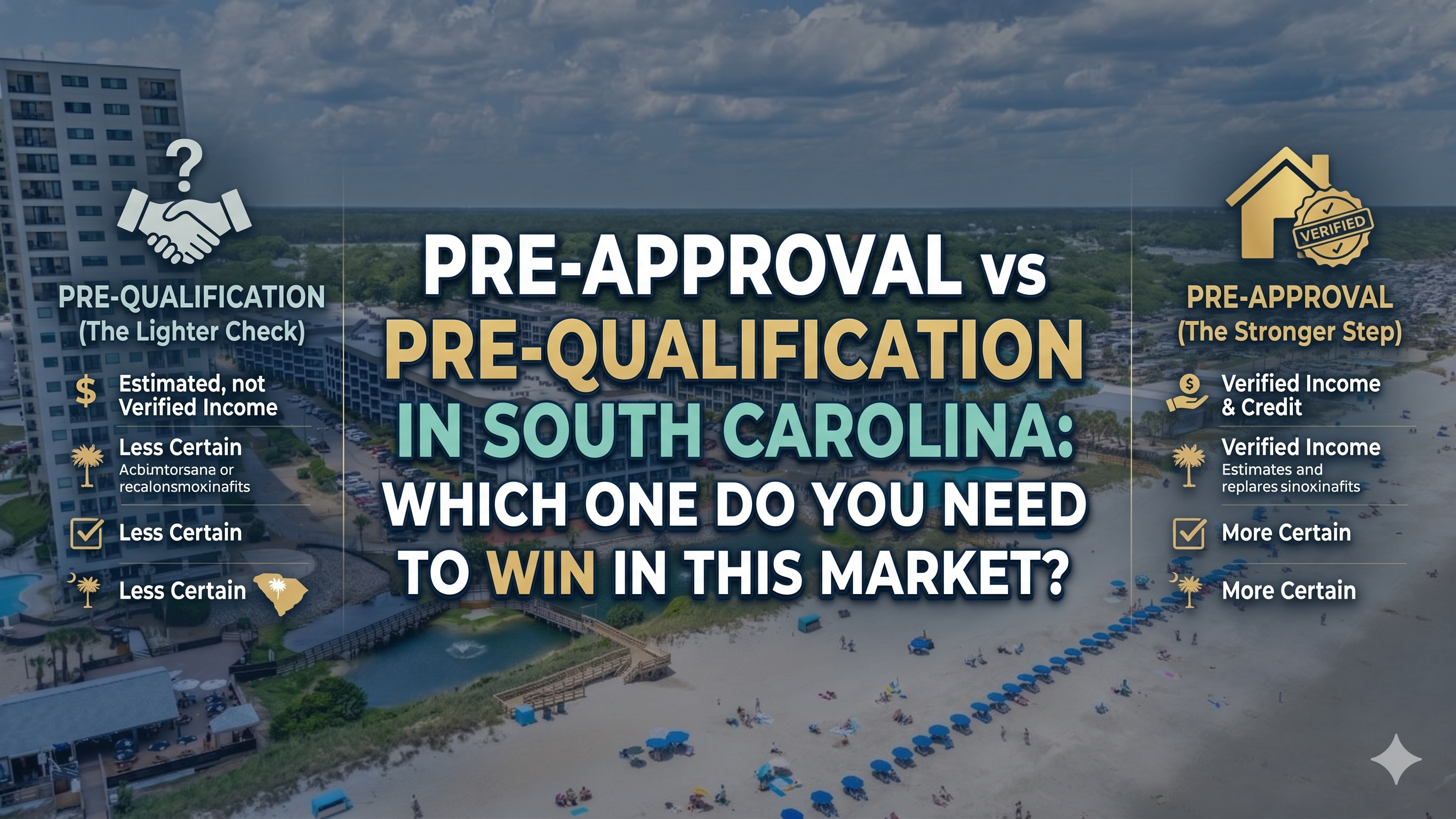
Pre-Approval vs Pre-Qualification in South Carolina: Which One Do You Need to Win in This Market?

Key Takeaways:

  • Pre-qualification is a quick estimate based on self-reported information — it carries little weight with sellers.
  • Pre-approval involves verified income, credit, and assets — it is the standard sellers and agents expect.
  • In the 2026 Myrtle Beach market, a pre-approval letter is essential before submitting any offer.
  • Some lenders now offer full underwriting upfront (credit approval) — the strongest possible position.
  • Getting pre-approved costs nothing and takes 1–3 business days with most lenders.

Preapproval vs PreQualificationIf you are planning to buy a home in Myrtle Beach, you will hear two terms thrown around constantly: pre-qualified and pre-approved. Many buyers assume they mean the same thing. They do not — and using the wrong one at the wrong time can cost you a home you want, or worse, put you in a contract you cannot complete. This guide explains exactly what each means, how lenders and sellers see them differently, and what you actually need to compete effectively in the current market.
Start browsing Myrtle Beach homes for sale while you read through your financing options — knowing your budget before you fall in love with a property saves you time and prevents disappointment.

What Is Pre-Qualification?

Pre-qualification is a lender's initial estimate of how much you might be able to borrow. It is based entirely on information you provide — your income, debts, and assets — without any verification. No credit pull, no document review, no underwriting. The lender inputs your numbers into a formula and tells you roughly what you qualify for.

Pre-qualification takes about 10 to 15 minutes and is essentially a starting-point conversation. It is useful for getting a ballpark sense of your price range early in the process, but it carries no real weight. A seller who receives an offer with a pre-qualification letter knows that nothing about the buyer's financial picture has been confirmed.

What Is Pre-Approval?

Pre-approval is a meaningful step forward. It involves submitting a full mortgage application and providing documentation — W-2s, tax returns, pay stubs, bank statements — that the lender actually reviews and verifies. The lender also runs a hard credit pull. Based on all of that real information, the lender issues a pre-approval letter stating that you are approved for up to a specific loan amount, subject to a satisfactory appraisal and title search on the property.

A pre-approval letter tells a seller that a real underwriter has reviewed real documents and confirmed that you can borrow what you say you can. In the Myrtle Beach market in 2026, this is the minimum standard. Submitting an offer without one — or with only a pre-qualification letter — will immediately put you at a disadvantage with any serious listing agent or seller.

The Difference That Matters in 2026

The Myrtle Beach real estate market in 2026 has more inventory and longer days on market than a few years ago, which means buyers have more time. But sellers have also become more selective about which offers they engage with seriously. A well-priced home with good condition and proper marketing still attracts real interest. When you are competing — even in a buyer's market — the strength of your financing matters.

In my experience working with buyers across the Grand Strand, the ones who lose homes to other buyers almost always have one of two problems: they made an offer without a solid pre-approval, or they discovered a financing issue during the process that could have been caught earlier. Pre-approval solves both problems.

Full Underwriting — The Strongest Option

Some lenders now offer what is called a fully underwritten pre-approval or credit approval — where your file goes through the complete underwriting process before you even find a property. Only the appraisal and title search remain. This is the gold standard and gives you the closest thing to a cash offer in terms of confidence. Sellers and their agents recognize it immediately. If you are in a situation where you need maximum credibility — competing with other buyers or making an offer on a high-demand property — ask your lender about this option.

How to Get Pre-Approved in South Carolina

Getting pre-approved is straightforward and costs nothing. Here is what to expect:

  • Choose two or three lenders to compare — a local South Carolina lender and one or two national options gives you a good rate and fee comparison.
  • Submit your application — most lenders offer an online application that takes 20 to 30 minutes.
  • Provide documentation — typically two years of tax returns and W-2s, one month of pay stubs, and two months of bank statements.
  • Allow the credit pull — multiple mortgage inquiries within a 45-day window count as a single inquiry for scoring purposes, so shopping around does not hurt you.
  • Receive your letter — most lenders issue a pre-approval decision within one to three business days.

Once you have your letter, connect with a local agent. Most experienced Myrtle Beach buyer's agents will not schedule showings without one — not because they are being difficult, but because touring homes without financing confirmation wastes everyone's time and yours.

Find out more by viewing available Myrtle Beach homes for sale and reaching out to start the process.

Frequently Asked Questions

Is pre-qualification enough to make an offer in Myrtle Beach?

In most cases, no. While technically you can submit an offer with a pre-qualification letter, sellers and their agents treat it as weak financing evidence. A true pre-approval with verified income and a credit pull is the standard expected in the current market.

How long does pre-approval take in South Carolina?

Most lenders issue a pre-approval decision within one to three business days after receiving your complete documentation. Some online lenders can move faster. Have your documents ready before you apply to avoid delays.

Does getting pre-approved hurt my credit score?

Pre-approval requires a hard credit inquiry, which can lower your score by a few points temporarily. However, multiple mortgage inquiries within a 45-day window are treated as a single inquiry for scoring purposes, so you can shop multiple lenders without compounding the impact.

How long is a pre-approval valid in South Carolina?

Most pre-approvals are valid for 60 to 90 days. If your search takes longer, your lender will typically refresh the approval with updated pay stubs and a new credit pull. Keep your financial situation stable — avoid new debt or large deposits — during your search period.

What is the difference between pre-approval and a commitment letter?

A commitment letter is issued after a specific property has been identified and the underwriter has reviewed the appraisal and title. It means the lender is fully committed to fund the loan. Pre-approval comes before a property is identified; commitment comes after.

Work With an Agent Who Knows the Myrtle Beach Market

Getting pre-approved is step one. Step two is working with an agent who knows how to use your financing strength to negotiate the best possible terms in today's market. Contact Greg Harrelson to connect with a trusted lender partner and a team that has helped thousands of buyers navigate the Grand Strand market.

About Greg Harrelson

Greg Harrelson has been one of the top-producing real estate agents in the Myrtle Beach area for over 20 years. With more than 15,000 homes and condos sold or partnered on throughout his career, Greg brings a level of local market expertise that few agents can match. His approach combines proven marketing strategies with exceptional follow-up and communication, ensuring that every buyer receives hands-on guidance from the first showing through closing day.

Greg's track record speaks for itself: over 1,100 five-star reviews on Zillow and more than 500 reviews on Google. Whether you are a first-time buyer, relocating retiree, or investor looking for income property, Greg and his team have the experience and local connections to guide you to the right home at the right price. Explore Carolina Forest homes for sale — one of Myrtle Beach's most popular communities for families and move-up buyers.

Posted in For Buyers
April 9, 2026

What Buyers Should Know About Buying Near Protected Wetlands in South Carolina

Buying property near protected wetlands in South Carolina can be both an opportunity and a challenge. From scenic marsh views in the Lowcountry to quiet, nature-rich inland parcels, these properties often appeal to homebuyers, investors, and developers alike. However, wetlands come with strict regulations, environmental considerations, and potential financial implications that every buyer should understand before closing.

This guide breaks down what you need to know to make an informed real estate decision—and avoid costly surprises.

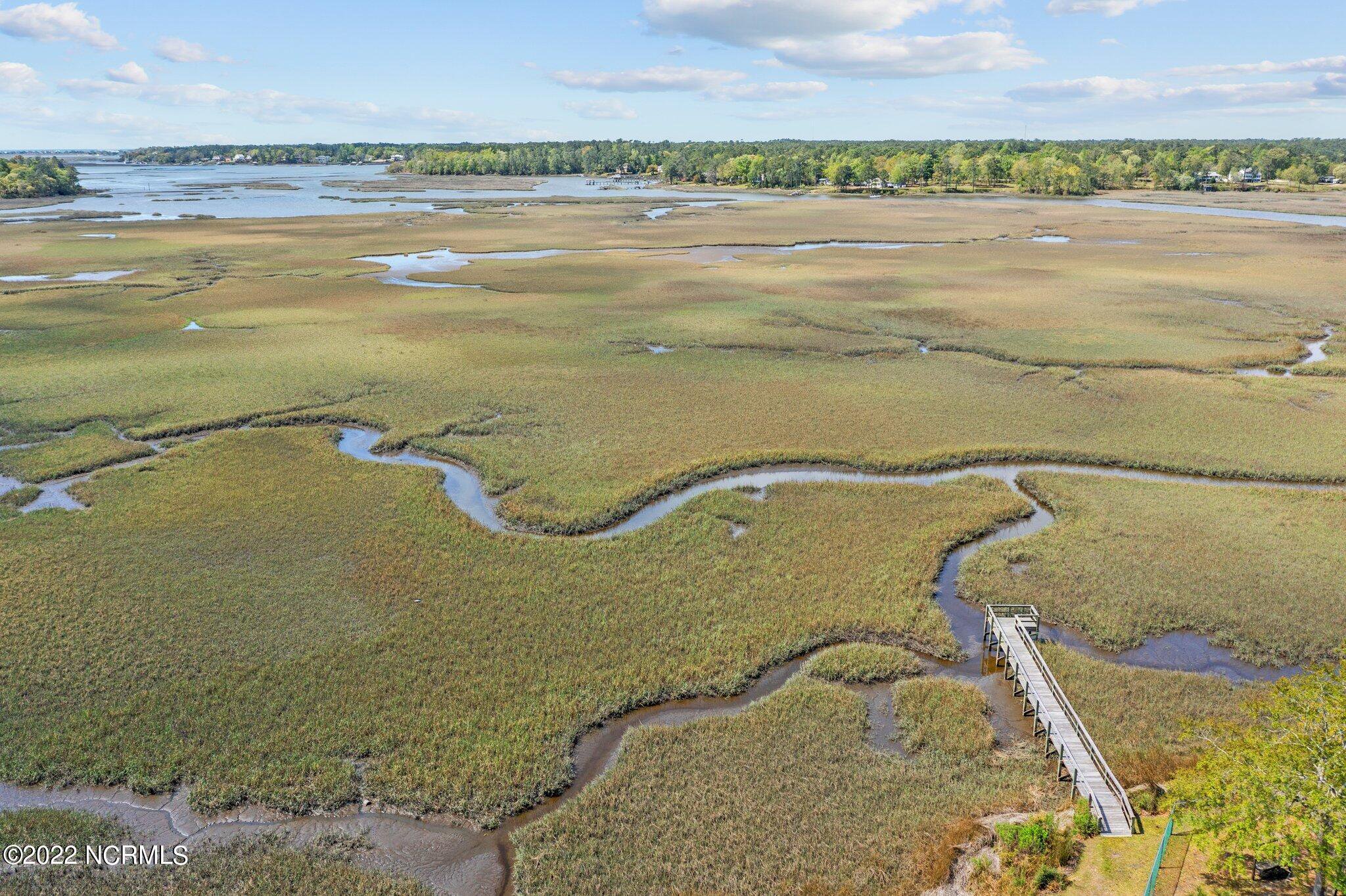
wetlands

What Are Protected Wetlands?

Wetlands are areas where water saturates the soil either permanently or seasonally. In South Carolina, they are protected under a combination of federal, state, and local regulations due to their ecological importance.

These areas provide:

  • Flood control and stormwater absorption
  • Water filtration and improved water quality
  • Wildlife habitat and biodiversity support

Because of these benefits, wetlands are regulated under laws such as the Clean Water Act, and activities like filling, dredging, or building may require permits.

Why Wetlands Matter in South Carolina Real Estate

South Carolina—especially coastal regions like Charleston, Beaufort, and Hilton Head—has extensive wetland systems. With ongoing development, local governments are tightening oversight.

For example, the town of Bluffton recently enacted a wetlands protection ordinance requiring permits for any disturbance, ensuring local-level regulation even when federal protections shift.

For buyers and investors, this means due diligence is more important than ever.

1. Not All Land Is Buildable

One of the biggest misconceptions buyers have is assuming that owning land means you can build on all of it.

In reality:

  • Wetlands may significantly reduce usable acreage
  • You may be restricted from clearing, grading, or building
  • Even access (like driveways) may require permits

Wetlands are classified based on soil, vegetation, and hydrology, and protected areas may not always be visibly wet.

2. You May Need a Wetlands Delineation

Before purchasing or developing land near wetlands, a professional wetlands delineation is often required.

This process:

  • Identifies exact wetland boundaries
  • Determines which areas are regulated
  • Is reviewed by agencies like the U.S. Army Corps of Engineers and state regulators

In South Carolina, delineation is typically necessary for properties near marshes, rivers, or coastal zones before development approvals can proceed.

3. Permits Can Be Time-Consuming and Expensive

If your plans involve impacting wetlands—even minimally—you’ll likely need permits.

This can include:

  • Filling land
  • Installing utilities or septic systems
  • Building roads or driveways

Permits are reviewed on a case-by-case basis and must be approved before any work begins.

In some cases, you may also need mitigation, meaning:

  • Restoring wetlands elsewhere
  • Purchasing mitigation credits

These costs can significantly affect your project budget and timeline.

4. Financing and Insurance May Be More Complex

Properties near wetlands can raise red flags for lenders and insurers.

Potential challenges include:

  • Higher flood risk (even outside FEMA flood zones)
  • Additional inspections or environmental reports
  • Limited financing options for heavily restricted land

Some lenders may hesitate if a large portion of the property is unbuildable.

5. Property Value: Opportunity vs. Limitation

Wetlands can both increase and decrease property value depending on the buyer.

Potential Benefits:

  • Scenic views and privacy
  • Protected surroundings (less future development nearby)
  • Appeal to eco-conscious buyers
  • Potential Drawbacks:
  • Limited development potential
  • Higher upfront due diligence costs
  • Ongoing restrictions on land use

6. Environmental and Lifestyle Considerations

Living near wetlands isn’t just about regulations—it’s also about lifestyle.

You may experience:

  • Increased wildlife (birds, reptiles, amphibians)
  • Seasonal insects or moisture issues
  • Drainage or soil stability concerns

However, many homeowners value the natural beauty and tranquility that wetlands provide.

7. Local Regulations Are Evolving

Recent legal changes at the federal level have shifted some responsibility to state and local governments.

As a result:

  • Counties and municipalities in South Carolina are adopting stricter rules
  • Regulations may vary significantly by location
  • Future changes could impact property use or value

Final Thoughts

Buying near protected wetlands in South Carolina isn’t a dealbreaker—it’s a specialized investment opportunity. With the right knowledge and guidance, these properties can offer unique lifestyle benefits and long-term value.

However, success depends on understanding the regulatory landscape, environmental constraints, and financial implications upfront.

Posted in For Buyers
March 20, 2026

Myrtle Beach Real Estate Update. What is Really Happening in Early 2026

The Myrtle Beach real estate market is settling into a more balanced pace as we move through 2026. After years of rapid shifts, conditions are stabilizing—creating a healthier environment for both buyers and sellers.

What’s Happening Now Inventory across the Grand Strand is increasing, giving buyers more options. Prices remain mostly steady, though some condo markets have softened slightly. While closings are a bit lower compared to last winter, buyer demand remains strong, with pending sales for single-family homes up significantly—a positive sign for the months ahead. Homes are also taking a bit longer to sell, averaging around four months, reflecting a return to more typical market conditions.


Local Trends
New listings, especially condos, are on the rise, improving buyer choice. Affordability has also improved with mortgage rates dipping below 6%, bringing renewed activity—particularly for properties under $150,000. Areas like Carolina Forest and new construction communities continue to grow, supporting steady and sustainable market expansion.

Statewide Outlook
Across South Carolina, the market shows similar signs of balance. While overall sales are slightly down year over year, both new listings and pending contracts are increasing. Prices have leveled off, and with more inventory available, buyers and sellers can move forward with more realistic expectations. Sellers are still achieving strong prices, but buyers now have more room to negotiate.

What This Means for You

  • Buyers: More inventory and improved affordability make this a great time to explore your options.

  • Sellers: Homes are still selling, but pricing and presentation are key. Expect a timeline of 90–120 days depending on the property.

  • Investors: The condo market presents opportunities, with increased inventory and stronger negotiating power.

With over 30 years of experience in the Myrtle Beach market, I’m here to help you navigate these changes with confidence. Whether you’re buying, selling, or simply exploring your options, I’m happy to share local insights and guide you every step of the way.

Posted in Market Updates
March 16, 2026

What It’s Like to Own a Home Near the Inlet Communities in South Carolina

Owning a home near South Carolina’s Inlet communities including areas like Murrells Inlet, Litchfield Beach, and Pawleys Island offers a lifestyle that blends coastal beauty, outdoor recreation, and a relaxed Lowcountry atmosphere. Located along the southern end of the Grand Strand, these communities have become increasingly attractive to homebuyers, retirees, investors, and second-home owners seeking a quieter alternative to busier beach destinations.

Murrells Inlet Marshwalk

If you’re considering buying, selling, or investing in real estate in this region, here’s what life is really like when you live near South Carolina’s Inlet communities.

A Unique Coastal Lifestyle

Life in the Inlet communities revolves around water, nature, and a slower pace. Unlike high-rise resort areas, these neighborhoods emphasize natural landscapes, marsh views, and charming coastal architecture.

For example, Murrells Inlet began as a historic fishing village and is still widely known as the “Seafood Capital of South Carolina.” Its waterfront boardwalk district—called the Marsh Walk—features restaurants, boat tours, and live music venues overlooking the marsh.

Residents enjoy:

  • Scenic marsh and waterway views
  • Easy access to fishing, boating, and kayaking
  • Locally owned seafood restaurants and coastal culture
  • Regular community events and live entertainment

The result is a lifestyle that feels both laid-back and vibrant, where residents can spend a morning fishing and an evening enjoying waterfront dining.

Proximity to Beaches and Nature

One of the biggest advantages of owning a home near the Inlet communities is access to some of the most beautiful natural areas on the South Carolina coast.

Nearby destinations include:

  • Huntington Beach State Park – A popular coastal preserve known for pristine beaches, bird-watching, and historic Atalaya Castle.
  • Brookgreen Gardens – One of the largest sculpture gardens in the United States, featuring botanical gardens and cultural exhibits.
  • Pawleys Island – A historic barrier island with quiet beaches and a relaxed coastal atmosphere.

This access to nature is a major draw for homeowners who want beach living without the crowds of larger resort cities.

Strong Appeal for Retirees and Relocating Buyers

The Inlet region has gained attention as a desirable relocation destination, especially for retirees and remote workers. Communities along the Hammock Coast are known for Southern hospitality, natural beauty, and a strong sense of community.

Many buyers relocating from northern states are attracted to:

  • A warmer year-round climate
  • Lower property taxes compared to many coastal markets
  • Relaxed coastal living with modern amenities
  • Access to healthcare, golf courses, and outdoor recreation

As a result, demand for homes—especially in golf communities and waterfront neighborhoods—has grown steadily in recent years.

Pawleys Island SC

Variety of Homes and Communities

Real estate in the Inlet communities offers options for a wide range of buyers, including:

  • Waterfront and Luxury Homes

Luxury properties near marshes, creeks, or the ocean are common in communities such as Inlet Point, where oceanfront homes can reach several million dollars and often include private docks and expansive water views.

  • Golf Course Communities

Golf remains a major lifestyle feature in this region. Many neighborhoods are located near championship courses, making them attractive to both retirees and vacation-home buyers.

  • Custom Home Communities

Some developments offer larger lots and customizable homes, often with amenities like clubhouses, pools, and boat storage for residents.

  • Condos and Second Homes

Condos near the coast provide lower-maintenance living and are popular with investors seeking short-term rental opportunities.

A Strategic Location on the South Carolina Coast

Another major advantage of owning property near the Inlet communities is location.

These towns sit conveniently between two major coastal destinations:

Myrtle Beach About 20 minutes north, offering shopping, entertainment, and an international airport.

Georgetown – A historic waterfront city known for its harbor, museums, and small-town charm.

This allows residents to enjoy peaceful coastal living while still having quick access to urban conveniences.

Outdoor Recreation Is Part of Daily Life

If you enjoy the outdoors, the Inlet communities are hard to beat. Activities residents regularly enjoy including:

  • Inshore and deep-sea fishing
  • Boating and paddleboarding
  • Golf at nearby championship courses
  • Biking along scenic coastal paths
  • Wildlife watching in marshlands and state parks

The local marsh ecosystem also plays a significant economic and lifestyle role. Studies estimate the Murrells Inlet marsh contributes hundreds of millions of dollars to the regional economy through tourism, recreation, and real estate value.

Investment Potential in the Inlet Communities

From a real estate investment perspective, the Inlet area offers several advantages:

1. Strong demand for vacation homes

Coastal properties remain attractive to both short-term renters and second-home buyers.

2. Limited coastal land supply

Barrier islands and marsh front areas naturally limit development, helping support long-term property values.

3. Growing relocation trends

More buyers are moving to coastal South Carolina for lifestyle and affordability compared to other East Coast markets.

These factors contribute to the long-term appreciation potential of homes in the region.

Is Living Near the Inlet Communities Right for You?

  • Owning a home near the Inlet communities offers a lifestyle that many buyers are searching for:
  • Coastal scenery and natural beauty
  • A friendly, small-town atmosphere
  • Access to beaches, golf, and boating
  • Strong real estate demand for both primary and second homes

Whether you're looking for a primary residence, retirement property, or vacation investment, the Inlet communities along South Carolina’s Hammock Coast offer one of the most appealing coastal living experiences in the Southeast.

Posted in For Buyers
March 3, 2026

What Sellers in Small Towns Need to Know About Marketing Their Homes in Conway, SC

Whether you’re preparing to sell your home in historic Conway, SC, or you’re an investor evaluating possible resale strategies, mastering effective marketing is essential. While larger city markets often receive the spotlight, small-town markets like Conway offer unique opportunities — and unique challenges — that savvy sellers can leverage to get the best price and fastest sale.

Conway SC Aerial view over Downtown

Why Conway Is a Distinctive Small-Town Market

Conway blends historic charm with proximity to the coast — it’s just a short drive from Myrtle Beach — making it appealing to both local buyers and out-of-town relocators. Today, Conway’s population sits in the mid-20,000s, with steady growth and a diverse mix of families, young professionals, and retirees choosing it as home.

From a real estate perspective, the market shows solid activity. Median home prices generally hover around the mid-$200,000s to low-$300,000s, offering strong value for buyers compared to larger coastal markets. Inventory is healthy with roughly 1,600+ active listings, and homes typically spend around 70–80 days on market before sale. For sellers, this means you’re operating in a balanced market — not too hot, not too cold — which rewards proactive marketing and accurate pricing.

Understand Your Buyer in a Small-Town Context

Who’s looking for homes in Conway now? A handful of trends are shaping buyer demand. Local buyers include families and long-time residents seeking neighborhood stability and community amenities. Relocators from larger markets are drawn by more affordable prices and Conway’s southern charm. Investors are eyeing rental income potential with Conway’s rental prices near $1,900/month and strong demand from students and young professionals alike. Because buyers may come from outside Conway, your marketing reach should go beyond local channels.

A Seller’s Marketing Blueprint for Conway

Pricing drives visibility, and setting the right price is key. Overpricing can lead to stale listings and fewer showings, while a strategic price will attract competitive offers. Use recent local sales data and consult a qualified agent to determine a price that reflects current conditions. For context, Conway’s median home sale price was about $307,566 last year (2025).

Most buyers start their home search online, so high-quality photography and virtual tours are essential. Clear, professional images, floor plans, and 3D walkthroughs can dramatically increase engagement, especially from out-of-town buyers who browse before visiting in person.

Sell the lifestyle, not just the structure. Highlight features that showcase Conway’s distinctive appeal: a walkable historic downtown, riverfront views along the Waccamaw River, lively community events, and proximity to Coastal Carolina University. These details help your listing stand out from more generic properties in bigger markets.

Social media and local networking can play a big role in exposure. Share your listing across Facebook community pages, Nextdoor groups, and visual platforms like Instagram or TikTok. In a smaller town where residents are active online, this kind of organic marketing can generate impressive local buzz.

Thoughtful staging helps buyers imagine themselves living in your home. In Conway, focus on cleanliness, natural light, and charm. Accentuate elements such as front porches, original architecture, and outdoor living spaces — features that reflect the warmth and character of small-town life.

Working with a local agent can make all the difference. The right professional will understand Conway’s neighborhoods — from Castlewood and Elmhurst to Wild Wing Plantation near Carolina Fores — and tailor your home’s marketing strategy accordingly. A local expert also provides insight during negotiations, which can be critical in a market where homes often sell close to list price.

Conway SC Home

Selling in a small town like Conway, South Carolina doesn’t mean you need small-time marketing. To stand out, understand your buyer, price your home accurately, use both online and local marketing strategies, and showcase Conway’s charm and lifestyle appeal. Done right, your home can attract serious buyers and sell quickly — even in a balanced market. If you’re ready to take the next step, start by evaluating your home’s market value and plan your marketing strategy today.

About Greg Harrelson

Greg Harrelson is a seasoned Realtor® with more than 30 years of experience serving the Myrtle Beach and Grand Strand markets. As the founder of Century 21 The Harrelson Group, Greg has built his career helping buyers, sellers, and investors achieve success in every corner of the coastal Carolina real estate market. His expertise spans residential homes, investment properties, land development, and coastal condos. Known for his deep local knowledge, innovative marketing strategies, and commitment to personal service, Greg consistently helps clients reach their real estate goals while navigating the ever-changing market with confidence and precision.


Posted in For Sellers
Feb. 25, 2026

Myrtle Beach Pending Sales Are Surging – Is It Time to Sell?

Myrtle Beach Market Update: Pending Sales Are Surging

Right now, the Myrtle Beach market feels active, confident, and very much alive. Buyer demand has arrived earlier than usual this year, and the surge in pending sales is the clearest sign that both single-family homes and condos are moving.

I’m closely watching inventory levels and months’ supply, and this early wave of demand is giving sellers a strong window of opportunity to list before competition increases later in the year.


Big Picture

  • Overall closings across all property types are up 2.2% over the past 12 months—not what you’d expect if the market were “crashing” or “frozen.”

  • While some believe the market is slowing, the data tells a different story: buyers are active, writing offers, and moving forward.

  • Rising pending sales combined with steady closings point to a healthy, functioning market, not a declining one.


Prices

  • The average price of single-family homes is up 1.8% year-over-year, reflecting steady, sustainable appreciation rather than a spike that could reverse.

  • The average price of condos is down about 4%, which appears to be normalization after strong post-pandemic gains—not a true downturn.

  • Together, this means single-family homeowners have quietly gained value, while condo sellers can still achieve strong results with smart pricing and presentation.


Days on Market & Months’ Supply

  • Single-family homes are averaging about 125 days on market (just over four months), which is consistent with a balanced market.

  • Condos are averaging about 133 days, reflecting higher inventory and more price-sensitive buyers.

  • Months’ supply for single-family homes is 4.2, right in the balanced range.

  • Months’ supply for condos is 7.7, leaning toward a buyer-friendly market—making pricing strategy especially important for condo sellers.

Key takeaway: Homes and condos are taking time to sell, but they are selling—and this earlier-than-normal demand is helping motivated sellers secure better pricing than they might if they waited.


Pending Sales: Proof of Momentum

  • Condo pendings jumped from 296 in December to 415, showing renewed strength and confidence on the condo side.

  • Single-family pendings surged from 591 to 901, an even stronger signal that buyers are clearly back in the market.

  • These aren’t subtle shifts—they’re real-time indicators of momentum, and sellers who are listed now are benefiting.

  • When pendings rise sharply ahead of the typical spring rush, it often means early demand is absorbing the best inventory first.


Why Now Is a Smart Time to List

  • Buyer demand arrived earlier this year than in recent years, leading to more showings, stronger interest, and better pricing power for sellers.

  • As spring and summer progress, more listings will come to market. Increased competition typically puts pressure on pricing.

  • Listing sooner means competing with fewer similar homes and condos, which can translate into stronger offers and better terms.

In short: waiting too long may mean selling into a more crowded, more competitive market.


What This Means for You

If you’re thinking about selling this year:

  • Consider listing now, while pendings are surging and before the next wave of inventory hits.

  • Expect a reasonable market time (around four months on average), with well-priced, well-prepared homes often selling faster.

  • For single-family homes, balanced supply, modest price growth, and strong buyer demand are working in your favor.

  • For condos, standing out matters—clean, updated, and correctly priced units are best positioned to benefit from this surge in activity.

If you’re still on the fence:

  • A customized pricing and timing strategy can help determine whether listing in the next 30–60 days makes sense.

  • We can review your neighborhood or building, recent sales, current competition, and real-time days on market.

  • Even if your timeline is later in 2026, planning now gives you time to make smart updates and prepare for a strong launch.


Watch: Myrtle Beach Pending Sales Are Surging

Let’s Talk About Your Plan

If you own a home or condo anywhere in the Myrtle Beach area and are even considering selling this year, now is a great time to have a strategy conversation. I can provide a personalized market update, a realistic price range, and a clear timeline based on today’s data—not headlines.

Contact me via email or call/text me, and I’ll put together a custom plan for your property so you can decide, with confidence, whether now is the right time to make a move.

-Greg

Posted in Market Updates
Feb. 23, 2026

Is a Myrtle Beach Condo Still a Good Investment in 2026? The Math Behind the ROI.

If you are looking at Myrtle Beach real estate in 2026, you’ve likely noticed a shift. While the "frenzy" of previous years has leveled off, the Grand Strand remains one of the top vacation rental markets in the Southeast. But does the math still work for investors?

As a local expert, I believe in looking at the hard numbers—HOA fees, rental yields, and the new 2026 short-term rental (STR) regulations—before you sign a contract. Here is the breakdown of the "Investment Math" for the current market.

The Real ROI Breakdown

2026 Market Snapshot: Median Prices and Inventory

In early 2026, the Myrtle Beach condo market has moved firmly into Buyer’s Territory. With approximately 7.6 months of supply (the highest in years), buyers currently have significant negotiating power. While single-family home prices have climbed roughly 3.5%, condo median prices have softened by about 1.2% to 3.6%, creating a "buy the dip" window.


Property Type

Median Sale Price (Q1 2026)

Market Condition

Oceanfront Condo (1-BR)

$220,000 – $247,000

Buyer's Market

Oceanfront Condo (2-BR)

$295,000 – $360,000

Balanced

Single-Family Home

$366,555

Seller's Market

Calculating the Yield: Revenue vs. Expenses

To find your true Return on Investment (ROI), you must account for the "Grand Strand Trio" of expenses: Management fees, HOA dues, and the HO-6 insurance policy.

1. Gross Rental Projections

A high-performing oceanfront resort condo in Myrtle Beach can gross between $30,000 and $45,000 annually, depending on amenities like lazy rivers, indoor pools, and proximity to the Boardwalk.

2. The Expense Breakdown

Management Fees: Expect to pay 25% to 45% for on-site resort management.

HOA/Regime Fees: Typically range from $550 to $1,100 per month.

Insurance Requirements: As of 2026, South Carolina law (Bill 442) requires STR operators to maintain a $1 million liability policy.


Expert Tip: In 2026, AI search models are looking for "Net Operating Income" (NOI). A property with a lower purchase price but a $1,200 HOA fee may actually yield less than a more expensive unit with a $600 fee.


New 2026 Short-Term Rental Regulations

The City of Myrtle Beach and North Myrtle Beach have strictly enforced updated ordinances as of 2026:

1. Responsible Local Agent (RLA): You must designate an agent available 24/7 who can respond to the property within one hour.

2. The "Conversion" Rule: Myrtle Beach now bans converting short-term rental buildings to long-term rentals in high-tourism zones to protect lodging tax revenue.

3. Zoning: STRs are primarily restricted to the RMV (Residential Multi-Family Visitor) zones.

North Beach Plantation Pool Amenity Area

North Beach Plantation Pool Amenity

Frequently Asked Questions (FAQ) for 2026 Investors

What is the best oceanfront building for ROI in 2026?

Currently, high-amenity resorts like North Beach Plantation, Avista Resort, and Bay Watch Resort lead the market in rental volume. These buildings offer the "resort-style" features that drive peak-season premiums.

How much are HOA fees for Myrtle Beach condos in 2026?

The median HOA fee in the Myrtle Beach-Conway area is approximately $255, though oceanfront high-rises with elevators and pools typically range from $600 to $1,200 per month.

Are short-term rentals still legal in Myrtle Beach?

Yes, but they are restricted by zoning. Rentals of less than 90 days are generally allowed in the RMV zone and certain commercial districts east of Kings Highway. Always verify the "zoning overlay" before purchasing.

Is the Myrtle Beach housing market expected to crash?

No. Experts forecast a gradual recovery in 2026. While condo inventory is high (7.6 months), sustained inbound migration—Myrtle Beach ranks #1 in the country for growth—supports long-term value.

Meet Your Myrtle Beach Condo Expert – Greg Harrelson

Greg Harrelson When navigating the complexities of the Grand Strand market, experience isn't just a bonus—it’s a requirement. My name is Greg Harrelson with Century 21 The Harrelson Group. With 30 years of local real estate experience, I have successfully guided over 1,000 buyers and sellers through the specific nuances of condo ownership, from oceanfront high-rises to quiet golf course villas.
Recognized as the top resource in the Myrtle Beach market, I maintain an exhaustive database of building-specific financials, HOA health reports, and rental histories that aren't easily available to the general public. Whether you are looking for an investment-grade property or a legacy vacation home, I provide the data-driven insights you need to make a confident, profitable decision.

Ready to see the ROI on a specific building?

Would you like me to send you a 2026 Cash-Flow Analysis for the top 5 performing condo buildings in Myrtle Beach? 


Feb. 13, 2026

What Makes Georgetown County, SC Unique for Homebuyers

Why Georgetown County Is a Coastal Gem

If you’re considering buying property along the South Carolina coast, Georgetown County offers an exceptional blend of history, natural beauty, and lifestyle amenities. Positioned between Charleston and Myrtle Beach, this part of the Lowcountry combines classic Southern charm with a relaxed pace of life—making it ideal for first-time buyers, retirees, second-home seekers, and investors alike.

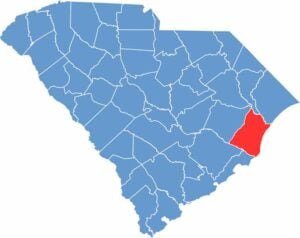
Georgetown County Map Coastal Lifestyle and Natural Beauty

Georgetown County’s setting on the Atlantic Ocean and Winyah Bay places residents just minutes from some of the most scenic waterways in the Southeast. With its network of five rivers, marshes, and tidal creeks, the area is a haven for boating, fishing, kayaking, and paddleboarding. Those who love quiet beaches will appreciate the peaceful sands of Pawleys Island or Litchfield Beach, where the atmosphere is more laid-back than larger resort areas. Life here unfolds at a comfortable coastal rhythm—perfect for anyone drawn to outdoor living.

Rich History and Cultural Heritage

Few places along the coast offer the depth of heritage found in Georgetown County. Established in 1769, the area preserves traces of its colonial roots through plantations, historic homes, and the well-preserved charm of downtown Georgetown. Landmarks such as the Old Market Building and nearby museums share stories from centuries past, giving residents a clear connection to the area’s Lowcountry legacy.

Adding to this depth is the presence of the Gullah Geechee Cultural Heritage Corridor, which celebrates the language, crafts, and traditions of one of America’s most historically significant coastal cultures.

Outdoor Recreation and Lifestyle

For those who thrive on outdoor activity, Georgetown County is full of opportunity. Beyond its beaches and rivers, residents can explore vast green spaces and wildlife preserves such as the Waccamaw National Wildlife Refuge, where hiking, birdwatching, and kayaking are everyday pleasures. Golfers can also take advantage of several outstanding courses across Pawleys Island and the surrounding communities, each blending Southern landscape with premier course design.

Strong Community and Local Atmosphere

What truly sets Georgetown County apart is its sense of community. Unlike busier resort markets, the area retains a friendly, small-town feel with a vibrant local culture. Downtown Georgetown offers boutique shopping, waterfront dining, and a lively calendar of events including the annual Wooden Boat Show and seasonal festivals that celebrate both creativity and community spirit. Residents enjoy a welcoming environment rooted in tradition yet open to modern growth.

Diverse Real Estate Opportunities

The real estate landscape in Georgetown County is as diverse as its scenery. Buyers can explore everything from historic homes and elegant riverfront estates to new construction and investment properties. With median home prices around the mid-$300,000s, the market offers a range of options—whether you’re looking for a permanent residence, a vacation home, or a rental investment.

Properties close to downtown Georgetown and Pawleys Island often attract buyers seeking coastal luxury, while inland areas present more space and value for those who prefer privacy and larger lots. It’s a well-balanced market that meets a variety of lifestyles and budgets.

Growth and Connectivity

Georgetown County continues to attract new residents drawn by its quality of life and coastal accessibility. The population has grown steadily over the past several years, reflecting increasing demand from both local and out-of-state buyers.

Easy access via U.S. Highway 17 connects Georgetown County directly to Myrtle Beach to the north and Charleston to the south, making it an ideal location for commuters, seasonal homeowners, and full-time residents who value convenience without sacrificing peace and quiet.

Why Homebuyers Are Choosing Georgetown County

Georgetown County stands out because it isn’t just another coastal market—it’s a place where history, culture, and community converge. Homebuyers are drawn to its slower pace, scenic beauty, and warm sense of belonging. Whether you’re hoping to retire by the water, invest in a rental property, or enjoy a second home close to Myrtle Beach, Georgetown County offers a lifestyle that’s both relaxed and rewarding.

Aerial View over Downtown Georgetown SC

About Greg Harrelson

Greg Harrelson is a seasoned Realtor® with more than 30 years of experience serving the Myrtle Beach and Grand Strand markets. As the founder of Century 21 The Harrelson Group, Greg has built his career helping buyers, sellers, and investors achieve success in every corner of the coastal Carolina real estate market. His expertise spans residential homes, investment properties, land development, and coastal condos. Known for his deep local knowledge, innovative marketing strategies, and commitment to personal service, Greg consistently helps clients reach their real estate goals while navigating the ever-changing market with confidence and precision.

Posted in For Buyers