The Move Isn't Just South — It's Into a Different Rhythm
A big share of the buyers moving into Myrtle Beach every year come from the Northeast. New York, New Jersey, Pennsylvania, Massachusetts, Connecticut, Maryland. Some are retiring. Some are relocating for remote work. Some finally cashed out of a high-cost metro and want more house, more sun, and lower taxes. Whatever the reason, they arrive with a certain set of expectations shaped by where they came from — and Myrtle Beach doesn't quite match all of them.
Here's the thing. Almost everyone who makes this move is happy they did. But knowing what actually changes lets you plan for it instead of adjusting on the fly. If you're already thinking through the process, our Certified Relocation Professional guide covers how our team supports relocation buyers end to end.
The Climate Shift
Winters here mean 55-degree days, not snow. That's the easy part. What surprises Northeast buyers is the humidity. Summer humidity along the coast is real — different from the dry heat some assume. Air conditioning becomes a serious utility, not an occasional summer help. Coastal storms are their own category. Hurricane season runs June through November, and while the Grand Strand isn't hit every year, the possibility shapes home construction and insurance in ways that matter.
You'll also notice the sun is stronger. Sunscreen becomes a daily thing, not a beach-vacation thing. Landscaping, exterior finishes, roofing, and outdoor furniture all age faster than they did back home.
The Cost Picture
Property Taxes
South Carolina's primary residence tax rate is meaningfully lower than most Northeast states. Once you file for the Legal Residence exemption at the Horry County Assessor's Office (Georgetown County if you're south of Murrells Inlet), your annual property tax bill on the same-value home often comes in a fraction of what you were paying up north. This is one of the biggest financial wins in the move.
State Income Tax
South Carolina taxes income, but rates run below high-tax Northeast states. Retirees benefit from state deductions on retirement income. Talk with a CPA who works with cross-state relocations to model your specific situation.
Insurance Runs Different, Not Necessarily Higher
You're no longer paying for snow damage risk. You are paying for wind, hail, and — if you're near the coast — flood. On a similar-value home, coastal insurance can run comparable or higher than what you paid up north, depending on the property. Get a real quote from a local carrier before making an offer. Our Myrtle Beach homeowners insurance resource is a solid starting point.
Everything Else
Groceries, gas, restaurants, healthcare — mixed. Some things are cheaper. Some are close to what you paid up north. The bigger financial change is usually the housing cost per square foot, which typically drops significantly.
The Daily Rhythm
This is the change nobody warns Northeast buyers about, and it's usually the best one. The pace is slower. Traffic exists but doesn't dominate your day. Restaurants aren't a 45-minute wait. People are friendly in ways that take some getting used to. Small talk with strangers is normal. This is not a criticism of the Northeast — it's just different.
For remote workers, that slower pace becomes an advantage. Same job, less friction outside of work.
Housing You Wouldn't See Up North
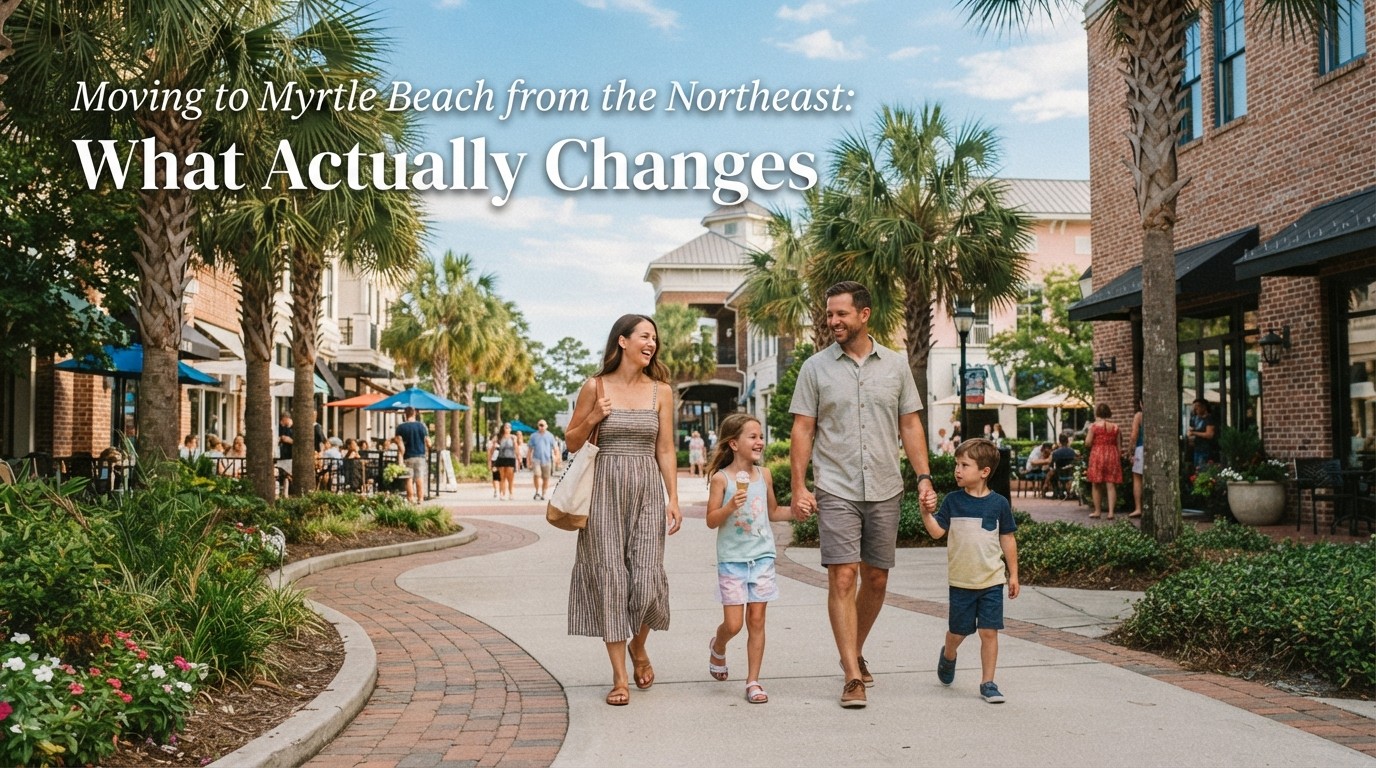
The Grand Strand housing mix looks different from what most Northeast buyers know. Ranch-style single-story homes are common. Two-story colonials less so. Coastal-style Lowcountry homes with deep porches, elevated construction, and impact windows are their own category. Condos are a huge share of the market and often function as vacation homes, rentals, or primary residences depending on the building.
Take your time. Tour a mix of neighborhoods before you commit. Our overview of the top 10 Myrtle Beach neighborhoods gives a fast orientation to the range.
Practical Items Northeast Buyers Miss
- Register your vehicles in SC and update your driver's license within 90 days of establishing residence
- Apply for the Legal Residence tax exemption immediately after closing — it changes your tax rate meaningfully
- Understand South Carolina is an attorney-closing state, which is different from title-company closings in many Northeast states
- Get familiar with hurricane preparedness before your first storm season
- Confirm your homeowners insurance carrier's specific wind, hail, and flood terms — coverage isn't always automatic
- Test your commute (if applicable) and daily errands in real conditions before you commit to a neighborhood
The First-Year Reality
Most Northeast relocators tell me the first six months are adjustment, months 7-12 are settling in, and the anniversary year is when Myrtle Beach starts to feel like home. That's normal. The pace, the humidity, the social patterns, the driving culture — none of them flip overnight. Give yourself the year.
If you want a practical week-by-week plan for your first month after closing, our post on your first 30 days after closing on a Grand Strand home lays it out.
Key Takeaways
Moving to Myrtle Beach from the Northeast is a real lifestyle change, not just a change of address. Winters get easier; summer humidity and hurricane season are new realities to plan for. Property taxes typically drop meaningfully once you claim the Legal Residence exemption. Insurance shifts from snow-and-ice risk to wind, hail, and flood exposure. The daily pace slows, the housing mix looks different, and the social patterns take some getting used to. Plan for the practical items in your first 90 days, give the transition a full year, and use a local team that supports relocation buyers professionally. The move works. It just works better with a plan.
About Greg Harrelson
Greg Harrelson is a seasoned Realtor® with more than 30 years of experience serving the Myrtle Beach and Grand Strand markets. As the founder of Century 21 The Harrelson Group, Greg has built his career helping buyers, sellers, and investors achieve success in every corner of the coastal Carolina real estate market. His expertise spans residential homes, investment properties, land development, and coastal condos. Known for his deep local knowledge, innovative marketing strategies, and commitment to personal service, Greg consistently helps clients reach their real estate goals while navigating the ever-changing market with confidence and precision.