Why Little River Keeps Showing Up on Buyer Lists
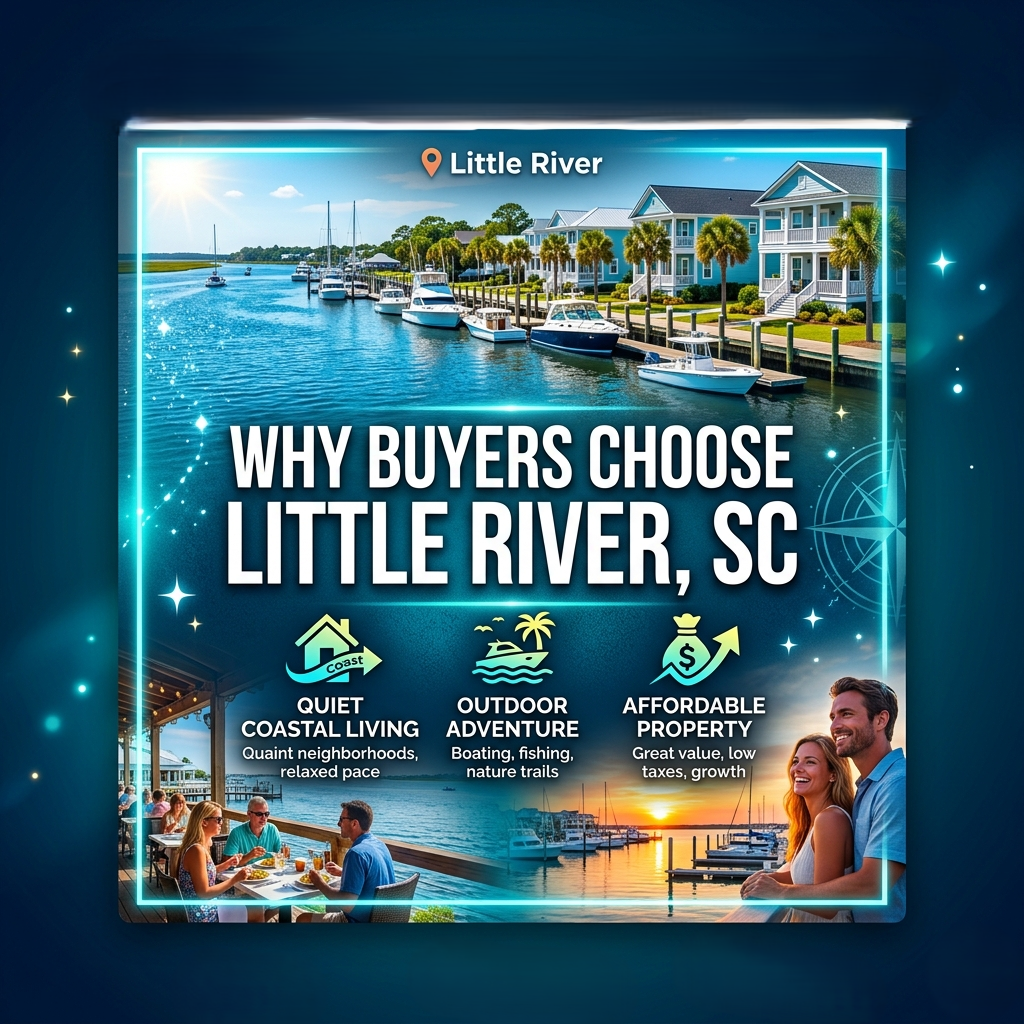
Little River, SC has quietly become one of the more interesting markets on the North Strand. It sits just north of North Myrtle Beach, tucked along the Intracoastal Waterway, and it has the kind of unhurried, working-waterfront feel that a lot of buyers say they’re looking for but can’t always find. The shrimp boats are still part of the picture. So are the small marinas, the waterfront restaurants, and a stretch of golf courses that draw players from across the country.
For buyers comparing options on the coast, Little River usually earns a second look once they spend a weekend here. Below is what I see drive most of those decisions.
A Lifestyle That Doesn’t Feel Touristy
The first thing buyers notice is the pace. North Myrtle Beach next door is busy in season, and Little River feels noticeably calmer. You still get the convenience — restaurants, grocery, healthcare, the beach a short drive away — but without the bumper-to-bumper feel of peak tourist weekends.
The waterway is a real anchor of daily life. Buyers who own boats end up gravitating here because Little River gives them direct access to the Intracoastal, the inlet, and ultimately the ocean. Even buyers who don’t own a boat tend to spend time on the water — fishing charters, dolphin cruises, casino boats, and waterfront dining are easy to walk to or reach in minutes.
Strong Value Compared to North Myrtle Beach
This is the big one. Buyers crossing into Little River from neighboring zip codes often find they can get more home — more square footage, more lot, more amenities — for the same budget. That’s especially true once you step a few minutes inland from the waterway.
That value gap is one of the reasons new construction has been so active here over the last several years. Builders kept finding land at prices that still made sense for them and for buyers, which is no small thing in 2026.
Communities Worth Knowing
Little River isn’t one neighborhood. It’s a collection of communities with different price points, amenity packages, and vibes. A few examples buyers should be aware of:
Big Landing
Big Landing is a gated community right on the Intracoastal Waterway with a clubhouse, pool, and a fishing pier of its own. If waterway lifestyle is the priority, it’s one of the first communities to put on the short list.
Hidden Brooke
Hidden Brooke leans newer-construction and family-friendly, with a community amenities center and pool. Buyers coming from out of state often appreciate that the homes feel modern and the layout of the neighborhood is straightforward.
River Hills
River Hills is one of Little River’s long-established golf course communities. If golf is part of why you’re moving to the coast, this is a different kind of fit than the resort-style condo communities you find further south.
Cypress Village
Cypress Village is a single-family, natural-gas community with a strong amenity package — pool, clubhouse, fitness center, lake, pickleball, and a small boat dock. It’s a good fit for buyers who want active community living without going all the way into a 55+ designation.
Windjammer Village
Windjammer Village appeals to buyers looking for a more established, gated feel with strong waterway-adjacent amenities — pool, clubhouse, community boat ramp, fishing pier, and tennis courts. Homes here tend to be a bit older, which can mean character and good bones for the right buyer.
Who Tends to Buy in Little River
Three buyer profiles come up most often:
- Retirees and near-retirees who want coastal living without the noise level of Myrtle Beach proper
- Out-of-state buyers — heavy from the Northeast and the Midwest — looking at warmer weather, lower property taxes, and waterway access
- Investors and second-home buyers who like the price-to-rental potential ratio compared to oceanfront markets
You also see a healthy share of buyers moving from North Myrtle Beach itself, downsizing or shifting from an older home into something newer in a planned community.
Practical Things to Think About Before You Buy
Little River sits in a part of Horry County where flood zones, wind insurance, and HOA structures vary block to block. A few things I tell buyers to plan for:
- Confirm the flood zone of any specific property and get an insurance quote before you’re past your due diligence period.
- Read the HOA budget and any pending special assessments, especially in older communities and condo buildings.
- For waterway-adjacent properties, ask about dock permits, easements, and any restrictions on boat lifts.
- For golf course communities, check whether the golf membership is mandatory, optional, or tied to the HOA.
Strategy for Buyers in Little River
If you’re weighing Little River vs. North Myrtle Beach, don’t just compare list prices. Compare total cost of ownership — taxes, HOA, insurance, commute to where you’ll actually spend time. Little River often wins that math.
If you’re shopping new construction, look closely at the lot premiums and what comes standard versus what’s an upgrade. Builder incentives have stayed competitive on the North Strand, and a good local agent can help you negotiate beyond the sticker.
Frequently Asked Questions
Is Little River, SC a good place to retire?
Yes, Little River is one of the more popular retirement spots on the North Strand. Buyers gravitate here for the slower pace, waterway lifestyle, mild winters, and lower property taxes compared to many Northeast and Midwest states. There’s a strong mix of single-family and condo options that work for retirees, including 55+ and active-adult communities nearby.
What are HOA fees like in Little River communities?
HOA fees in Little River vary widely based on amenities. A simple neighborhood with basic common-area upkeep can be a few hundred dollars per year, while gated waterway communities with clubhouses, pools, piers, and on-site maintenance can run well over $1,000 annually. Condo fees are higher because they typically cover insurance, exterior maintenance, and shared utilities.
Is Little River cheaper than North Myrtle Beach?
In most direct comparisons, yes. Buyers can often get more home or more land in Little River for the same budget as a comparable property in North Myrtle Beach, especially once you step a few minutes inland from the waterway. Oceanfront and direct-waterway exceptions exist, but the broad market trend has favored value in Little River.
Are there short-term rental rules in Little River?
Short-term rental rules depend heavily on the specific community and whether you’re inside Little River’s town limits or in unincorporated Horry County. Some HOAs restrict or prohibit short-term rentals entirely, while others allow them with conditions. Always confirm both the local ordinance and the community’s rules in writing before you buy with rental income in mind.
Key Takeaways
- Little River offers a calmer, more working-waterfront feel than its neighbors to the south.
- Buyers consistently get more home for the money than in North Myrtle Beach.
- Waterway access, golf, and new construction are three of the biggest draws.
- Communities range from gated waterway neighborhoods to natural-gas, amenity-rich single-family developments.
- Verifying flood zones, HOA budgets, and rental rules upfront is non-negotiable here.
About Greg Harrelson
Greg Harrelson is a seasoned Realtor® with more than 30 years of experience serving the Myrtle Beach and Grand Strand markets. As the founder of Century 21 The Harrelson Group, Greg has built his career helping buyers, sellers, and investors achieve success in every corner of the coastal Carolina real estate market. His expertise spans residential homes, investment properties, land development, and coastal condos. Known for his deep local knowledge, innovative marketing strategies, and commitment to personal service, Greg consistently helps clients reach their real estate goals while navigating the ever-changing market with confidence and precision.