Short-term rentals are one of the biggest reasons people invest in Myrtle Beach real estate. The vacation traffic, the strong rental demand, and the seasonal nature of the market all combine to make short-term rentals an attractive piece of many investment portfolios. Before purchasing a property with rental income in mind, every buyer should understand how short-term rental rules work in the Myrtle Beach area, because the rules vary by location, building, and use case more than most newcomers expect.
Why Short-Term Rentals Matter Here
Myrtle Beach is one of the most visited destinations on the East Coast, drawing millions of tourists every year. That traffic supports a strong vacation rental market, especially in oceanfront condos, ocean-view buildings, and homes within walking distance of the beach. For investors and second-home buyers, the ability to rent the property when not using it themselves is often a critical part of the financial picture.
The Layered Nature of the Rules
One of the most important things to understand is that short-term rental rules in this area come from multiple layers, including the city, the county, and the homeowners association or condo regime. Each layer can add its own requirements. A property might be allowed under city zoning but restricted under HOA rules. A condo building might allow short-term rentals broadly but require minimum stays during certain seasons. Buyers who only check one layer often discover surprises after closing.
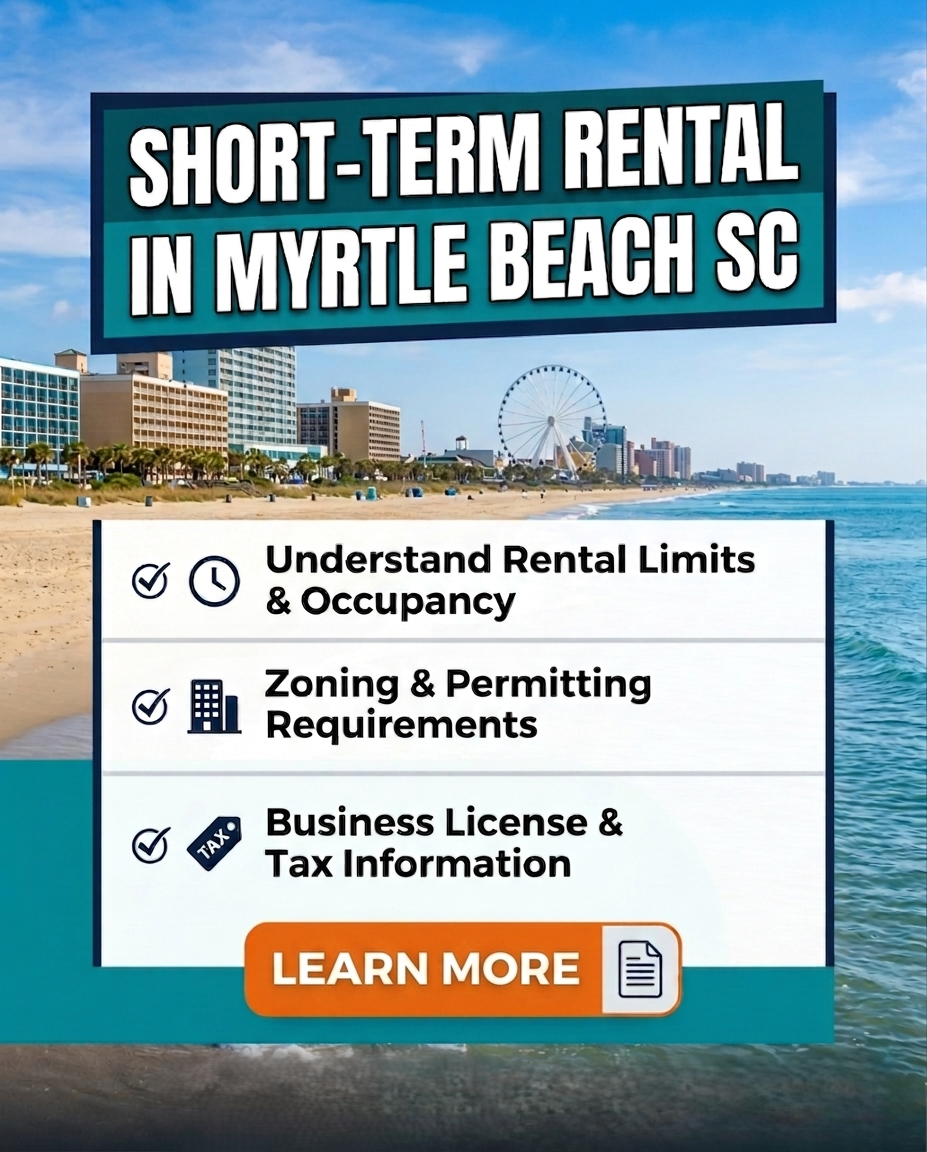 Municipal and County Rules
City of Myrtle Beach Rules
The City of Myrtle Beach has zoning rules that designate where short-term rentals are allowed. Many traditional vacation areas, especially along the oceanfront and in mixed-use districts, allow short-term rentals as a matter of zoning. Some single-family residential zoning districts have more restrictive rules. The city has also addressed business licensing, accommodations tax collection, and registration requirements for short-term rental operators. Verifying current zoning for the specific address you are considering is an essential due diligence step.
North Myrtle Beach Rules
North Myrtle Beach is a separate municipality with its own zoning and regulatory framework. Many of the iconic vacation neighborhoods in North Myrtle Beach, including Cherry Grove and Ocean Drive, have a long tradition of short-term rentals. Specific zoning, registration, and tax requirements apply, so confirming the rules for the specific address is just as important here as in Myrtle Beach proper.
Surfside, Garden City, and Pawleys Island
Surfside Beach, Garden City, and Pawleys Island all have their own rules. Some areas embrace short-term rentals enthusiastically, others have implemented additional restrictions in recent years. Buyers focused on these communities should research the latest local ordinances and confirm them with their real estate professional and, when needed, with the relevant municipal office.
Horry County and Georgetown County
Outside the incorporated municipalities, short-term rentals fall under county-level regulation. Horry County and Georgetown County each have their own rules around accommodations tax, registration, and zoning. Buyers exploring properties in unincorporated areas should look at the county requirements specifically rather than assuming city rules apply.
HOA and Condo Building Rules
For condos and properties within HOAs, the building or community rules often matter more than municipal zoning. Some condo buildings on the Myrtle Beach oceanfront actively cater to short-term rentals and have professional on-site rental management. Other buildings limit rentals to a minimum thirty-day stay or longer. A few have eliminated short-term rentals altogether. Reading the bylaws, declarations, and most recent meeting minutes before going under contract is the only way to know for sure.
Taxes, Reporting, and Insurance
Taxes and Reporting
South Carolina collects accommodations tax on short-term rental income. Local jurisdictions also collect their own accommodations tax. As a rental operator, you are responsible for collecting these taxes from guests, remitting them to the appropriate agencies, and reporting income for state and federal tax purposes. Many operators use a property manager who handles tax remittance, while others handle it themselves through state and local online portals. Either way, planning for these taxes from day one prevents headaches later.
Insurance Considerations
A standard homeowners or condo policy is generally not sufficient for a short-term rental. Insurance carriers offer specific short-term rental products that cover liability and contents differently than owner-occupied policies. If a property will be operated as a rental, the insurance policy needs to reflect that use. Some lenders also have requirements about how the property can be used.
How This Shapes Buying Decisions
For buyers focused on rental income, the rules should drive the search. A condo building that does not allow short-term rentals is not the right purchase if your investment thesis depends on short-term income. A property in a single-family neighborhood with strict HOA rentals limits will not deliver the projected returns. Myrtle Beach real estate has plenty of properties that work beautifully as short-term rentals, but matching the right property to your goals requires understanding the rule layers from the start.
Strategy for Buyers
Define how you plan to use the property before touring. If short-term rental income is essential, focus on buildings and neighborhoods with proven track records and supportive rules. Verify city, county, and HOA rules in writing. Talk to current owners or rental managers about real performance data, not pro forma projections. And work with an agent who specializes in rental-friendly properties along the Grand Strand.
Final Takeaway
Short-term rental rules in Myrtle Beach are more nuanced than they appear on the surface. The good news is that the area has many properties and buildings where short-term rentals work well, and investors continue to find strong income opportunities here. By understanding the layered rules from city to county to HOA, buyers position themselves to choose properties that match their goals and avoid the common mistakes that come from assuming the rules without checking. Done correctly, short-term rentals remain one of the most rewarding ways to participate in the coastal South Carolina real estate market.
Explore More on Our Site
If short-term rental investing is on your radar, explore Airbnb investment opportunities, view Myrtle Beach condos for sale, or browse rental-friendly oceanfront condos.
About Greg Harrelson
Greg Harrelson is a seasoned Realtor® with more than 30 years of experience serving the Myrtle Beach and Grand Strand markets. As the founder of Century 21 The Harrelson Group, Greg has built his career helping buyers, sellers, and investors achieve success in every corner of the coastal Carolina real estate market. His expertise spans residential homes, investment properties, land development, and coastal condos. Known for his deep local knowledge, innovative marketing strategies, and commitment to personal service, Greg consistently helps clients reach their real estate goals while navigating the ever-changing market with confidence and precision.