Explore the Myrtle Beach Real Estate Blog

Find exactly what you need, whether you're buying, selling, or just getting to know the Grand Strand.

01

Buying a Home

First-time buyer guides, financing tips, and how to win in the Myrtle Beach market.

02

Selling a Home

Pricing, staging, and the marketing that actually gets coastal homes sold.

03

Lifestyle and Communities

Coastal living, local communities, and what day-to-day life is really like along the Grand Strand.

04

Market Updates

The latest on prices, inventory, and what it means for you.

05

Moving & Relocation

Relocating to the coast? Tips on the move, schools, and settling into the Grand Strand.

06

Offer to Close

Step-by-step guides to buying and selling on the Grand Strand — from your first offer through closing day.

June 8, 2026

Living in Myrtle Beach: Pros and Cons

Myrtle Beach has been one of the most popular relocation destinations in the country for years, drawing buyers from across the Northeast, Midwest, and Mid-Atlantic. The lifestyle, climate, cost of living, and steady real estate appreciation all play a role. Like any place, life in Myrtle Beach comes with real benefits and a few honest tradeoffs. Walking through both sides helps anyone considering a move decide whether the area is the right fit for their life and goals.

The Pros of Living in Myrtle Beach

The Coastal Lifestyle Is Real

Living in Myrtle Beach real estate communities gives you year-round access to ocean views, beach walks, golf, fresh seafood, and community events. Mornings often start with a walk near the water and afternoons can be spent on the course or out on a boat. The everyday quality of life is a major reason people who visit on vacation eventually decide to make the move permanent.

Mild Climate

The Grand Strand enjoys a mild four-season climate with warm summers, comfortable spring and fall stretches, and short, mild winters. For buyers coming from snowy parts of the country, the change is dramatic. Heating bills shrink, outdoor activities extend through the year, and seasonal allergies, while still present, are more manageable for many residents than they were back home.

Cost of Living

Cost of living in Myrtle Beach is competitive with national averages and significantly lower than many of the metropolitan areas where new residents come from. Property taxes are favorable, especially for primary residences. Groceries, services, and entertainment are reasonably priced. The area still offers entry points across many price ranges, from condos to large single-family homes, which is why so many retirees and young families find the area accessible.

Strong Sense of Community

Despite being a popular vacation destination, Myrtle Beach has neighborhoods with a strong year-round community feel. Many residents are transplants, which means newcomers fit in quickly. Civic groups, churches, hobby clubs, golf leagues, and volunteer organizations make it easy to build a social network in your first year.

Healthcare and Amenities Have Grown

Healthcare options have expanded substantially in recent years with new hospitals, specialty clinics, and senior-focused services. Shopping, dining, and entertainment have grown alongside the population. The area now has the kinds of services and conveniences buyers from larger cities expect, which makes the relocation less of a tradeoff than it might have been a decade or two ago.

Easy Access for Family and Friends

Myrtle Beach International Airport offers nonstop flights to many major cities, making it easy for visiting family to come down for long weekends. The location along Highway 17 and Highway 501 also makes it a manageable drive from much of the East Coast. Many residents say their social calendar got busier after the move, not quieter, because friends and family love coming to visit.

The Cons of Living in Myrtle Beach

Tourist Traffic in Peak Season

Myrtle Beach is a major vacation destination, and that means traffic. From late spring through summer, certain corridors near the ocean see significantly more cars. Locals plan around it, often shopping during off-peak hours and choosing back routes. Once you learn the rhythms, it becomes manageable, but it is something to know about before moving.

Insurance Costs

Coastal insurance, including wind and hail and sometimes flood, is more expensive than inland markets. Smart buyers get insurance quotes early when home shopping. Newer homes built to current coastal codes generally insure more affordably than older homes, which is one of the reasons new construction has been popular here.

Humidity and Coastal Maintenance

Salt air and humidity affect homes, vehicles, and outdoor furnishings more than inland conditions. Regular maintenance keeps things in great shape, but it is an aspect of coastal living that buyers should plan for and budget for.

Storm Awareness

Tropical storms and hurricanes occasionally pass through the area. Most years go by without any direct impact, but residents need to be prepared with insurance, an evacuation plan, and basic storm supplies. The area's modern construction and emergency services handle these events well, but the responsibility of being a coastal homeowner is real.

Job Market Depends on Your Field

Myrtle Beach has a strong economy in tourism, hospitality, healthcare, real estate, and increasingly remote work. If your career is in one of these areas or if you can work remotely, the area is an excellent fit. If you are in a specialized industry that is less common locally, you may need to plan for a longer commute or remote arrangement.

Strategy for Newcomers

Spend time in the area before committing if at all possible. Try multiple neighborhoods, drive the commutes, and visit during different seasons. Talk with current residents about what they love and what surprised them. Work with a local real estate professional who lives in the market and can match you with neighborhoods that fit your lifestyle and budget.

Final Takeaway

Living in Myrtle Beach has pulled hundreds of thousands of new residents in over the years for very good reasons. The lifestyle, climate, cost of living, and community appeal continue to draw new buyers every year. The tradeoffs are manageable for most people who plan ahead, especially with the right information and the right local guidance. For many, the move turns out to be one of the best life decisions they ever made. 
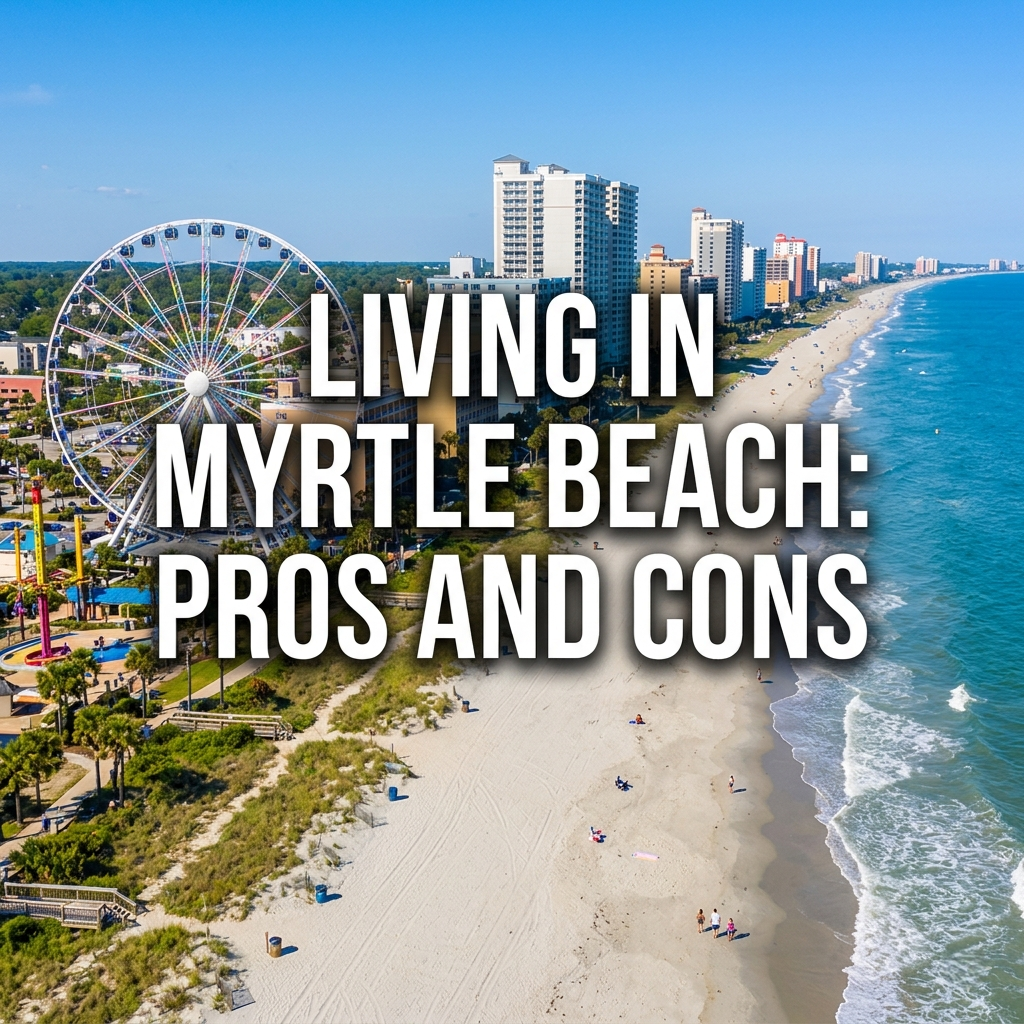
Living in Myrtle Beach Pros and Cons..

Explore More on Our Site

If Myrtle Beach feels like the right fit, browse Myrtle Beach homes for sale, view Myrtle Beach condos for sale, or compare 55-plus retirement communities.

About Greg Harrelson

Greg Harrelson is a seasoned Realtor® with more than 30 years of experience serving the Myrtle Beach and Grand Strand markets. As the founder of Century 21 The Harrelson Group, Greg has built his career helping buyers, sellers, and investors achieve success in every corner of the coastal Carolina real estate market. His expertise spans residential homes, investment properties, land development, and coastal condos. Known for his deep local knowledge, innovative marketing strategies, and commitment to personal service, Greg consistently helps clients reach their real estate goals while navigating the ever-changing market with confidence and precision.

June 5, 2026

North Myrtle Beach Condo Market Trends

The condo market in North Myrtle Beach has been one of the most active and watched segments of the Grand Strand real estate landscape for years. With a wide range of buildings, price points, and rental potential, condos in North Myrtle Beach attract second-home buyers, investors, retirees, and full-time residents alike. Understanding the trends shaping this market helps both buyers and sellers move with confidence.

Why Condos Are So Strong Here

North Myrtle Beach offers an unusually deep mix of condo inventory along its oceanfront and through its inland communities. The mix of beach culture, family vacation traditions, and resort amenities has created persistent demand from buyers across the country. Many of the most iconic Cherry Grove, Ocean Drive, Crescent Beach, and Windy Hill buildings have been part of the market for decades, with strong owner communities and proven rental track records.

Current Trends Shaping the Market

Steady Demand from Second-Home Buyers

Demand from second-home buyers remains consistent. Buyers from the Northeast, Mid-Atlantic, Midwest, and parts of Canada continue to view North Myrtle Beach as a top destination for their coastal getaway. That steady out-of-area demand supports pricing across the condo market.

The Rental Income Factor

Many condo buyers approach the purchase with rental income in mind. Vacation rental performance varies significantly by building, location, view, and finishes. Properties that perform best generally combine ocean access, good condition, professional photography, and either a strong on-site rental program or solid third-party management.

Insurance Costs Are Part of Every Conversation

Coastal insurance, including the master policy carried by the HOA and the owner's HO6 policy, has become a more visible part of condo ownership conversations. Buyers should evaluate the strength of the building's master policy, recent premium history, and any planned changes.

HOA Health and Reserves

HOA health has become a major part of due diligence. Buyers are paying close attention to reserve funds, recent special assessments, and planned capital projects. Buildings with strong reserves and well-run boards tend to hold their value better and offer more stable ownership experiences.

North Myrtle Beach Condo Market Trends

Property Types in the North Myrtle Beach Condo Market

Oceanfront High-Rises and Mid-Rises

Oceanfront buildings deliver the most direct beach access and the strongest vacation rental performance. They also carry the highest HOA fees in many cases because the master policy and exterior maintenance costs are larger.

Ocean View and Second-Row Buildings

Buildings one or two rows back from the ocean often deliver strong value. Many have pool decks and amenities that make up for being a short walk away from the beach.

Resort-Style Communities

Resort-style condo communities like those at Barefoot Resort offer golf, swimming amenities, marinas, and easy access to the oceanfront. These buildings appeal to lifestyle-driven buyers who want amenities beyond the unit itself.

Smaller Low-Rise and Channel Properties

Smaller low-rise condos in Cherry Grove and other quieter neighborhoods offer a more residential feel. These properties often appeal to full-time owners and buyers who want a quieter beach experience.

Pricing and Inventory Patterns

Pricing in the North Myrtle Beach condo market has shown steady appreciation over time with some moderation in growth more recently as the broader market has balanced. Inventory tends to ebb and flow seasonally, with more listings appearing in late winter and spring as owners prepare for the busy summer selling season.

Strategy for Buyers

Tour multiple buildings and compare HOA fees, master policy details, reserve studies, and rental rules. Get an HO6 insurance quote on the specific unit you are considering. Read recent board meeting minutes to see how the building is being managed. And work with an agent who tracks the condo market closely because building-specific performance varies dramatically.

Strategy for Sellers

Professional photography matters enormously in the condo market. Pricing should reflect recent comparable sales in the same building or comparable buildings, not aspirational numbers. Highlight rental income history if applicable. Be ready to share clear HOA financial information to support buyer confidence.

Final Takeaway

The North Myrtle Beach condo market continues to offer some of the most accessible, lifestyle-rich, and investment-friendly options on the Grand Strand. With careful attention to the trends and building-specific details, buyers and sellers can both navigate this market successfully. North Myrtle Beach has earned its reputation as a great place to own a condo, and the fundamentals supporting that reputation remain as strong as ever.

Explore More on Our Site

If condo investing on the north end is on your radar, browse North Myrtle Beach real estate, view Myrtle Beach condos for sale, and take a closer look at North Beach Plantation condos.

About Greg Harrelson

Greg Harrelson is a seasoned Realtor® with more than 30 years of experience serving the Myrtle Beach and Grand Strand markets. As the founder of Century 21 The Harrelson Group, Greg has built his career helping buyers, sellers, and investors achieve success in every corner of the coastal Carolina real estate market. His expertise spans residential homes, investment properties, land development, and coastal condos. Known for his deep local knowledge, innovative marketing strategies, and commitment to personal service, Greg consistently helps clients reach their real estate goals while navigating the ever-changing market with confidence and precision.
Posted in Market Updates
June 4, 2026

Ocean Drive Area Housing Market Insights

The Ocean Drive section of North Myrtle Beach has a personality all its own. Known affectionately by locals as O.D., the neighborhood is the historic heart of North Myrtle Beach and a perennial favorite for buyers who value tradition, community energy, and immediate beach access. The Ocean Drive housing market reflects all of that character, with a real estate landscape that ranges from historic cottages to oceanfront condos and everything in between. Understanding the market dynamics here helps buyers and sellers make smarter, more confident decisions.

What Makes the Ocean Drive Market Special

Ocean Drive is the birthplace of the Carolina Shag and the spiritual center of beach music culture in the Carolinas. Main Street comes alive with shag dancing, live music, and beachside dining. That cultural identity is part of what supports steady demand for real estate in the area. Buyers come to Ocean Drive not just for a home but for a lifestyle that is hard to find anywhere else. North Myrtle Beach as a whole benefits from this kind of identity, and Ocean Drive sits right at the center of it.

Current Market Conditions

Inventory

Inventory along Ocean Drive tends to move quickly when priced correctly. Buyers from across the country compete for the best properties, especially oceanfront homes and well-located condos. Seasonality plays a role, with spring and early summer bringing more activity as buyers visit for vacation and end up shopping for homes.

Pricing

Pricing in Ocean Drive reflects the premium that location and history command. Oceanfront properties anchor the top of the market, while a few blocks inland the prices become more accessible while still offering walkable beach access. The price-to-distance gradient is meaningful here, so buyers willing to walk one or two extra blocks can often unlock significant value.

Demand Drivers

Demand for Ocean Drive real estate comes from multiple sources. Second-home buyers from the Northeast, Midwest, and Mid-Atlantic make up a large share. Retirees relocating full-time continue to choose Ocean Drive for its walkability and lifestyle. Investors focus on properties suitable for short-term rentals, which can perform well in this market because of the steady visitor traffic.

Property Types in Ocean Drive

Historic Cottages

Ocean Drive has a collection of historic beach cottages that have been passed down through families for generations. Some of these homes have been beautifully preserved, others lovingly updated, and some are being rebuilt with modern construction while keeping the spirit of the neighborhood intact. View oceanfront homes in North Myrtle Beach.

Oceanfront Condos

Mid-rise and low-rise oceanfront condos sit close to the beach and serve as both second homes and vacation rentals. Many buildings have professional rental programs that make ownership relatively turnkey.

Newer Custom Builds

As older lots turn over, new custom builds bring modern design and finishes to Ocean Drive. These newer homes typically command premium pricing and appeal to buyers who want a fresh build with all the lifestyle benefits of the neighborhood.

Inland Single-Family Homes

A few blocks inland, single-family homes offer strong value with easy walking access to the beach and Main Street. These homes are often the smart move for buyers who want Ocean Drive lifestyle without the oceanfront premium.

Investment and Rental Performance

Ocean Drive remains a strong vacation rental market. Properties within walking distance to Main Street and the beach perform especially well during shag events, golf seasons, and family vacation periods. Investors should evaluate building rules, neighborhood ordinances, and realistic operating costs alongside projected rental income. The best long-term performers are often properties with a mix of strong location, well-maintained condition, and flexibility in their rental rules.

Ocean Drive Area Housing Market Insights

What Buyers and Sellers Should Watch

What Buyers Should Watch

Buyers should pay attention to days on market for comparable properties, the consistency of pricing across recent sales, and any specific rental rules that affect investment potential. Move-in ready properties tend to attract multiple buyers, so being pre-approved and decisive matters.

What Sellers Should Watch

Sellers should focus on presentation. Ocean Drive buyers often visit in person and respond strongly to homes that are well-staged and clean. Pricing in line with recent comparable sales remains the surest path to a quick, top-dollar sale.

Strategy for Buyers

Tour Ocean Drive at multiple times of day, including a Friday evening on Main Street and a quiet weekday morning along the beach. Walk the streets you might live on. Talk to neighbors. Get pre-approved before you tour because the market rewards prepared buyers. And work with an agent who tracks Ocean Drive carefully and can interpret what the data means for the specific block or building you are considering.

Final Takeaway

The Ocean Drive housing market continues to be one of the most distinctive and rewarding markets along the Grand Strand. The combination of historic identity, steady demand, and the walkable beach lifestyle creates value that endures over time. For buyers willing to act decisively and sellers willing to present and price well, Ocean Drive remains one of the most desirable places to own real estate on the entire coast.

Explore More on Our Site

To dig deeper into the local market, explore North Myrtle Beach real estate, browse oceanfront beach houses, or see all Myrtle Beach homes for sale.

About Greg Harrelson

Greg Harrelson is a seasoned Realtor® with more than 30 years of experience serving the Myrtle Beach and Grand Strand markets. As the founder of Century 21 The Harrelson Group, Greg has built his career helping buyers, sellers, and investors achieve success in every corner of the coastal Carolina real estate market. His expertise spans residential homes, investment properties, land development, and coastal condos. Known for his deep local knowledge, innovative marketing strategies, and commitment to personal service, Greg consistently helps clients reach their real estate goals while navigating the ever-changing market with confidence and precision.

Posted in Market Updates
June 3, 2026

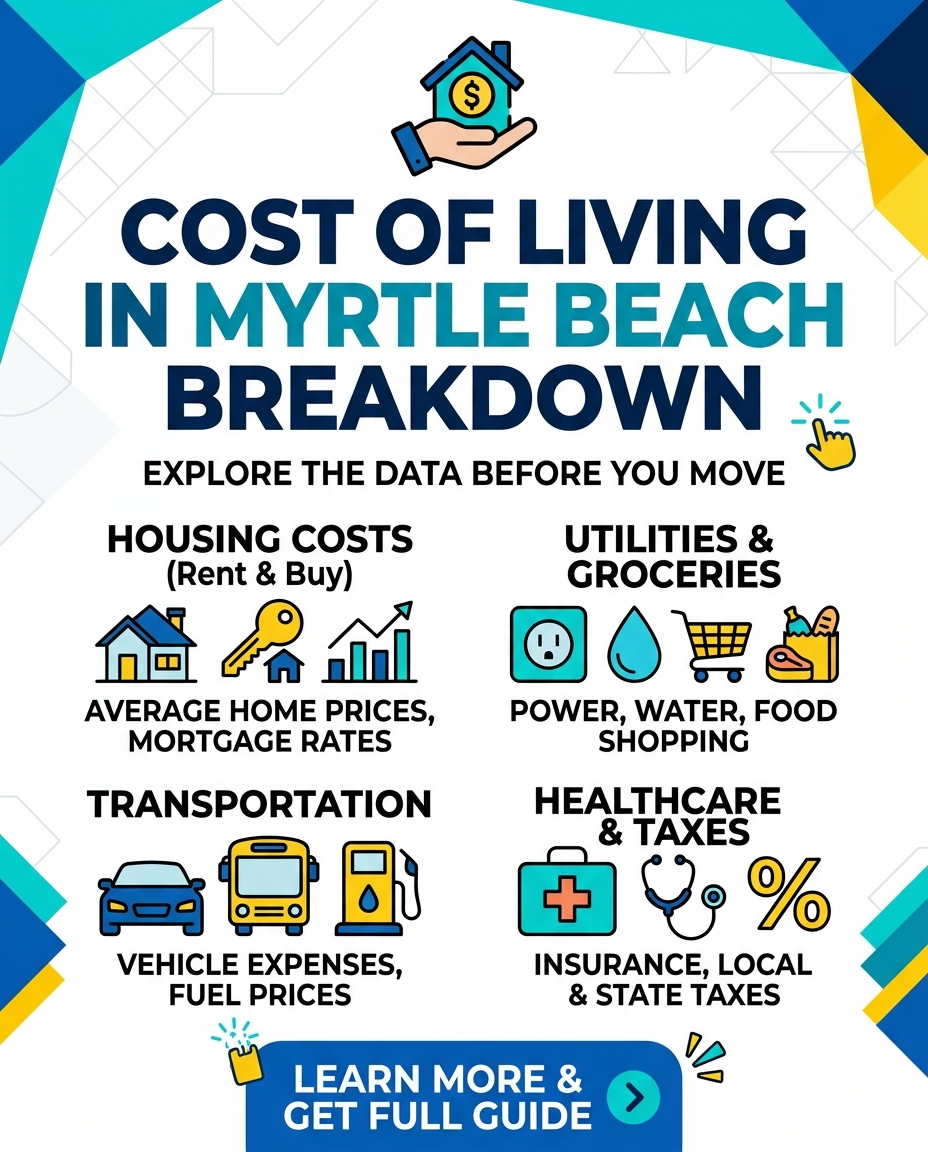
Cost of Living in Myrtle Beach Breakdown

Cost of living is one of the biggest reasons people relocate to Myrtle Beach. Buyers coming from the Northeast, Mid-Atlantic, and Midwest often arrive expecting expenses similar to where they came from and are pleasantly surprised by what they find. While prices have moved upward in recent years, the Grand Strand still offers a financial picture that allows residents to enjoy a strong quality of life without stretching the budget. Here is a clear breakdown of what cost of living actually looks like across the major categories.

Housing and Property Costs

Housing Costs

Housing is usually the largest line item in any household budget, and Myrtle Beach delivers strong value relative to many comparable coastal markets. Single-family homes, condos, and townhomes are available across a wide range of price points. Conway SC real estate, Carolina Forest, and parts of Surfside Beach offer entry-level homes that remain accessible to first-time buyers. Oceanfront and luxury markets in Pawleys Island, Grande Dunes, and Market Common reach premium price points but still tend to compare favorably to similar coastal markets up north.

Buyers exploring Myrtle Beach real estate often find that they can purchase more home for their budget here than in cities like Boston, New York, Philadelphia, or Washington, D.C. Property taxes are also significantly lower, especially for primary residences, which improves the monthly carrying cost picture even further.

Property Taxes

South Carolina's property tax structure is one of the friendliest in the country for homeowners. Owner-occupied primary residences are assessed at four percent of appraised value. Second homes and investment properties are assessed at six percent. Combined with the local millage rate, the resulting tax bill is dramatically lower than what buyers from higher-tax states are used to paying. The savings on annual property taxes alone can offset other costs of relocating.

Insurance Costs

Insurance is one area where coastal markets cost more than inland markets. Wind and hail coverage, standard homeowners insurance, and sometimes flood insurance combine to create a higher annual premium than buyers from inland states might expect. The good news is that the difference is usually offset by the favorable property tax structure. Newer homes built to current coastal codes also tend to insure more affordably than older homes.

Day-to-Day Living Costs

Utility Costs

Utility costs in Myrtle Beach are reasonable. The mild climate means heating bills are low compared to northern states. Cooling costs in summer can be meaningful, especially in larger homes, but high-efficiency systems and good insulation keep them manageable. Water, sewer, trash, and natural gas where available are all priced competitively.

Groceries and Everyday Expenses

Grocery prices in the Myrtle Beach area are generally in line with national averages and notably lower than many large urban markets. The area has all of the major grocery chains, plus local markets and seafood retailers that take advantage of fresh coastal seafood. Eating out remains affordable across a wide range of cuisines, with a strong mix of national chains and local favorites.

Transportation

Transportation costs in Myrtle Beach are quite reasonable. Auto insurance rates compare favorably to many states. Gas prices are typically near or below national averages. Most residents drive everywhere because the area is spread across a coastal corridor rather than concentrated in a single dense city. Commute times within the area are generally short, with most points along the Grand Strand reachable in twenty to thirty minutes outside of peak summer traffic.

Cost of Living in Myrtle Beach Breakdown

Lifestyle and Services

Healthcare

Healthcare costs and access have improved substantially in the area in recent years. Major hospital systems serve the region with full-service facilities, specialty centers, and an expanding network of clinics. Out-of-pocket costs vary by insurance plan, but residents generally find quality care without the higher pricing common in major metropolitan markets.

Entertainment and Recreation

One of the best things about living in Myrtle Beach is how much free or low-cost recreation there is. Public beach access, parks, walking trails, and community events form a year-round calendar of low-cost lifestyle. Golf courses are abundant, with a wide range of price points. Restaurants, live entertainment, and shopping centers offer plenty of options without the premium pricing of larger metropolitan areas.

Taxes Beyond Property

South Carolina's tax structure is broadly favorable. The state offers retirement income deductions for residents over a certain age, which is one reason retirees frequently relocate here. Sales tax is reasonable, and the absence of state-level estate taxes adds another benefit for long-term planning. A conversation with a CPA before relocating can help you map out the full tax picture for your situation.

Strategy for Newcomers

When budgeting for a move to Myrtle Beach, build a realistic monthly cost estimate that includes housing, taxes, insurance, utilities, groceries, transportation, and healthcare. Compare it to your current expenses honestly. Most relocators find the comparison highly favorable, especially after factoring in property tax savings and lower heating costs. Working with a local real estate professional helps you understand neighborhood-specific cost differences such as HOA fees and insurance variations.

Final Takeaway

Cost of living in Myrtle Beach remains one of the most appealing reasons people relocate to coastal South Carolina. The combination of reasonable housing, favorable property taxes, manageable utilities, and abundant low-cost lifestyle activities makes it possible to live well without overextending the budget. With a clear picture of the numbers and the right local guidance, the financial side of moving to Myrtle Beach often becomes one of the most reassuring parts of the decision.

Explore More on Our Site

To see how the budget translates into housing options, browse Myrtle Beach homes for sale, view Myrtle Beach condos for sale, or compare 55-plus retirement communities.

About Greg Harrelson

Greg Harrelson is a seasoned Realtor® with more than 30 years of experience serving the Myrtle Beach and Grand Strand markets. As the founder of Century 21 The Harrelson Group, Greg has built his career helping buyers, sellers, and investors achieve success in every corner of the coastal Carolina real estate market. His expertise spans residential homes, investment properties, land development, and coastal condos. Known for his deep local knowledge, innovative marketing strategies, and commitment to personal service, Greg consistently helps clients reach their real estate goals while navigating the ever-changing market with confidence and precision.

June 2, 2026

Cherry Grove Real Estate Overview

Cherry Grove holds a special place in the heart of the Grand Strand. Tucked into the northern end of North Myrtle Beach, this beachside community has been a favorite for families and seasonal owners for generations. Real estate in Cherry Grove tells a story of charm, tradition, and steady demand. For buyers exploring the area, understanding what makes Cherry Grove distinct is the first step in deciding whether this is the right neighborhood for the kind of beach life you want.

What Defines Cherry Grove

Cherry Grove is shaped by the ocean on one side and a unique network of tidal channels and marshes on the other. That geography creates a quieter, more residential beach experience than you find further south along the Grand Strand. The famous Cherry Grove Pier remains a community landmark. Stilted beach homes line many of the streets, channel-front properties offer boating and fishing opportunities, and a tight-knit year-round community has emerged alongside the seasonal traffic. Cherry Grove feels like a place where people return year after year, often across generations.

Cherry Grove Real Estate Overview

The Cherry Grove Real Estate Mix

Oceanfront and Ocean View Homes

Oceanfront homes in Cherry Grove range from older family beach houses with decades of memories to newer custom rebuilds with modern finishes. Ocean view homes one or two rows back deliver beach proximity at a more accessible price point and still perform well as vacation rentals.

Channel and Marsh-Front Homes

The Cherry Grove channels are one of the defining features of this neighborhood. Channel-front homes with private docks attract buyers who love boating, fishing, kayaking, and the calm of the tidal waterway. Marsh-front properties offer stunning sunset views and a strong connection to coastal nature.

Inland and Mid-Block Homes

Homes a few blocks back from the beach offer strong value and the kind of quiet residential feel that many full-time owners look for. These properties often appeal to families and retirees who want short walks to the beach without paying the oceanfront premium.

Condos and Smaller Buildings

Cherry Grove also has a selection of low-rise condo buildings and small mid-rises, especially along the oceanfront and near the pier. Condos here often appeal to second-home buyers who want lower maintenance and predictable carrying costs.

Lifestyle in Cherry Grove

Daily life in Cherry Grove revolves around water and community. Fishing from the pier, kayaking the channels, beach walks, and casual evenings on the porch shape the rhythm. The neighborhood is more residential than many parts of North Myrtle Beach, which is part of its appeal. Families gravitate to Cherry Grove because the beach feels safer, the streets feel calmer, and the energy is welcoming without being overly busy.

Vacation Rental Performance

Cherry Grove has a strong vacation rental market, especially for single-family homes and channel-front properties. Vacationers love the family-friendly feel, the fishing, and the slightly quieter beach. Rental performance depends heavily on the specific property, location, and how well it is marketed and managed. Investors who buy thoughtfully often find Cherry Grove rewarding because of repeat guest traffic and the durable appeal of the neighborhood.

Costs and Considerations

Insurance

Coastal insurance applies in Cherry Grove. Oceanfront and channel-front homes carry the highest premiums. Smart buyers always get insurance quotes before going under contract.

Flood and Elevation

Many homes in Cherry Grove are built on stilts in part because of flood elevation considerations. Reviewing the flood zone and elevation certificate is an important part of due diligence.

Maintenance

Saltwater and humidity wear on homes near the ocean. Owners who plan for ongoing exterior maintenance enjoy their homes and protect their value.

Strategy for Cherry Grove Buyers

Decide first what kind of waterfront you want, ocean or channel, because the lifestyle differs significantly. Tour multiple homes at different distances from the beach to find the sweet spot between price and proximity. Get insurance quotes early. Read flood zone information carefully. And work with an agent who knows Cherry Grove in detail, because the neighborhood has nuances that only experienced locals catch.

Final Takeaway

Cherry Grove is one of the most beloved neighborhoods on the Grand Strand for very good reasons. The mix of beach access, channel living, family tradition, and welcoming community creates a place that buyers fall in love with and rarely leave. Whether you are buying a primary residence, a second home, or an investment property, Cherry Grove rewards thoughtful buyers with a coastal lifestyle that is hard to match anywhere else along the South Carolina coast.

Explore More on Our Site

To go deeper on the Cherry Grove area, browse Cherry Grove Cottages, explore the broader North Myrtle Beach real estate market, or view oceanfront beach houses along the coast.

About Greg Harrelson

Greg Harrelson is a seasoned Realtor® with more than 30 years of experience serving the Myrtle Beach and Grand Strand markets. As the founder of Century 21 The Harrelson Group, Greg has built his career helping buyers, sellers, and investors achieve success in every corner of the coastal Carolina real estate market. His expertise spans residential homes, investment properties, land development, and coastal condos. Known for his deep local knowledge, innovative marketing strategies, and commitment to personal service, Greg consistently helps clients reach their real estate goals while navigating the ever-changing market with confidence and precision.

June 1, 2026

Retirement Living in North Myrtle Beach

Retirement is one of the most exciting life chapters, and where you choose to spend it can shape everything that follows. North Myrtle Beach has earned a strong reputation as a top retirement destination along the East Coast, and it is easy to see why. The mix of mild climate, friendly community feel, accessible cost of living, and abundant lifestyle options makes North Myrtle Beach a place where retirees genuinely thrive. For anyone considering retirement here, knowing what daily life looks like helps you decide whether this corner of coastal South Carolina is the right fit.

Why Retirees Choose North Myrtle Beach

North Myrtle Beach offers a quieter, more residential feel than many other vacation destinations on the East Coast. Retirees often arrive looking for a community where they can be active, social, and outdoors much of the year. The beach, the golf, the year-round events, and the strong sense of neighborhood all fit that goal. Many retirees say the relaxed pace and welcoming community feel were the deciding factors in choosing North Myrtle Beach over louder, busier destinations.

Retirement Living in North Myrtle Beach

The Lifestyle Day-to-Day

Beach and Outdoor Living

Daily walks on the beach, weekend golf, kayaking the Cherry Grove channels, and dinners on the porch shape much of the retirement experience here. The mild climate makes outdoor activity possible for most of the year, and the area's natural beauty rewards people who enjoy time outside.

Social Life and Community

North Myrtle Beach has a strong social fabric. Civic groups, churches, country clubs, golf leagues, dance clubs, hobby groups, and volunteer organizations make it easy to build a social network. Many retirees describe their first year as one of the most social periods of their adult life.

Arts, Music, and Entertainment

From Carolina Shag on Main Street to live music venues, theater, and gallery exhibits, there is no shortage of entertainment. The area continues to invest in arts and cultural offerings, which adds to the appeal for retirees who want more than just beach time.

Housing Options for Retirees

Low-Maintenance Condos

Many retirees gravitate to condos for the simplicity. Exterior maintenance, landscaping, and many amenities are handled by the HOA. Oceanfront, ocean view, and resort-style buildings offer different lifestyle experiences at different price points.

Single-Family Homes in Established Communities

Single-family homes in communities like Del Webb NMB, Tidewater Plantation, Barefoot Resort, and select inland neighborhoods give retirees more space, privacy, and yard while still offering community amenities.

Gated Communities

Gated communities appeal to retirees who value security, architectural consistency, and active social calendars. The choice of community depends on whether you prioritize golf, water access, walkability, or a particular price point.

The Financial Picture for Retirees

Property Taxes

South Carolina assesses owner-occupied primary residences at four percent of appraised value, which is among the lowest assessment ratios in the country. For retirees aged 65 and older, the homestead exemption further reduces taxable value. The combined effect is a property tax bill that often surprises new retirees in the best way.

State Income Tax

South Carolina provides retirement income deductions for residents over a certain age, which can meaningfully improve the after-tax income picture. A conversation with a CPA before relocating can clarify exactly what the savings look like for your specific situation.

Cost of Living

Cost of living in the area is competitive with national averages and significantly lower than many of the metropolitan areas retirees come from. Groceries, healthcare, transportation, and entertainment are reasonable, and the lifestyle offers many free or low-cost activities.

Healthcare Access

Healthcare has grown substantially in the area in recent years. Major hospital systems serve North Myrtle Beach with full-service facilities, specialty clinics, and senior-focused services. The combination of strong local healthcare and easy access to larger systems in Myrtle Beach and Wilmington gives retirees the medical coverage they need.

Easy Access for Family Visits

Myrtle Beach International Airport offers nonstop service to many major cities, which makes it easy for adult children and grandchildren to visit. Many retirees say their social calendar got busier after relocating because family loved coming down for long weekends and longer vacations.

Strategy for Retirees Considering a Move

Spend time in the area in different seasons if you can. Tour multiple neighborhoods to find the right fit between condo and single-family, gated and open, oceanfront and inland. Talk with other retirees who have made the move. Get insurance quotes and understand the full carrying cost before deciding. And work with an agent who specializes in retirement buyers because they understand the considerations that matter most.

Final Takeaway

Retirement living in North Myrtle Beach offers a wonderful balance of community, climate, cost of living, and lifestyle. The area has been welcoming retirees for decades, and the experience continues to improve as healthcare, amenities, and infrastructure grow. For retirees who want to enjoy the beach, stay active, and build a meaningful community in their next chapter, North Myrtle Beach is hard to beat.

Explore More on Our Site

If retirement in this area is on your mind, browse North Myrtle Beach real estate, explore the area's top 55-plus retirement communities, and take a closer look at Del Webb North Myrtle Beach.

About Greg Harrelson

Greg Harrelson is a seasoned Realtor® with more than 30 years of experience serving the Myrtle Beach and Grand Strand markets. As the founder of Century 21 The Harrelson Group, Greg has built his career helping buyers, sellers, and investors achieve success in every corner of the coastal Carolina real estate market. His expertise spans residential homes, investment properties, land development, and coastal condos. Known for his deep local knowledge, innovative marketing strategies, and commitment to personal service, Greg consistently helps clients reach their real estate goals while navigating the ever-changing market with confidence and precision.
May 29, 2026

Top Mistakes First-Time Homebuyers Make

Buying your first home is one of the largest financial decisions most people ever make, and the process can feel overwhelming if you walk into it without preparation. In the Myrtle Beach and Grand Strand markets, first-time buyers face an additional layer of considerations because of the coastal nature of the area, the mix of property types, and the variety of buyer programs available. Knowing the most common mistakes first-time buyers make in coastal South Carolina helps you sidestep them and approach your purchase with confidence.

Top Mistakes First-Time Homebuyers Make

Preparation and Budget Mistakes

Skipping Pre-Approval

Many first-time buyers start touring homes before sitting down with a lender. By the time they find a home they love, they often discover the price range they were imagining does not match what they actually qualify for. Real pre-approval, with documentation reviewed by a lender, gives you a true picture of your budget and tells sellers you are a serious buyer when you submit an offer.

Not Understanding the Full Monthly Cost

The mortgage payment is only one part of monthly homeownership cost. Property taxes, homeowners insurance, wind and hail coverage, flood insurance if applicable, HOA or condo fees, and utilities all add up. In coastal markets like Myrtle Beach, these costs can be higher than what first-time buyers expect, especially insurance. Calculating the full monthly cost upfront prevents the unpleasant surprise of being house-poor after closing.

Underestimating Closing Costs

First-time buyers often save for the down payment but forget about closing costs. Closing costs in South Carolina typically include lender fees, title insurance, attorney fees, recording fees, and prepaid insurance and taxes. They generally run a few percent of the purchase price. Some sellers will contribute to closing costs as part of negotiation, but buyers should plan for them as part of the overall budget.

Search and Decision Mistakes

Overlooking First-Time Buyer Programs

South Carolina offers several programs that can help first-time buyers, including down payment assistance, low-down-payment FHA loans, USDA loans for eligible rural areas, and VA loans for veterans. Each program has its own rules and benefits. Many first-time buyers in Myrtle Beach real estate never explore these options because they assume they would not qualify. Talking with a lender experienced in these programs can open up possibilities you did not know existed.

Falling in Love With the First Home

It is natural to feel emotionally drawn to homes that match your style, but rushing into the first one you tour often leads to regret. Touring multiple homes in different neighborhoods helps calibrate what fair market value really looks like and what you genuinely value in a home. Some of the best decisions first-time buyers make come from comparing options instead of jumping at the first one.

Due Diligence Mistakes

Skipping the Home Inspection

In hot markets, some first-time buyers feel pressure to skip the inspection to make their offer more appealing. This is rarely a good idea. A thorough inspection identifies issues that can cost thousands of dollars to repair after closing. In coastal areas, inspections are particularly important because of moisture, salt exposure, HVAC condition, and roof considerations.

Not Reading the HOA Documents

Many homes in the Grand Strand area are within HOAs, especially condos and planned communities. The HOA budget, reserves, rules, and recent meeting minutes contain important information. First-time buyers sometimes skim the documents and later discover restrictions, special assessments, or financial issues they wish they had known about. Take the time to read everything carefully.

Forgetting About Insurance Quotes

In coastal South Carolina, insurance can vary dramatically from one home to another based on location, elevation, age, and construction. Smart first-time buyers get insurance quotes on a specific home before going under contract, not after. Knowing the actual insurance cost prevents budget surprises during underwriting and helps you compare homes on a true cost basis.

Process Mistakes

Making Big Financial Changes During the Process

Once you are pre-approved, your financial profile is being watched closely by your lender. Opening a new credit card, financing a car, or making a large unexplained deposit can derail your loan even at the last minute. First-time buyers sometimes do this without realizing the consequences. Keep your financial situation steady from pre-approval through closing.

Going It Alone

The first-time buying process is full of moving parts that experienced agents and lenders handle every day. Trying to navigate the market without local expertise often leads to mistakes that cost more than any savings on commission. A good local agent helps you understand the neighborhoods, evaluate offers, negotiate well, and close smoothly.

Strategy for First-Time Buyers

Get pre-approved with a lender experienced in your loan type. Build a budget that includes the full monthly cost of ownership. Tour multiple homes before making decisions. Get insurance quotes early. Read every page of the contracts and disclosures. Ask questions whenever something is unclear. And work with a Grand Strand real estate professional who understands coastal markets.

Final Takeaway

The first-time home buying experience can be one of the most exciting moments in your life, especially when you are buying in a place as special as the Grand Strand. By avoiding the most common mistakes, you give yourself the best chance to walk into homeownership feeling confident, informed, and ready to enjoy the home for years to come.

Explore More on Our Site

When you are ready to begin the search the right way, browse Myrtle Beach homes for sale, connect with our top Myrtle Beach Realtors, or get pre-approved through Myrtle Beach home loans.

About Greg Harrelson

Greg Harrelson is a seasoned Realtor® with more than 30 years of experience serving the Myrtle Beach and Grand Strand markets. As the founder of Century 21 The Harrelson Group, Greg has built his career helping buyers, sellers, and investors achieve success in every corner of the coastal Carolina real estate market. His expertise spans residential homes, investment properties, land development, and coastal condos. Known for his deep local knowledge, innovative marketing strategies, and commitment to personal service, Greg consistently helps clients reach their real estate goals while navigating the ever-changing market with confidence and precision.

Posted in For Buyers
May 28, 2026

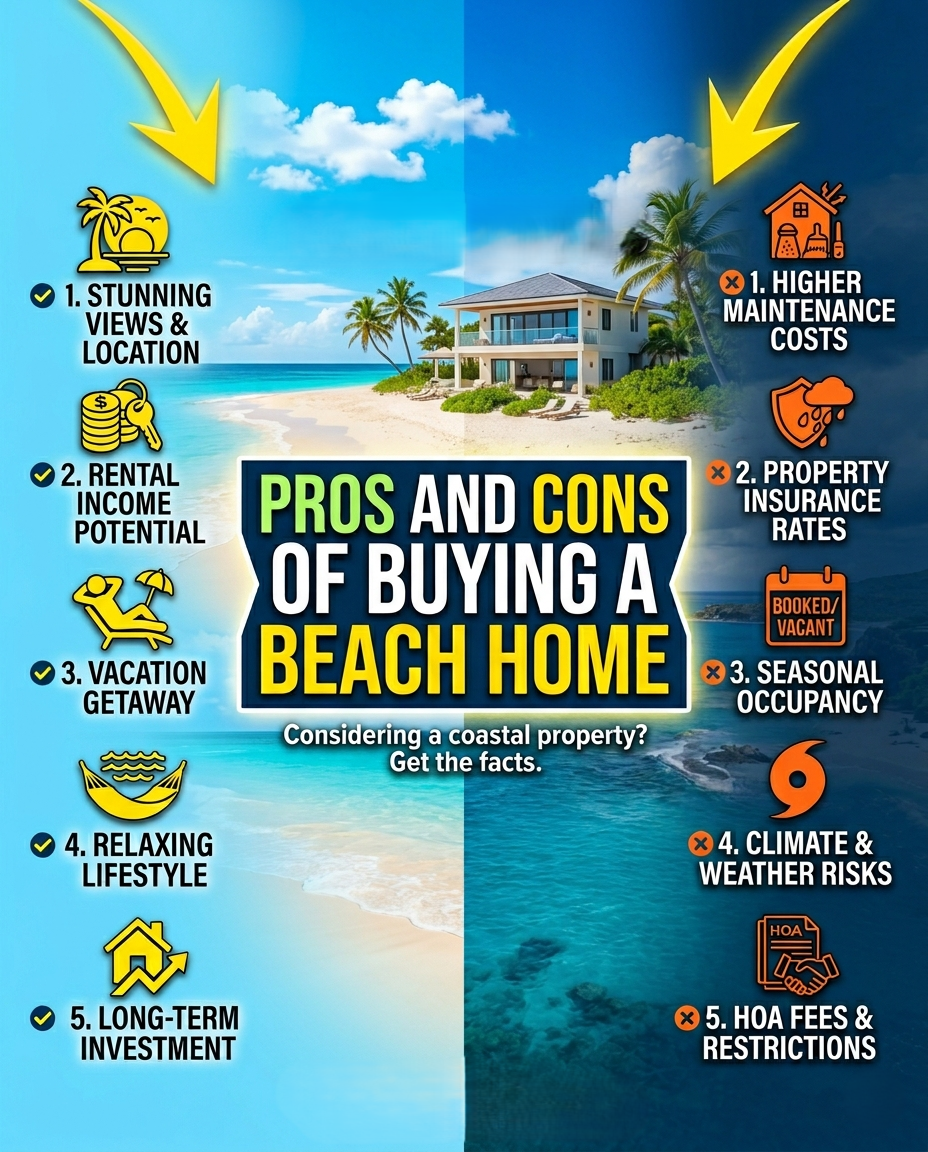
Pros and Cons of Buying a Beach Home

Buying a beach home is one of those goals that lives near the top of many people's life lists. The Grand Strand has been turning that dream into reality for buyers from across the country for decades, drawing retirees, second-home owners, vacationers, and full-time relocators to communities like Myrtle Beach, North Myrtle Beach, Surfside, and Pawleys Island. Like any major real estate decision, owning a beach home comes with real benefits and real considerations. Looking at both sides honestly is the best way to decide whether the coastal lifestyle is right for you.

Why Beach Homes Capture So Many Buyers

There is something genuinely powerful about waking up to the sound of the ocean, walking the beach in the early morning, and watching the seasons turn from your porch. Beach homes also offer a lifestyle that tends to bring people together. Family visits become weekend traditions. Friends find reasons to come stay. Buyers often describe their beach home as the place that finally gave them more time with the people they love. That emotional return on investment is real and often outweighs the spreadsheet view.

Pros and Cons of Buying a Beach Home

The Pros of Buying a Beach Home

Long-Term Lifestyle Value

Coastal South Carolina offers a quality of life that is hard to replicate inland. Mild winters, ocean breezes, golf courses, fresh seafood, and a slower pace help explain why so many buyers choose to make this area their permanent home. A beach home gives you direct access to that lifestyle whenever you want it, whether for two weeks a year or year-round.

Strong Long-Term Demand

Demand for beach homes in the Grand Strand has been remarkably consistent for years. New buyers continue to arrive from the Northeast, Mid-Atlantic, and Midwest, drawn by the lifestyle and the favorable cost of living. That steady demand helps support property values over time and gives owners confidence that the market is rooted in something real, not in a short-term trend.

Rental Income Potential

For many beach home buyers, rental income is part of the financial picture. Short-term vacation rentals continue to perform well across the area, especially in oceanfront and ocean-view locations. Long-term rentals are also viable, particularly in markets like Conway and Carolina Forest where year-round demand from local renters is strong. Even owners who use the home heavily themselves often offset some of their carrying costs with seasonal rentals.

Tax and Cost Advantages

South Carolina's property tax structure is friendly to homeowners, especially for primary residences with the four percent assessment ratio. Even at the six percent ratio for second homes, many buyers from higher-tax states find their annual carrying costs significantly lower than what they paid up north. Myrtle Beach real estate consistently surprises buyers in the best way when they sit down and run the full numbers.

The Cons of Buying a Beach Home

Insurance Costs Are Higher Near the Coast

Insurance is one of the most important variables for any coastal homeowner. Wind and hail coverage, flood insurance, and standard homeowners insurance all need to be priced into your budget. Costs can vary significantly depending on how close the home is to the ocean, the elevation, the age of the home, and the construction type. Smart buyers get insurance quotes before going under contract, not after.

HOA and Condo Fees

Many beach communities, especially condo developments, have HOA fees that cover building maintenance, amenities, insurance on common areas, and reserves. These fees vary widely from a few hundred dollars per month in modest condos to four-figure monthly fees in luxury oceanfront buildings. Reviewing the HOA budget, reserve study, and rules in detail before buying is essential.

Saltwater and Coastal Maintenance

Living near the ocean is wonderful, but salt and humidity are tougher on a home than inland conditions. HVAC systems, exterior finishes, hardware, and outdoor furniture all wear faster. Beach homes need consistent care to keep them looking sharp and functioning well. Owners who plan for that maintenance ahead of time enjoy their homes more and protect their investments.

Storm Risk and Preparation

The Grand Strand sees occasional tropical storms and hurricanes. Most years pass without any direct impact, but coastal homeowners need to be prepared. Hurricane shutters, evacuation plans, and proper insurance are part of responsible ownership. Modern construction in the area is built to current coastal codes, which helps significantly, but the risk remains a real consideration that buyers should understand and respect.

Seasonal Use If You Are Far Away

Out-of-state buyers sometimes find that life gets in the way of using their beach home as often as they hoped. If a home sits empty most of the year, you are still paying for insurance, HOA, taxes, and maintenance. Some buyers solve this by renting the home seasonally, but renting brings its own management considerations.

Strategy for Buyers

Be clear about how you plan to use the home. A primary residence, a second home, and a pure investment property all warrant different decisions on location, price point, and amenities. Run the full numbers including insurance, HOA, taxes, utilities, and maintenance, not just the mortgage. Tour multiple neighborhoods because the difference between oceanfront, ocean view, and a few blocks inland can change pricing and rental performance significantly.

Final Takeaway

A beach home along the Grand Strand can be one of the most rewarding investments you make, both financially and emotionally. The pros are real and lasting, but so are the costs and considerations. Buyers who go in clear-eyed about insurance, maintenance, and how they actually plan to use the home tend to be the happiest owners over the long run. With the right preparation and the right local guidance, the dream of owning a beach home in coastal South Carolina is well within reach.

Explore More on Our Site

If a beach home is on your wish list, browse oceanfront beach houses, view Myrtle Beach oceanfront condos, or explore Surfside Beach real estate.

About Greg Harrelson

Greg Harrelson is a seasoned Realtor® with more than 30 years of experience serving the Myrtle Beach and Grand Strand markets. As the founder of Century 21 The Harrelson Group, Greg has built his career helping buyers, sellers, and investors achieve success in every corner of the coastal Carolina real estate market. His expertise spans residential homes, investment properties, land development, and coastal condos. Known for his deep local knowledge, innovative marketing strategies, and commitment to personal service, Greg consistently helps clients reach their real estate goals while navigating the ever-changing market with confidence and precision.
Posted in For Buyers
May 27, 2026

Understanding Property Taxes in Georgetown County

Property taxes are an essential part of the homeownership equation, and Georgetown County offers a tax environment that consistently surprises buyers in the best way. Whether you are considering a beach cottage in Pawleys Island, a historic home in downtown Georgetown, or a quiet riverfront property in Litchfield, understanding how property taxes work in Georgetown County helps you make smarter decisions and avoid surprises down the road.

Why Georgetown County Taxes Catch Buyers Off Guard

Many of the buyers who relocate to Georgetown County are coming from states with significantly higher property tax burdens. The contrast can be remarkable. South Carolina has built a property tax system that favors owner-occupied primary residences in particular, and Georgetown County's combination of assessment ratios, exemptions, and millage rates puts annual tax bills well below what buyers from the Northeast and Mid-Atlantic typically expect. That financial breathing room is a meaningful part of why Georgetown real estate continues to attract retirees, second-home buyers, and full-time relocators.

How South Carolina Property Taxes Work

The Two Key Assessment Ratios

South Carolina uses different assessment ratios depending on how a property is used. Owner-occupied primary residences are assessed at four percent of the appraised value. Second homes, vacation homes, and investment properties are assessed at six percent. That difference is at the heart of what makes the South Carolina property tax system unusual. The four percent rate is one of the lowest assessment ratios in the country for primary residences, and it is one of the most overlooked perks of moving to coastal South Carolina full-time.

Filing for the Primary Residence Assessment

The four percent rate is not automatic. After purchasing a home that you intend to use as your primary residence, you need to file an application with the Georgetown County Assessor's office. The form is straightforward, but timing matters. Filing promptly after closing helps ensure the home is assessed correctly for your first full tax year. Buyers who skip or delay this step often end up paying more than necessary until the application is processed.

Second Homes and Investment Properties

For buyers purchasing in Pawleys Island real estate, Litchfield, or other Georgetown County coastal areas as a second home or investment, the six percent assessment ratio applies. While this is higher than the primary residence rate, it remains very competitive on a national basis. Many vacation homeowners report that even at the six percent rate, their annual tax bill is well below what they pay on similar second homes in the Northeast.

The Millage Rate

The millage rate in Georgetown County varies by location, since different parts of the county fall under different combinations of school district, fire service, water and sewer, and special purpose districts. A property in incorporated Georgetown is assessed differently than a property in unincorporated Pawleys Island or in the Litchfield area. When you are evaluating a specific home, your real estate professional can help you understand which jurisdictions apply and what the resulting millage rate looks like.

The Homestead Exemption Advantage

For homeowners aged 65 and older, those who are totally and permanently disabled, or those who are legally blind, South Carolina offers a homestead exemption. This exemption removes the first fifty thousand dollars of fair market value from property taxation on the primary residence. For retirees moving to Georgetown County, this is a meaningful annual savings that compounds over many years and helps make the area particularly attractive for retirement.

Special Districts and Add-Ons

Some properties in Georgetown County fall within special districts that fund specific services such as beach renourishment, stormwater management, or fire protection. These add-ons are usually small but worth knowing about. They appear on the annual tax bill and can vary depending on the specific neighborhood. A careful review of the most recent tax bill before closing helps avoid any surprises.

Understanding Property Taxes in Georgetown County

How Property Taxes Affect Your Monthly Payment

If you are financing your home, property taxes are typically included in your monthly mortgage payment through an escrow account. That means you pay one twelfth of the annual tax bill each month and your lender pays the actual tax bill on your behalf. When estimating your monthly payment, lenders use estimated annual taxes. Be sure your lender is using the correct assessment ratio for your situation, since the difference between primary residence and second home rates can change the monthly payment significantly.

Tax Considerations Across Georgetown County

Different parts of Georgetown County have different tax characteristics. Pawleys Island and Litchfield Beach attract many second-home buyers, so the six percent assessment is common. Downtown Georgetown sees more primary residence buyers, where the four percent rate often applies. Inland communities in the county tend to mix both. Looking at recent tax history alongside the type of use the new buyer will pursue gives the most accurate picture of what taxes will look like going forward.

Strategy for Buyers and Sellers

Strategy for Buyers

Confirm whether the property is currently assessed at four or six percent and how that aligns with your intended use. Pull the most recent tax bill and review the breakdown of millage and any special districts. File for the primary residence assessment promptly after closing if applicable. And explore the homestead exemption if you are 65 or older, as it represents a meaningful long-term savings.

Strategy for Sellers

Be ready to share your annual tax bill with buyers and explain how it might change for them depending on use. If your home is currently assessed at six percent because it is a second home, point out that a buyer using it as a primary residence will likely see a lower bill. That can be a meaningful selling point for the right buyer, and clear communication helps build trust during the transaction.

Final Takeaway

Property taxes in Georgetown County are one of the more pleasant financial discoveries for buyers moving to the area. The combination of low assessment ratios, reasonable millage rates, and meaningful exemptions creates a tax environment that supports long-term affordability and rewards informed buyers. Whether you are buying a primary residence in town, a coastal second home in Pawleys Island, or an investment property along the rivers and marshes of the Lowcountry, understanding the local tax structure is an important part of making confident decisions in Georgetown County real estate.

Explore More on Our Site

To explore Georgetown County markets, browse Pawleys Island real estate, view Murrells Inlet homes for sale, or visit the Myrtle Beach Real Estate FAQ.

About Greg Harrelson

Greg Harrelson is a seasoned Realtor® with more than 30 years of experience serving the Myrtle Beach and Grand Strand markets. As the founder of Century 21 The Harrelson Group, Greg has built his career helping buyers, sellers, and investors achieve success in every corner of the coastal Carolina real estate market. His expertise spans residential homes, investment properties, land development, and coastal condos. Known for his deep local knowledge, innovative marketing strategies, and commitment to personal service, Greg consistently helps clients reach their real estate goals while navigating the ever-changing market with confidence and precision.

May 26, 2026

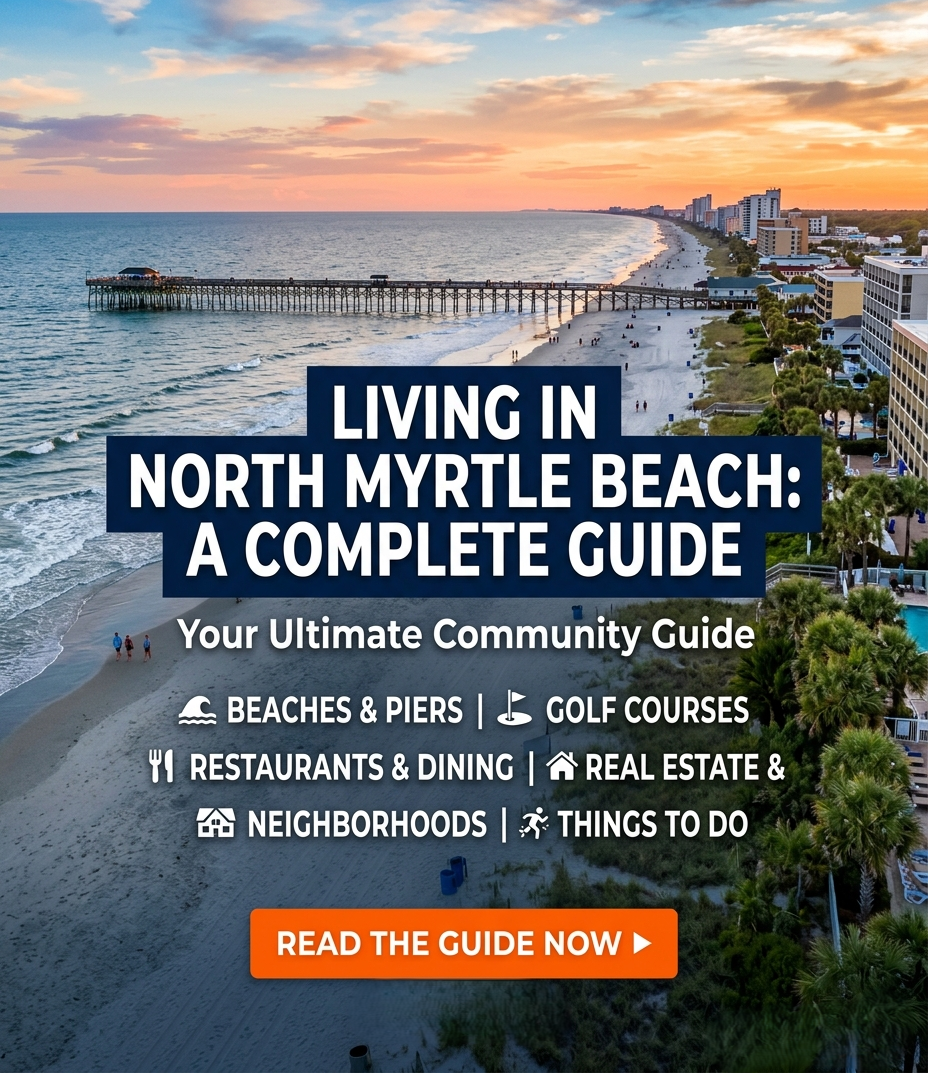
Living in North Myrtle Beach: A Complete Guide

North Myrtle Beach has a personality all its own. While the broader Grand Strand draws visitors and residents from across the country, North Myrtle Beach attracts a particular kind of buyer who values a slightly slower pace, a stronger sense of neighborhood, and a coastline famous for shag dancing, family beach traditions, and welcoming small-town energy. For buyers considering a move, knowing what life is actually like in North Myrtle Beach makes the decision much easier and helps you choose the right part of town to call home.

What Makes North Myrtle Beach Different

North Myrtle Beach sits at the northern end of the Grand Strand and includes several historic beach communities that merged into one city, including Cherry Grove, Ocean Drive, Crescent Beach, and Windy Hill. That heritage gives North Myrtle Beach a distinct character. Streets are quieter, beaches feel more residential, and the year-round community vibe is stronger than in Myrtle Beach proper. Many buyers describe North Myrtle Beach as the perfect mix of beach lifestyle and small-town living.

The Communities Within North Myrtle Beach

Cherry Grove

Cherry Grove is a beloved family beach known for its calm tidal channels, fishing pier, and laid-back charm. Many homes here are family-owned and have been passed down across generations. The mix of stilted beach homes, modest cottages, and newer rebuilds creates a unique architectural rhythm. Cherry Grove is especially popular with families and second-home buyers who want a quieter beach experience.

Ocean Drive

Ocean Drive, often called O.D. by locals, is the historic heart of North Myrtle Beach. It is the birthplace of the Carolina Shag and home to Main Street, where shag dancing, live music, and beach culture come alive year-round. Real estate here ranges from oceanfront cottages to mid-rise condos, with strong rental performance for properties close to the beach.

Crescent Beach

Crescent Beach offers a quieter coastal feel with a mix of single-family homes, condos, and small mid-rise buildings. The neighborhood appeals to buyers who want easy beach access without the energy of a busy tourist district.

Windy Hill

Windy Hill blends oceanfront condos with a more residential feel and has historically attracted buyers seeking a balance between vacation lifestyle and full-time community living.

 Living in North Myrtle Beach A Complete GuideLifestyle and Day-to-Day Living

Daily life in North Myrtle Beach revolves around the water and the community. Mornings on the beach, walks along the Cherry Grove channel, golf in the afternoon, and dinner at a family-owned restaurant on Main Street form a natural rhythm. The area's compact size means most everyday needs are within a short drive, and the city has worked hard to keep traffic manageable and parks accessible. Year-round events including the SOS Spring Safari, Music on Main, and various community festivals reinforce the strong sense of identity.

Real Estate Options

Real estate in North Myrtle Beach spans a wide range. Oceanfront condos remain popular for second-home and investment buyers. Single-family homes range from charming beach cottages to luxury custom homes, especially in areas like Tilghman Beach and the gated Tidewater Plantation. Inland communities and golf course neighborhoods offer larger homes and lots at more accessible price points. Buyers exploring Myrtle Beach real estate often find that North Myrtle Beach offers a better mix of community feel and beach access for the price.

Cost of Living in North Myrtle Beach

Cost of living in North Myrtle Beach mirrors the broader Grand Strand. Property taxes for primary residences are favorable at the four percent assessment ratio. Utilities are reasonable. Insurance costs reflect coastal location. Day-to-day expenses for groceries, dining, and entertainment compare favorably to most major coastal markets. Many residents say the value is one of the most appealing aspects of life in the area.

Schools and Family Life

North Myrtle Beach has a strong reputation as a family-friendly community. Schools are part of the Horry County Schools system, with options that families consistently rate well. Parks, sports leagues, and community programs round out a kid-friendly lifestyle. The compact, walkable nature of many neighborhoods makes it easy for kids to bike to friends' houses and for families to enjoy time outdoors together.

Recreation and Amenities

Recreation in North Myrtle Beach is built around the water. Fishing, boating, kayaking, paddleboarding, and beach time are everyday activities. Golf is also a major draw, with several championship courses within minutes of every neighborhood. The area features parks, sports complexes, an aquatic center, and biking trails that round out the active lifestyle. Restaurants range from waterfront seafood spots to casual diners and upscale dining.

Commute and Convenience

North Myrtle Beach is about thirty to forty minutes from Myrtle Beach International Airport, depending on traffic, and easily accessible from Highways 17 and 31. Day-to-day shopping, healthcare, and services are all within town. Larger needs and entertainment options are available in nearby Myrtle Beach, with Wilmington, North Carolina, also within a reasonable drive.

Strategy for Buyers

Tour multiple neighborhoods because each section of North Myrtle Beach has a distinct feel. Spend time at the beach, on Main Street, and at neighborhood parks to sense the community. Get insurance quotes early. Read HOA documents carefully if you are looking at condos or planned communities. And work with an agent who knows North Myrtle Beach in detail and can help you understand the differences between Cherry Grove, Ocean Drive, Crescent Beach, and Windy Hill.

Final Takeaway

Living in North Myrtle Beach offers a coastal lifestyle that feels both relaxed and connected. The beaches, the historic neighborhoods, the community traditions, and the welcoming atmosphere combine to create a place that residents love and visitors fall in love with. For buyers who want the best of beach life with a stronger sense of community, North Myrtle Beach continues to be one of the most rewarding choices on the Grand Strand.

Explore More on Our Site

If North Myrtle Beach feels right, browse North Myrtle Beach real estate, view Myrtle Beach homes for sale, or shop Myrtle Beach condos for sale.

About Greg Harrelson

Greg Harrelson is a seasoned Realtor® with more than 30 years of experience serving the Myrtle Beach and Grand Strand markets. As the founder of Century 21 The Harrelson Group, Greg has built his career helping buyers, sellers, and investors achieve success in every corner of the coastal Carolina real estate market. His expertise spans residential homes, investment properties, land development, and coastal condos. Known for his deep local knowledge, innovative marketing strategies, and commitment to personal service, Greg consistently helps clients reach their real estate goals while navigating the ever-changing market with confidence and precision.