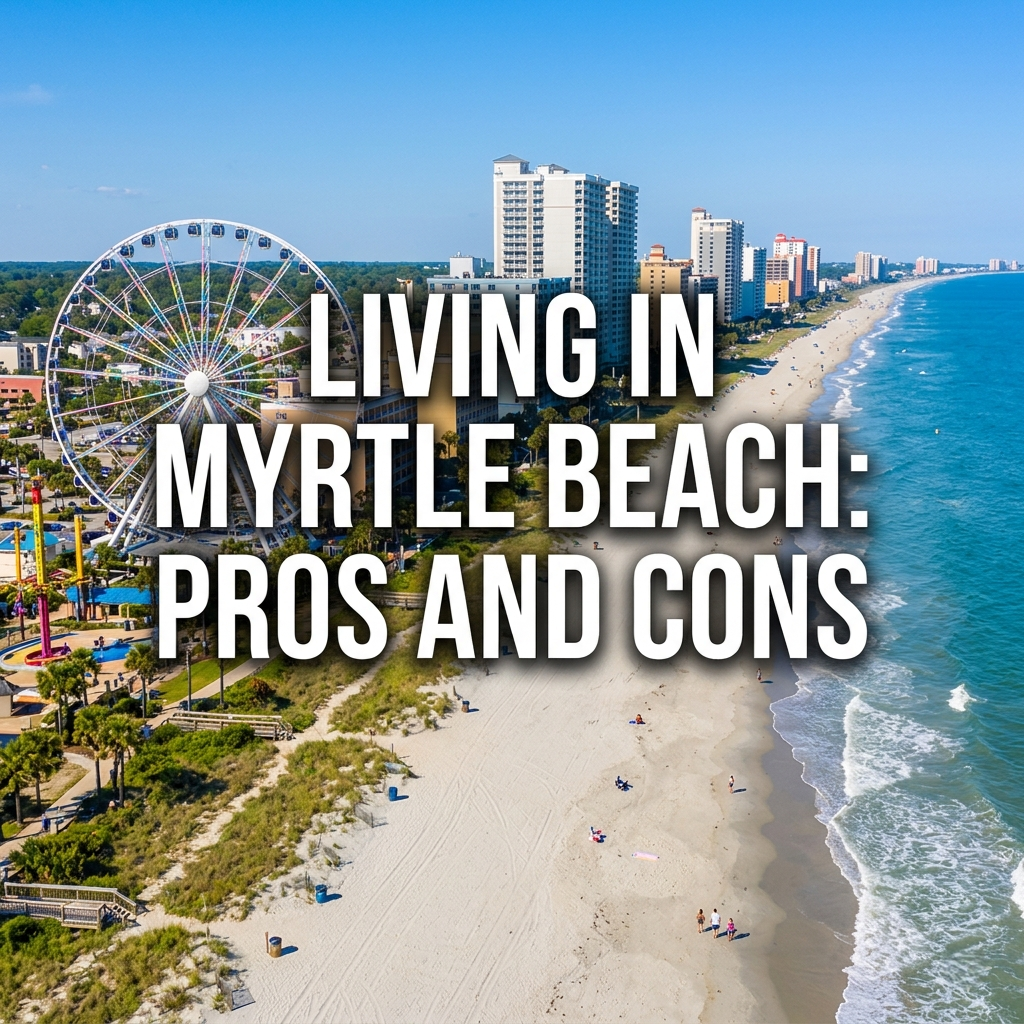
Myrtle Beach has been one of the most popular relocation destinations in the country for years, drawing buyers from across the Northeast, Midwest, and Mid-Atlantic. The lifestyle, climate, cost of living, and steady real estate appreciation all play a role. Like any place, life in Myrtle Beach comes with real benefits and a few honest tradeoffs. Walking through both sides helps anyone considering a move decide whether the area is the right fit for their life and goals.
The Pros of Living in Myrtle Beach
The Coastal Lifestyle Is Real
Living in Myrtle Beach real estate communities gives you year-round access to ocean views, beach walks, golf, fresh seafood, and community events. Mornings often start with a walk near the water and afternoons can be spent on the course or out on a boat. The everyday quality of life is a major reason people who visit on vacation eventually decide to make the move permanent.
Mild Climate
The Grand Strand enjoys a mild four-season climate with warm summers, comfortable spring and fall stretches, and short, mild winters. For buyers coming from snowy parts of the country, the change is dramatic. Heating bills shrink, outdoor activities extend through the year, and seasonal allergies, while still present, are more manageable for many residents than they were back home.
Cost of Living
Cost of living in Myrtle Beach is competitive with national averages and significantly lower than many of the metropolitan areas where new residents come from. Property taxes are favorable, especially for primary residences. Groceries, services, and entertainment are reasonably priced. The area still offers entry points across many price ranges, from condos to large single-family homes, which is why so many retirees and young families find the area accessible.
Strong Sense of Community
Despite being a popular vacation destination, Myrtle Beach has neighborhoods with a strong year-round community feel. Many residents are transplants, which means newcomers fit in quickly. Civic groups, churches, hobby clubs, golf leagues, and volunteer organizations make it easy to build a social network in your first year.
Healthcare and Amenities Have Grown
Healthcare options have expanded substantially in recent years with new hospitals, specialty clinics, and senior-focused services. Shopping, dining, and entertainment have grown alongside the population. The area now has the kinds of services and conveniences buyers from larger cities expect, which makes the relocation less of a tradeoff than it might have been a decade or two ago.
Easy Access for Family and Friends
Myrtle Beach International Airport offers nonstop flights to many major cities, making it easy for visiting family to come down for long weekends. The location along Highway 17 and Highway 501 also makes it a manageable drive from much of the East Coast. Many residents say their social calendar got busier after the move, not quieter, because friends and family love coming to visit.
The Cons of Living in Myrtle Beach
Tourist Traffic in Peak Season
Myrtle Beach is a major vacation destination, and that means traffic. From late spring through summer, certain corridors near the ocean see significantly more cars. Locals plan around it, often shopping during off-peak hours and choosing back routes. Once you learn the rhythms, it becomes manageable, but it is something to know about before moving.
Insurance Costs
Coastal insurance, including wind and hail and sometimes flood, is more expensive than inland markets. Smart buyers get insurance quotes early when home shopping. Newer homes built to current coastal codes generally insure more affordably than older homes, which is one of the reasons new construction has been popular here.
Humidity and Coastal Maintenance
Salt air and humidity affect homes, vehicles, and outdoor furnishings more than inland conditions. Regular maintenance keeps things in great shape, but it is an aspect of coastal living that buyers should plan for and budget for.
Storm Awareness
Tropical storms and hurricanes occasionally pass through the area. Most years go by without any direct impact, but residents need to be prepared with insurance, an evacuation plan, and basic storm supplies. The area's modern construction and emergency services handle these events well, but the responsibility of being a coastal homeowner is real.
Job Market Depends on Your Field
Myrtle Beach has a strong economy in tourism, hospitality, healthcare, real estate, and increasingly remote work. If your career is in one of these areas or if you can work remotely, the area is an excellent fit. If you are in a specialized industry that is less common locally, you may need to plan for a longer commute or remote arrangement.
Strategy for Newcomers
Spend time in the area before committing if at all possible. Try multiple neighborhoods, drive the commutes, and visit during different seasons. Talk with current residents about what they love and what surprised them. Work with a local real estate professional who lives in the market and can match you with neighborhoods that fit your lifestyle and budget.
Final Takeaway
Living in Myrtle Beach has pulled hundreds of thousands of new residents in over the years for very good reasons. The lifestyle, climate, cost of living, and community appeal continue to draw new buyers every year. The tradeoffs are manageable for most people who plan ahead, especially with the right information and the right local guidance. For many, the move turns out to be one of the best life decisions they ever made.
Explore More on Our Site
If Myrtle Beach feels like the right fit, browse Myrtle Beach homes for sale, view Myrtle Beach condos for sale, or compare 55-plus retirement communities.
About Greg Harrelson
Greg Harrelson is a seasoned Realtor® with more than 30 years of experience serving the Myrtle Beach and Grand Strand markets. As the founder of Century 21 The Harrelson Group, Greg has built his career helping buyers, sellers, and investors achieve success in every corner of the coastal Carolina real estate market. His expertise spans residential homes, investment properties, land development, and coastal condos. Known for his deep local knowledge, innovative marketing strategies, and commitment to personal service, Greg consistently helps clients reach their real estate goals while navigating the ever-changing market with confidence and precision.