Little River and North Myrtle Beach Share a Border and Not Much Else
Buyers shopping the north end of the Grand Strand almost always weigh Little River against North Myrtle Beach. The two markets sit minutes apart, both touch the water, and both show up on the same MLS searches. Underneath that surface similarity, they behave as very different buying environments — different housing stock, different waterfront realities, different buyer profiles, and different pricing tendencies. Choosing between them is less about which is better and more about which fits how you actually want to live.
The Water Is Not the Same Water
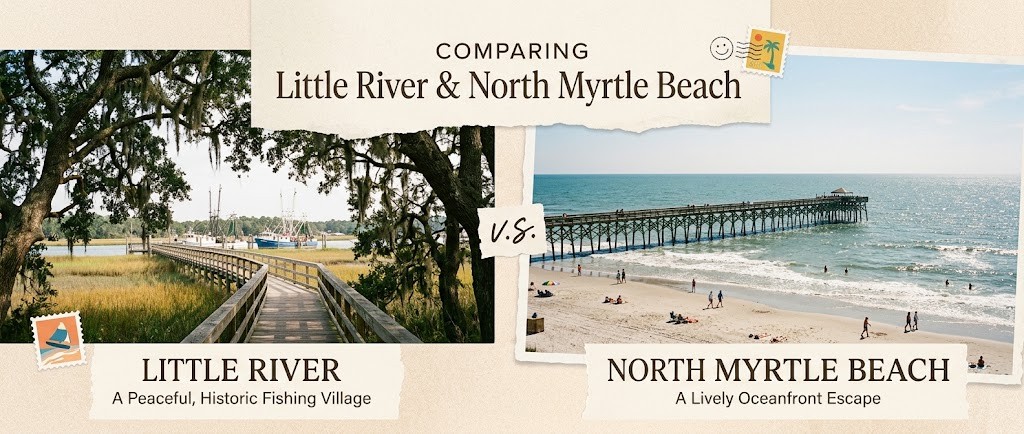
North Myrtle Beach is an Atlantic Ocean town. The beach is the headline attraction, and the housing stock reflects it — oceanfront condos, ocean-block single-family homes, second-row cottages, and inland subdivisions oriented around pool-and-club amenity sets. Buyers come here because the beach is 90 seconds from the door.
Little River is an Intracoastal Waterway town. The water story runs through the ICW, the marina, and the creek-and-marsh system that feeds into Calabash and the North Carolina line. Boat owners settle here specifically because deep-water access, slips, and marina proximity cost less than they do farther south. Beach access still exists — Cherry Grove and the north end of North Myrtle Beach are a short drive — but the waterfront lifestyle in Little River is boat-first, not sand-first. Our overview of Little River homes for sale captures the current inventory.
Who Each Town Attracts
North Myrtle Beach draws snowbirds, second-home owners, vacation-rental investors, and full-time residents who want walkable beach-town energy. The identity leans tourist-friendly year-round, with a stronger shoulder-season rental economy than most of the Grand Strand.
Little River draws boaters, retirees who prefer a quieter rhythm, buyers looking for better square-foot value than oceanfront pricing allows, and families moving from pricier Carolina or Virginia markets. It tends to attract more full-time residents and fewer vacation-rental investors. For a fuller sense of who settles here, see our post on what buyers should know about living in Little River.
Housing Stock Comparisons
North Myrtle Beach is condo-heavy at the beach, single-family in the inland neighborhoods, and anchored by a handful of large resort communities led by Barefoot Resort. Price per square foot runs higher closer to the ocean and in gated-golf communities.
Little River leans single-family and townhome, with condo inventory concentrated along the ICW and near the marina. Tidewater Plantation, Coquina Harbour, and the mainland sections of Little River serve very different buyer profiles. The town has more inventory in the $300K to $600K band than oceanfront North Myrtle Beach, and that pricing gap is often the deciding factor for first-time full-time coastal residents. Our broader North Myrtle Beach real estate hub covers the comparison inventory.
Day-to-Day Rhythm
The two towns feel noticeably different on a Wednesday afternoon in July. North Myrtle Beach is active — traffic along Main Street, families walking to the beach, lines at restaurants, shag music drifting from Ocean Drive. Little River is quieter. Boats come and go from the marina, locals eat lunch at the ICW-side restaurants, and the pace resembles small-town Carolina more than a tourist destination. That difference is amplified in the shoulder season. Little River winter feels like winter in a small town. North Myrtle Beach winter still has activity.
Pricing and Days on Market
North Myrtle Beach pricing varies dramatically by section — oceanfront, ocean-block, and inland each have their own market. Well-prepared homes near the beach move quickly when priced to recent closed comps; overpriced listings sit regardless of location. Little River pricing is tighter across the town, with less dramatic variation between sections. Days on market in Little River run longer than oceanfront North Myrtle Beach but shorter than markets farther south like Pawleys.
Buyers should get pre-approved before writing offers in either market — our Myrtle Beach home loans page is the right starting point for coastal and second-home financing.
Taxes, Insurance, and Short-Term Rentals
Both towns sit in Horry County, so the primary-vs-non-primary tax ratio applies the same way. Insurance costs on coastal properties price similarly, though specific wind, hail, and flood exposure varies property to property. The bigger regulatory difference is short-term rental rules — North Myrtle Beach has established rental zones and infrastructure built around them, while Little River’s short-term rental market is thinner and more HOA-dependent. Investors should verify specific property rental rules before writing an offer in either market.
How to Decide
Beach-first buyers who want oceanfront or ocean-block proximity, a walkable beach-town rhythm, and an active year-round scene gravitate to North Myrtle Beach. Boat-first buyers who want better square-foot value, a quieter daily pace, and ICW or marina access gravitate to Little River. Buyers who want both lifestyles sometimes split the difference and settle in a Barefoot Resort section near the water or in Tidewater Plantation on the Little River side — both offer resort amenity sets with easy access to either town.
Key Takeaways
North Myrtle Beach is Atlantic Ocean, beach-town rhythm, year-round tourist energy, and condo-heavy coastal inventory. Little River is Intracoastal Waterway, boat-first, quieter rhythm, and single-family and townhome stock with better square-foot value than oceanfront pricing allows. Match the choice to the lifestyle you actually want, not just the one that photographs well.
About Greg Harrelson
Greg Harrelson is a seasoned Realtor® with more than 30 years of experience serving the Myrtle Beach and Grand Strand markets. As the founder of Century 21 The Harrelson Group, Greg has built his career helping buyers, sellers, and investors achieve success in every corner of the coastal Carolina real estate market. His expertise spans residential homes, investment properties, land development, and coastal condos. Known for his deep local knowledge, innovative marketing strategies, and commitment to personal service, Greg consistently helps clients reach their real estate goals while navigating the ever-changing market with confidence and precision.