A seller's disclosure tells you what the owner knows about the house. It does not tell you everything about the house. That difference matters, and it's the first thing I want every buyer to understand before they sign anything.
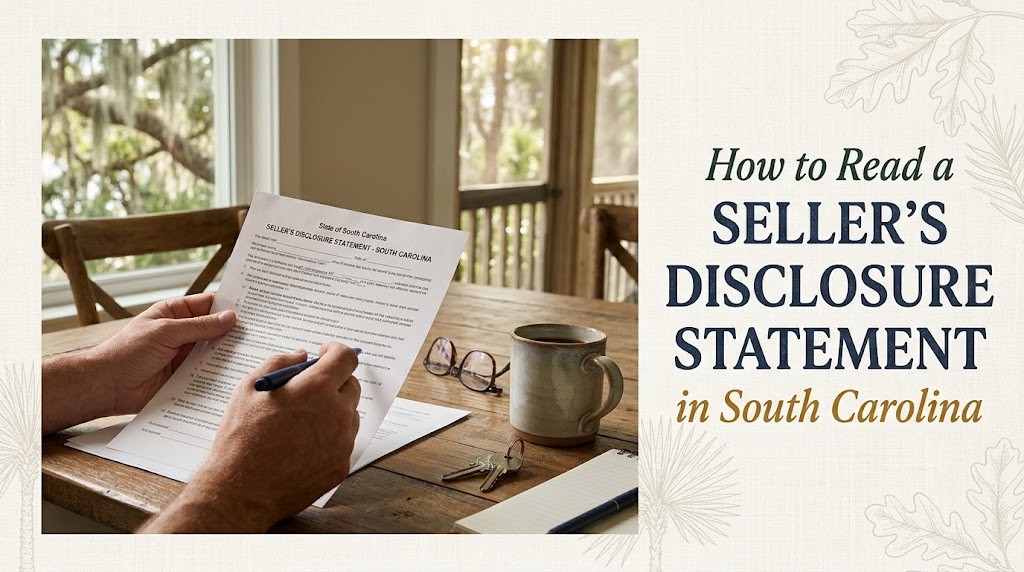
In South Carolina, most sellers of a single-family home fill out a state form called the Residential Property Condition Disclosure Statement. You should get it before you sign a contract. Read it slowly. Then use it to decide what to dig into during your inspection.
What the South Carolina Disclosure Form Covers
The form walks the seller through the big systems of the home. It asks about the roof, the foundation, plumbing, electrical, heating and air, and water intrusion. It asks about termites and wood damage. It asks about the water supply and sewer or septic. It also asks about things you can't see on a showing, like zoning issues, easements, HOA rules, and any lawsuits tied to the property.
For each question, the seller marks yes, no, or no representation. A "yes" should come with an explanation. Read those explanations closely. That's where the real story usually lives.
What the Disclosure Doesn't Do
The disclosure is not a warranty. It's not an inspection, either. It only reflects what the owner actually knows. A seller who has never been in the crawl space can honestly say they aren't aware of a problem down there.
That's why you never skip a professional inspection just because the disclosure looks clean. A good home inspector in the Myrtle Beach area will look at the things an owner may never have noticed. Put the disclosure and the inspection report side by side. Where they disagree, ask questions.
Sales Where You May Not Get a Disclosure
Some sales are exempt under state law. Estate sales handled by a personal representative, foreclosures, sales ordered by a court, auctions, and transfers between co-owners or family members often come without the form. A brand-new home that nobody has ever lived in is exempt too. So is a sale where both sides agree in writing to skip it.
If you're buying one of these, you'll lean even harder on your inspection and your due diligence period. Ask your agent early whether a disclosure is coming, so you aren't surprised.
Answers That Deserve a Second Look
Most disclosures are routine. A few answers should make you slow down and ask more questions.
- "No representation" checked on most of the form, especially by an owner who lived there for years
- Any mention of past water in the crawl space, attic, or garage
- Roof repairs with no date or no contractor named
- Past termite treatment without a current bond or service contract
- Additions or enclosed porches with no mention of permits
None of these kill a deal on their own. They just tell you where to point your inspector. On the coast, I pay extra attention to water and wood damage. Humidity and storms are part of life here, and termites love both. A CL-100 termite letter is the next step once you're under contract.
How the Disclosure Fits Into Your Due Diligence Period
In most South Carolina contracts, you get a due diligence period after you go under contract. That's your window to inspect, get quotes, check insurance, and decide if you want to move forward. If you're not sure how that money works, read up on due diligence money vs. earnest money before you write an offer.
Use the disclosure to plan that window. If the seller mentions an old roof leak, line up a roofer. If they mention septic work, get the tank inspected. If the HOA section raises questions, ask for the rules and the budget right away. Don't wait until day eight of a ten-day period to start.
Also talk to your lender early. Some issues on a disclosure, like an old roof or a past flood, can affect insurance and financing. Elite Home Lending works with buyers across the Grand Strand, and you can start with them at elitehl.com or through our Myrtle Beach home loans resources. Getting your financing lined up first gives you more time to focus on the house.
Questions I'd Ask Before Writing an Offer
Ask how old the roof and the heating and air system really are. Ask if there have been any insurance claims on the house. Ask whether the seller has receipts for big repairs. Ask if the home has ever had water inside, even once. Sellers who answer clearly and quickly are usually sellers who took care of the place.
If you'd like help reading a disclosure on a home you're looking at, reach out. I'm Greg Harrelson, and I've been helping buyers along the Grand Strand for more than 30 years. Reading these forms with you is part of the job.
Key Takeaways
- The disclosure shows what the seller knows, not everything about the home.
- It's not a warranty and never replaces a professional inspection.
- Some sales, like estates, foreclosures, and new construction, may come without one.
- Vague answers or lots of "no representation" marks deserve follow-up.
- Use the disclosure to plan your due diligence period from day one.
Frequently Asked Questions
When should I get the seller's disclosure in South Carolina?
You should get it before you sign a purchase contract. Ask your agent for it as soon as you get serious about a home. Reading it early helps you decide whether to make an offer and what to inspect.
Can a seller be held responsible for leaving something off the disclosure?
A seller who knowingly hides a problem can face legal trouble. But the form only covers what the seller actually knows. If you think something was hidden, talk to a real estate attorney about your options.
Do I still need an inspection if the disclosure looks clean?
Yes. A clean disclosure just means the seller isn't aware of problems. An inspector looks at the roof, crawl space, attic, and systems with trained eyes. That's how you find what an owner may have missed.
Does a condo sale come with a disclosure too?
Many condo sales do, but the form focuses on the unit. You'll also want the HOA documents, budget, and meeting minutes. Those tell you about the building, the reserves, and any special assessments coming down the road.
About Greg Harrelson
Greg Harrelson is a seasoned Realtor® with more than 30 years of experience serving the Myrtle Beach and Grand Strand markets. As the founder of Century 21 The Harrelson Group, Greg has built his career helping buyers, sellers, and investors achieve success in every corner of the coastal Carolina real estate market. His expertise spans residential homes, investment properties, land development, and coastal condos. Known for his deep local knowledge, innovative marketing strategies, and commitment to personal service, Greg consistently helps clients reach their real estate goals while navigating the ever-changing market with confidence and precision.