Cost of living is one of the biggest reasons people relocate to Myrtle Beach. Buyers coming from the Northeast, Mid-Atlantic, and Midwest often arrive expecting expenses similar to where they came from and are pleasantly surprised by what they find. While prices have moved upward in recent years, the Grand Strand still offers a financial picture that allows residents to enjoy a strong quality of life without stretching the budget. Here is a clear breakdown of what cost of living actually looks like across the major categories.
Housing and Property Costs
Housing Costs
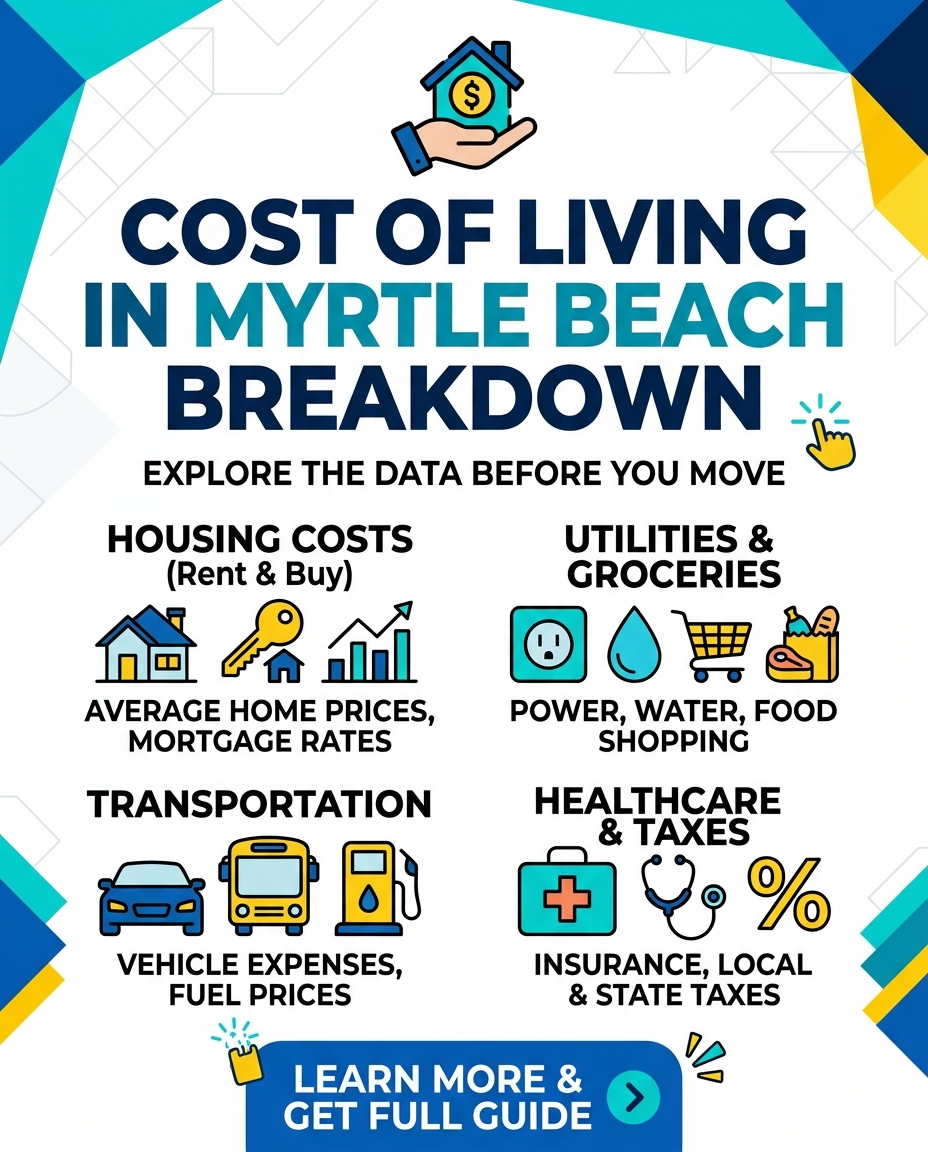
Housing is usually the largest line item in any household budget, and Myrtle Beach delivers strong value relative to many comparable coastal markets. Single-family homes, condos, and townhomes are available across a wide range of price points. Conway SC real estate, Carolina Forest, and parts of Surfside Beach offer entry-level homes that remain accessible to first-time buyers. Oceanfront and luxury markets in Pawleys Island, Grande Dunes, and Market Common reach premium price points but still tend to compare favorably to similar coastal markets up north.
Buyers exploring Myrtle Beach real estate often find that they can purchase more home for their budget here than in cities like Boston, New York, Philadelphia, or Washington, D.C. Property taxes are also significantly lower, especially for primary residences, which improves the monthly carrying cost picture even further.
Property Taxes
South Carolina's property tax structure is one of the friendliest in the country for homeowners. Owner-occupied primary residences are assessed at four percent of appraised value. Second homes and investment properties are assessed at six percent. Combined with the local millage rate, the resulting tax bill is dramatically lower than what buyers from higher-tax states are used to paying. The savings on annual property taxes alone can offset other costs of relocating.
Insurance Costs
Insurance is one area where coastal markets cost more than inland markets. Wind and hail coverage, standard homeowners insurance, and sometimes flood insurance combine to create a higher annual premium than buyers from inland states might expect. The good news is that the difference is usually offset by the favorable property tax structure. Newer homes built to current coastal codes also tend to insure more affordably than older homes.
Day-to-Day Living Costs
Utility Costs
Utility costs in Myrtle Beach are reasonable. The mild climate means heating bills are low compared to northern states. Cooling costs in summer can be meaningful, especially in larger homes, but high-efficiency systems and good insulation keep them manageable. Water, sewer, trash, and natural gas where available are all priced competitively.
Groceries and Everyday Expenses
Grocery prices in the Myrtle Beach area are generally in line with national averages and notably lower than many large urban markets. The area has all of the major grocery chains, plus local markets and seafood retailers that take advantage of fresh coastal seafood. Eating out remains affordable across a wide range of cuisines, with a strong mix of national chains and local favorites.
Transportation
Transportation costs in Myrtle Beach are quite reasonable. Auto insurance rates compare favorably to many states. Gas prices are typically near or below national averages. Most residents drive everywhere because the area is spread across a coastal corridor rather than concentrated in a single dense city. Commute times within the area are generally short, with most points along the Grand Strand reachable in twenty to thirty minutes outside of peak summer traffic.
Lifestyle and Services
Healthcare
Healthcare costs and access have improved substantially in the area in recent years. Major hospital systems serve the region with full-service facilities, specialty centers, and an expanding network of clinics. Out-of-pocket costs vary by insurance plan, but residents generally find quality care without the higher pricing common in major metropolitan markets.
Entertainment and Recreation
One of the best things about living in Myrtle Beach is how much free or low-cost recreation there is. Public beach access, parks, walking trails, and community events form a year-round calendar of low-cost lifestyle. Golf courses are abundant, with a wide range of price points. Restaurants, live entertainment, and shopping centers offer plenty of options without the premium pricing of larger metropolitan areas.
Taxes Beyond Property
South Carolina's tax structure is broadly favorable. The state offers retirement income deductions for residents over a certain age, which is one reason retirees frequently relocate here. Sales tax is reasonable, and the absence of state-level estate taxes adds another benefit for long-term planning. A conversation with a CPA before relocating can help you map out the full tax picture for your situation.
Strategy for Newcomers
When budgeting for a move to Myrtle Beach, build a realistic monthly cost estimate that includes housing, taxes, insurance, utilities, groceries, transportation, and healthcare. Compare it to your current expenses honestly. Most relocators find the comparison highly favorable, especially after factoring in property tax savings and lower heating costs. Working with a local real estate professional helps you understand neighborhood-specific cost differences such as HOA fees and insurance variations.
Final Takeaway
Cost of living in Myrtle Beach remains one of the most appealing reasons people relocate to coastal South Carolina. The combination of reasonable housing, favorable property taxes, manageable utilities, and abundant low-cost lifestyle activities makes it possible to live well without overextending the budget. With a clear picture of the numbers and the right local guidance, the financial side of moving to Myrtle Beach often becomes one of the most reassuring parts of the decision.
Explore More on Our Site
To see how the budget translates into housing options, browse Myrtle Beach homes for sale, view Myrtle Beach condos for sale, or compare 55-plus retirement communities.
About Greg Harrelson
Greg Harrelson is a seasoned Realtor® with more than 30 years of experience serving the Myrtle Beach and Grand Strand markets. As the founder of Century 21 The Harrelson Group, Greg has built his career helping buyers, sellers, and investors achieve success in every corner of the coastal Carolina real estate market. His expertise spans residential homes, investment properties, land development, and coastal condos. Known for his deep local knowledge, innovative marketing strategies, and commitment to personal service, Greg consistently helps clients reach their real estate goals while navigating the ever-changing market with confidence and precision.