Walkability in Myrtle Beach: What It Really Means
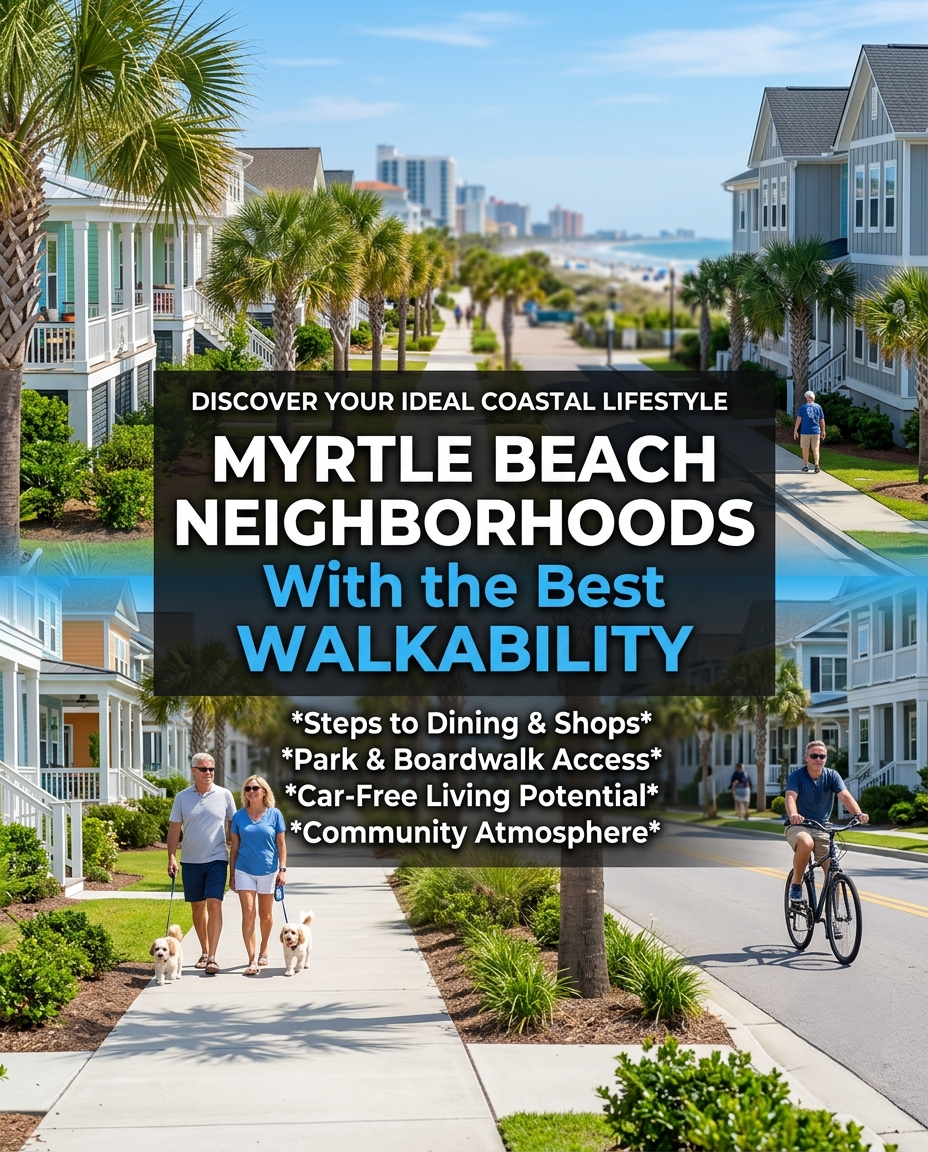
Myrtle Beach is known for sunshine, sand, and a laid-back coastal pace, but more and more buyers are asking a very practical question before they choose a neighborhood: how easy is it to live here without constantly getting in the car? Walkability has quietly become one of the top factors for retirees, second-home buyers, remote workers, and families looking at homes for sale in Myrtle Beach, SC.
Walkability along the Grand Strand does not look the way it does in a major metro. You will not find a dense urban grid stretching for miles. What you will find are pockets of neighborhoods built around sidewalks, small commercial nodes, parks, and easy beach access. Knowing where those pockets are makes all the difference.
Why Walkability Matters in a Coastal Market
For many buyers, walkability ties directly to lifestyle. Retirees want to walk to dinner, coffee, or the beach without dealing with seasonal traffic. Vacation-home owners want a property that feels like a getaway the moment they park. Full-time residents enjoy the savings, the daily exercise, and the simple community connection a walkable neighborhood encourages.
There is also a resale benefit. Walkable neighborhoods in Myrtle Beach tend to hold value because they appeal to a broad mix of buyers, including locals, snowbirds, investors, and remote workers. When a property is steps away from a beach access, a restaurant, or a grocery store, there is built-in demand that supports long-term value.
Top Walkable Neighborhoods in Myrtle Beach
Market Common
Few places in Myrtle Beach are as walkable as Market Common. Built around a pedestrian-friendly town center, this area packs shopping, dining, fitness studios, parks, entertainment, and event spaces into a tight footprint. Single-family homes, townhomes, and condos sit just blocks from restaurants, walking trails, and seasonal community events.
What makes Market Common stand out is the mix of housing. Low-maintenance townhomes near the action, traditional single-family homes a few blocks back, and condos for snowbirds who want a lock-and-leave lifestyle all coexist within walking distance of the same restaurants and shops.
Downtown Myrtle Beach and the Boardwalk Area
The historic downtown and Boardwalk corridor delivers a very different walkable experience. Buyers here are usually drawn to oceanfront condos within steps of the SkyWheel, the boardwalk, the pier, and a long stretch of restaurants and shops along Ocean Boulevard. For investors, this is one of the strongest vacation rental zones in Myrtle Beach because guests can park once and enjoy their whole stay on foot.
Single-family homes on the streets just inland of Ocean Boulevard can also offer solid walkability with sidewalks and bike-friendly routes connecting homes to local cafes, ice cream stops, and beach accesses. Rental rules vary by block and by condo building, so always confirm short-term rental eligibility before buying for income.
The Highlands at Withers Preserve
Just outside the Market Common core, The Highlands at Withers Preserve offers a more residential feel with strong walkability into the Market Common town center. Many homes here are newer, with sidewalks, mature landscaping, and easy access to the lake loop trail. For buyers who want a true neighborhood feel but still want to walk to dinner, this is one of the most balanced choices in Myrtle Beach.
The Sanctuary at Withers Preserve
Another strong option inside the Withers Preserve footprint is The Sanctuary at Withers Preserve. The community blends a quieter, residential setting with the same easy walking and biking access into the Market Common shops and restaurants. Buyers who want a tucked-away feel without sacrificing daily walkability tend to gravitate here.
State Park and Springmaid Beach Area
The southern stretch near Myrtle Beach State Park offers a quieter, more natural take on walkability. Buyers here can reach the state park, beach access points, and small shopping plazas without long drives. The pace is calmer than downtown but still gives owners a walkable feel near the coast.
Practical Considerations Before You Buy
Walkability is great, but coastal Myrtle Beach has its own real-world factors to weigh:
- Summer heat and humidity make midday walks tough, so tree cover and shaded sidewalks matter
- HOA fees in lifestyle communities like Market Common tend to run higher because amenities are part of the appeal
- Flood zones along the coast can affect insurance costs even in walkable areas
- Vacation rental rules differ block by block, especially in downtown and oceanfront corridors
- Foot traffic increases dramatically in season near the boardwalk and Ocean Boulevard
None of these are deal breakers, but they help frame realistic expectations for daily living.
Strategy for Buyers
If walkability is high on your list, start by defining how you actually plan to use it. Walking to dinner, walking to the beach, and walking to a coffee shop each point you toward a different neighborhood. Retirees often gravitate toward Market Common and the Withers Preserve communities for everyday convenience. Investors lean toward downtown and the Boardwalk corridor for guest experience. Second-home buyers often look at the Springmaid and state park areas for quieter beach access.
Work with an agent who knows the rhythm of each area, not just the listing data. Walking-distance language on a search portal can be misleading, so local familiarity matters when it comes to walkable Myrtle Beach real estate.
Key Takeaways
Walkability in Myrtle Beach is more than a checkbox on a listing. It is a lifestyle factor that shapes daily living, resale value, and rental appeal. Market Common offers the most complete walkable experience for everyday life, while the downtown and Boardwalk area delivers a vacation-style walkable lifestyle. Neighborhoods like The Highlands at Withers Preserve, The Sanctuary at Withers Preserve, and the streets near Myrtle Beach State Park add quieter, more residential walkable options. Buyers should weigh HOA fees, flood considerations, and seasonal foot traffic alongside the walkability appeal and lean on local expertise to match the right neighborhood to the right lifestyle.
About Greg Harrelson
Greg Harrelson is a seasoned Realtor® with more than 30 years of experience serving the Myrtle Beach and Grand Strand markets. As the founder of Century 21 The Harrelson Group, Greg has built his career helping buyers, sellers, and investors achieve success in every corner of the coastal Carolina real estate market. His expertise spans residential homes, investment properties, land development, and coastal condos. Known for his deep local knowledge, innovative marketing strategies, and commitment to personal service, Greg consistently helps clients reach their real estate goals while navigating the ever-changing market with confidence and precision.