Who Will Insure an Older Grand Strand Home, and Why the Premium Jumped
Older homes and manufactured homes on the Grand Strand can be insured, but insurers look hard at four things: the roof, the electrical panel, the plumbing and how well the home stands up to wind. If no private company will write the wind coverage, the South Carolina Wind and Hail Underwriting Association is the fallback. Premiums have climbed because storm losses and rebuilding costs rose up and down the coast, and older homes carry more of that risk. Get real quotes during due diligence, before you're committed.
I hear this question from buyers looking at 1970s ranches in Surfside Beach, 1980s brick homes in Conway and manufactured homes on their own land all over Horry County. Older houses face tougher underwriting than the standard picture of homeowners insurance in Myrtle Beach, and the answers start with what the insurer sees.
Insurers Start With the Roof
The roof is the first question on almost every application. How old is it, what's it made of, and is there a permit for the last replacement? An older shingle roof is the single most common reason I see a quote come back high or not come back at all.
Some companies will still write the policy but only pay the depreciated value of an aging roof after a claim. That's a big difference when a storm takes it off. A newer roof, a metal roof in good shape, or a roof with a secondary water barrier underneath usually helps.
Old Wiring and Old Pipes Can Stop a Policy Cold
Homes built in the 1970s and 1980s often still have their original electrical panel. Fuse boxes, certain older breaker panels like Federal Pacific and Zinsco, and aluminum branch wiring are all red flags to an underwriter. Some companies won't write the home until the panel is replaced.
Plumbing gets the same look. Gray polybutylene pipe was common from the late 1970s into the mid-1990s, and galvanized steel shows up in older homes. Both have a history of leaks, and insurers know it. Your inspection report will call these out. Hand that report to your insurance agent early.
Wind Mitigation Features Earn Their Keep on the Coast
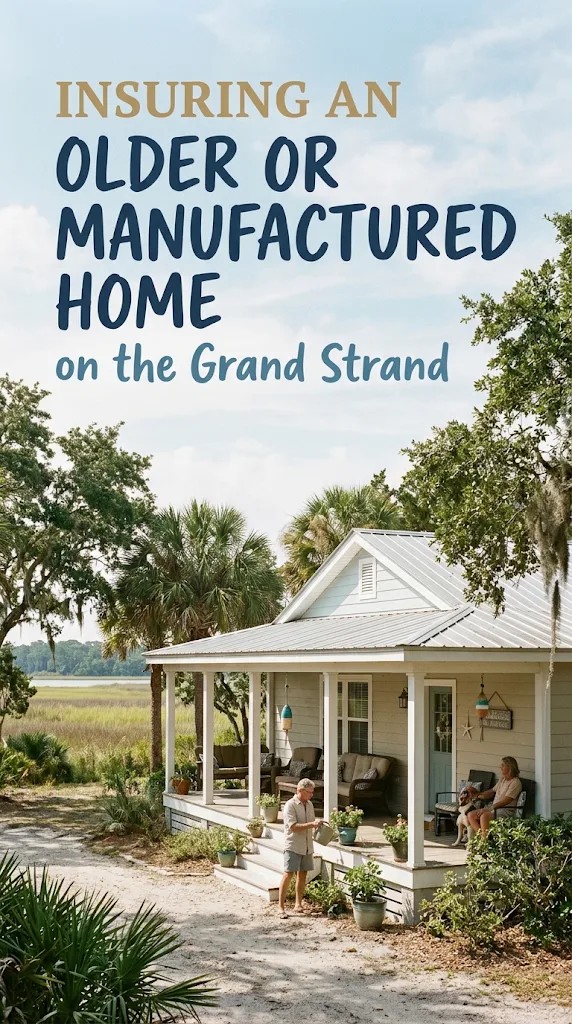 On the Grand Strand, wind is usually the expensive part of the policy. Some companies split it off entirely, which is why wind and hail coverage often carries its own deductible and sometimes its own carrier. The features that keep a roof attached in a storm can also lower what you pay for it.
A wind mitigation inspection documents what your home already has. Here's what the inspector looks for:
- Roof-to-wall straps or clips
- Roof deck nailing pattern
- Secondary water barrier
- Impact-rated windows or storm shutters
- Roof shape, hip versus gable
Those features can earn premium discounts. If the home is your primary residence, the SC Safe Home program, run by the South Carolina Department of Insurance, offers grants to eligible owners for wind-mitigation retrofits. It's worth checking before you pay for straps or shutters on your own.
When Private Companies Say No, the Wind Pool Is the Backstop
The South Carolina Wind and Hail Underwriting Association is the state's coastal wind pool. It exists for properties that can't find wind coverage in the private market. It covers wind and hail only, so you still need a separate policy for fire, theft and liability, and a separate flood policy if you want flood coverage. Plan for two or three policies in your monthly payment.
Manufactured Homes Play by Their Own Rules
Say you're looking at a 1987 double-wide on a half-acre in Murrells Inlet. Close to the MarshWalk, no HOA, room for a boat. Here's what decides the insurance.
Built Before or After June 15, 1976?
Manufactured homes built after June 15, 1976 are built to the federal HUD code. Older units, the ones people still call mobile homes, are much harder to insure and finance. A 1987 home clears that line. Good start.
Tie-Downs and the Data Plate Tell the Story
Every HUD-code home has a data plate, usually inside a kitchen cabinet, a bedroom closet or near the electrical panel. It shows the manufacturer, the date and the wind zone the home was built for. If it's missing, insurers and lenders will make you track down a replacement. They'll also ask how the home is anchored. Tie-downs, straps and ground anchors that are rusted or loose are a problem on the coast, and so is missing skirting.
Your Own Land or a Park Lot?
If you own the land, the home may be titled as real property with the lot. That's usually the easier path for insurance and financing. If the home sits on a rented lot in a park, you're insuring the home only, and the park sets its own rules. That's why buyers shopping manufactured homes with land usually have an easier time with underwriting than buyers looking at park lots.
Financing follows the same logic. Lenders care about the foundation, the title and the age of the home. Elite Home Lending, our lending partner, can tell you early whether a specific manufactured home fits the loan you want, so you aren't finding out a week before closing. The same check applies to a 1970s site-built house, and it's the first question I'd ask if you're weighing Myrtle Beach mortgage options on an older home.
Premiums Rose Across the Whole Coast, Not Just Your House
If your renewal jumped and nothing changed at your house, you're not alone. Rebuilding costs went up. Materials and labor went up. Insurers pay more for their own backup coverage after years of big storms in coastal states. Older homes feel it more because they carry more risk on paper, even when they've held up fine for decades.
Get Your Quotes Before You're Committed
In South Carolina, due diligence money usually goes to the seller and generally isn't refundable. That means your due diligence period is the time to find out what insurance will cost. Order the home inspection and a wind mitigation inspection right away. Send both reports to two or three insurance agents. If the home sits in a FEMA flood zone that starts with A or V, get a flood quote too.
That's the way I've always run a purchase on an older home. Insurance quote in hand before the clock runs out, so you're deciding with real numbers.
Key Takeaways
Older and manufactured homes on the Grand Strand are insurable, but the roof, panel, plumbing and wind features drive the price. Manufactured homes built after June 15, 1976 with a data plate, solid tie-downs and owned land have the easiest path. The wind pool and SC Safe Home exist for a reason, so use them. Get your quotes during due diligence, not after.
Frequently Asked Questions
Can I get insurance on a manufactured home in Horry County?
Yes, especially if it was built after June 15, 1976 to the federal HUD code. Insurers will want to see the data plate, proof of proper tie-downs and the roof's condition. Homes built before that date are much harder to insure.
What is the South Carolina Wind and Hail Underwriting Association?
It's the state's coastal wind pool for properties that can't find wind coverage from a private company. It covers wind and hail only. You'll still need a separate policy for other risks, plus flood coverage if you want it.
Why did my insurance go up when nothing changed at my house?
Premiums rose across coastal markets because rebuilding costs and storm losses went up. Insurers pass those costs through at renewal. Older homes tend to see bigger increases because underwriters view them as higher risk.
About Greg Harrelson
Greg Harrelson is a seasoned Realtor® with more than 30 years of experience serving the Myrtle Beach and Grand Strand markets. As the founder of Century 21 The Harrelson Group, Greg has built his career helping buyers, sellers, and investors achieve success in every corner of the coastal Carolina real estate market. His expertise spans residential homes, investment properties, land development, and coastal condos. Known for his deep local knowledge, innovative marketing strategies, and commitment to personal service, Greg consistently helps clients reach their real estate goals while navigating the ever-changing market with confidence and precision.