The Allure of Georgetown's Historic District
Georgetown is one of the most distinctive places to own a home along the South Carolina coast. As the state's third-oldest city, it carries an architectural and cultural identity you simply do not find elsewhere along the Grand Strand. Buyers searching for Georgetown SC real estate are usually drawn to the historic district for the same reasons it has held its character for centuries: a walkable Front Street waterfront, mature trees, historic homes, and a calmer pace that feels rooted in place rather than driven by tourism.
Owning a home in or near Georgetown's historic district is not just a real estate decision. It is a lifestyle choice that blends history, the waterfront, and a deep sense of community.
What Defines the Historic District Lifestyle
Walking the Streets and the Front Street Waterfront
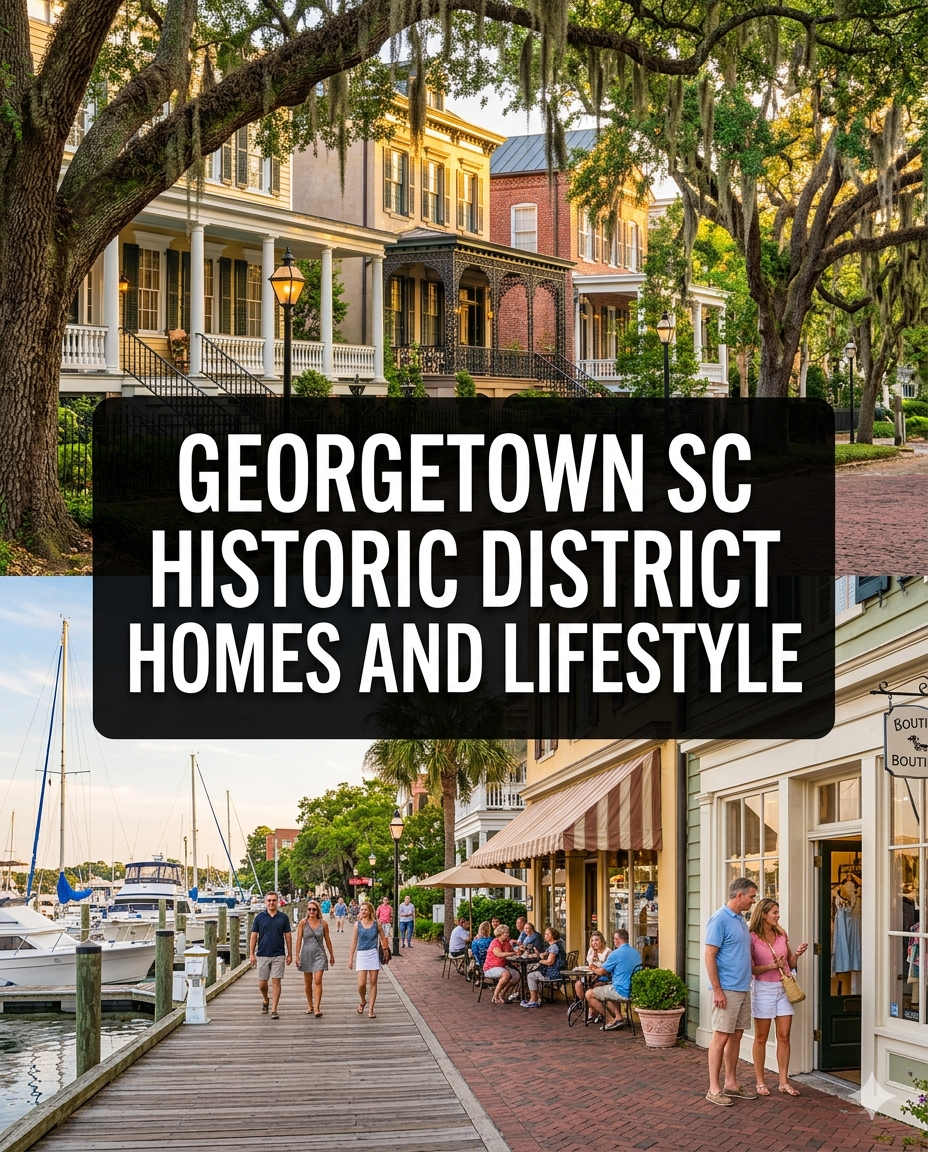
The historic district is built for walking. Front Street follows the Sampit River and connects locally owned restaurants, shops, art galleries, and the Harborwalk. Owners often start the day with coffee on the water, run errands on foot, and end the evening at a restaurant just blocks from home. It is the kind of daily rhythm that draws retirees, second-home buyers, and remote workers who want to slow down without sacrificing access to good food and culture.
Architecture and Character
Many homes in the historic district date back to the 18th and 19th centuries. Buyers love the original architecture, mature live oaks draped in Spanish moss, brick streets, and the personal scale of each block. Renovations and updates are common, but the area's preservation focus keeps the character intact, which protects long-term values for owners who want a property that stands out.
A Slower, More Connected Pace
Georgetown moves at a different speed than the rest of the Grand Strand. The community is small enough that neighbors know each other and large enough to support active downtown events year round. Buyers consistently mention this everyday connection as the reason they ultimately chose Georgetown over busier coastal markets.
Communities Near the Historic District
Downtown Georgetown
Homes inside the historic district itself sit within walking distance of the waterfront, restaurants, and shops. Inventory is limited, and most homes have a story attached to them. Buyers focused on this area should be prepared to act quickly when the right property hits the market.
Wedgefield Plantation
Just minutes from the historic district, Wedgefield Plantation blends Lowcountry estate character with modern community amenities. The neighborhood features mature trees, a community golf course, equestrian access, and homes that range from cottages to larger estates. For buyers who want historic-area access but prefer more land and privacy, this is one of the strongest fits in the area.
The Arbors at Wedgefield Plantation
The Arbors at Wedgefield Plantation offers a more focused selection of homes inside the larger Wedgefield community. Buyers here enjoy proximity to Wedgefield's amenities while choosing a layout and price point that fits a smaller footprint. The Arbors works well for buyers who want to be close to historic Georgetown without taking on the maintenance of a larger estate property.
DeBordieu Colony
For buyers seeking a luxury coastal lifestyle within easy reach of historic Georgetown, DeBordieu Colony offers private beach access, golf, tennis, and a gated community feel. DeBordieu sits between the historic district and Pawleys Island, blending coastal exclusivity with the cultural draw of Georgetown.
Costs and Practical Considerations
Historic district ownership has its own unique financial profile. Older homes may require updated electrical, plumbing, or roofing systems, and renovation projects can be subject to preservation guidelines. Insurance can vary based on age, location, and proximity to water. Property tax rates in Georgetown County differ between primary residents and second-home owners, so the math should be run before assuming ownership costs.
Flood zones along the waterfront and the Sampit River need careful review. Elevation and flood coverage can affect both monthly cost and long-term resale. Buyers should also ask about historic preservation requirements that may apply to exterior changes, additions, or new construction within the district.
Strategy for Buyers
The best strategy in historic Georgetown is patience paired with readiness. Inventory is limited, and the right property does not always arrive on schedule. Buyers who line up their financing, define their must-haves, and partner with an experienced local agent are positioned to move quickly when a home that fits their goals comes to market. For luxury or estate buyers, a similar mindset applies in DeBordieu Colony and Wedgefield Plantation, where each home has a unique character that justifies due diligence.
Key Takeaways
- Georgetown's historic district offers a walkable, character-rich lifestyle that is rare on the Grand Strand
- Wedgefield Plantation and The Arbors at Wedgefield Plantation deliver historic-area access with more space
- DeBordieu Colony adds a private, luxury coastal layer within easy reach of historic Georgetown
- Older homes, flood zones, and preservation rules require thorough due diligence
- Limited inventory means buyers should be financially ready and clear on priorities before searching
Frequently Asked Questions
Do historic district homes have renovation restrictions?
Many homes inside Georgetown's historic district are subject to preservation guidelines that affect exterior changes, additions, and certain repairs. Interior renovations are generally more flexible. Always confirm specific requirements with the local preservation authority and the homeowner's insurance carrier before planning major work.
How do property taxes work for second-home buyers in Georgetown County?
South Carolina applies a higher tax assessment ratio to non-primary residences than to primary homes. Second-home owners in Georgetown County should expect higher annual tax bills than owner-occupants on a similar property. Running the numbers in advance prevents surprises at closing and during the first tax cycle.
Is flood insurance required for waterfront historic district homes?
Flood coverage is often required for properties in higher-risk flood zones near the Sampit River and along the waterfront. Even where it is not required, many owners choose to carry it given the area's coastal exposure. Reviewing the elevation certificate and flood zone designation early in due diligence is the safest move.
What is the difference between living in DeBordieu Colony and the historic district?
The historic district focuses on walkability, downtown culture, and historic character. DeBordieu Colony is a private, gated coastal community with beach access, golf, and a quieter pace. Many buyers actually choose one as a primary home and the other as a frequent visit destination, depending on lifestyle priorities.
About Greg Harrelson
Greg Harrelson is a seasoned Realtor® with more than 30 years of experience serving the Myrtle Beach and Grand Strand markets. As the founder of Century 21 The Harrelson Group, Greg has built his career helping buyers, sellers, and investors achieve success in every corner of the coastal Carolina real estate market. His expertise spans residential homes, investment properties, land development, and coastal condos. Known for his deep local knowledge, innovative marketing strategies, and commitment to personal service, Greg consistently helps clients reach their real estate goals while navigating the ever-changing market with confidence and precision.