Buying a Condo Is a Different Investigation
A single-family home due diligence checklist covers the house and the lot. A condo due diligence checklist covers all of that plus the building, the association, the reserves, the master insurance, and the rules that govern how you can use the unit. Miss one of those extra items and you can close on a unit that looks perfect and still owe thousands in special assessments six months later.
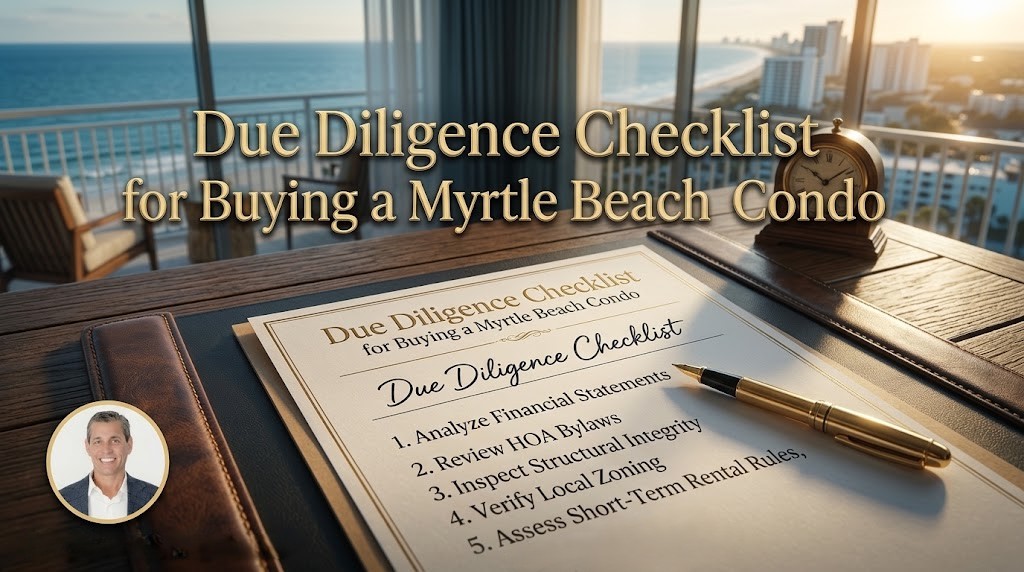
This is a working checklist for Myrtle Beach and Grand Strand condo buyers. Use it during your due diligence window while you still have the ability to negotiate or walk away. For the broader framework on how the SC due diligence period works, see our post on the South Carolina due diligence process.
The Unit Itself
General Home Inspection
Every unit gets a full home inspection. Even in a well-maintained building, the interior of the unit — HVAC, plumbing, electrical, appliances, flooring, windows, sliders — is your responsibility. A coastal-experienced inspector who understands salt-air and humidity effects is worth the extra cost. Our Myrtle Beach home inspector page is a solid starting point.
Sliders, Windows, and Balcony Doors
These fail more often in coastal units than most buyers expect. Test them all. Look for water intrusion around the frames, seal condition, and smooth operation.
HVAC and Water Heater
Note the age and condition. Coastal exposure shortens both. If either is older than 7 to 8 years, budget for near-term replacement.
Appliances and Fixtures
Confirm what conveys. On rental units, appliances and furnishings usually convey. On owner-occupied units, it varies. Get the list in writing.
The Building and HOA
Current Budget and Reserve Study
Ask for the current-year HOA budget and the most recent reserve study. Well-funded reserves cover future major repairs without special assessments to owners. Underfunded reserves signal future surprises. This is the single most important document in the condo due diligence stack.
Recent Special Assessment History
Ask for the special assessment history for the last 3 to 5 years. Buildings that have hit owners with repeated or large assessments are telling you something about how they operate.
Meeting Minutes
Request the last 12 months of HOA board meeting minutes. Look for discussions of pending assessments, major repair projects, litigation, or governance conflicts. Buyers who read these documents catch issues that never make it into the marketing.
Governing Documents
Bylaws, CC&Rs, and rules. These control what you can and cannot do with your unit — rentals, pets, parking, exterior modifications, guests, quiet hours. Read them front to back before closing.
Insurance
Master Insurance Policy
Request a copy of the master policy or at least a certificate of insurance. Confirm what it covers, what the deductibles are (wind, hail, named storms often have separate deductibles), and where the coverage stops. On the Grand Strand, this matters more than in inland markets.
Individual HO-6 Coverage
Get a real quote from a local carrier for your individual HO-6 unit-owner policy. Review it alongside the master policy to identify any coverage gaps. Our Myrtle Beach homeowners insurance resource is a helpful reference here.
Flood Zone and Elevation
For coastal condos, confirm the building flood zone and any building-specific flood insurance requirements. Lenders often require flood coverage for units in higher-risk zones.
Rental Rules
Short-Term Rental Eligibility
If rental income is part of your plan, confirm in writing whether the building allows short-term rentals, weekly rentals, or monthly-minimum stays. Rules vary widely across Grand Strand buildings and sometimes change over time.
Rental Program Details
If the building has an in-house or partner rental program, get the details: fees, commission split, occupancy history, average nightly rates, and any owner obligations. Our property management team can help evaluate whether the numbers make sense for the specific building.
Rental Restrictions on New Owners
Some buildings restrict rentals to a limited number of units at any time and require a waiting list. Confirm the rule for the specific unit before assuming you can rent it out on day one.
Financial Verification
HOA Estoppel Letter
The estoppel letter from the HOA confirms the current owner is paid up, no pending violations, and no known assessments. Your closing attorney will typically order this as part of closing but confirm it is being handled.
Title Search
Standard on any purchase. Your attorney runs it to confirm clean transfer of ownership and identify any liens or easements. If issues surface, catch them during the due diligence window while you still have negotiation leverage.
Physical Building Walk-Through
Walk the building itself, not just the unit. Look at common areas, hallways, elevators, exterior condition, pool and amenity condition, and how well maintained the property is overall. A well-run condo building looks well-run. A struggling one shows it in the common areas long before it shows in the financials.
Key Takeaways
- Condo due diligence covers the unit AND the building, the HOA, the reserves, the master insurance, and the rules
- The reserve study is the most important document — underfunded reserves signal future special assessments
- Read the last 12 months of meeting minutes for hints of pending projects or governance issues
- Confirm master insurance coverage and get an individual HO-6 quote alongside it
- Confirm rental rules in writing before assuming rental income
- Walk the building itself, not just the unit
- Use the SC due diligence window fully — this is your window to negotiate or walk away
Frequently Asked Questions
What is a condo reserve study and why does it matter?
A reserve study is a professional assessment of a condo building future capital needs — roof, elevators, siding, HVAC, pool equipment — and whether the association reserves are funded to cover them. Underfunded reserves usually mean future special assessments billed to owners on top of normal HOA fees.
How do I get a copy of the HOA documents?
Your agent or the listing agent requests them from the HOA or management company. Some HOAs charge a modest fee. Buyers are typically entitled to receive them during due diligence in South Carolina.
What is the difference between the master policy and my HO-6?
The master policy covers the building structure, common areas, and exterior. Your HO-6 covers the interior of your unit, your personal property, and liability. The exact split between the two varies by association, which is why reviewing them together matters.
Can I back out if I find issues in the HOA documents?
In most South Carolina purchase contracts, yes — the due diligence period allows termination if you find issues you are not comfortable with, and your earnest money is typically returned. Confirm the specific contract language with your agent or attorney.
About Greg Harrelson
Greg Harrelson is a seasoned Realtor® with more than 30 years of experience serving the Myrtle Beach and Grand Strand markets. As the founder of Century 21 The Harrelson Group, Greg has built his career helping buyers, sellers, and investors achieve success in every corner of the coastal Carolina real estate market. His expertise spans residential homes, investment properties, land development, and coastal condos. Known for his deep local knowledge, innovative marketing strategies, and commitment to personal service, Greg consistently helps clients reach their real estate goals while navigating the ever-changing market with confidence and precision.